

Finding ways to keep properties competitive in Greater London can quickly get complicated when energy regulations shift and best practices grow more advanced. For landlords and property owners, understanding energy modelling is now vital to ensure full compliance and uncover new opportunities to increase property value. This guide demystifies what energy modelling really means, highlighting essential concepts that directly impact strategic decisions on efficiency, legal obligations, and long-term investment.
Table of Contents
- Defining Energy Modelling And Key Concepts
- Types Of Energy Models Used In The UK
- How Energy Modelling Supports EPC Assessment
- Legal Standards And Compliance Requirements
- Cost, Benefits, And Common Pitfalls
- Choosing The Right Energy Modelling Approach
Key Takeaways
| Point | Details |
|---|---|
| Importance of Energy Modelling | Energy modelling supports strategic decision-making by simulating energy systems and evaluating multiple scenarios for infrastructure and technology investments. |
| Diversity of Models | The UK utilises various energy modelling approaches, including top-down, bottom-up, hybrid, and sector-specific models, each providing unique insights into energy dynamics. |
| Legal Compliance | Energy modelling must adhere to strict legal standards in the UK to ensure transparency and accuracy in energy performance assessments. |
| Cost-Benefit Analysis | While energy modelling offers significant benefits for informed decision-making, practitioners should be cautious of potential pitfalls, such as data uncertainty and computational complexity. |
Defining Energy Modelling and Key Concepts
Energy modelling represents a sophisticated analytical approach used to understand, predict, and optimise complex energy systems. At its core, this technique involves creating computational representations that simulate how energy technologies, infrastructure, and policy interactions function across different scenarios.
The primary purpose of energy modelling is to support strategic decision-making by providing insights into potential future energy configurations. Comprehensive energy system analysis helps researchers, policymakers, and industry professionals explore multiple pathways for technological development, infrastructure investment, and decarbonisation strategies.
Key components of energy modelling typically include:
- Simulating interactions between different energy sectors (electricity, heating, transportation)
- Evaluating technology performance and cost implications
- Assessing potential infrastructure requirements
- Modelling policy impacts on energy consumption and emissions
- Predicting system-wide transformation scenarios
Modern energy models are increasingly sophisticated, incorporating complex variables such as:
- Technological innovation rates
- Economic constraints
- Regional infrastructure capabilities
- Renewable energy potential
- Carbon reduction targets
Mathematical optimization plays a crucial role in these models, allowing analysts to identify the most cost-effective and efficient energy system configurations. Whole systems energy modelling enables comprehensive exploration of potential decarbonisation pathways under various constraints.
Pro tip: When engaging with energy modelling, always consider the underlying assumptions and limitations of the computational models to ensure accurate interpretation of results.
Types of Energy Models Used in the UK
The United Kingdom employs a diverse range of energy models to analyse and predict complex energy system dynamics. Energy modelling landscape research reveals that these models are critical tools for understanding technological, economic, and policy interactions within the national energy framework.
Primary types of energy models used across the UK can be categorised into several key approaches:
- Top-down economic models: Analyse macroeconomic interactions and aggregate energy consumption patterns
- Bottom-up technology models: Focus on specific technological capabilities and system-level performance
- Hybrid models: Combine economic and technological perspectives for comprehensive analysis
- Sectoral models: Specialise in specific energy domains like transportation, buildings, or electricity generation
- Agent-based models: Simulate individual and organisational decision-making processes
These models differ significantly in their methodological approaches and analytical capabilities. UK energy modelling strengths demonstrate that each model type offers unique insights into different aspects of energy system transformation.
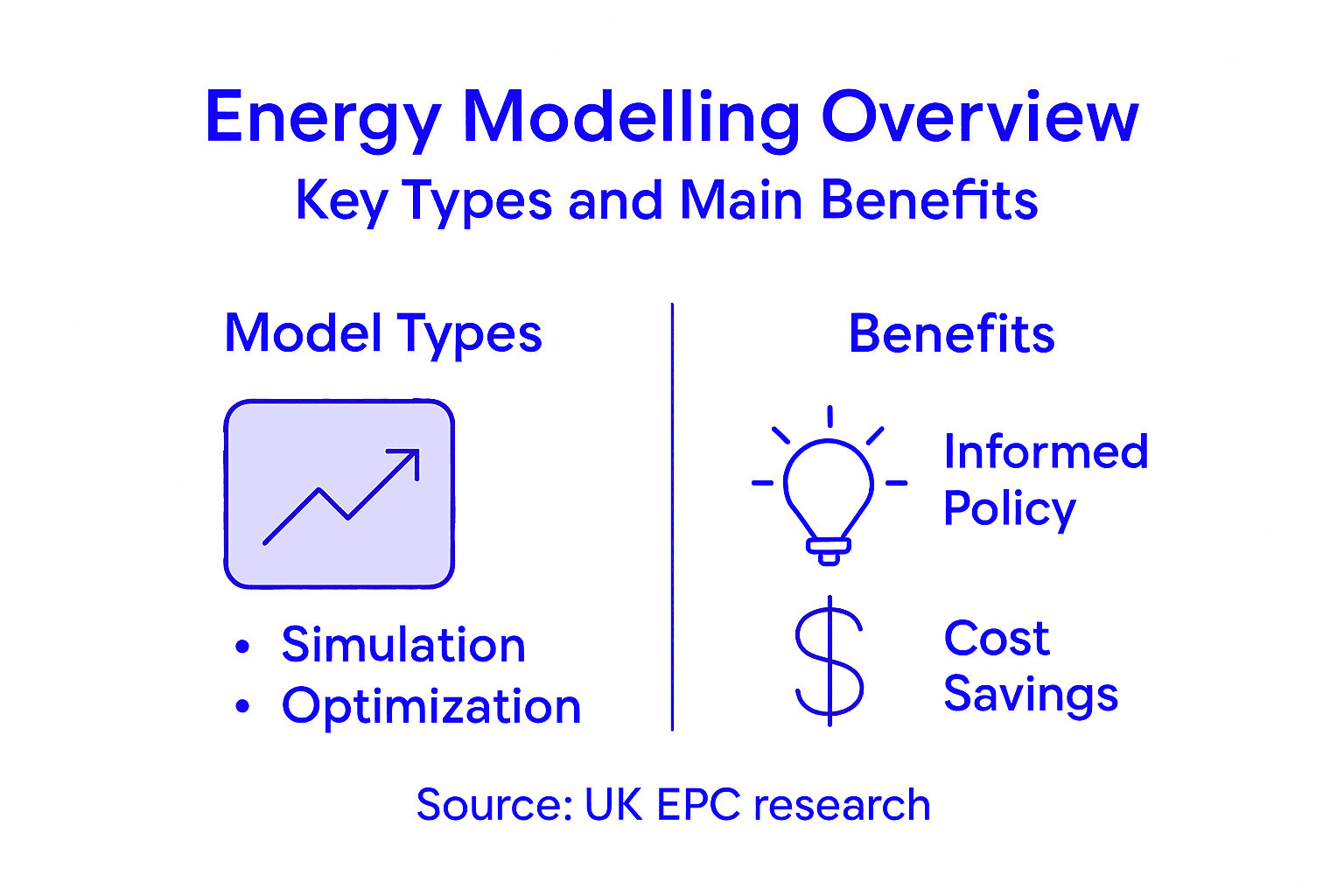
Here is a comparison of major energy model types used in the UK and their unique analytical strengths:
| Model Type | Primary Focus | Typical Users |
|---|---|---|
| Top-down economic models | Macro-scale market and policy impact | Government, economists |
| Bottom-up technology models | Detailed technology and system analysis | Engineers, analysts |
| Hybrid models | Integrating economic and technical data | Modelling consortia |
| Sectoral models | In-depth study of single energy sectors | Specialist consultancies |
| Agent-based models | Individual and organisational behaviour | Behavioural researchers |
Modern energy models increasingly incorporate complex variables such as:
- Technological innovation trajectories
- Behavioural change scenarios
- Economic constraint analysis
- Regional infrastructure development
- Policy intervention impacts
The sophistication of these computational tools allows researchers and policymakers to explore multiple decarbonisation pathways, assess potential infrastructure investments, and understand the intricate dynamics of energy transitions.
Pro tip: When interpreting energy model results, always consider the underlying assumptions and methodological limitations to ensure accurate strategic planning.
How Energy Modelling Supports EPC Assessment
Energy Performance Certificates (EPCs) rely increasingly on sophisticated energy modelling techniques to provide accurate and comprehensive assessments of building energy efficiency. Home Energy Model methodology represents a significant advancement in evaluating residential energy performance across the United Kingdom.
The core components of energy modelling that support EPC assessments include:
- Detailed fabric performance analysis
- Heating system efficiency calculations
- Smart technology readiness evaluation
- Energy consumption prediction
- Cost effectiveness assessment
Modern energy models incorporate multiple complex variables to generate precise EPC ratings. Comprehensive EPC assessment methods now consider intricate factors beyond traditional measurement approaches.
Key analytical processes in EPC energy modelling involve:
- Measuring building envelope thermal characteristics
- Evaluating existing heating infrastructure
- Assessing potential energy efficiency improvements
- Calculating projected energy consumption
- Determining potential carbon emissions
These sophisticated computational techniques enable property owners and assessors to gain deeper insights into building performance, identifying opportunities for energy conservation and potential cost savings.

Pro tip: Request a detailed breakdown of your energy model’s assumptions to better understand your property’s specific efficiency potential.
Legal Standards and Compliance Requirements
Energy modelling in the United Kingdom is governed by stringent legal frameworks designed to ensure consistent and transparent energy performance assessments. National Calculation Methodology standards provide comprehensive guidelines for calculating building energy performance across various property types.
Key legal compliance requirements for energy modelling include:
- Adherence to Building Regulations Part L
- Compliance with CO2 emissions targets
- Standardised software and calculation protocols
- Mandatory energy performance reporting
- Consistent methodology for assessment
The legal landscape for energy modelling encompasses multiple regulatory dimensions, ensuring that property assessments meet national sustainability and efficiency objectives. Government EPC compliance framework establishes clear parameters for energy performance certification and reporting.
Critical legal obligations for energy modelling practitioners involve:
- Maintaining certified assessor qualifications
- Following approved calculation methodologies
- Implementing standardised data collection processes
- Ensuring accurate and transparent reporting
- Meeting net zero policy requirements
These legal standards play a crucial role in driving energy efficiency improvements and supporting the United Kingdom’s broader environmental and sustainability objectives.
Pro tip: Regularly update your understanding of current energy modelling regulations to ensure continuous compliance and professional effectiveness.
Cost, Benefits, and Common Pitfalls
Energy modelling represents a sophisticated approach to understanding complex energy systems, but it comes with inherent costs and strategic advantages. Energy modelling strengths and limitations provide critical insights into the nuanced landscape of computational energy analysis.
Key benefits of energy modelling include:
- Informing strategic policy decisions
- Facilitating infrastructure investment planning
- Supporting technological innovation assessment
- Enabling comprehensive scenario exploration
- Providing transparent evidence for stakeholders
However, practitioners must be aware of significant potential pitfalls. Comprehensive modelling landscape analysis highlights several critical challenges that can undermine model effectiveness:
- Data uncertainty and variability
- Computational complexity
- Oversimplified behavioural assumptions
- Limited technological change representation
- Funding and accessibility constraints
The financial investment in energy modelling varies considerably, depending on model complexity, computational requirements, and specific research objectives. Advanced models can require substantial resources for development, maintenance, and ongoing refinement.
The following table summarises common costs, benefits, and pitfalls in energy modelling for clarity:
| Aspect | Examples | Practical Implication |
|---|---|---|
| Cost | Software, data, expert time | Budget planning is essential |
| Benefit | Scenario analysis, investment insights | Enables informed decision-making |
| Pitfall | Data uncertainty, complexity | Results may need careful review |
Pro tip: Always allocate budget for model validation and periodic reassessment to ensure continued accuracy and relevance.
Choosing the Right Energy Modelling Approach
Selecting an appropriate energy modelling approach requires careful consideration of project-specific requirements and strategic objectives. Energy modelling landscape analysis emphasises the importance of matching model complexity to precise research questions and available resources.
Key factors to consider when selecting an energy modelling approach include:
- Specific project objectives
- Temporal and spatial resolution needs
- Available computational resources
- Required level of system complexity
- Stakeholder engagement requirements
- Budget constraints
- Desired transparency and detail
Different modelling approaches serve distinct purposes within the energy systems landscape. Whole systems modelling strategies recommend tailoring models to specific goals such as:
- Policy development insights
- Infrastructure investment planning
- Technological innovation assessment
- Local energy system design
- Net zero transition pathway exploration
Professional energy modellers often recommend developing a portfolio of complementary models rather than relying on a single, comprehensive approach. This strategy allows for nuanced analysis across multiple dimensions of energy system transformation.
Pro tip: Consult with experienced modelling professionals to validate your chosen approach and ensure alignment with your specific research or project objectives.
Unlock the Power of Accurate Energy Modelling with Complete EPC
Understanding complex energy modelling is essential for precise Energy Performance Certificate (EPC) assessments. The article highlights challenges like data uncertainty and the need for sophisticated analysis to predict energy consumption and carbon emissions accurately. If you are a property owner, landlord, or estate agent seeking reliable and detailed insights into your building’s energy efficiency, it is crucial to work with experts who grasp these intricate concepts and legal standards.
At Complete EPC, we specialise in applying advanced energy modelling techniques to deliver comprehensive EPCs tailored to both domestic and commercial properties across London. Our team of qualified assessors ensures every report includes clear recommendations, helping you meet compliance requirements and identify energy-saving opportunities that increase your property’s value. Do not let complexity prevent you from gaining meaningful guidance. Discover our seamless service and lowest price guarantee by visiting Complete EPC today and take the first step towards smarter energy decisions.
Frequently Asked Questions
What is energy modelling?
Energy modelling is an analytical approach that creates computational representations to simulate energy technologies, infrastructure, and policy interactions in order to understand and optimise complex energy systems.
Why is energy modelling important?
Energy modelling is crucial for supporting strategic decision-making, informing policy development, exploring pathways for technological advancement, and guiding infrastructure investments aimed at decarbonisation.
What are the key components of energy modelling?
Key components of energy modelling include simulating energy sector interactions, evaluating technology performance, assessing infrastructure requirements, modelling policy impacts, and predicting future transformation scenarios.
What types of energy models are commonly used?
Common types of energy models include top-down economic models, bottom-up technology models, hybrid models, sectoral models, and agent-based models, each offering unique insights into energy system dynamics.