

Uncertainty around green leases still leads many London landlords and estate agents to hesitate when updating commercial contracts. Understanding how a green lease reshapes traditional obligations and what environmental clauses really require is crucial as sustainability expectations intensify across the United Kingdom. This article clarifies misconceptions, explains how these agreements work, and highlights practical factors that drive energy efficiency and regulatory compliance for commercial properties.
Table of Contents
- Green Leases Explained And Common Misconceptions
- Types Of Green Leases And Key Clauses
- Legal Framework And Uk Compliance Requirements
- Roles, Obligations, And Data Sharing Responsibilities
- Risks, Costs, And Practical Challenges For Landlords
Key Takeaways
| Point | Details |
|---|---|
| Understanding Green Leases | Green leases establish environmental obligations for landlords and tenants, fostering collaborative sustainability efforts in property management. |
| Types of Green Leases | The spectrum of green leases ranges from light (non-binding) to dark (fully binding), allowing flexibility in addressing environmental commitments. |
| Cost and Compliance Responsibilities | Responsibilities for costs and improvements are primarily borne by landlords, while tenants maintain operational performance, necessitating clear agreements on obligations. |
| Importance of Realistic Targets | Setting specific, measurable environmental targets in green leases prevents disputes and ensures accountability for both parties. |
Green leases explained and common misconceptions
A green lease is a commercial lease agreement that includes environmental obligations for both landlords and tenants. Unlike standard commercial leases, green leases contain specific clauses requiring parties to collaboratively reduce the property’s environmental impact through energy improvements, water conservation, waste reduction, and sustainable refurbishment.
These leases extend far beyond simple energy efficiency measures. They address the entire operational footprint of a building, making them a comprehensive approach to environmental responsibility.
How green leases actually work
Green leases function through added contractual clauses that bind parties to environmental commitments. The strength of these commitments varies significantly depending on how the lease is structured.
- Light green clauses: Non-binding agreements that encourage environmental improvements without legal obligation
- Dark green clauses: Legally binding commitments with specific performance targets and financial consequences for non-compliance
- Mixed approach: A combination of binding and voluntary measures tailored to the property and parties involved
Cost responsibility typically falls on landlords for major improvements, though some clauses allow landlords to recover expenses from tenants through service charges or rent adjustments.
Green leases create shared responsibility between landlords and tenants, turning environmental compliance into a collaborative effort rather than a one-sided obligation.
Common misconceptions about green leases
Many London property professionals misunderstand what green leases actually require. Here are the biggest myths:
Misconception 1: Green leases are legally mandatory
This is false. The UK has no legal requirement for commercial leases to include green clauses. They remain entirely optional, though they align with UK climate policy and increasingly reflect tenant and investor expectations.
Misconception 2: Green leases only focus on energy
Incorrect. While energy efficiency is central, green lease clauses cover water consumption, waste management, refurbishment standards, and overall environmental impact reduction.
Misconception 3: Tenants always pay for improvements
Not necessarily. Most green leases place improvement costs on landlords, particularly for structural or building-system upgrades. The lease agreement determines who bears what costs.
Misconception 4: A memorandum of understanding is just as binding as a green lease
Wrong. Green lease agreements are formal contractual documents with legal consequences, whilst memoranda of understanding are non-binding and more flexible in nature.
Why green leases matter for London landlords
Commercial real estate generates substantial carbon emissions. Green leases help reduce these whilst simultaneously lowering operating costs, increasing property values, and attracting quality tenants who prioritise sustainability. Understanding UK energy efficiency policies helps landlords make informed decisions about whether green leases align with their property strategy and compliance obligations.
Pro tip: Before implementing green lease clauses, review your property’s current Energy Performance Certificate (EPC) rating to understand baseline performance and identify realistic improvement targets that won’t overburden either party.
Types of green leases and key clauses
Green leases come in different forms, each with varying levels of commitment. Understanding the distinctions helps you choose the right structure for your London property and ensure both parties can realistically meet their obligations.
The classification system ranges from light to dark, reflecting how binding and comprehensive the environmental commitments are. This spectrum allows flexibility whilst maintaining accountability.
The green lease spectrum
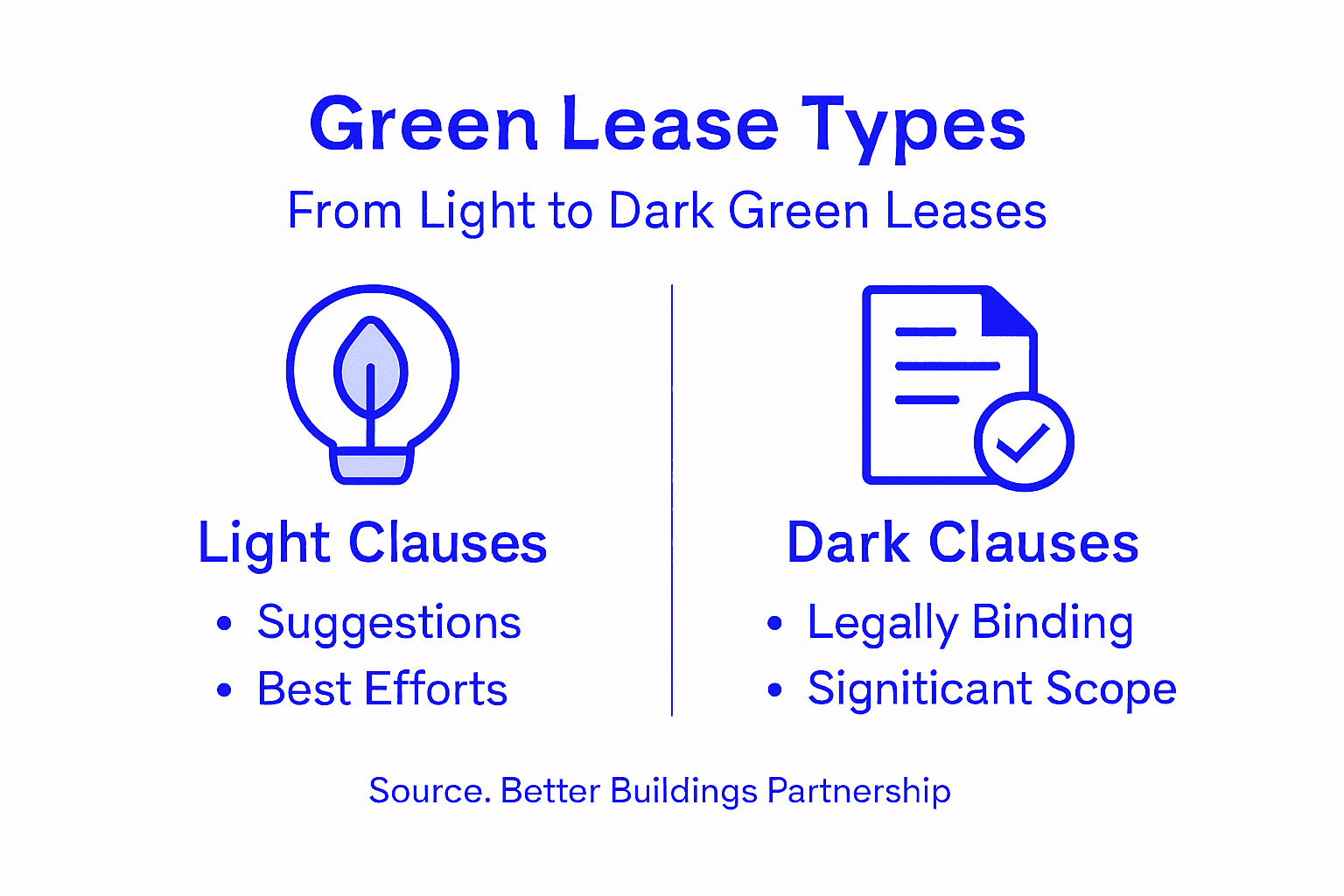
Light green leases contain non-binding clauses that encourage environmental improvements without legal enforcement. These are ideal for landlords and tenants who want sustainability goals but need flexibility in execution.
Medium green leases impose genuine environmental obligations without imposing unreasonable costs on either party. They balance binding commitments with practical affordability, making them the most common choice for commercial properties.
Dark green leases are legally binding agreements with extensive environmental scope and potentially significant costs. These suit organisations with strong sustainability commitments and the financial capacity to meet demanding targets.

Here is a summary comparing the main types of green lease structures by commitment and impact:
| Lease Type | Typical Commitment Level | Cost Implications | Suitable For |
|---|---|---|---|
| Light Green | Encouraged, not legally binding | Minimal additional costs | Early adopters seeking flexibility |
| Medium Green | Binding, but moderate targets | Balanced, manageable expenses | Typical commercial portfolios |
| Dark Green | Strict and fully binding | Potentially high expenditures | Organisations with strong ESG focus |
The right lease type depends on your property’s current condition, tenant profile, and long-term sustainability strategy, not on what sounds most environmentally friendly.
Common clauses found in green leases
Beyond the binding level, green leases address specific operational and maintenance areas. Light green clauses are minimal-impact agreements whilst dark green versions cover extensive environmental scope.
Key clause categories include:
The following table outlines common green lease clauses and who is primarily responsible for their implementation:
| Clause Category | Main Responsibility | Typical Action |
|---|---|---|
| Energy Efficiency | Landlord | System upgrades, monitoring |
| Water Conservation | Tenant | Usage tracking, fixture choice |
| Waste Management | Tenant | Segregation, recycling oversight |
| Refurbishment Materials | Landlord | Procurement standards |
| Environmental Certification | Landlord | Compliance documentation |
| Data Sharing & Reporting | Both | Collect, review, submit data |
- Energy efficiency obligations: Regular maintenance of HVAC systems, lighting upgrades, and performance monitoring against baseline metrics
- Water conservation measures: Installing efficient fixtures, monitoring consumption, and reporting on usage levels
- Waste management requirements: Establishing recycling programmes, composting initiatives, and waste reduction targets
- Sustainable materials specifications: Using eco-friendly products for refurbishment, maintenance, and operations
- Green certification maintenance: Keeping buildings aligned with BREEAM, LEED, or similar standards
- Data sharing and reporting: Providing energy, water, and waste consumption data for transparency and improvement tracking
Tailoring clauses to your property
Not every property needs every clause. The most effective green leases match the building’s actual operational reality and the tenant’s business model.
For example, a data centre requires different energy efficiency targets than an office building. A retail property needs different waste management strategies than a warehouse.
Having clear, measurable targets prevents disputes. Vague commitments like “reduce energy use significantly” cause problems. Instead, specify exact percentage reductions, timeframes, and measurement methods.
Understanding energy performance regulations in London helps you align green lease clauses with existing compliance requirements rather than creating duplicate or contradictory obligations.
Pro tip: Start with a medium green lease structure, then adjust specific clauses based on your property’s EPC rating, existing systems, and tenant capacity—this balances environmental ambition with realistic execution.
Legal framework and UK compliance requirements
Green leases are not legally mandatory in the UK, but they increasingly align with binding regulations that affect commercial properties. Understanding this intersection between voluntary green clauses and compulsory energy standards is crucial for London landlords.
The legal landscape is shaped by two distinct forces: energy efficiency regulations that apply regardless of lease type, and sustainability frameworks that green leases help you satisfy more effectively.
The regulatory backdrop
Minimum Energy Efficiency Standards (MEES) is the primary regulation affecting commercial properties. It requires leased buildings to meet minimum EPC ratings or face legal consequences.
Current MEES rules prohibit leasing commercial properties rated below an F on the EPC scale. This threshold becomes stricter over time, moving to E-rated minimum by April 2023 and B-rated minimum by 2030.
These deadlines are fixed. You cannot negotiate around them or apply for exemptions based on cost concerns.
Green leases complement MEES compliance by embedding energy improvement obligations into contracts, making it easier to demonstrate ongoing commitment to required standards.
How green leases support legal compliance
A well-drafted green lease creates contractual accountability for meeting MEES requirements. Instead of relying on landlord goodwill alone, both parties have legal obligations tied to energy performance.
This shared responsibility structure benefits both landlords and tenants:
- For landlords: Green clauses document tenant cooperation in meeting EPC standards, reducing liability if improvements are necessary
- For tenants: Clear environmental obligations prevent surprise demands for costly upgrades
- For both parties: Documented energy targets provide evidence of good faith compliance efforts
Minimum Energy Efficiency Standards regulations require leased commercial properties to meet minimum EPC ratings, and green leases help embed these legal obligations directly into lease agreements.
The Better Buildings Partnership guidance
The Better Buildings Partnership provides the Green Lease Toolkit—a comprehensive resource for drafting compliant green clauses. This toolkit bridges voluntary sustainability ambitions with mandatory energy standards.
The toolkit offers templates and guidance for light, medium, and dark green clauses, all aligned with current UK regulations. Using it significantly reduces legal risk during lease negotiations.
Most London solicitors and property managers reference this toolkit when drafting new leases or lease renewals, making it the de facto standard for professional green lease agreements.
Planning ahead for 2030
With the B-rated EPC minimum arriving in 2030, many properties will need substantial upgrades. Green leases provide the contractual framework to plan and execute these improvements without disputes.
Properties currently rated D or E have approximately five years to implement upgrades. Green lease clauses allow you to spread costs across this timeframe through shared contributions.
Pro tip: Review your current property’s EPC rating against 2030 MEES targets now, then structure green lease clauses to allocate improvement costs fairly over the next five years rather than facing emergency upgrades.
Roles, obligations, and data sharing responsibilities
Green leases only work when both landlords and tenants understand their distinct roles and responsibilities. Vague agreements lead to disputes, missed targets, and wasted money. Clear role definition prevents these problems.
The traditional landlord-tenant split creates perverse incentives. Landlords invest in improvements but tenants enjoy the energy savings. Green leases fix this by aligning financial interests with environmental outcomes.
Landlord responsibilities
Landlords typically own responsibility for capital improvements and major building systems. These are expensive, long-term investments that individual tenants cannot reasonably fund.
Common landlord obligations include:
- Installing or upgrading HVAC systems, boilers, and heating equipment
- Replacing windows and improving building insulation
- Installing LED lighting infrastructure and smart building controls
- Conducting energy audits and providing baseline data
- Funding structural or mechanical upgrades required for compliance
Landlords also typically cover the cost of obtaining and maintaining certifications like BREEAM or improved EPC ratings.
Landlords control the building’s fixed assets; tenants control daily operational behaviours. Green leases succeed by assigning obligations to whoever can actually influence each area.
Tenant responsibilities
Tenants manage operational efficiency and day-to-day environmental performance. They control how systems are used, maintained, and monitored during their occupancy.
Typical tenant obligations include:
- Maintaining heating, cooling, and lighting systems to manufacturer specifications
- Managing waste segregation and recycling programmes
- Operating equipment efficiently and reporting visible malfunctions
- Monitoring and controlling energy and water consumption within the space
- Complying with waste reduction targets and sustainable procurement policies
Tenant responsibilities focus on behaviour and maintenance rather than capital expenditure. This makes obligations realistic whilst ensuring daily choices support environmental goals.
The data sharing challenge
Data sharing on energy and water consumption is critical to monitor compliance and track progress against targets, but it raises practical administrative and privacy concerns.
Effective green leases specify:
- Frequency: Monthly, quarterly, or annual reporting intervals
- Format: Standardised templates preventing confusion and delays
- Confidentiality: How data is protected, shared, and used
- Responsibility: Who collects, processes, and analyses the data
- Access: What information each party receives and when
Without these details, data collection becomes chaotic. One party submits utilities in kilowatt-hours while another uses kilowatt-hours per square metre, making comparisons impossible.
Setting realistic targets
Both parties must agree on measurable, achievable environmental targets. Vague commitments like “reduce energy use” cause endless disputes about whether targets are met.
Proper targets include specific percentages (“reduce energy by 10% against baseline”), timeframes (“by December 2026”), and measurement methods (“verified by independent EPC assessor”).
Pro tip: Assign data collection responsibilities to the party controlling the relevant equipment or systems, then build in quarterly review meetings where both landlords and tenants discuss results and identify practical obstacles before problems escalate.
Risks, costs, and practical challenges for landlords
Green leases sound attractive in principle, but they create real financial and administrative burdens for landlords. Understanding these challenges before committing is essential to avoid costly mistakes.
The upfront investment can be substantial, and recovery mechanisms are often complicated. The administrative overhead is frequently underestimated until you’re managing data collection and tenant disputes.
The capital expenditure challenge
Most green lease obligations fall on landlords, particularly for building system upgrades. Installing new HVAC systems, replacing windows, or improving insulation costs tens of thousands of pounds.
These are not optional expenses if the lease includes binding environmental clauses. You cannot defer them because a tenant objects or lease renewal approaches.
London properties often require multiple simultaneous improvements to meet modern standards. Older buildings may need boiler replacement, window upgrades, and lighting retrofit all at once.
Capital improvements justify green leases only if you can recover costs through rent adjustments, service charges, or longer lease terms that spread expenses across multiple years.
Cost recovery and tenant resistance
Recovering improvement costs from tenants is more complicated than it sounds. Some tenants resist additional service charges, particularly if they cannot directly control the outcomes.
Common cost recovery issues include:
- Timing mismatches: You complete expensive upgrades, then the tenant leaves before lease term ends
- Negotiation resistance: Prospective tenants demand rent reductions in exchange for accepting green obligations
- Service charge disputes: Tenants challenge whether improvements actually reduce their energy bills enough to justify costs
- Economic downturn: Tenants struggle to pay additional charges during recessions or business difficulties
Landlords face practical challenges including negotiating acceptable green clauses, managing cost recovery, and balancing environmental goals with lease viability, particularly with short lease terms.
Administrative and compliance burdens
Data collection and monitoring create ongoing administrative work. You must collect energy and water consumption reports, verify accuracy, compare against targets, and investigate variances.
These tasks require systems, training, and time. Many landlords underestimate the administrative effort involved in ongoing monitoring and compliance verification.
Disputes arise when consumption data conflicts with lease targets. One party blames the other; months pass arguing about whether the building actually met obligations.
Short lease terms and uncertainty
Short commercial leases (under five years) make green investments risky. You complete expensive upgrades, then the tenant leaves and the next one may not sign a green lease at all.
Longer lease terms (10+ years) justify capital investment because you benefit from improved efficiency across multiple years. Shorter terms mean costs cannot be properly recovered.
Tenant compliance and enforcement
Writing binding clauses means little if you cannot enforce them. Proving tenant non-compliance requires documented evidence: energy bills, maintenance records, audit reports.
Enforcement is costly. Legal action to recover penalties or terminate a lease damages tenant relationships and creates vacancy risk.
Pro tip: Start with medium green clauses offering cost recovery mechanisms through service charges rather than rent adjustments, and ensure lease terms exceed 7 years so capital improvements are recouped before tenant transition risk.
Take Control of Your Green Lease Compliance with Expert EPC Services
Understanding the demands of green leases can feel overwhelming, especially with the need to meet Minimum Energy Efficiency Standards and plan costly building improvements ahead of 2030. If you are a landlord or property professional aiming to navigate legal obligations and sustainability goals with confidence the critical starting point is a precise Energy Performance Certificate. This certificate is essential for assessing your property’s current efficiency and tailoring realistic improvement targets to avoid unexpected expenses or disputes.
At Complete EPC we specialise in delivering accurate and comprehensive EPC assessments across London, helping you align your commercial property with green lease requirements and regulatory demands. Our qualified assessors provide detailed reports and clear recommendations that empower you to implement the right green lease clauses and cost recovery strategies effectively. Don’t leave your property’s future to chance when expert guidance is only a click away.
Ensure your property meets legislation and supports sustainable growth today. Visit Complete EPC to get your affordable, reliable EPC arranged quickly and take the next step towards a greener, compliant commercial lease.
Frequently Asked Questions
What is a green lease?
A green lease is a commercial lease that includes environmental obligations for both landlords and tenants, aiming to collaboratively reduce the property’s environmental impact through energy improvements, water conservation, and waste reduction.
What are the different types of green leases?
Green leases are classified into light, medium, and dark green leases. Light green leases encourage sustainability without legal obligation, medium green leases impose binding commitments that are affordable, and dark green leases enforce strict, legally binding obligations and may involve significant costs.
How do green leases benefit landlords?
Green leases help landlords reduce carbon emissions, lower operating costs, and increase property values. They can also attract quality tenants who prioritise sustainability, aligning with current climate policies and compliance obligations.
Do tenants always pay for improvements in a green lease?
Not necessarily. While some costs for improvements fall on landlords, specific clauses within the green lease can allow for cost recovery from tenants, depending on the agreement made between both parties.