

Property owners in Central London often face the challenge of balancing comfort, efficiency, and legal requirements in historic buildings. Retrofitting is not simply an upgrade—it is a comprehensive solution that transforms existing properties without demolition. With many London homes built long before modern energy standards, understanding options for energy efficiency improvements is vital for meeting EPC targets and unlocking lasting value. This guide offers clarity on effective retrofit measures, tailored legal advice, and practical steps to boost your building’s performance.
Table of Contents
- Retrofit Defined: Upgrading Existing Properties
- Main Types of Retrofit Measures Explained
- How Retrofit Enhances EPC Ratings
- Legal, Cost, and Practical Considerations
Key Takeaways
| Point | Details |
|---|---|
| Importance of Retrofit | Retrofit enhances energy efficiency in existing buildings without requiring demolition, crucial for older properties in London. |
| Holistic Approach | A comprehensive retrofit strategy integrates building fabric improvements with heating, ventilation, and energy monitoring for maximum impact. |
| EPC Ratings and Value | Improving a building’s EPC rating boosts property value and meets regulatory requirements, essential for landlords. |
| Phased Implementation | Retrofit projects can be strategically phased to spread costs and prioritise high-impact improvements for better returns. |
Retrofit Defined: Upgrading Existing Properties
Retrofit means adding new materials, technologies, and products to an existing building to reduce energy consumption. Rather than demolishing and rebuilding, you’re upgrading what already stands to work more efficiently.
In London, where many properties date back centuries, retrofit is transforming how buildings perform. You’re not replacing the structure; you’re enhancing its ability to retain heat, reduce draughts, and operate with less energy demand.
What Retrofit Covers
Retrofitting involves a holistic approach that considers your building’s fabric, services, and environmental conditions. The process isn’t just about one upgrade—it’s a coordinated strategy.
Key areas addressed in retrofit work include:
- Building fabric improvements: Insulation, windows, doors, and air-sealing to prevent heat loss
- Service upgrades: Heating systems, ventilation, and water heating modernisation
- Indoor environment: Better air quality and comfort for occupants
- Energy monitoring: Systems to track consumption and identify further savings
Each area works together. Upgrading insulation alone won’t deliver maximum benefit if your heating system remains outdated. That’s why a comprehensive approach matters.
Why Retrofit Matters for London Properties
Many London buildings are energy-hungry by modern standards. A Victorian terraced house or Edwardian flat wasn’t designed for today’s energy efficiency expectations.
Retrofit addresses this directly. The retrofit process improves comfort and cuts carbon emissions whilst reducing operational costs. Your property uses less energy, your bills drop, and you meet regulatory requirements.
This matters because:
- Energy Performance Certificates (EPCs) reveal your building’s current efficiency rating
- Landlords face legal requirements around minimum EPC standards
- Property values increase when energy efficiency improves
- Lower energy use reduces your carbon footprint
The Retrofit Process
Retrofit isn’t haphazard. It follows a structured path from assessment through completion.

First, an energy assessment identifies where heat escapes and energy is wasted. This guides which upgrades deliver the biggest impact. Second, you prioritise improvements based on budget and benefit. Third, qualified installers implement the work carefully, managing disruption to occupants.
The result is a building that performs measurably better on every metric: lower bills, better comfort, higher EPC ratings, and reduced environmental impact.
Retrofit transforms existing buildings into efficient homes without requiring demolition or relocation—it’s sustainable upgrading done right.
Pro tip: Start with an EPC assessment before planning retrofit work; it identifies exactly which upgrades will boost your rating most effectively and help you prioritise spending.
Main Types of Retrofit Measures Explained
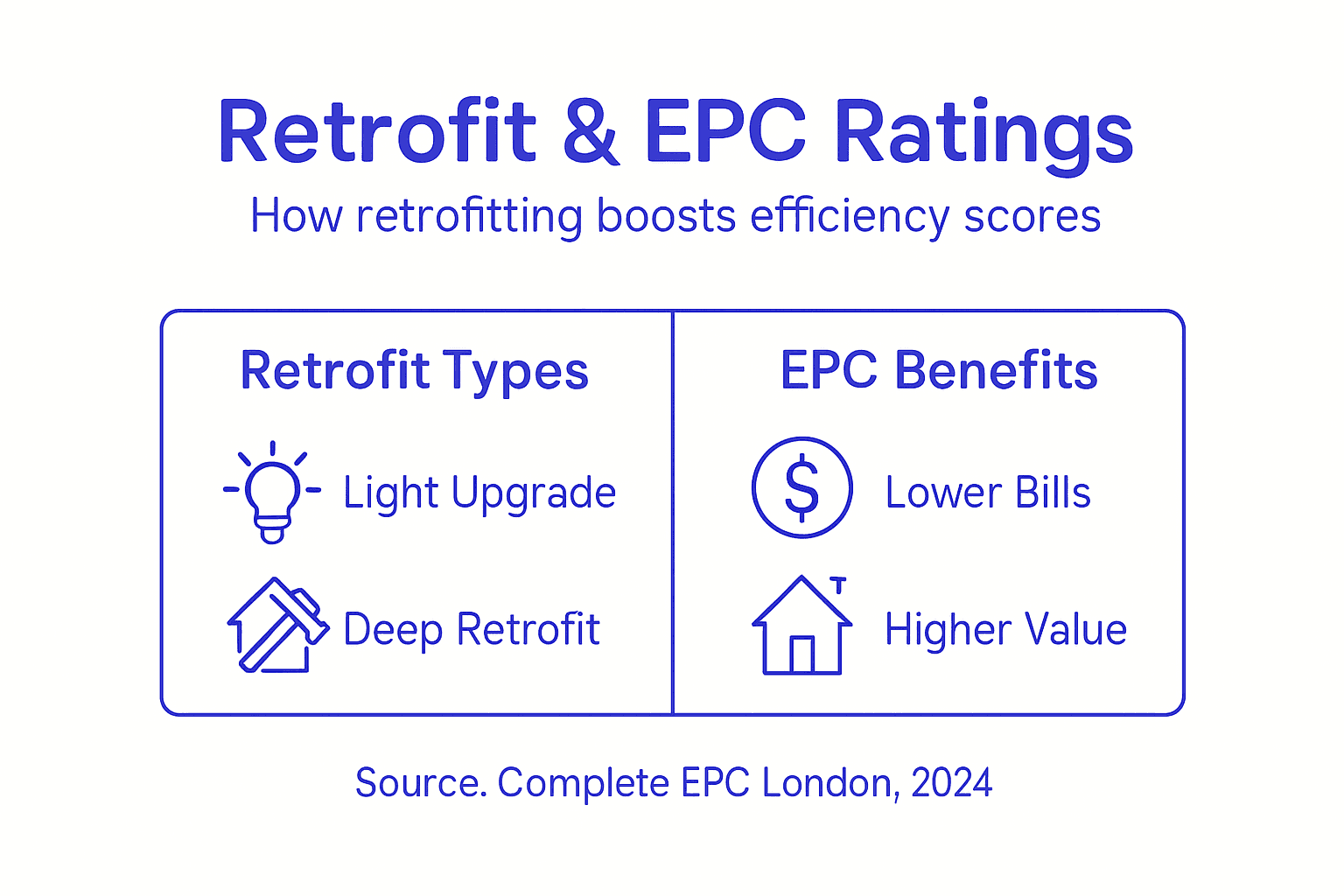
Retrofit measures fall into two distinct categories: light retrofit and deep retrofit. Light retrofit targets single improvements, whilst deep retrofit reimagines your entire building’s energy performance.
The choice depends on your budget, timeline, and how dramatically you want to transform your property’s efficiency. Most London property owners start with targeted measures, then layer additional improvements over time.
Here is a summary of light versus deep retrofit approaches:
| Retrofit Approach | Scope of Work | Typical Outcomes | Cost Implications |
|---|---|---|---|
| Light Retrofit | Single measure upgrades | Improved comfort, modest savings | Lower upfront, phased spending |
| Deep Retrofit | Whole-building transformation | Major efficiency, maximum carbon reduction | High initial cost, greatest savings |
This table highlights how combining measures and investment level affects impact.
Thermal Envelope Improvements
Your building’s thermal envelope is its outer skin—walls, roof, floor, and windows. Poor insulation here means heat escapes constantly, forcing your heating system to work harder.
Common interventions include insulating walls, roofs and floors, upgrading windows and sealing draughts. These measures directly reduce the energy your property needs to stay warm.
Key thermal improvements include:
- Cavity wall insulation: Filling gaps between walls to prevent heat loss
- Loft insulation: Adding thick insulation layers to your roof space
- Draught-proofing: Sealing gaps around doors, windows, and floor edges
- Double or triple glazing: Replacing single-pane windows with efficient alternatives
- Floor insulation: Insulating suspended floors to stop heat escaping downwards
Each of these works independently but performs best when combined. A newly insulated loft paired with single-glazed windows won’t deliver maximum savings.
Heating and Hot Water Systems
Upgrading heating systems to low carbon options is often the single biggest impact measure. Your boiler and heating system consume more energy than almost any other building element.
Modern alternatives include heat pumps, hybrid systems, and condensing boilers. These technologies use significantly less fuel to generate the same warmth.
When you pair heating upgrades with improved insulation, your bills drop substantially. Your renovated thermal envelope means your new heating system doesn’t need to work as hard.
Ventilation and Indoor Air Quality
Better insulation traps stale air inside unless you add proper ventilation. That’s why modern retrofit includes mechanical ventilation with heat recovery.
These systems remove stale indoor air whilst recovering its warmth and transferring that heat to fresh incoming air. You get cleaner air without losing the warmth you’ve paid for.
Renewable Energy Technologies
Solar panels, solar thermal systems, and other renewables generate clean energy on site. When combined with reduced energy demand from insulation and efficient systems, renewables become far more effective.
Deep retrofit addressing the entire building delivers far greater energy savings than isolated single measures, transforming both performance and running costs.
Pro tip: Prioritise thermal envelope improvements first; insulation and draught-proofing offer the fastest payback and reduce the size (and cost) of heating systems you’ll eventually need to install.
How Retrofit Enhances EPC Ratings
Your Energy Performance Certificate rating directly reflects your building’s energy efficiency. Retrofit improvements translate directly into measurable EPC rating increases because you’re addressing the exact factors the certificate assesses.
When you upgrade insulation, heating systems, or ventilation, your property uses less energy to maintain comfort. Lower energy demand means a better EPC rating.
The Direct Connection Between Retrofit and EPC Scores
Retrofit improves EPC ratings by upgrading insulation, heating systems, and airtightness, thereby reducing energy demand. Every measure you implement has a quantifiable impact on your certificate.
EPCs measure how much energy your property needs annually. When you reduce that need through retrofit, your EPC band improves automatically.
This isn’t speculative. It’s calculated and verified by qualified assessors using standardised methodology.
What Improvements Drive Rating Changes
Not all retrofit measures carry equal weight in EPC calculations. Some improvements shift your rating dramatically; others contribute gradually.
Measures with significant EPC impact include:
- Heating system upgrades: Modern boilers and heat pumps dramatically reduce energy consumption
- Insulation improvements: Loft, wall, and floor insulation directly lower heat loss
- Window replacements: Better glazing reduces thermal transmission
- Ventilation upgrades: Mechanical heat recovery systems improve efficiency ratings
- Renewable energy installation: Solar panels generate on-site energy, reducing grid demand
Each upgrade gets assessed and calculated into your overall energy demand prediction.
EPC Ratings and Property Value
Improving EPCs signals better building performance and supports compliance with UK Government net-zero targets. Properties with higher EPC ratings command better valuations and attract more serious buyers.
Landlords face legal minimums—properties must achieve certain EPC bands to remain legally lettable. Retrofit moves you safely above these thresholds.
Buyers and tenants now actively seek efficient properties. A D-rated property struggles to compete with a C-rated equivalent, even at lower prices.
Layering Improvements for Maximum Rating Gain
Strategic retrofit planning maximises your EPC improvement. Start with measures that deliver the biggest rating impact relative to cost.
Your EPC recommendation report identifies exactly which improvements will boost your rating most effectively. Use this guidance to prioritise spending and plan phased work over time.
For quick reference, here are the typical EPC band improvements from common retrofit interventions:
| Retrofit Measure | Likely EPC Band Shift | Added Value |
|---|---|---|
| Loft insulation | 1 band improvement | Fast payback, enhanced warmth |
| Full double glazing | 1-2 bands possible | Reduced heat loss, quieter rooms |
| Heat pump installation | Up to 2 band improvement | Significant carbon reduction |
| Mechanical ventilation | 1 band typical | Healthier indoor air, energy savings |
| Solar PV panels | 1 band possible | Lower bills, clean energy generation |
This table helps prioritise upgrades based on expected EPC impact.
Each retrofit measure adds to your EPC calculation cumulatively; a holistic approach targeting multiple areas delivers far superior rating improvements than isolated single upgrades.
Pro tip: Request an updated EPC assessment after completing major retrofit work to officially document your rating improvement and unlock the full commercial and legal benefits.
Legal, Cost, and Practical Considerations
Retrofit projects aren’t simply about choosing improvements and installing them. Legal requirements, financial planning, and practical logistics all demand careful attention before work begins.
Understanding these considerations upfront prevents costly mistakes, regulatory penalties, and project delays.
Building Regulations Compliance
Retrofitting is governed by the Building Regulations 2010 in England and Wales, which ensure health, safety, and energy efficiency standards are met. Your retrofit measures must comply with regulations covering thermal elements like walls and roofs, plus controlled services such as boilers and ventilation systems.
Not complying with Building Regulations creates serious problems. You face enforcement action, difficulty selling your property, and potential safety issues.
Always hire qualified installers who understand these requirements. They’ll ensure your work meets standards and generate the necessary certification documentation.
Cost Planning and Whole Life Value
Retrofit costs vary dramatically depending on what you’re upgrading. A loft insulation project costs far less than a complete heating system replacement.
However, whole life costs matter more than upfront spending. A cheaper boiler might cost more over 15 years through higher fuel bills and earlier replacement.
Consider these cost factors:
- Initial installation: Labour, materials, and specialist fees
- Disruption costs: Temporary accommodation or business interruption
- Future running costs: Energy bills after upgrade completion
- Maintenance requirements: Service plans and repair budgets
- Longevity: How long until replacement becomes necessary
Invest in quality installations that deliver genuine efficiency gains and long-term durability.
Practical Workforce Challenges
Finding skilled retrofit installers remains challenging in London. Demand exceeds supply, affecting availability and potentially costs.
Book qualified installers well in advance. Verify their credentials, ask for references, and confirm they hold appropriate certifications for the work you need completed.
Get multiple quotes. This reveals market pricing and allows you to compare scope, timelines, and guarantees offered by different contractors.
Project Planning and Phasing
Retrofit doesn’t need to happen all at once. Phased approaches spread costs over time whilst still delivering measurable EPC improvements.
Plan strategically: complete high-impact measures first, then layer additional upgrades as budget allows. This maximises your return on investment whilst maintaining flexibility.
Legal compliance, realistic costing, and skilled installation form the foundation of retrofit projects that deliver promised energy savings without legal or financial complications.
Pro tip: Obtain multiple written quotes with detailed scope definitions before committing; compare not just price but timelines, warranties, and compliance documentation each installer provides.
Upgrade Your London Property with Expert EPC Support
The challenge of boosting your property’s energy efficiency through retrofit measures is clear from the article. Many London buildings need targeted improvements like insulation, heating system upgrades, and enhanced ventilation to raise their EPC ratings and reduce energy costs. Tackling this can feel overwhelming without the right guidance, especially when legal compliance and cost planning are crucial. You deserve a trusted partner who understands these specific needs and can help translate retrofit plans into official certification quickly and affordably.
Complete EPC specialises in delivering comprehensive Energy Performance Certificates across London, empowering you to showcase your building’s true efficiency and comply with all legal standards. With qualified assessors offering detailed evaluation reports and tailored recommendations, you gain clarity on which retrofit improvements will raise your EPC score effectively. Don’t wait until regulations or prospective buyers create pressure – enhance your property value and reduce operating costs now. Visit Complete EPC to book your assessment and access expert advice on retrofit and EPC improvements. Discover how easy it is to transform retrofit efforts into recognised success through our seamless, competitively priced service at Energy Performance Certificates for London Properties. Take the next step towards a greener, more comfortable London home today and secure your place ahead in the property market.
Frequently Asked Questions
What is the purpose of retrofit in buildings?
Retrofit involves upgrading existing buildings with new materials and technologies to enhance energy efficiency, reduce energy consumption, and improve comfort without demolishing the existing structure.
How can retrofitting improve Energy Performance Certificate (EPC) ratings?
Retrofitting enhances EPC ratings by making significant improvements in insulation, heating systems, and ventilation, which collectively reduce energy demand, leading to a better EPC rating.
What are the main types of retrofit measures?
Retrofit measures typically fall into two categories: light retrofit, which focuses on single upgrades for moderate improvements, and deep retrofit, which involves comprehensive changes for substantial energy savings and efficiency.
Why is it important to consider the thermal envelope during retrofitting?
The thermal envelope, including walls, roofs, and windows, is crucial during retrofitting as it directly affects heat retention. Poor insulation can lead to significant energy loss, negating the benefits of other upgrades like heating system improvements.
Recommended
- Why Improve Energy Ratings: Benefits for London Properties
- Achieving a Higher Energy Rating: EPC Insights for London Residents – Complete EPC
- EPC Ratings: How They Shape London Property Value
- EPC Essentials: How London Property Owners Can Improve Their Ratings – Complete EPC
- Barbican Building Restoration – UpKeep UK