

Over 60 percent of British homes fall below optimal energy efficiency standards, impacting both household budgets and the environment. As energy costs rise and sustainability goals become more urgent, understanding what energy efficiency truly means for a property has never been more relevant. This article clarifies the essential measures and benefits of energy-saving solutions for British property owners, helping you make smart choices for comfort, value, and long-term savings.
Table of Contents
- Defining Energy Efficiency In Property Context
- Types Of Energy Efficiency Measures For Buildings
- Epcs And Legal Obligations In The Uk
- Financial Savings And Long-Term Value
- Environmental Impact And Sustainability Goals
Key Takeaways
| Point | Details |
|---|---|
| Energy efficiency is essential for property management | It optimises energy use while ensuring comfort and functionality in buildings. |
| EPCs are crucial legal compliance tools | Properties must have valid Energy Performance Certificates (EPCs) when marketed, with penalties for non-compliance. |
| Investing in energy efficiency enhances property value | Upgrades can lead to significant reductions in utility costs and increase market value by 3-10%. |
| Environmental sustainability through energy efficiency is critical | Reducing energy consumption in properties directly contributes to climate change mitigation efforts. |
Defining Energy Efficiency in Property Context
Energy efficiency represents a critical concept in modern property management, focusing on optimising energy consumption while maintaining comfort and functionality. Energy efficiency measures fundamentally describe using less energy to deliver the same level of heating, lighting, and overall building performance.
At its core, energy efficiency involves strategic approaches to reducing energy consumption without compromising living standards. This encompasses evaluating a property’s Standard Assessment Procedure (SAP) score, which provides a comprehensive rating of a building’s energy performance. The SAP score ranges from 1 to 100, with higher numbers indicating superior energy efficiency. Properties achieving scores closer to 100 demonstrate more effective energy management, lower carbon dioxide emissions, and reduced utility expenses.
Key aspects of energy efficiency include examining the thermal performance of walls, windows, and insulation, assessing heating systems’ effectiveness, and implementing smart technologies that minimise unnecessary energy expenditure. Property energy efficiency metrics help property owners understand their current performance and identify targeted improvement strategies.
Pro Tip: Energy Assessment: Conduct a professional energy performance assessment annually to track your property’s efficiency progress and identify potential cost-saving upgrades.
Types of Energy Efficiency Measures for Buildings
Implementing comprehensive energy efficiency measures is crucial for reducing carbon emissions and minimising utility costs in residential and commercial properties. Improving building thermal performance involves strategic upgrades across multiple building systems and structural elements.
One of the most significant energy efficiency interventions is thermal insulation, which plays a pivotal role in reducing heat loss. Cavity wall insulation represents a prime example, involving filling the space between exterior wall layers with materials like mineral wool or polystyrene beads. These techniques can dramatically reduce heat transmission, leading to lower energy consumption and decreased carbon emissions.

Additional energy efficiency measures include upgrading windows and doors with high-performance glazing, installing advanced heating systems with improved efficiency ratings, and implementing smart home technologies that monitor and optimise energy consumption. Other crucial interventions involve enhancing roof and floor insulation, sealing air leakage points, and integrating renewable energy technologies such as solar panels or heat pumps.
Pro Tip: Energy Efficiency Audit: Schedule a professional energy assessment to identify targeted improvements and prioritise cost-effective upgrades that will deliver the most significant energy savings.
Here is a comparison of common energy efficiency measures for properties and their main impacts:
| Measure | Primary Benefit | Typical Payback Period |
|---|---|---|
| Cavity wall insulation | Reduced heat loss | 2-5 years |
| High-performance glazing | Improved thermal comfort | 5-10 years |
| Smart heating controls | Lower energy bills | 1-3 years |
| Solar panel installation | Renewable energy generation | 8-15 years |
EPCs and Legal Obligations in the UK
Understanding Energy Performance Certificates (EPCs) is crucial for property owners navigating the legal landscape of energy efficiency in the United Kingdom. Energy Performance Certificates are mandatory when properties are constructed, sold, or let, serving as a comprehensive assessment of a building’s energy performance and potential improvements.
The EPC rating system ranges from A (most efficient) to G (least efficient), providing a clear visual representation of a property’s energy credentials. These certificates not only fulfil legal requirements but also offer valuable insights into potential energy-saving measures. UK government targets for energy efficiency are ambitious, with plans to ensure fuel-poor homes reach at least EPC band C by 2030 and as many properties as possible achieving this standard by 2035.
Legal obligations surrounding EPCs are stringent and apply to various property transactions. Landlords must ensure their properties meet minimum energy efficiency standards, with potential penalties for non-compliance. Commercial and residential property owners must obtain a valid EPC before marketing a property for sale or rent, with certificates remaining valid for a decade. The assessment covers critical aspects such as heating systems, insulation, lighting, and potential energy-saving recommendations.
Pro Tip: Certificate Preparation: Always ensure your EPC is up to date and readily available before listing a property, as failure to provide a valid certificate can result in significant legal and financial penalties.
Financial Savings and Long-Term Value
Investing in energy efficiency represents a strategic approach to property management that delivers substantial financial benefits and long-term value. Implementing targeted energy efficiency measures can dramatically reduce heating expenses and enhance overall property performance, creating a compelling financial argument for property owners and investors.
The financial impact of energy efficiency extends beyond immediate utility bill reductions. Upgrading a building’s thermal performance can increase property market value by making buildings more attractive to environmentally conscious buyers and tenants. Improvements such as enhanced insulation, advanced heating systems, and energy-efficient windows can potentially increase property valuation by 3-10%, depending on the scale and quality of upgrades.
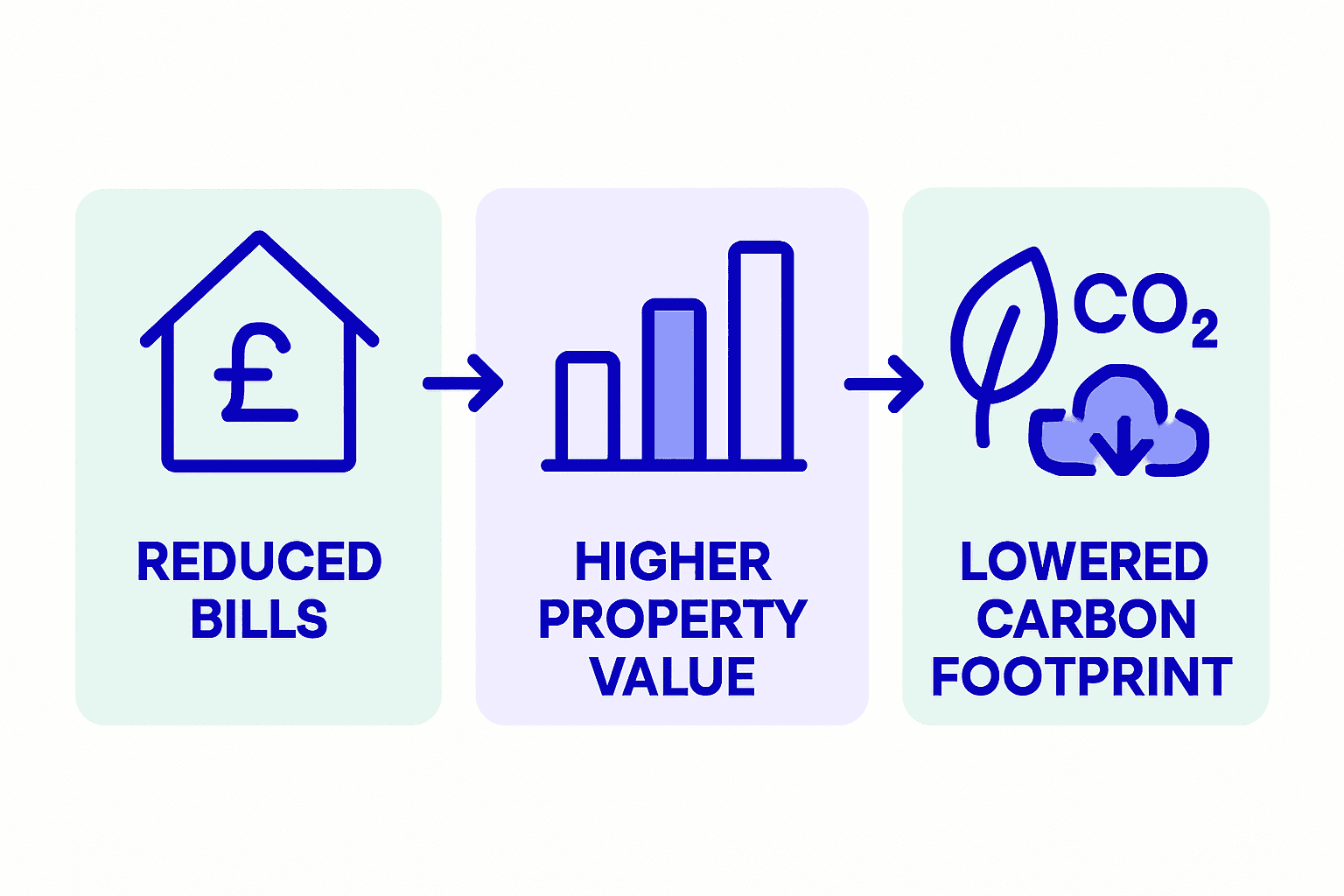
Additional financial advantages include potential government incentives, reduced maintenance costs, and improved building performance. Energy-efficient properties typically experience lower repair and replacement expenses for heating and cooling systems, while also benefiting from potential tax credits, grants, and reduced insurance premiums. These cumulative savings can offset initial investment costs and generate significant long-term financial returns.
Below is a summary of key financial and environmental advantages of energy-efficient properties:
| Advantage | Financial Impact | Environmental Contribution |
|---|---|---|
| Lower utility expenses | Reduced monthly outgoings | Less energy consumption |
| Increased property value | Higher resale and rental potential | Attracts eco-conscious buyers |
| Access to government incentives | Grants and tax credits for upgrades | Supports national climate goals |
| Reduced maintenance costs | Fewer repairs for heating and cooling | Extended system lifespan |
Pro Tip: Investment Strategy: Prioritise energy efficiency upgrades that offer the highest return on investment, focusing on improvements with the quickest payback periods and most substantial long-term financial benefits.
Environmental Impact and Sustainability Goals
Addressing climate change requires a comprehensive approach to reducing carbon emissions, with property energy efficiency playing a crucial role. Enhancing energy efficiency in housing represents a direct and impactful strategy for minimising environmental footprints and supporting broader sustainability objectives.
Improving the energy efficiency of UK homes is instrumental in meeting national and global climate change mitigation targets. By systematically reducing energy consumption across residential and commercial properties, the United Kingdom can significantly decrease greenhouse gas emissions. This approach involves upgrading building infrastructure, implementing advanced energy technologies, and promoting sustainable design principles that prioritise environmental conservation.
The environmental benefits extend beyond immediate carbon reduction. Energy-efficient properties contribute to a circular economy by reducing resource consumption, minimising waste, and creating more resilient urban infrastructure. Advanced insulation techniques, renewable energy integration, and smart building technologies enable properties to operate with minimal environmental impact, transforming the built environment from a significant emissions source to a potential carbon-neutral solution.
Pro Tip: Green Transformation: Conduct a comprehensive energy audit to identify specific opportunities for reducing your property’s environmental footprint, focusing on interventions that deliver both ecological and economic benefits.
Unlock the Full Potential of Your London Property with Expert EPC Services
The article highlights the challenges property owners face in meeting legal energy efficiency standards and the critical role of an accurate Energy Performance Certificate. With rising demands for higher EPC ratings and the need to reduce energy costs while boosting property value, navigating these complex requirements can feel overwhelming. Key concerns such as understanding EPC ratings, ensuring compliance, and identifying effective improvement recommendations are central to your success in London’s competitive property market.
At Complete EPC, we specialise in delivering professional and affordable Energy Performance Certificates tailored for domestic and commercial properties across London. Our qualified assessors provide comprehensive evaluations, detailed reports with actionable improvement advice, and ensure you comply fully with regulations. Take control of your property’s energy future today and experience the benefits of reduced energy bills, increased market appeal, and strong sustainability credentials. Discover how energy performance assessments can simplify your compliance journey and unlock long-term savings.
Don’t let regulatory demands or inefficiencies hold back your property’s potential. Visit Complete EPC now to secure your efficient energy certification and stay ahead in London’s property market.
Frequently Asked Questions
What is energy efficiency in the context of properties?
Energy efficiency in properties refers to optimising energy consumption while maintaining comfort and functionality, focusing on using less energy for heating, lighting, and overall building performance.
How is a property’s energy efficiency measured?
A property’s energy efficiency is typically assessed using the Standard Assessment Procedure (SAP) score, which ranges from 1 to 100. Higher scores indicate better energy management and lower carbon emissions.
What are some common energy efficiency measures for improving properties?
Common energy efficiency measures include thermal insulation upgrades, high-performance glazing, smart heating controls, and the installation of renewable energy technologies like solar panels.
Why is having a valid Energy Performance Certificate (EPC) important?
A valid EPC is crucial as it is a legal requirement for renting or selling a property. It provides an assessment of the property’s energy performance and potential improvements while indicating compliance with energy efficiency regulations.