

Nearly every property in London must have an Energy Performance Certificate, but less than half of homeowners know what their EPC rating actually means. These certificates carry more weight than just ticking off a legal box. They offer clear insights on energy savings and property value, helping owners make smarter decisions. If you want to stay compliant and cut unnecessary costs, understanding energy performance is your first step.
Table of Contents
- Defining Energy Performance And EPCs
- Types Of Energy Performance Assessments
- Legal Requirements For London Properties
- Key Factors Affecting EPC Ratings
- Costs, Benefits, And Compliance Tips
Key Takeaways
| Point | Details |
|---|---|
| EPC Importance | Energy Performance Certificates (EPCs) are mandatory for property transactions in London, offering insights into energy efficiency and environmental impact. |
| Assessment Types | Various assessments, including EPCs and Display Energy Certificates (DECs), provide tailored evaluations for different property types, ensuring meaningful comparisons. |
| Legal Compliance | Property owners must obtain a valid EPC before marketing their properties, with specific responsibilities to comply with energy efficiency standards. |
| Improvement Benefits | Enhancing EPC ratings can significantly reduce energy costs and increase property value, acting as a strategic advantage in the housing market. |
Defining Energy Performance and EPCs
An Energy Performance Certificate (EPC) provides a comprehensive snapshot of a property’s energy efficiency, functioning as a critical document for homeowners, landlords, and potential buyers across London. According to the gov.uk technical notes, these certificates are mandatory when properties are constructed, sold, or let, serving as an essential tool for housing market analysis and environmental assessment.
The EPC rating system offers a straightforward, standardised approach to understanding a building’s energy performance. As Energy Saving Trust explains, properties receive a rating from A to G, with A representing the most energy-efficient and G indicating the least efficient. This rating provides crucial insights into:
- Potential heating and lighting costs
- Carbon dioxide (CO₂) emissions
- Recommended energy-saving improvements
Beyond its immediate practical applications, an EPC serves as a roadmap for property owners seeking to enhance their building’s energy efficiency. The certificate not only highlights current performance but also suggests targeted improvements that could reduce energy consumption, lower utility bills, and minimise environmental impact. For London property owners, understanding and acting on these recommendations can translate into significant long-term savings and contribute to broader sustainability goals.
Navigating the complexities of energy performance can seem daunting, but an Energy Performance Certificate Rating provides a clear, actionable framework for property owners. Whether you’re looking to sell, rent, or simply improve your property’s energy efficiency, an EPC offers valuable insights into your building’s environmental performance and potential areas for enhancement.
Types of Energy Performance Assessments
Energy performance assessments in London encompass multiple types of evaluations designed to provide comprehensive insights into a property’s energy efficiency. Wikipedia describes these certificates as standardized rating schemes that summarize the energy efficiency of buildings, enabling meaningful comparisons across different properties.
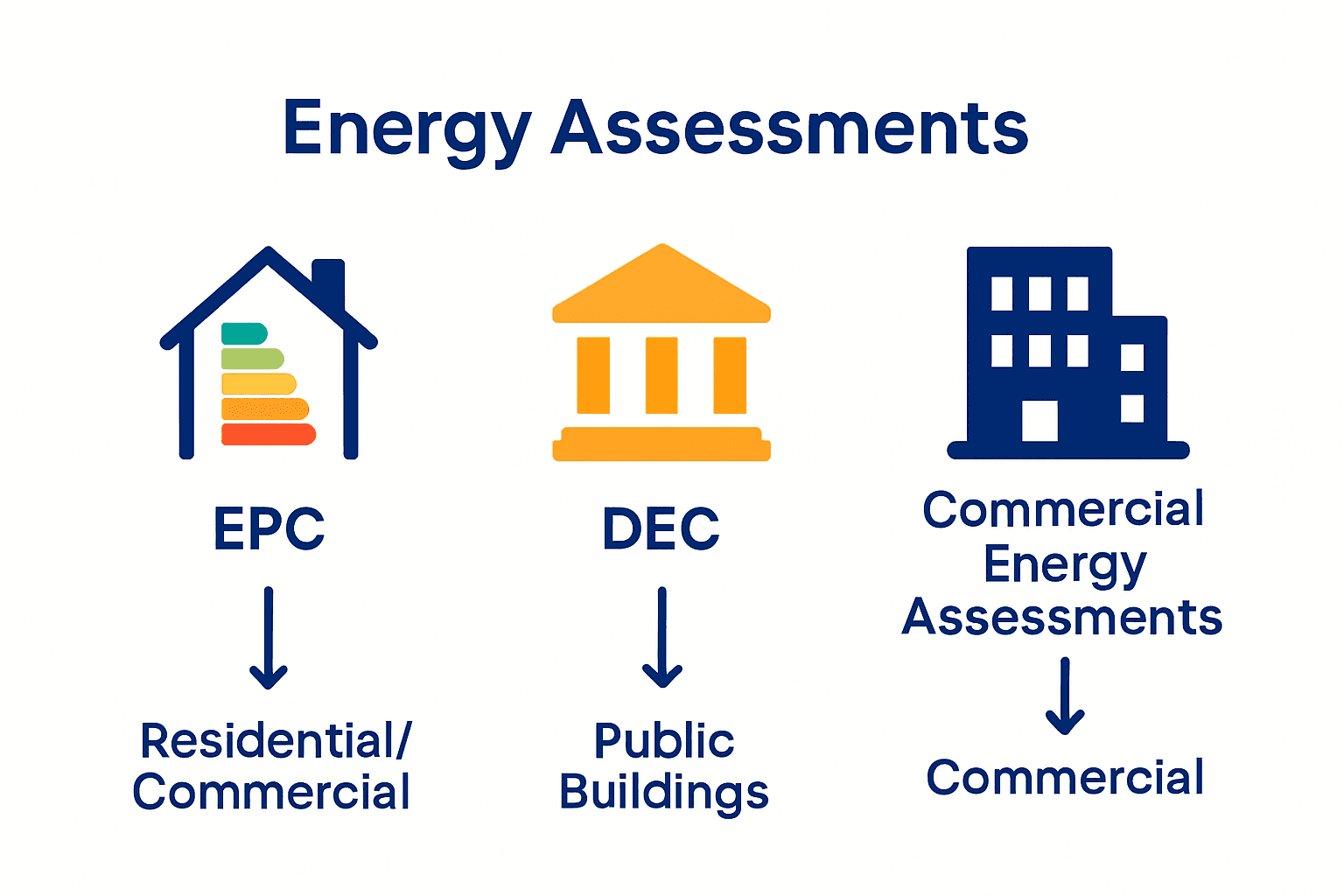
The primary types of energy performance assessments include:
- Energy Performance Certificates (EPCs): Standard assessments for residential and commercial properties
- Display Energy Certificates (DECs): Specifically for public buildings
- Commercial Energy Assessments: Tailored evaluations for business premises
- Residential Property Assessments: Focused on homes and apartments
Display Energy Certificates (DECs) represent a unique assessment type, as Wikipedia explains, introduced to increase transparency about actual energy usage. These certificates use a scale from A to G and are particularly relevant for public buildings, providing real-world insights into energy consumption patterns.
For property owners in London seeking a detailed understanding of their building’s energy performance, a comprehensive EPC assessment process guide can offer step-by-step clarity. Each assessment type serves a specific purpose, helping property owners, managers, and potential buyers make informed decisions about energy efficiency, potential improvements, and environmental impact.
Legal Requirements for London Properties
Navigating the legal landscape of energy performance for London properties requires a clear understanding of mandatory requirements. According to gov.uk, Energy Performance Certificates (EPCs) are compulsory for all properties when they are constructed, sold, or let, serving critical purposes for housing market analysis and environmental assessment.
Key legal obligations for property owners in London include:
- Obtaining a valid EPC before marketing a property for sale or rent
- Ensuring the EPC is less than 10 years old
- Displaying the EPC rating prominently when selling or renting
- Maintaining a minimum energy efficiency standard for rental properties
The regulatory landscape is continuously evolving, with gov.uk indicating potential reforms to the Energy Performance of Buildings regime. These proposed changes may introduce new metrics for assessing energy performance, with significant modifications anticipated in the second half of 2026.
For London property owners seeking to stay compliant, 7 essential EPC compliance tips can provide crucial guidance. Understanding and proactively addressing these legal requirements not only ensures regulatory compliance but also contributes to broader environmental sustainability efforts and can potentially increase property value through improved energy efficiency.
Key Factors Affecting EPC Ratings
Understanding the key factors that influence Energy Performance Certificates (EPCs) is crucial for London property owners seeking to improve their building’s energy efficiency. As Energy Saving Trust explains, EPCs rate properties on a scale from A (very efficient) to G (inefficient), taking into account multiple critical aspects of a building’s energy performance.
The primary factors affecting EPC ratings include:
- Insulation Quality: Wall, roof, and floor insulation effectiveness
- Heating Systems: Age, efficiency, and type of heating equipment
- Windows and Doors: Glazing type, sealing, and heat retention capabilities
- Lighting: Energy efficiency of installed lighting fixtures
- Renewable Energy Installations: Solar panels, heat pumps, or other green energy solutions
Gov.uk highlights that these certificates provide comprehensive data used by housing market analysts and environmental modellers, underscoring their importance beyond simple energy efficiency ratings.
For property owners looking to improve their EPC ratings, top tips for achieving a better rating can provide targeted strategies. Implementing energy-efficient improvements not only enhances your property’s rating but can also significantly reduce energy costs, increase property value, and contribute to broader environmental sustainability efforts.

Costs, Benefits, and Compliance Tips
The landscape of energy performance involves critical financial and regulatory considerations for London property owners. Energy Saving Trust highlights that EPCs not only rate property efficiency but also provide crucial insights into potential heating and lighting costs, CO₂ emissions, and improvement recommendations.
Key financial and compliance aspects include:
- Initial Certification Costs: Typically ranging from £60 to £120 per assessment
- Potential Energy Savings: Improvements can reduce utility bills by 20-30%
- Property Value Impact: Higher EPC ratings can increase market value
- Legal Compliance: Mandatory for selling or renting properties
- Penalty Avoidance: Non-compliance can result in significant fines
Gov.uk emphasizes that these certificates provide comprehensive data crucial for housing market analysis and environmental assessment. Understanding these nuances can transform an EPC from a mere legal requirement to a strategic tool for property management.
For property owners navigating these complex requirements, understanding Part L compliance offers a critical pathway to meeting regulatory standards while optimizing energy efficiency. Proactive investment in energy performance not only ensures legal compliance but can lead to substantial long-term financial and environmental benefits.
Take Control of Your London Property’s Energy Performance Today
Navigating the complex legal requirements and factors influencing your property’s EPC rating can feel overwhelming. From understanding insulation quality and heating systems to ensuring full compliance with government regulations, it is vital to have expert support that makes the process smooth and reliable. Many London property owners face challenges such as avoiding penalties, reducing energy costs, and increasing property value while meeting evolving standards.
At Complete EPC, we specialise in providing detailed and accurate Energy Performance Certificates tailored for domestic and commercial properties across London. Our experienced assessors not only help you achieve compliance but also deliver clear recommendations to enhance your building’s efficiency and reduce long-term expenses. Don’t let uncertainty slow you down. Explore our EPC assessment process guide and discover 7 essential EPC compliance tips to stay ahead of regulatory changes and maximise your property’s potential.
Take confident action now and secure a competitive advantage in the London property market. Visit Complete EPC to start your seamless certification journey today.
Frequently Asked Questions
What is an Energy Performance Certificate (EPC)?
An Energy Performance Certificate (EPC) provides a detailed assessment of a property’s energy efficiency, rating it from A (most efficient) to G (least efficient), and offering insights into potential energy-saving improvements.
Why are EPCs important for homeowners and landlords?
EPCs are crucial for homeowners and landlords as they are legally required when constructing, selling, or letting a property. They also help identify ways to improve energy efficiency, which can lead to lower utility costs and increased property value.
What factors affect the EPC rating of a property?
Key factors affecting the EPC rating include insulation quality, heating systems, windows and doors, lighting efficiency, and the presence of renewable energy installations.
What are the penalties for not complying with EPC regulations?
Non-compliance with EPC regulations can result in significant fines for property owners, making it essential to obtain and display a valid EPC before marketing a property for sale or rent.
Recommended
- 7 Simple Steps to Get an EPC for Your London Property – Complete EPC
- 7 Essential EPC Compliance Tips for London Property Owners – Complete EPC
- Complete EPC Blog: Insights on Energy Performance Certificates
- EPC for Domestic Property: Complete London Guide – Complete EPC
- Why Electric Bikes Matter: Complete Guide for 2025 | Liverpool Cycle Tours