

Most property investors in London will face strict energy regulations sooner than expected. By 2027, commercial properties must hit a minimum C rating or risk legal and financial penalties. Understanding Energy Performance Certificates is no longer optional. EPCs reveal exactly how energy efficient a building is and offer a clear path toward property improvements and higher returns. Getting ahead of these rules today helps investors protect their assets and build long-term value in a competitive market.
Table of Contents
- Understanding EPCs For Property Investors
- EPC Types: Domestic Vs Commercial Properties
- Legal Requirements And UK Regulations
- EPC Process: Assessment To Certification
- Compliance Risks And Financial Penalties
- Maximising Value Through EPC Improvements
Key Takeaways
| Point | Details |
|---|---|
| Understanding EPCs | Energy Performance Certificates (EPCs) are essential for property investors as they provide insights into energy efficiency and improvement recommendations, impacting investment decisions and property valuations. |
| Legal Compliance | Property investors must comply with evolving EPC regulations, including minimum energy efficiency standards that significantly affect marketability and potential financial penalties for non-compliance. |
| EPC Process | The EPC assessment involves a thorough on-site inspection, resulting in a detailed report that includes energy ratings and actionable recommendations for enhancing property efficiency. |
| Strategic Improvements | Upgrading energy performance through insulation, heating technologies, and renewable energy solutions can increase property value and tenant appeal while reducing operational costs. |
Understanding EPCs for Property Investors
Property investors navigating the London real estate landscape must comprehend Energy Performance Certificates (EPCs) as critical documents that evaluate a building’s energy efficiency. According to Wikipedia), these mandatory certificates provide crucial insights into a property’s energy performance and potential improvement recommendations.
EPCs serve multiple strategic purposes for property investors. They offer a comprehensive assessment that includes:
- Energy efficiency ratings from A (most efficient) to G (least efficient)
- Estimated energy costs for heating, lighting, and hot water
- Specific recommendations for reducing energy consumption
- Potential cost savings through proposed improvements
For property investors, understanding EPCs goes beyond compliance. These certificates can significantly impact investment decisions, property valuations, and long-term financial strategies. Complete Guide to EPC and Legal Compliance UK highlights that properties with higher energy efficiency ratings often command premium prices and attract more environmentally conscious tenants.
Navigating the EPC landscape requires strategic thinking. Savvy investors view these certificates not as bureaucratic requirements, but as valuable tools for assessing a property’s potential. By carefully analyzing EPC recommendations, you can identify cost-effective upgrades that enhance property value, reduce operational expenses, and improve overall investment returns.
EPC Types: Domestic vs Commercial Properties
Property investors in London must understand the critical distinction between domestic and commercial Energy Performance Certificates (EPCs). According to Wikipedia), these certificates are specifically categorized to address the unique energy assessment requirements of different property types.
Domestic EPCs
Domestic EPCs focus on residential properties, including:
- Single-family homes
- Apartments
- Residential flats
- Shared living spaces
These assessments evaluate residential energy efficiency by examining factors such as:
- Insulation quality
- Heating systems
- Window and door performance
- Overall thermal characteristics
Commercial EPCs
Commercial EPCs target non-residential buildings, covering:
- Office spaces
- Retail establishments
- Warehouses
- Industrial facilities
- Public buildings
The EPC for Commercial Property Guide highlights that commercial EPCs require more complex assessments, considering additional factors like:
- Large-scale HVAC systems
- Lighting efficiency
- Industrial equipment energy consumption
- Workplace environmental controls
Understanding these differences is crucial for property investors. While both domestic and commercial EPCs aim to improve energy efficiency, their methodologies, assessment criteria, and recommendations vary significantly. Investors must recognize these nuances to make informed decisions about property improvements, potential upgrades, and long-term energy management strategies.

Legal Requirements and UK Regulations
Property investors must navigate a complex landscape of Energy Performance Certificate (EPC) regulations in the United Kingdom. According to RSM UK, significant legal requirements are reshaping the property investment market with increasingly stringent energy efficiency standards.
Key Commercial Property Regulations
Commercial property investors face critical legal obligations:
- As of April 2023, it is unlawful to let commercial properties with an EPC rating below E
- Future regulations will progressively raise minimum energy efficiency standards
- By 2027, properties must achieve a minimum C rating
- By 2030, properties will need to reach a B rating
These evolving standards represent more than bureaucratic requirements. 7 Essential EPC Compliance Tips for London Property Owners emphasizes that investors who proactively upgrade their properties can avoid potential financial penalties and increase asset value.
Residential Property Considerations
Residential property owners are not exempt from these regulatory changes. While current standards differ slightly from commercial regulations, the trend is clear: improved energy efficiency is becoming a legal imperative. Property investors must anticipate and adapt to these changing requirements, viewing energy performance upgrades not as expenses, but as strategic investments in long-term property value and marketability.
Staying ahead of these regulations requires continuous monitoring, strategic planning, and a commitment to sustainable property management. Investors who understand and implement these evolving standards will be best positioned to maximize their property portfolios’ potential in an increasingly environmentally conscious market.
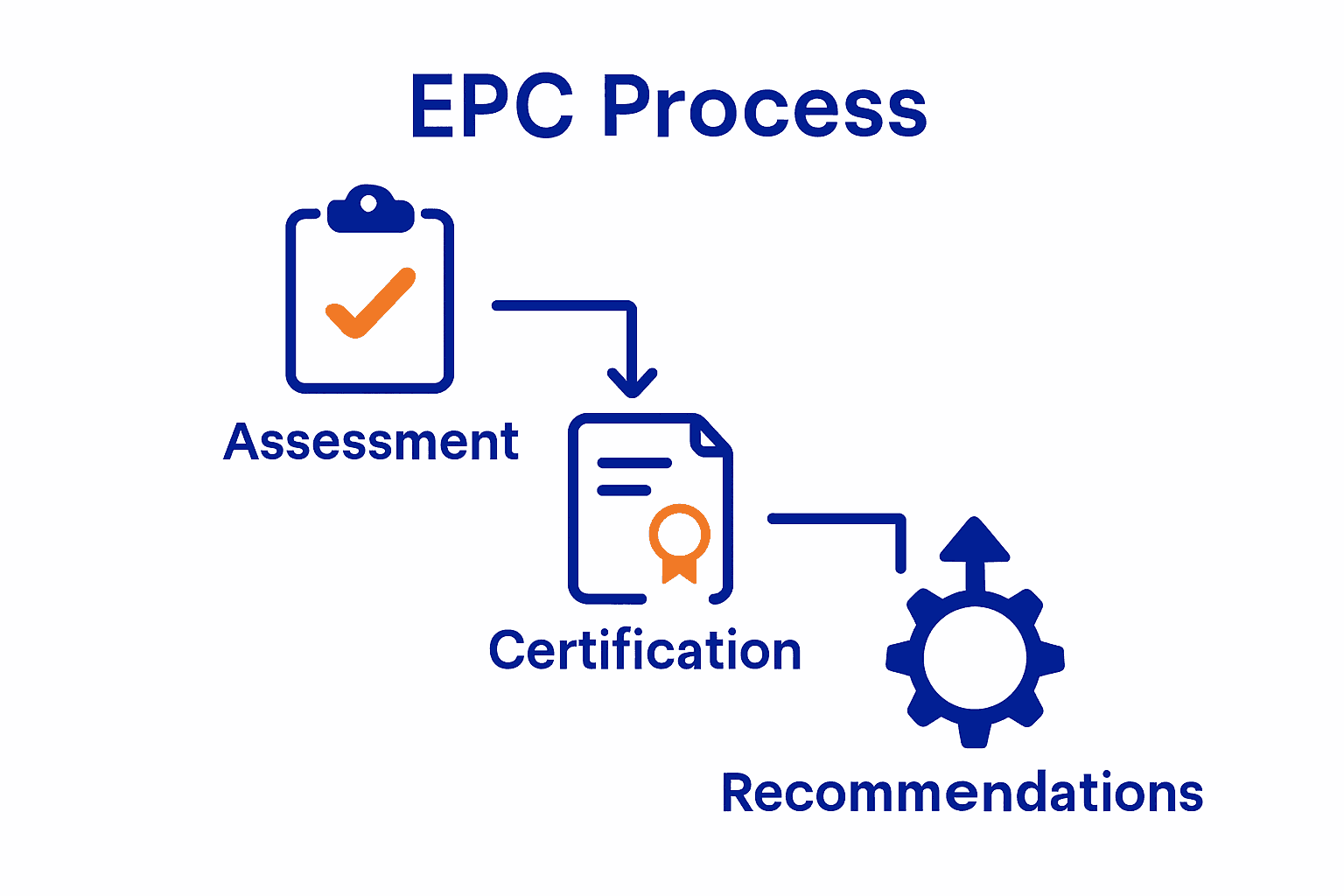
EPC Process: Assessment to Certification
Property investors must understand the comprehensive journey of obtaining an Energy Performance Certificate (EPC). According to Wikipedia), the process involves a detailed on-site inspection by a qualified assessor who meticulously analyzes building materials and energy usage patterns.
The Assessment Stage
The EPC assessment is a structured process that involves:
- Comprehensive property inspection
- Detailed measurements of key architectural features
- Evaluation of existing heating and insulation systems
- Analysis of energy consumption patterns
- Identification of potential energy efficiency improvements
EPC Assessment Process Guide highlights that professional assessors typically spend 60-90 minutes examining a standard residential or commercial property, capturing critical data that determines the final energy efficiency rating.
Certification and Recommendations
Following the assessment, property owners receive a comprehensive report that includes:
- Energy efficiency rating from A (highest) to G (lowest)
- Estimated annual energy costs
- Specific recommendations for improving energy performance
- Potential cost savings from proposed upgrades
- Validity period of the certificate (typically 10 years)
Investors should view the EPC not as a bureaucratic requirement, but as a strategic tool for understanding and enhancing property value. The recommendations provide a roadmap for targeted improvements that can significantly increase a property’s marketability, reduce operational costs, and contribute to broader sustainability goals.
Compliance Risks and Financial Penalties
Property investors must be acutely aware of the significant financial consequences associated with EPC non-compliance. According to RSM UK, penalties can range dramatically from £500 to £5,000, depending on the property’s rateable value.
Commercial Property Penalties
For commercial property owners, non-compliance risks include:
- Immediate financial fines
- Potential restrictions on property lettings
- Potential enforcement actions
- Mandatory energy efficiency upgrades
- Potential legal complications
Residential Rental Property Implications
Money Week warns that landlords face escalating regulatory pressures. By 2030, all privately rented homes must achieve a minimum EPC rating of C, with significant financial penalties for non-compliance.
Strategic Compliance Approach
Proactive investors should view EPC compliance not as a burden, but as an opportunity. The potential penalties underscore the importance of:
- Regular property energy assessments
- Continuous improvement of energy efficiency
- Strategic planning for future regulatory changes
- Investing in sustainable property upgrades
By anticipating and addressing potential compliance issues early, property investors can mitigate financial risks, enhance property value, and position themselves favorably in an increasingly environmentally regulated market.
Maximising Value Through EPC Improvements
Property investors can unlock significant financial potential by strategically improving their Energy Performance Certificates (EPCs). According to Money Week, targeted upgrades can dramatically enhance a property’s market value and attractiveness to potential tenants.
Key Investment Improvements
Strategic EPC enhancement focuses on several critical areas:
- Upgrading insulation systems
- Installing efficient heating technologies
- Implementing double glazing
- Modernizing electrical systems
- Integrating renewable energy solutions
5 Ways an EPC Check Can Enhance Your Property Value suggests that these improvements can lead to multiple tangible benefits, including reduced operational costs and increased property marketability.
Financial and Market Advantages
According to RSM UK, investing in energy efficiency goes beyond regulatory compliance. The potential returns include:
- Lower operating expenses
- Improved tenant satisfaction
- Enhanced market competitiveness
- Potential increases in rental yields
- Reduced vacancy periods
Smart investors view EPC improvements not as expenses, but as strategic investments. By proactively upgrading property energy performance, you can create more attractive, sustainable assets that command premium prices in an increasingly environmentally conscious real estate market.
Take Control of Your Property Investments with Expert EPC Support
Navigating the complex world of Energy Performance Certificates can feel overwhelming for property investors aiming to meet rising legal requirements and boost their asset value. The article highlights key challenges such as understanding the distinction between domestic and commercial EPCs, avoiding costly penalties, and seizing opportunities to improve energy efficiency ratings. If you want to avoid the stress of compliance risks and costly fines, while unlocking the full market potential of your London properties, expert guidance is essential.
At Complete EPC, we specialise in delivering fast, accurate, and affordable EPC assessments tailored for both domestic and commercial properties across London. Our qualified assessors provide detailed reports with clear improvement recommendations, helping you enhance your property’s energy performance and secure higher rental yields. Discover how our dedicated services align perfectly with the insights from EPC for Property Investors: Complete London Guide. Don’t wait until penalties become a threat. Visit us today at Complete EPC to get your EPC organised promptly and benefit from professional advice on maximising your investment’s value.
Frequently Asked Questions
What is an Energy Performance Certificate (EPC) and why is it important for property investors?
An Energy Performance Certificate (EPC) is a mandatory document that assesses a property’s energy efficiency and provides ratings from A (most efficient) to G (least efficient). For property investors, EPCs are important as they can influence property valuations, rental attractiveness, and compliance with legal requirements.
What are the main differences between domestic and commercial EPCs?
Domestic EPCs are focused on residential properties such as homes and apartments, assessing factors like insulation and heating systems. Commercial EPCs address non-residential buildings, considering larger-scale systems and energy use in workplaces. The methodologies and recommendations for each type differ significantly, affecting how property investors approach energy efficiency.
What are the legal regulations regarding EPC ratings for commercial properties?
As of April 2023, it is unlawful to let commercial properties with an EPC rating below E. Future regulations will require properties to achieve a C rating by 2027 and a B rating by 2030, making compliance critical for property investors.
How can improvements in EPC ratings enhance property value?
Improving EPC ratings through upgrades like insulation, efficient heating, and renewable energy solutions can lower operational costs and increase marketability. Enhanced energy performance can lead to higher rental yields, reduced vacancy periods, and increased property value, making it a strategic investment for property investors.
Recommended
- 7 Essential EPC Compliance Tips for London Property Owners – Complete EPC
- 7 Simple Steps to Get an EPC for Your London Property – Complete EPC
- Energy Performance Overview: Complete Guide for London – Complete EPC
- What Is an EPC? Complete Guide for London 2025 – Complete EPC
- BabyLoveGrowth | #1 Automated Organic Growth Platform for Google and ChatGPT