

Over 90 percent of British home buyers say energy efficiency directly influences their decisions. Energy performance ratings are not just technical details for the British property market. They shape legal requirements, impact property values, and determine ongoing costs for homeowners and landlords. Understanding the key differences between EPC and SAP assessments empowers anyone involved in British real estate to make smarter, compliant decisions and avoid costly surprises.
Table of Contents
- Defining EPC And SAP Assessments In The UK
- Core Differences Between EPC And SAP Methods
- Legal Requirements For EPC And SAP Assessments
- Assessment Process And What To Expect
- Costs, Compliance, And Common Pitfalls
Key Takeaways
| Point | Details |
|---|---|
| EPC Overview | Energy Performance Certificates are mandatory for property transactions in the UK, providing a simple rating of energy efficiency from A to G. |
| SAP Purpose | The Standard Assessment Procedure offers a detailed evaluation of energy performance, essential for compliance with building regulations. |
| Legal Compliance | Both EPC and SAP assessments are governed by legal frameworks, with fines for non-compliance ranging from £500 to £5,000. |
| Assessment Process | Property assessments typically take 1-2 hours, requiring preparation of relevant documentation to streamline the process. |
Defining EPC and SAP Assessments in the UK
Understanding Energy Performance Certificates (EPCs) and Standard Assessment Procedure (SAP) assessments is crucial for property owners and landlords across the United Kingdom. These evaluations play a significant role in determining the energy efficiency and environmental impact of residential properties.
An Energy Performance Certificate is a comprehensive document that provides a detailed rating of a property’s energy efficiency, ranging from A (most efficient) to G (least efficient). Issued by qualified assessors, these certificates offer crucial insights into a building’s energy consumption, carbon dioxide emissions, and potential areas for improvement. The UK government mandates EPCs for properties being sold, rented, or constructed, making them an essential component of property transactions.
The Standard Assessment Procedure (SAP) serves as the official methodology for evaluating residential energy performance in the United Kingdom. Developed by the Building Research Establishment, SAP calculations provide a standardised approach to measuring energy efficiency. These assessments consider multiple factors, including:
- Heating systems
- Insulation quality
- Windows and doors
- Renewable energy installations
- Overall building construction
While EPCs and SAP assessments might seem similar, they serve distinct purposes in the UK’s energy efficiency framework. An EPC provides a visual snapshot of a property’s energy performance, whereas SAP calculations offer a more detailed, technical analysis that underpins building regulations and energy efficiency standards.
Core Differences Between EPC and SAP Methods
While both Energy Performance Certificates (EPCs) and Standard Assessment Procedure (SAP) assessments focus on energy efficiency, they serve distinctly different purposes within the United Kingdom’s property and construction landscape. Understanding these nuanced differences is crucial for property owners, developers, and professionals navigating energy performance regulations.
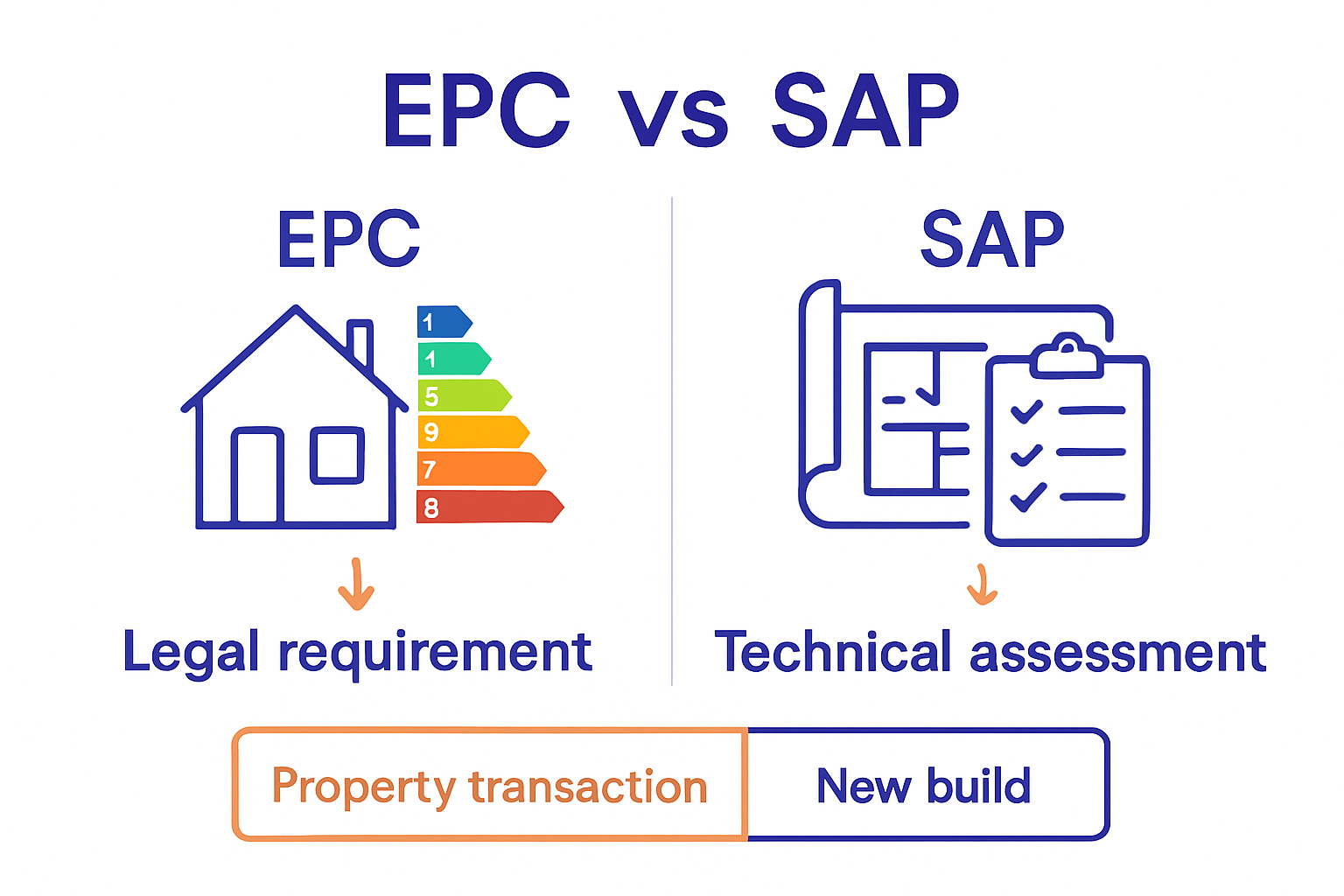
EPC assessments primarily provide a comprehensive visual summary of a property’s energy performance, generating a rating from A to G that indicates the building’s overall efficiency. SAP calculations, by contrast, offer a more technical and granular analysis of energy consumption. These detailed calculations measure specific factors such as annual energy costs, carbon dioxide emissions, and potential energy savings, making them an essential tool for building regulations and new construction planning.
The key distinctions between EPCs and SAP methods can be summarised as follows:
-
Purpose:
- EPC: Provides a standardised energy efficiency rating for property transactions
- SAP: Enables detailed technical evaluation for building compliance and design
-
Scope:
- EPC: Snapshot of current energy performance
- SAP: Comprehensive analysis of potential energy performance
-
Regulatory Role:
- EPC: Mandatory for property sales and rentals
- SAP: Critical for demonstrating compliance with Building Regulations
Beyond these fundamental differences, SAP assessments play a pivotal role in the UK’s ongoing efforts to reduce carbon emissions and improve residential energy efficiency. By providing a standardised methodology for measuring energy performance, these calculations help architects, builders, and homeowners make informed decisions about property design, renovation, and sustainable improvements.
Legal Requirements for EPC and SAP Assessments
The United Kingdom has established comprehensive legal frameworks governing Energy Performance Certificates (EPCs) and Standard Assessment Procedure (SAP) assessments to promote energy efficiency and reduce carbon emissions across residential and commercial properties. These regulations are not merely bureaucratic exercises but critical mechanisms for driving sustainable building practices and environmental responsibility.
Legal requirements for EPCs mandate that property owners obtain a valid certificate when constructing, selling, or renting a property. These certificates must be produced by accredited energy assessors who meticulously examine key elements such as insulation, heating systems, and glazing to determine a property’s energy efficiency rating. The assessment process ensures potential buyers or tenants receive transparent information about a building’s environmental performance and potential running costs.
SAP assessments play an equally crucial role in the UK’s regulatory landscape, particularly in new construction. These assessments are legally required to demonstrate compliance with Part L of the Building Regulations, which focuses on conservation of fuel and power. The key legal requirements for SAP assessments include:
- Mandatory evaluation for all new residential constructions
- Comprehensive analysis of energy performance
- Verification of compliance with current building standards
- Generation of Energy Performance Certificates
- Detailed reporting of potential carbon dioxide emissions
Property owners, developers, and landlords must understand that non-compliance with these legal requirements can result in significant financial penalties. Failure to provide a valid EPC when required can lead to fines ranging from £500 to £5,000, depending on the property type and duration of non-compliance. By adhering to these standardised assessment methodologies, stakeholders contribute not only to legal compliance but also to the broader national goal of reducing carbon emissions and promoting energy-efficient buildings.
Assessment Process and What to Expect
Navigating the Energy Performance Certificate (EPC) and Standard Assessment Procedure (SAP) assessment processes can feel daunting for property owners and developers. Understanding the step-by-step journey helps demystify these crucial energy efficiency evaluations and prepares stakeholders for a smooth, comprehensive assessment.
Energy assessments are conducted by qualified professionals who follow a meticulous methodology to evaluate a property’s energy performance. The assessment typically involves a comprehensive on-site inspection where the assessor carefully examines multiple aspects of the building, including:
- Insulation quality and type
- Heating and cooling systems
- Window and door specifications
- Hot water systems
- Lighting installations
- Renewable energy technologies
During the inspection, the assessor will collect detailed measurements, photograph key elements, and document specific characteristics that influence energy efficiency. These observations are then inputted into specialised software that calculates the property’s overall energy performance rating. The SAP calculation process goes even further, providing a comprehensive technical analysis that considers potential energy consumption, carbon dioxide emissions, and the building’s environmental impact.

Property owners should anticipate the assessment taking approximately 1-2 hours, depending on the property’s size and complexity. Preparing for the assessment by gathering relevant documentation such as previous energy bills, construction plans, and details of recent energy-efficiency improvements can significantly streamline the process. After the assessment, you will receive a detailed report providing your property’s energy efficiency rating, alongside practical recommendations for potential improvements that could enhance performance and reduce energy costs.
Costs, Compliance, and Common Pitfalls
Navigating the landscape of Energy Performance Certificates (EPCs) and Standard Assessment Procedure (SAP) assessments involves understanding the financial implications, regulatory requirements, and potential challenges that property owners may encounter. Proactive awareness can help mitigate risks and ensure smooth compliance with UK energy efficiency standards.
Legal requirements for EPC certification come with specific cost considerations that vary depending on property type and size. Typical assessment costs range from £60 to £120 for residential properties, with commercial assessments potentially costing significantly more. Property owners should budget not just for the initial assessment, but also for potential recommended improvements highlighted in the energy performance report.
Common pitfalls in the EPC and SAP assessment process include:
- Incomplete documentation
- Outdated property information
- Failing to implement recommended energy efficiency upgrades
- Overlooking recent improvements that could boost energy rating
- Neglecting to renew certificates before expiration
The energy efficiency rating is a critical component of the assessment, providing a comprehensive overview of a property’s energy performance. This rating considers multiple factors, including:
- Estimated fuel bills
- Carbon dioxide emissions
- Heating and insulation effectiveness
- Potential cost savings from improvements
Non-compliance can result in substantial financial penalties, with fines ranging from £500 to £5,000 depending on the property type and duration of non-compliance. Landlords and property sellers must be particularly vigilant, as failure to provide a valid EPC can prevent property transactions and result in legal complications. Proactively managing your property’s energy performance not only ensures regulatory compliance but can also significantly enhance property value and reduce long-term energy costs.
Simplify Your EPC and SAP Assessment Journey with Complete EPC
Understanding the differences between EPC and SAP assessments is crucial for property owners and developers aiming to meet UK legal requirements while enhancing energy efficiency. Whether you need an accurate Energy Performance Certificate for a property sale or a detailed SAP calculation to ensure building regulation compliance, the process can feel complex and overwhelming. Key challenges include navigating mandatory evaluations, avoiding costly penalties, and identifying actionable steps to improve your property’s energy rating.
At Complete EPC, we specialise in delivering fast, reliable, and competitively priced energy performance services across London. Our team of qualified assessors offers expert guidance from initial evaluation to comprehensive reports with tailored improvement recommendations. Don’t let compliance issues or unclear assessments stall your property transaction or renovation plans. Take control now by visiting our Energy Performance Certificate service page to secure your assessment and gain peace of mind. Act today and ensure your property meets all legal requirements while boosting its value and sustainability.
Frequently Asked Questions
What is the difference between EPC and SAP assessments?
EPCs provide a standardised energy efficiency rating for properties, while SAP assessments offer a detailed technical analysis of energy performance, focusing on compliance with building regulations.
Why do I need an Energy Performance Certificate (EPC)?
An EPC is mandatory for property transactions, including sales and rentals, and provides potential buyers or tenants with crucial information about a property’s energy efficiency and running costs.
What factors are considered in a Standard Assessment Procedure (SAP) assessment?
SAP assessments evaluate various factors such as heating systems, insulation quality, windows, doors, renewable energy systems, and overall building construction to derive a technical analysis of energy performance.
How much does it cost to obtain an EPC or SAP assessment?
The cost of an EPC assessment typically ranges from £60 to £120 for residential properties. SAP assessments may vary in cost based on property size and complexity, often requiring additional budget for recommended improvements.
Recommended
- An Energy Performance Certificate Rating (EPC Rating)
- Complete Guide to EPC Rating Scales UK – Complete EPC
- A Guide to Online SAP Calculations for London Homeowners – Complete EPC
- The Basics of SAP Calculations for London Properties – Complete EPC
- Corporate Tax Planning Explained: UK Business Essentials
- What Is Structural Assessment? Complete Overview – FloridaLicensedEngineers.com