
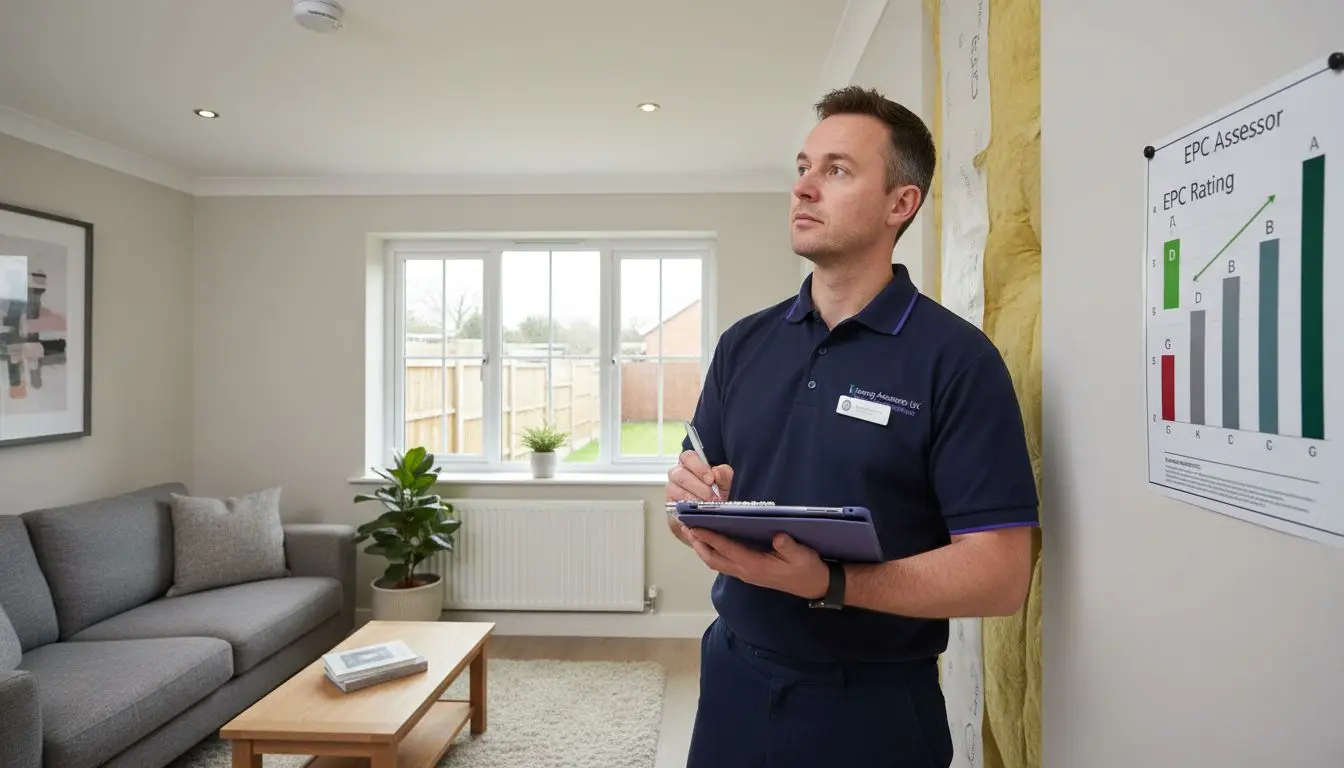
More than 85 percent of homes in the UK receive an energy efficiency grade somewhere between C and E, leaving only a small fraction rated as highly efficient. Choosing a property with a strong EPC rating can make a real difference to your comfort, running costs, and environmental impact. Understanding what the EPC scale means helps buyers and owners gauge how efficient— or costly— a home may be long before moving in.
Table of Contents
- EPC Rating Scales Defined And Explained
- How EPC Ratings Are Calculated
- UK Legal Requirements For EPC Ratings
- Impact Of EPC Ratings On Property Value
- Improving Your EPC Rating Effectively
Key Takeaways
| Point | Details |
|---|---|
| EPC Rating Scale | EPCs range from A (most efficient) to G (least efficient), providing a clear measure of energy performance for properties. |
| Legal Requirements | EPCs are mandatory for property transactions and must meet the Minimum Energy Efficiency Standards (EPC rating of E) for rental properties. |
| Impact on Property Value | Higher EPC ratings (C or above) correlate with lower energy costs and increased property value, making energy efficiency a key factor for buyers and investors. |
| Improvement Strategies | Property owners can enhance EPC ratings through energy-efficient upgrades such as insulation, modern heating systems, and renewable energy solutions. |
EPC Rating Scales Defined and Explained
Energy Performance Certificates (EPCs) offer a standardized method for assessing and comparing the energy efficiency of buildings across the United Kingdom. Energy efficiency ratings range from A to G, with A representing the most energy-efficient properties and G representing the least efficient. According to finance-ni, this scale provides a clear, color-coded visual representation that allows property owners and potential buyers to quickly understand a building’s energy performance.
The rating system works like a comprehensive energy report card for properties. Each certificate displays a colorful chart similar to those found on household appliances, with grades ranging from deep green (A) to bright red (G). Properties achieving an A rating typically have exceptional thermal performance, minimal heat loss, and significantly lower carbon emissions. These top-tier properties often incorporate advanced insulation, energy-efficient heating systems, and potentially renewable energy technologies.
On the opposite end of the spectrum, properties rated G are considered the most energy-inefficient. nidirect highlights that these properties typically have higher fuel bills and greater environmental impact. Buildings in this category might feature poor insulation, outdated heating systems, and significant heat loss through windows, walls, and roofs. The substantial difference between A and G ratings can translate to hundreds of pounds in annual energy costs, making the EPC an essential tool for understanding potential long-term expenses associated with a property.
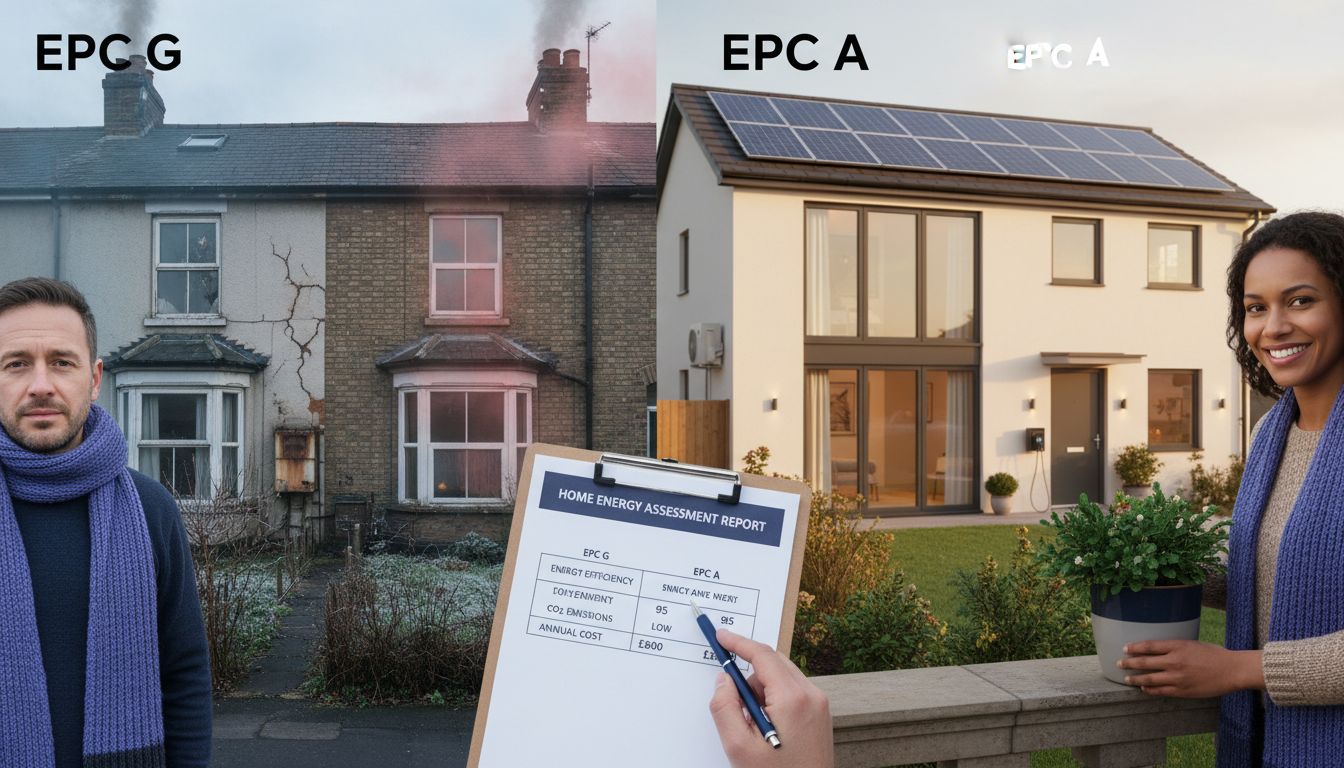
Key aspects of the EPC rating system include:
- Ratings from A (most efficient) to G (least efficient)
- Color-coded visual representation
- Assessment of carbon emissions and energy consumption
- Potential recommendations for improving property efficiency
- Legally required for selling or renting properties
By providing a clear, standardized assessment, EPC ratings empower property owners, tenants, and buyers to make informed decisions about energy efficiency and potential environmental impact. These certificates not only serve as compliance documents but also act as valuable guides for reducing energy consumption and lowering carbon footprints across residential and commercial properties.
How EPC Ratings Are Calculated
Understanding how Energy Performance Certificates (EPCs) are calculated involves a detailed and systematic assessment by professional energy assessors. hoa explains that the process begins with a qualified Domestic Energy Assessor who conducts a comprehensive evaluation of a property’s energy characteristics. This assessment involves meticulously examining multiple aspects of a building’s energy performance, including insulation levels, heating system efficiency, and overall energy consumption patterns.
The calculation methodology primarily relies on the Standard Assessment Procedure (SAP), a government-approved technique for determining energy efficiency. According to gov, this procedure calculates estimated fuel costs and provides a standardized approach to rating a property’s energy performance. The assessor considers numerous critical factors during the evaluation:
- Building fabric and construction materials
- Heating system type and efficiency
- Insulation quality in walls, floors, and roof
- Windows and doors thermal performance
- Ventilation systems
- Renewable energy installations
- Hot water systems
The final EPC rating emerges from a complex scoring system that transforms these detailed assessments into a straightforward A to G scale.
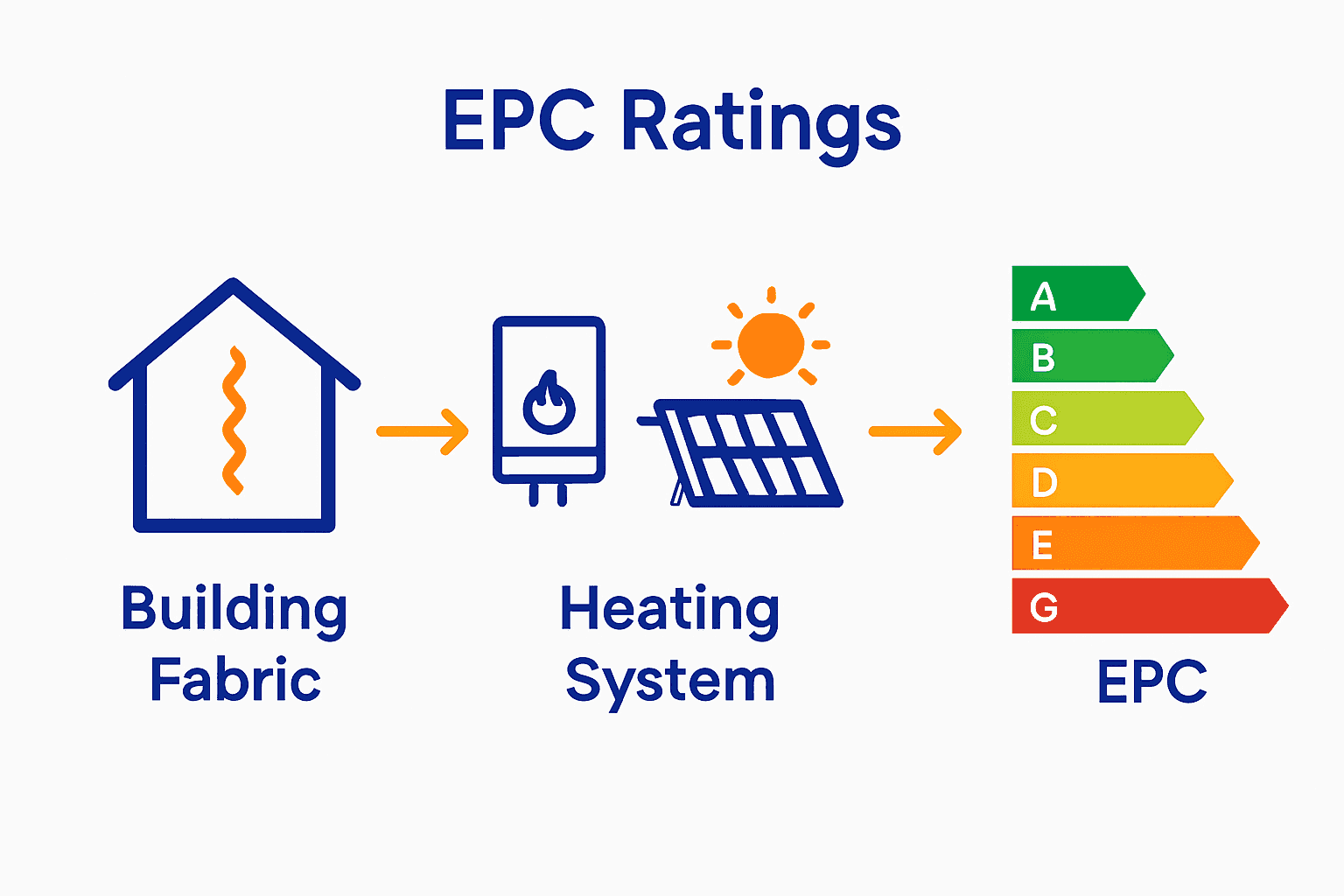 Properties receive points based on their energy efficiency characteristics, with A-rated properties demonstrating exceptional performance and G-rated properties showing significant room for improvement. The score reflects not just current energy consumption but also potential energy costs and carbon emissions.
Practically, this means a property’s EPC rating isn’t just a theoretical measurement but a tangible indicator of its energy efficiency. Homeowners and potential buyers can use this rating to understand potential energy costs, plan improvements, and make informed decisions about property investments. By providing a clear, standardized assessment, the EPC rating system serves as a crucial tool in promoting energy-efficient buildings and supporting the UK’s broader environmental sustainability goals.
UK Legal Requirements for EPC Ratings
Energy Performance Certificates (EPCs) are not just informational documents but have become a critical legal requirement for property owners and landlords across the United Kingdom. nrla highlights the Minimum Energy Efficiency Standards (MEES) introduced in 2018, which mandate specific energy performance requirements for rental properties. Under these regulations, rental properties must achieve a minimum EPC rating of E, making it essential for landlords to ensure their properties meet these energy efficiency standards before leasing.
The legal landscape surrounding EPCs is comprehensive and strictly enforced. nidirect emphasizes that EPCs are mandatory during key property transactions, including:
- Property construction
- Property sale
- Property rental
Failing to obtain a valid EPC can result in significant consequences, including:
- Enforcement actions by local authorities
- Substantial penalty charges
- Potential restrictions on renting or selling the property
The enforcement of these regulations is typically managed by district councils, who have the authority to investigate and penalize non-compliant property owners. This approach ensures that property owners take their energy efficiency responsibilities seriously and contribute to broader national sustainability goals.
For landlords and property owners, understanding and complying with these legal requirements is crucial. The regulations are designed not just as bureaucratic measures, but as meaningful steps towards reducing carbon emissions and improving overall energy efficiency in the built environment. By requiring properties to meet minimum energy performance standards, the UK government is driving a significant transformation in how buildings are constructed, maintained, and managed.
Impact of EPC Ratings on Property Value
The Energy Performance Certificate (EPC) rating has become an increasingly critical factor in determining a property’s market value and attractiveness to potential buyers or renters. ons highlights that dwellings with higher energy efficiency ratings (specifically those rated C or above) are associated with superior insulation and significantly lower energy costs. These characteristics directly translate into enhanced property value, making energy-efficient properties more desirable in the competitive real estate market.
The trend towards high-performance properties is becoming increasingly pronounced. gov reports that by April to June 2025, an impressive 88% of new dwellings in England had achieved an A or B EPC rating. This statistic underscores a significant shift in property development, with builders and homeowners prioritizing energy efficiency as a key value proposition.
The financial implications of EPC ratings are multifaceted and substantial:
- Lower energy bills due to improved efficiency
- Reduced carbon footprint
- Enhanced property marketability
- Potential premium pricing for high-rated properties
- Lower maintenance and upgrade costs
Investors and homeowners are increasingly recognizing that an excellent EPC rating is not just an environmental credential but a tangible financial asset. Properties with superior energy performance typically command higher resale values, attract more discerning buyers, and offer long-term cost savings. As energy costs continue to rise and environmental consciousness grows, the correlation between high EPC ratings and property value is expected to become even more pronounced, making energy efficiency a critical consideration in real estate investments.
Improving Your EPC Rating Effectively
Improving a property’s Energy Performance Certificate (EPC) rating is a strategic process that can significantly enhance both energy efficiency and property value. hoa highlights that homeowners can take targeted steps to boost their energy efficiency, with assessors typically providing personalized recommendations tailored to each specific property. These improvements aren’t just about compliance, but about creating more sustainable and cost-effective living spaces.
nrla emphasizes that landlords can implement several key strategies to enhance their property’s EPC rating. The most impactful improvements include:
- Installing double glazing windows
- Upgrading to a modern, efficient boiler
- Adding comprehensive wall and roof insulation
- Implementing draught-proofing measures
- Switching to LED lighting
- Installing renewable energy systems like solar panels
The financial and environmental benefits of these improvements extend far beyond the immediate EPC rating boost. Homeowners can expect reduced energy bills, increased property value, and a smaller carbon footprint. Each improvement contributes to creating a more energy-efficient home, with some modifications offering immediate returns while others provide long-term benefits.
Crucially, the process of improving an EPC rating is not a one-size-fits-all approach. Property owners should consider a professional energy assessment to receive targeted recommendations specific to their building’s unique characteristics. By strategically investing in energy efficiency upgrades, homeowners can transform their properties into more sustainable, comfortable, and valuable assets that meet increasingly stringent environmental standards.
Take Control of Your Property’s Energy Efficiency Today
Understanding the intricacies of EPC rating scales can feel daunting, especially when faced with legal requirements and the need to improve your property’s energy performance. The challenge of navigating from a low rating to a more desirable one involves crucial decisions on insulation, heating systems, and renewable options. These factors deeply affect your energy bills, carbon footprint, and ultimately the value of your property.
If you are seeking expert guidance to interpret your property’s EPC rating and recommendations on how to improve it effectively, Complete EPC offers professional and affordable energy performance assessments tailored to both domestic and commercial properties across London. With experienced assessors and a commitment to delivering detailed reports, you can rest assured your energy efficiency goals are achieved without hassle.
Don’t let compliance issues or energy costs weigh you down. Discover how simple it is to meet legal standards and boost your property’s worth with our expert EPC services. Act now to secure the lowest rates in the UK market and gain peace of mind knowing you are supported by a trusted consultancy. Visit Complete EPC to start your journey towards a smarter, more energy-efficient property today.
Frequently Asked Questions
What is an EPC rating?
Energy Performance Certificates (EPCs) provide a standardized assessment of a building’s energy efficiency, rated from A (most efficient) to G (least efficient).
How are EPC ratings calculated?
EPC ratings are calculated by qualified assessors using the Standard Assessment Procedure (SAP), which evaluates factors like insulation, heating system efficiency, and overall energy consumption.
What are the legal requirements for EPC ratings?
EPCs are legally required for property transactions, including construction, sale, and rental. Rental properties must achieve a minimum rating of E under the Minimum Energy Efficiency Standards (MEES).
How can I improve my property’s EPC rating?
To improve an EPC rating, homeowners can invest in upgrades like double glazing, modern boilers, insulation, draught-proofing, LED lighting, and renewable energy systems such as solar panels.