

Most british commercial property owners in Central London face strict energy compliance rules and growing pressure to prove building efficiency. Failing to secure a valid Energy Performance Certificate can risk hefty fines and reduce a property’s overall market appeal. By organising your EPC application workflow, you can protect your investment and appreciate the true value of smart documentation. This guide offers practical steps that save time and help keep your portfolio competitive amid changing regulations.
Table of Contents
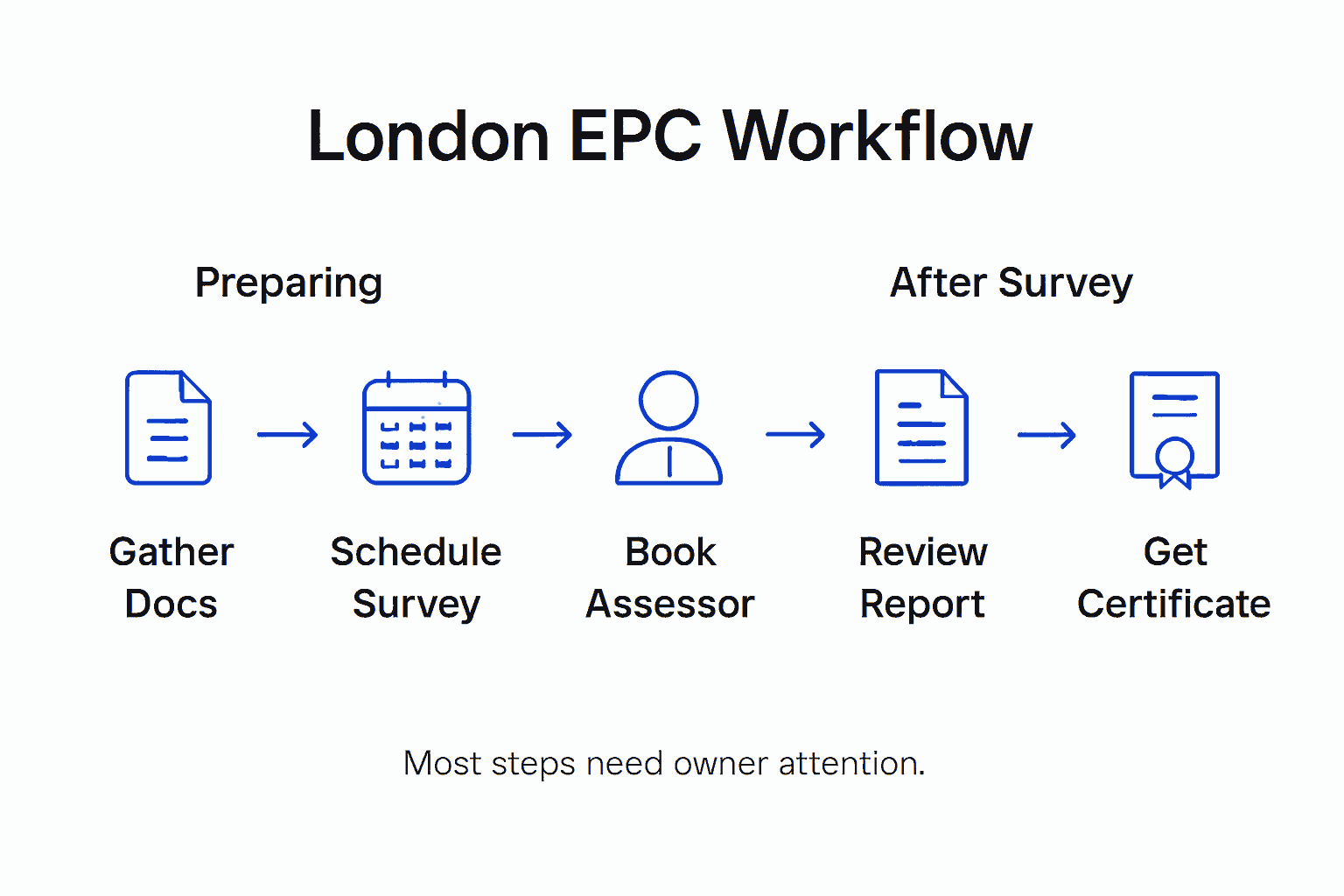
- Step 1: Gather Required Property Documents
- Step 2: Schedule Professional EPC Assessment
- Step 3: Coordinate Onsite Inspection With Assessor
- Step 4: Review And Verify Assessment Report
- Step 5: Obtain EPC Certificate And Implement Recommendations
Quick Summary
| Essential Insight | Detailed Explanation |
|---|---|
| 1. Gather all necessary documents | Collect property-specific documents early, including floor plans, utility bills, and proof of ownership, to streamline the EPC process. |
| 2. Choose a certified energy assessor | Contact a qualified energy assessor registered with an approved body to conduct your EPC assessment thoroughly and accurately. |
| 3. Ensure full property access | Prepare your property for inspection by granting access to all areas, including lofts and utility rooms, to avoid assessment delays. |
| 4. Review assessment report meticulously | Carefully examine ratings and recommendations in the EPC report to identify impactful energy efficiency improvements for your property. |
| 5. Implement recommended upgrades | Prioritise energy efficiency upgrades based on potential savings and costs, and document all improvements for future EPC assessments. |
Step 1: Gather required property documents
Preparing a comprehensive set of property documents is your first critical task when applying for an Energy Performance Certificate (EPC) in London. By collecting these materials early, you will streamline the assessment process and prevent potential delays.
Start by compiling essential documentation such as your property’s floor plans, recent utility bills, and building construction details. You will want to have the complete property address ready, alongside proof of ownership or tenancy agreements. The UK government guidance on property documentation recommends keeping records of any previous energy improvements or modifications that could impact your property’s energy rating.
Typically, your documentation package should include building regulations certificates, previous EPCs (if available), details of heating systems, window specifications, and insulation records. Professional EPC assessors will review these documents to calculate your property’s energy efficiency accurately. Having these materials organised and readily accessible will help expedite your assessment and demonstrate your commitment to transparent property management.
Top Tip: Create a dedicated digital folder for your property documents to ensure quick access and prevent last minute scrambling during your EPC assessment.
Step 2: Schedule professional EPC assessment
Scheduling a professional Energy Performance Certificate assessment represents a crucial milestone in your property management journey. This step transforms your preparatory work into a tangible evaluation of your property’s energy efficiency.
To begin, you will need to contact a certified energy assessor who is qualified to conduct official EPC surveys in London. These professionals are specifically accredited by the government to perform comprehensive energy assessments. When selecting an assessor, verify their credentials and confirm they are registered with an approved body. Most assessments take approximately 45 to 60 minutes for standard residential properties, during which the assessor will conduct a thorough examination of your property’s energy characteristics including heating systems, insulation, windows, and overall construction.
During your initial consultation, provide the assessor with all documentation you gathered in the previous step. Be prepared to grant them full access to your property, including loft spaces, boiler rooms, and exterior areas. The assessor will take measurements, photograph key energy infrastructure, and document specific details that contribute to your property’s overall energy performance rating.
Top Tip: Prepare a quick summary of any recent energy efficiency upgrades or modifications to help your assessor conduct a more precise evaluation.
Step 3: Coordinate onsite inspection with assessor
Coordinating your onsite Energy Performance Certificate inspection requires careful planning and preparation to ensure a smooth and comprehensive assessment of your property. This step is critical in obtaining an accurate energy efficiency evaluation.
Prepare for a detailed systematic property energy evaluation by understanding what the assessor will examine. During the inspection, they will meticulously assess your building’s fabric, heating and cooling systems, insulation quality, window performance, and lighting infrastructure. Clear communication is key. Confirm the exact timing and duration of the assessment in advance. Ensure all areas of your property are accessible including loft spaces, utility rooms, and exterior zones. Have your property documentation readily available and be prepared to discuss any recent energy efficiency upgrades or unique architectural features that might impact the assessment.
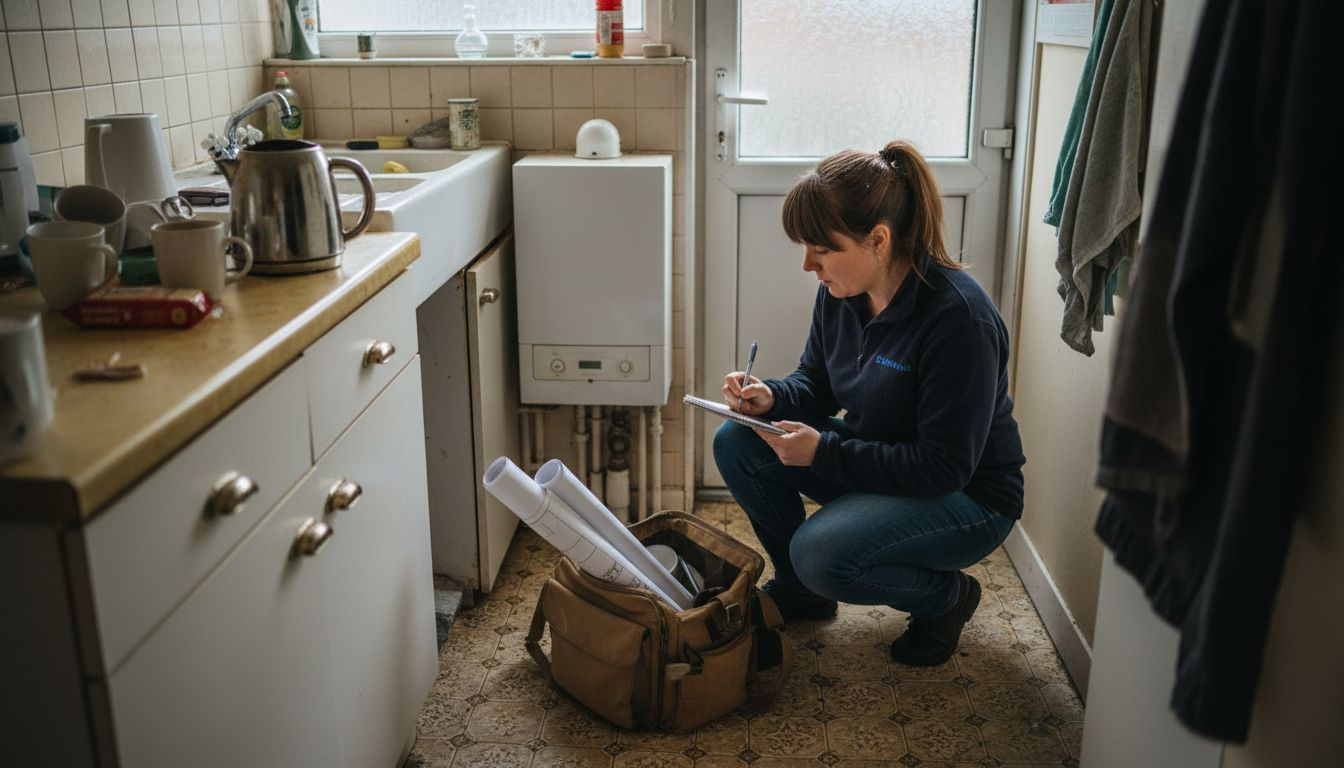
On the day of inspection, walk through the property with the assessor. Point out any recent improvements, modifications, or specific characteristics that could influence energy performance. Be transparent about your property’s history and willing to provide additional context. The assessor will take measurements, photographs, and detailed notes to compile a comprehensive energy performance profile.
Below is a comparison of EPC assessor and property owner roles during the assessment process:
| Activity | Assessor Responsibility | Owner Responsibility |
|---|---|---|
| Documenting property features | Conducts detailed recording | Supplies accurate documentation |
| Accessing all property areas | Inspects hard-to-reach spaces | Grants full access throughout |
| Assessing recent improvements | Evaluates energy upgrades | Highlights recent modifications |
| Measurement and photography | Takes required photos/notes | Ensures spaces are unobstructed |
Top Tip: Create a pre inspection checklist of accessible spaces and relevant documents to streamline the assessment process and demonstrate your preparedness.
Step 4: Review and verify assessment report
Reviewing your Energy Performance Certificate assessment report marks a critical stage in understanding your property’s energy efficiency profile. This step transforms technical data into actionable insights for potential property improvements.
Carefully examine the detailed technical metrics and energy performance evaluation provided in the report. Focus on key areas including headline energy ratings, fabric performance scores, heating system efficiency, and recommended upgrade opportunities. Pay close attention to the numerical ratings assigned to different aspects of your property. Cross reference the assessor’s calculations with your own understanding of the property, checking that all rooms, systems, and structural elements have been accurately documented.
When reviewing the recommendations, prioritise those with the most significant potential impact on your property’s energy efficiency. Consider the estimated costs and potential energy savings for each suggested improvement. If any section of the report seems unclear or you disagree with the assessment, do not hesitate to contact the assessor directly for clarification. The goal is to gain a comprehensive understanding of your property’s current energy performance and develop a strategic approach to potential upgrades.
Top Tip: Create a digital copy of your EPC report and store it securely with your property documents for future reference and potential property transactions.
Step 5: Obtain EPC certificate and implement recommendations
Obtaining your Energy Performance Certificate represents the culmination of your assessment journey, providing a formal documentation of your property’s energy efficiency profile. This crucial document serves multiple important purposes for London property owners.
Once your assessment is complete, you will receive an official EPC certificate for property marketing and transactions. This certificate includes not just your property’s energy rating, but also a comprehensive list of recommended improvements. Prioritise these recommendations based on potential energy savings, estimated implementation costs, and long term property value enhancement. Some upgrades might qualify for government energy efficiency grants, so investigate additional financial support mechanisms that could offset your investment.
Implementing the recommended improvements is a strategic process. Start with recommendations that offer the most significant energy efficiency gains and have reasonable implementation costs. This might include upgrading insulation, installing more efficient heating systems, or replacing windows. Keep detailed records of all improvements, as these can positively impact future EPC assessments and potentially increase your property’s market value.
Here is a summary of common EPC recommendations and their typical benefits:
| Upgrade Recommendation | Typical Impact on Efficiency | Estimated Cost Range | Potential Grant Availability |
|---|---|---|---|
| Loft insulation upgrade | Reduces heat loss | £300–£600 | Often covered by Green Homes Grant |
| Double glazing windows | Improves heat retention | £4,000–£7,000 | Support varies by scheme |
| Boiler replacement | Increases heating efficiency | £1,500–£3,000 | Possible ECO funding |
| LED lighting installation | Cuts electricity usage | £100–£300 | Rare, but local grants possible |
| Cavity wall insulation | Prevents heat escape | £500–£1,000 | Frequently subsidised |
Top Tip: Schedule a follow up assessment after implementing major energy efficiency upgrades to document and validate your property’s improved performance.
Simplify Your EPC Application Process with Complete EPC
Navigating the complex steps of the Energy Performance Certificate application workflow can feel overwhelming, especially when you need to gather extensive property documents, coordinate assessments, and review technical reports. If you are managing London properties and aiming to meet legal compliance while unlocking energy-saving opportunities, you understand how crucial accuracy and efficiency are throughout this process.
Complete EPC specialises in supporting property owners, landlords, estate agents, and solicitors with expert energy performance services tailored for London’s unique requirements. Our team of qualified assessors will handle everything from initial documentation checks to detailed onsite inspections, ensuring your property receives a thorough evaluation and a clear, actionable report. With our guarantee of the lowest rates in the UK market combined with seamless service delivery, we empower you to confidently obtain your official certificate and implement cost-effective energy improvements.
Ready to take the stress out of your EPC journey? Discover how our professional consultation can help you comply with regulations and enhance your property’s value today. Visit Complete EPC to get started and learn more about our comprehensive Energy Performance Certificate services. Act now and turn your EPC requirements into a strategic advantage with Complete EPC.
Frequently Asked Questions
What documents do I need to gather before applying for an EPC?
Before applying for an Energy Performance Certificate, collect essential documents such as property floor plans, recent utility bills, and building construction details. Include proof of ownership or tenancy agreements to streamline your application process.
How do I schedule a professional EPC assessment for my property?
To schedule a professional Energy Performance Certificate assessment, contact a certified energy assessor qualified to perform EPC surveys. Confirm their registration with an approved body and allocate about 45 to 60 minutes for the assessment to ensure a thorough examination of your property’s energy efficiency.
What should I expect during the onsite inspection for the EPC?
During the onsite inspection, the assessor will evaluate your property’s fabric, heating and cooling systems, insulation, and windows. Prepare to grant full access to all areas of your property and discuss any recent energy efficiency upgrades that may influence the assessment.
How can I effectively review my EPC assessment report?
To effectively review your EPC assessment report, focus on key metrics like energy ratings and fabric performance scores. Cross-reference the assessor’s findings with your knowledge of the property to ensure all aspects are accurately documented, and prioritise recommended improvements based on potential impact and cost.
What are some common recommendations I might receive after the EPC assessment?
Common recommendations may include upgrading insulation, installing double glazing, or replacing an inefficient boiler. These improvements typically enhance energy efficiency significantly, and some may qualify for financial grants to help offset implementation costs.
How do I obtain and effectively use my EPC certificate?
After your assessment, you will receive an official Energy Performance Certificate that documents your property’s energy efficiency. Use this certificate for property marketing and transactions, and implement the recommended improvements to enhance your property’s energy performance and market value.