

Most british landlords are surprised to discover that more than 25 percent of properties in Greater London could face legal penalties due to outdated Energy Performance Certificates. With regulations tightening, keeping your property compliant goes far beyond a simple paperwork exercise. Understanding what EPC renewal truly involves means you can protect your investment, avoid fines, and take practical steps to lift both compliance and long-term value in the heart of the capital.
Table of Contents
- What EPC Renewal Involves for Properties
- EPC Validity Periods and Renewal Triggers
- Legal Requirements for EPC Renewal in London
- Choosing Accredited EPC Assessors
- Common Pitfalls and Compliance Risks
Key Takeaways
| Point | Details |
|---|---|
| EPC Renewal Process | Engage an accredited energy assessor for a comprehensive evaluation of your property’s energy efficiency. Schedule assessments at least two months before your current certificate expires to maintain compliance. |
| Renewal Triggers | Renew your EPC following any significant property changes, such as sales, rentals, or major renovations to ensure accurate energy performance documentation. |
| Legal Compliance | Adhere to Minimum Energy Efficiency Standards, ensuring rental properties achieve at least an E rating to avoid penalties. Regularly update your EPC documentation to reflect current energy performance. |
| Selecting Assessors | Choose accredited EPC assessors who are experienced and certified to provide reliable evaluations. Verify their credentials before engagement to ensure quality assessments. |
What EPC Renewal Involves for Properties
EPC renewal represents a critical process for property owners in London, ensuring legal compliance and demonstrating a property’s current energy efficiency standards. When renewing an Energy Performance Certificate, property owners must engage an accredited energy assessor who will conduct a comprehensive evaluation of the building’s thermal performance, insulation quality, heating systems, and overall carbon emissions.
The renewal process typically involves a detailed on-site assessment where the assessor systematically examines various property components. Key elements include reviewing the building’s wall construction, roof insulation, window glazing, heating infrastructure, and potential areas for energy improvements. Retrofitting efforts play a significant role in this process, as property owners can strategically upgrade their buildings to enhance energy efficiency ratings and potentially reduce long-term operational costs.

Property owners should anticipate that EPC renewal assessments will generate a detailed report categorising the property’s energy performance using a standardised rating scale from A (most efficient) to G (least efficient). This documentation not only satisfies legal requirements for rental and sale properties but also provides actionable recommendations for reducing energy consumption and improving the building’s environmental footprint.
Pro tip: Schedule your EPC renewal assessment at least two months before your existing certificate expires to ensure continuous compliance and avoid potential legal penalties.
EPC Validity Periods and Renewal Triggers
Every property owner in London must understand the critical timelines governing Energy Performance Certificates. EPC validity is not indefinite – in fact, these crucial documents have a standard lifespan of 10 years from their original issue date. Specific regulatory guidelines mandate renewal under several specific circumstances that property owners must carefully track.
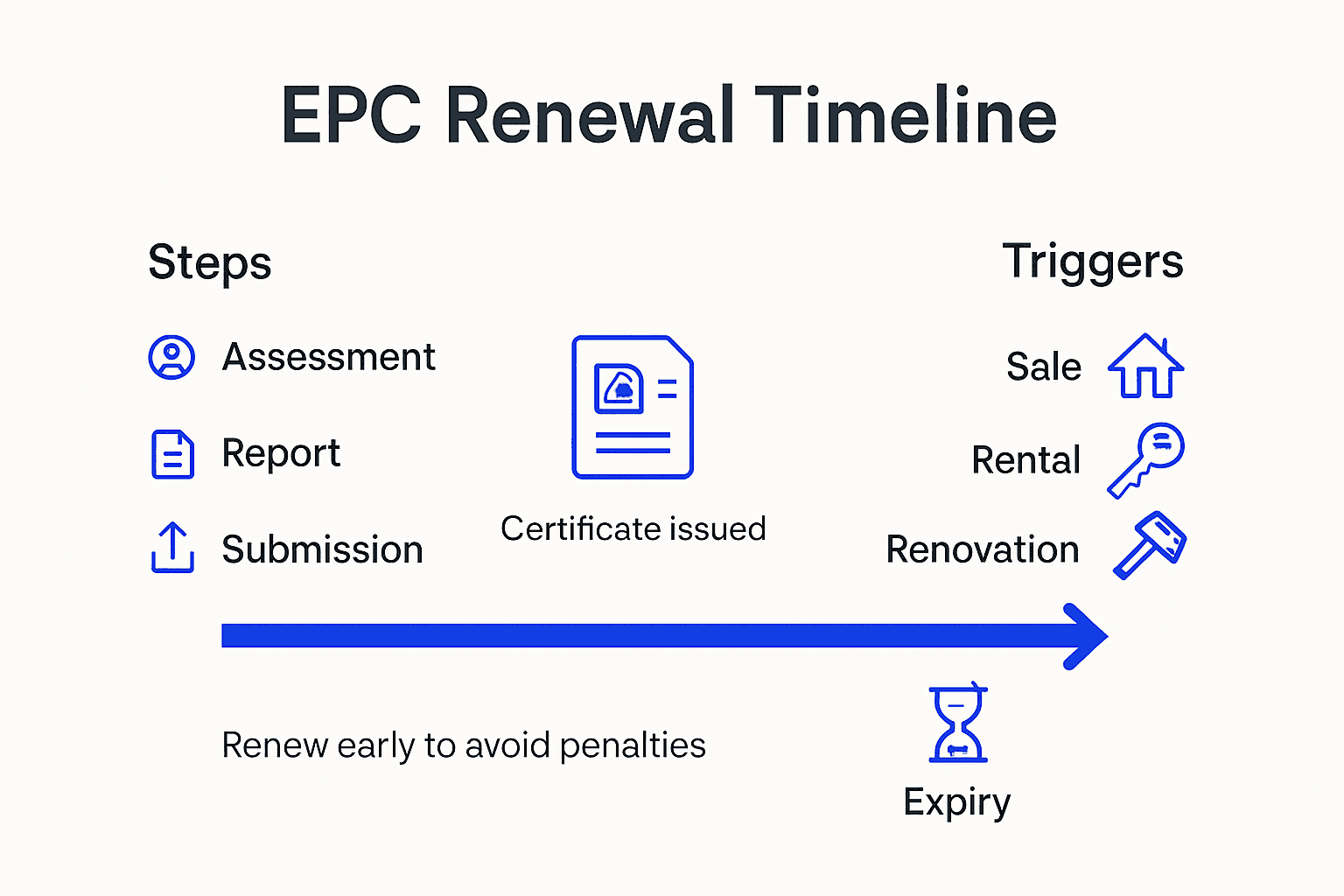
Renewal triggers are multifaceted and depend on various property changes and transactions. These include selling a property, renting out a space, undertaking significant renovation work that impacts energy efficiency, or when the existing certificate approaches its expiration date. Each of these scenarios requires obtaining a fresh EPC assessment, which provides an updated evaluation of the building’s thermal performance, insulation quality, and overall energy consumption characteristics.
Property owners should pay close attention to the specific conditions that necessitate EPC renewal. Minor modifications might not trigger a mandatory reassessment, but substantial changes such as installing new heating systems, replacing windows, or adding substantial insulation could require a new certificate. The primary goal of these renewal requirements is to maintain accurate and current information about a property’s energy efficiency, supporting broader environmental sustainability efforts and providing potential buyers or tenants with transparent energy performance data.
Pro tip: Maintain a digital calendar reminder for your EPC’s expiration date, scheduling an assessment at least three months in advance to ensure uninterrupted compliance and avoid potential legal complications.
Here’s a summary of EPC renewal triggers and the impact on property compliance:
| Renewal Trigger | Compliance Requirement | Impact on Property Owner |
|---|---|---|
| Sale of property | New EPC assessment required | Ensures up-to-date legal status |
| Rental agreement change | Fresh certificate needed | Maintains legal rental rights |
| Major renovation | Updated energy evaluation needed | May improve energy rating |
| Certificate expiration | Renewal assessment mandatory | Prevents penalties or delays |
Legal Requirements for EPC Renewal in London
London property owners must navigate a complex landscape of legal requirements surrounding Energy Performance Certificates. Government regulations mandate strict compliance protocols for EPC renewals, with specific obligations varying depending on property type and intended use.
For rental properties, the Minimum Energy Efficiency Standards (MEES) impose particularly rigorous requirements. Landlords must ensure their properties achieve a minimum EPC rating of E, with future plans to elevate this standard to rating C. Compliance standards are enforced through mandatory assessments by accredited energy assessors, who comprehensively evaluate a property’s thermal performance, insulation quality, and overall energy consumption characteristics.
Critical renewal triggers include property sales, rental transitions, significant renovations, and certificate expiration. Property owners must proactively manage these transitions, understanding that non-compliance can result in substantial financial penalties. Each renewal requires a fresh assessment that not only updates the property’s energy efficiency documentation but also provides an opportunity to implement potential improvements that could enhance the building’s overall energy performance.
Pro tip: Maintain a comprehensive digital file of all previous EPC assessments and implement a systematic tracking system to anticipate renewal requirements well in advance of legal deadlines.
Compare key legal features for rental and sale properties under London EPC regulations:
| Property Type | Minimum EPC Rating | Upcoming Standard | Penalty for Non-Compliance |
|---|---|---|---|
| Rental | E | C (future plans) | Fines and rental restrictions |
| For sale | No set minimum | May rise with new law | Delay or cancellation of transaction |
Choosing Accredited EPC Assessors
Selecting the right energy performance certificate assessor is crucial for ensuring accurate and legally compliant documentation for London properties. Government regulations mandate that only accredited professionals can produce valid Energy Performance Certificates, making the selection process a critical step in meeting legal requirements.
Accredited assessors must demonstrate specific qualifications and professional credentials. They undergo rigorous training to evaluate a property’s energy efficiency, examining factors such as insulation, heating systems, ventilation, and potential areas for improvement. Local guidance emphasises the importance of verifying an assessor’s credentials, which typically include membership in recognised accreditation schemes and extensive knowledge of current energy efficiency standards.
When choosing an EPC assessor, property owners should consider several key factors. Look for professionals with demonstrable experience in your specific property type, whether residential or commercial. Verify their accreditation status, request sample reports, and check references from previous clients. The assessor should provide a comprehensive evaluation that not only meets legal requirements but also offers practical insights into potential energy efficiency improvements that could enhance the property’s overall performance and market value.
Pro tip: Request proof of accreditation and professional indemnity insurance before engaging an EPC assessor, and confirm their membership in recognised professional bodies to ensure the highest quality assessment.
Common Pitfalls and Compliance Risks
Navigating the complex landscape of Energy Performance Certificate regulations requires a proactive approach to avoiding potential legal and financial complications. Recent government reforms highlight several critical pitfalls that property owners must carefully manage, including failing to renew certificates within prescribed timeframes and engaging non-accredited assessors.
The most significant compliance risks stem from inadequate documentation and lack of awareness about current energy efficiency standards. Property owners can inadvertently expose themselves to substantial penalties by neglecting minimum energy efficiency requirements, using invalid EPCs during property transactions, or failing to update certificates when property modifications occur. Detailed regulatory assessments indicate that non-compliance can result in significant financial penalties, potential restrictions on property rental and sale, and missed opportunities for energy efficiency improvements.
Key risk areas include inaccurate energy ratings, outdated documentation, and insufficient understanding of evolving regulatory requirements. Property owners must maintain meticulous records, stay informed about legislative changes, and proactively engage with qualified energy assessors to mitigate these risks. This approach not only ensures legal compliance but also maximises the potential for energy efficiency improvements and potential cost savings.
Pro tip: Create a digital compliance calendar that tracks EPC expiration dates, regulatory updates, and scheduled assessments to prevent inadvertent non-compliance and associated financial risks.
Simplify Your EPC Renewal with Expert Support from Complete EPC
Navigating the EPC renewal process can be overwhelming, especially with strict legal requirements and the risk of penalties for non-compliance. From understanding key triggers like property sales, rental changes, or major renovations, to ensuring assessments by accredited professionals, the challenges property owners face are clear. If you want to avoid costly mistakes, maintain valid Energy Performance Certificates, and explore opportunities for energy efficiency improvements, trusted guidance is vital.
Complete EPC specialises in offering comprehensive EPC services across London that guarantee accuracy, compliance and competitive pricing. Our team of qualified assessors handles the entire renewal process with ease, delivering detailed reports that meet legal standards and help you plan property enhancements. Discover how our expert consultancy can reduce stress and save you money by visiting Complete EPC. Take control of your property’s energy compliance today and secure your EPC renewal smoothly by contacting us now.
Frequently Asked Questions
What does the EPC renewal process involve?
The EPC renewal process involves engaging an accredited energy assessor who evaluates the property’s energy efficiency, examining aspects like insulation, heating systems, and carbon emissions. A detailed report categorising the property’s energy performance is generated.
How often do I need to renew my Energy Performance Certificate?
Energy Performance Certificates are valid for 10 years. Renewal is necessary if selling the property, renting it out, undergoing significant renovations, or approaching the expiration date of the existing certificate.
What are the legal requirements for EPC renewal in London?
Legal requirements mandate that properties meet certain energy efficiency standards, particularly for rental properties, which must achieve a minimum EPC rating of E. Non-compliance can result in financial penalties and restrictions on transactions.
How can I choose an accredited EPC assessor?
When choosing an EPC assessor, verify their accreditation status, request sample reports, and check references. Ensure they have experience with your property type and are knowledgeable about current energy efficiency standards.