

Over 80 percent of UK property transactions now hinge on up-to-date Energy Performance Certificates. Staying on top of EPC certificate validity is more than just a legal checkbox—it shapes everything from property sales to rental agreements. Misunderstanding the timeline or letting a certificate lapse can derail deals and lead to hefty penalties. If you want to avoid surprises and make confident decisions about your property, you need to know exactly what EPC validity means and how it affects your next move.
Table of Contents
- What Does EPC Certificate Validity Mean?
- Different Types of EPCs and Validity Periods
- Legal Requirements for EPCs in London
- EPC Validity in Property Sales and Rentals
- Renewing, Updating, and Maintaining Compliance
Key Takeaways
| Point | Details |
|---|---|
| EPC Validity | An Energy Performance Certificate is valid for 10 years from the issue date and becomes invalid if a newer certificate is issued for the same property. |
| Legal Requirements | Landlords must provide a valid EPC to tenants before marketing or viewing a property to avoid penalties. |
| EPC Types | There are domestic and non-domestic EPCs, both having a standard 10-year validity but differing in scope and methodology. |
| Compliance Management | Property owners should proactively track EPC expiration dates and renew or update assessments to ensure ongoing compliance. |
What Does EPC Certificate Validity Mean?
An Energy Performance Certificate (EPC) represents a critical document that provides key insights into a property’s energy efficiency. According to the gov.uk guidelines, an EPC is valid for a specific period that impacts property transactions and energy management strategies.
The standard validity period for an EPC is 10 years from its initial issue date. This means once an assessor generates the certificate, it remains a legally recognized document for a decade. However, the certificate becomes invalid if a newer EPC is produced for the same property before that 10-year period expires. Property owners should understand this timeline to ensure ongoing compliance when selling, renting, or modifying their property.
Each EPC provides a comprehensive energy efficiency rating ranging from A (most efficient) to G (least efficient). gov.uk emphasizes that these certificates are mandatory when selling, renting, or constructing a property. The rating helps potential buyers or tenants understand the property’s potential energy consumption and associated costs, making it a crucial document in real estate transactions.
Key points about EPC certificate validity include:
- Valid for 10 years from the issue date
- Becomes invalid if a newer certificate is produced
- Required for property sales, rentals, and construction
- Provides energy efficiency ratings from A to G
- Helps potential occupants understand energy performance and potential costs
To maintain compliance and provide accurate energy efficiency information, property owners should track their EPC’s expiration date and arrange for a new assessment when needed. Importance of Obtaining an EPC Certificate for Your Property provides additional insights into the significance of keeping your energy performance documentation current.
Different Types of EPCs and Validity Periods
Energy Performance Certificates (EPCs) are not a one-size-fits-all document. gov.uk identifies two primary categories of EPCs: domestic and non-domestic certificates, each serving distinct purposes in property energy assessment.
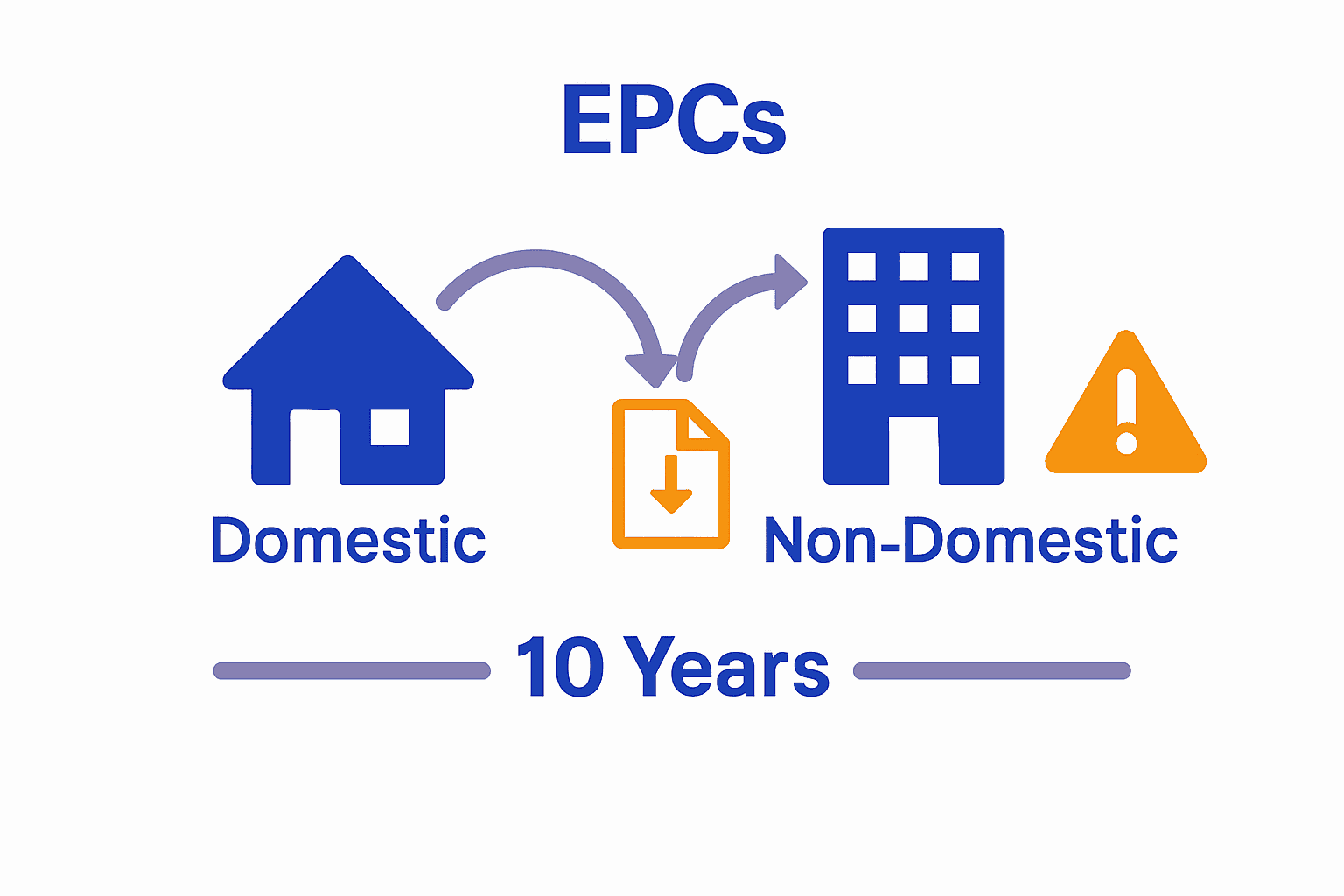
Domestic EPCs typically cover residential properties like houses and flats, providing homeowners and tenants with critical insights into their property’s energy efficiency. Non-domestic EPCs, conversely, focus on commercial and public buildings such as offices, shops, and industrial facilities. Despite their different scopes, both types share a consistent 10-year validity period, ensuring property owners have a reasonable timeframe to use their energy performance documentation.
Interestingly, the UK government is contemplating potential changes to EPC regulations. According to gov.uk, there are ongoing consultations about potentially reducing the current 10-year validity period. This proposed modification aims to ensure more up-to-date and accurate energy performance information is readily available to property stakeholders.
Key differences between domestic and non-domestic EPCs include:
- Scope of assessment
- Complexity of energy efficiency evaluation
- Target audience and use cases
- Specific methodology for energy performance calculation
Whether you’re a homeowner or commercial property manager, understanding these nuanced differences is crucial. For a comprehensive understanding of EPC requirements, check out our guide on EPC legal compliance, which offers detailed insights into navigating these important energy certification standards.

Legal Requirements for EPCs in London
Navigating the legal landscape of Energy Performance Certificates (EPCs) in London requires a clear understanding of specific regulatory requirements. england.shelter.org.uk highlights critical obligations for landlords and property owners, emphasizing the importance of compliance in the London property market.
For landlords, the legal requirements are particularly stringent. According to the source, they must provide a valid EPC to prospective tenants at the earliest opportunity, no later than when written information is provided or a property viewing occurs. Failure to comply can result in significant penalties, making it crucial for property owners to understand and meet these requirements promptly.
When it comes to property sales, gov.uk mandates that an EPC must be ordered before marketing the property. This certificate becomes a critical document in real estate transactions, providing potential buyers with essential information about the property’s energy efficiency. The certificate remains valid for 10 years, giving property owners a reasonable timeframe to use and reference their energy performance documentation.
Key legal requirements for EPCs in London include:
- Mandatory provision of EPC to prospective tenants
- EPC must be obtained before marketing a property
- Certificate valid for 10 years
- Penalties for non-compliance
- Required for both residential and commercial properties
To ensure full compliance and avoid potential legal complications, property owners should stay informed about these requirements. For more detailed guidance, check out our compliance tips for London property owners, which offer comprehensive insights into navigating EPC regulations effectively.
EPC Validity in Property Sales and Rentals
The Energy Performance Certificate plays a crucial role in property transactions, serving as a key document for both sales and rental markets. gov.uk outlines specific requirements that property owners must navigate when marketing their properties, emphasizing the importance of obtaining an EPC before any transaction begins.
For property sales, an EPC must be secured and made available before the property is marketed. This certificate provides potential buyers with transparent insights into the property’s energy efficiency, helping them understand potential future energy costs and environmental impact. The 10-year validity period means a single certificate can be used for multiple sales or marketing attempts within that timeframe, offering flexibility for property owners.
england.shelter.org.uk highlights the critical obligations for landlords, who must provide a valid EPC to prospective tenants. The legal requirements are strict, with potential penalties for non-compliance. This ensures that tenants receive essential information about the energy performance of their potential new home before making a rental commitment.
Key considerations for EPC validity in property transactions include:
- Required before property marketing
- Valid for 10 years from issue date
- Mandatory for both sales and rentals
- Provides energy efficiency rating
- Potential penalties for non-compliance
Property investors and homeowners can simplify their EPC journey by understanding these requirements. For more detailed guidance on navigating property certification, check out our guide for property investors, which offers comprehensive insights into managing EPC requirements effectively.
Renewing, Updating, and Maintaining Compliance
Maintaining EPC compliance is a dynamic process that requires proactive management and awareness of evolving regulatory standards. gov.uk highlights the potential for significant changes in EPC regulations, signaling the importance of staying informed about current and upcoming requirements.
Property owners must be particularly vigilant about their EPC’s validity and renewal process. The standard 10-year certificate period provides a reasonable timeframe, but it’s crucial to track expiration dates and anticipate potential updates. Proactive renewal ensures continuous compliance and helps avoid last-minute complications during property transactions or rental agreements.
england.shelter.org.uk emphasizes that landlords carry a significant responsibility in maintaining EPC compliance. If a certificate expires, a new assessment must be obtained before the next sale or rental opportunity. This requirement underscores the ongoing nature of energy performance documentation and the need for regular updates.
Key strategies for maintaining EPC compliance include:
- Track certificate expiration dates
- Schedule renewals before current certificate expires
- Stay informed about regulatory changes
- Conduct regular energy efficiency assessments
- Implement recommended energy improvements
For landlords seeking a structured approach to EPC management, our landlord EPC checklist provides a comprehensive guide to navigating these requirements effectively and maintaining ongoing compliance.
Stay Ahead with Expert EPC Services in London
Understanding your EPC certificate validity is essential to avoid penalties and ensure smooth property sales or rentals across London. If you feel overwhelmed by tracking expiry dates or meeting legal requirements, you are not alone. Many property owners and landlords face challenges staying compliant while aiming to improve energy efficiency and reduce costs. Our expert team at Complete EPC specialises in delivering accurate and up-to-date Energy Performance Certificates for both domestic and commercial properties. We provide clear, comprehensive reports that help you make informed decisions and maintain compliance effortlessly.
Don’t let your EPC certificate expiry cause delays or legal issues. Act now to secure your energy assessment with Complete EPC, where you’ll find reliable guidance on EPC legal compliance and tailored advice for property investors in London through our property investors guide. Ensure your property remains market-ready with confidence. Visit us today to take the next step towards seamless EPC compliance and energy savings.
Frequently Asked Questions
What is the validity period of an EPC certificate?
The validity period of an Energy Performance Certificate (EPC) is 10 years from the initial issue date.
When is an EPC required during property transactions?
An EPC is required before marketing a property for sale or rent. It must be provided to potential buyers or tenants at the earliest opportunity.
What happens if a new EPC is issued before the 10-year period expires?
If a new EPC is produced for the same property before the original 10-year validity period expires, the original certificate becomes invalid.
How can property owners maintain EPC compliance?
Property owners can maintain EPC compliance by tracking expiration dates, scheduling renewals before expiration, staying informed about regulatory changes, and conducting regular energy efficiency assessments.