

More than 60 percent of british commercial property owners now face tighter Energy Performance Certificate regulations as London authorities press for lower carbon emissions. Understanding EPCs is critical for those determined to protect property value while saving on energy costs. This guide breaks down the essential building regulations every landlord must master, offering practical strategies to upgrade energy efficiency and avoid hefty penalties.
Table of Contents
- Core Concepts Of EPCs And UK Building Regulations
- Types Of EPC Ratings And Regulatory Standards
- The EPC Assessment Process For London Properties
- Minimum Energy Efficiency Standards And Legal Compliance
- Cost Caps, Penalties, And Common Landlord Mistakes
Key Takeaways
| Point | Details |
|---|---|
| Importance of EPCs | Energy Performance Certificates (EPCs) are crucial for evaluating and improving the energy efficiency of properties in the UK, especially in London. |
| Regulatory Compliance | Properties must meet minimum EPC ratings, with upcoming regulations requiring a rating of C by 2030, necessitating proactive energy improvements. |
| Market Impact | More energy-efficient properties typically achieve higher market values and attract environmentally conscious buyers and tenants. |
| Common Landlord Mistakes | Landlords should avoid missing EPC requirements and unregistered exemptions by maintaining organised records and proactively managing compliance. |
Core concepts of EPCs and UK building regulations
Energy Performance Certificates (EPCs) are pivotal documents that assess and communicate the energy efficiency of properties across the United Kingdom. These certificates provide property owners, tenants, and potential buyers with critical insights into a building’s energy consumption, carbon emissions, and potential for improvement. In London, EPCs have become increasingly significant as part of the broader strategy to reduce carbon footprints and enhance urban sustainability.
The core purpose of EPCs is to create transparency around a property’s energy performance. When an accredited assessor conducts an inspection, they evaluate multiple aspects including insulation quality, heating systems, lighting efficiency, and overall thermal characteristics. The assessment generates a rating from A (most efficient) to G (least efficient), similar to energy labels found on household appliances. Energy Performance Regulations in the UK mandate that these certificates are required when properties are constructed, sold, or rented, ensuring potential occupants understand the energy profile of their future home or commercial space.
Under current UK building regulations, EPCs serve multiple crucial functions. They not only provide an energy efficiency rating but also recommend specific improvements that could enhance a property’s performance. These recommendations might include upgrading insulation, installing more efficient heating systems, or implementing renewable energy technologies. For London property owners, these insights can translate directly into potential energy cost savings and increased property value. The regulations are designed to support the UK’s ambitious net-zero emissions targets by encouraging incremental improvements in building energy standards across residential and commercial sectors.
Pro tip: Always request a copy of the EPC and carefully review the recommended improvements before purchasing or renting a property, as these suggestions can represent significant long-term energy and cost savings.
Types of EPC ratings and regulatory standards
Energy Performance Certificates in the United Kingdom utilise a comprehensive rating system that provides a clear and standardised approach to measuring building energy efficiency. The ratings range from A to G, with A representing the most energy-efficient properties and G representing the least efficient. Each rating is determined through a detailed assessment of key factors including heating systems, insulation, lighting, and overall thermal performance, which collectively contribute to the property’s total energy consumption and carbon emissions.
Under the current regulatory framework, landlords must navigate specific minimum energy efficiency standards that directly impact rental property compliance. Specifically, properties in England and Wales are required to achieve a minimum EPC rating of E or higher, with ratings of F and G effectively prohibited from being let unless specific exemptions are granted. These standards represent a critical mechanism for driving improvements in building energy performance and supporting the UK’s broader environmental sustainability goals.
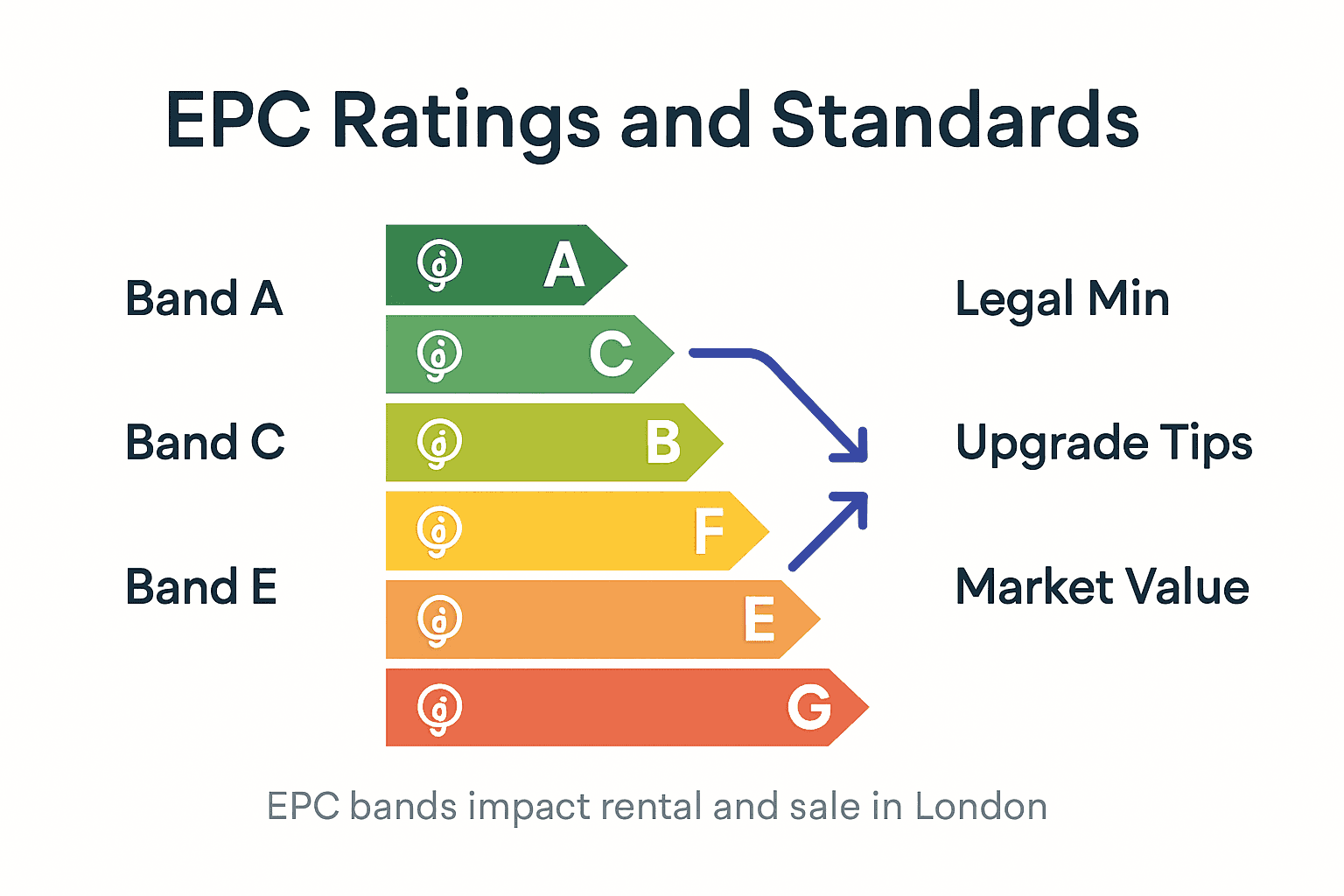
The EPC rating system provides more than just a simple classification. Each certificate includes detailed recommendations for potential energy efficiency improvements, offering property owners actionable insights into reducing their carbon footprint and energy costs. The ratings consider multiple technical aspects such as wall and roof insulation, heating system efficiency, window quality, and renewable energy potential. For London properties, these ratings can significantly influence market value, with more energy-efficient properties often commanding higher prices and attracting environmentally conscious tenants and buyers.
Pro tip: When reviewing an EPC rating, pay close attention to the recommended improvements section, as implementing these suggestions can potentially increase your property’s rating by several bands and reduce long-term energy expenditure.
Here is a summary of EPC rating bands and their typical implications for property owners:
| EPC Rating Band | Energy Efficiency Level | Typical Recommendations | Potential Market Impact |
|---|---|---|---|
| A | Highest | LED lighting, renewables | Strong buyer interest |
| B | Very high | Improved insulation | Higher rental yield |
| C | High | Efficient heating | Meets future standards |
| D | Moderate | Insulate walls/roof | May need upgrades |
| E | Adequate (minimum legal) | Basic measures | Permitted to let (until 2028/2030 only) |
| F | Low | Major insulation/heating | Cannot let without exemption |
| G | Lowest | Full retrofit needed | Unmarketable for letting |
The EPC assessment process for London properties
The Energy Performance Certificate (EPC) assessment for London properties is a systematic and comprehensive process designed to evaluate a building’s energy efficiency and environmental impact. Accredited assessors conduct a detailed on-site inspection, meticulously examining various structural and technological elements that contribute to the property’s overall energy performance. 7 Simple Steps to Get an EPC typically involve scheduling an assessment, preparing the property for inspection, and understanding the subsequent recommendations.
During the assessment, the professional energy assessor will thoroughly examine critical aspects of the property, including wall and roof insulation, heating systems, lighting installations, windows, and overall thermal characteristics. They utilise specialised equipment and measurement techniques to calculate heat loss, energy consumption, and potential carbon emissions. The assessor will document the property’s current energy efficiency status, taking detailed measurements and photographs to support their comprehensive evaluation. This process involves inspecting both visible and accessible elements of the building’s energy infrastructure.

The resulting EPC provides property owners with a detailed analysis of their building’s energy performance, complete with a standardised rating from A to G and specific recommendations for potential improvements. For London properties, this assessment is particularly crucial given the city’s stringent environmental regulations and commitment to reducing carbon emissions. The certificate not only serves as a legal requirement for properties being sold or rented but also offers valuable insights into potential energy-saving modifications that could enhance the property’s efficiency and market value.
Pro tip: Prepare for your EPC assessment by gathering documentation about your property’s previous energy improvements, and ensure all areas of the property are accessible to the assessor to receive the most accurate evaluation.
Minimum Energy Efficiency Standards and legal compliance
The Minimum Energy Efficiency Standards (MEES) represent a critical regulatory framework governing energy performance requirements for rental properties across England and Wales. Landlords face increasingly stringent compliance obligations that mandate minimum energy performance levels for their properties, with current regulations requiring a minimum Energy Performance Certificate (EPC) rating of E for rental units. Properties rated F or G are effectively prohibited from being let unless specific exemptions can be demonstrated.
Under the evolving regulatory landscape, property owners must prepare for significant upcoming changes. From 2028, new tenancies and by 2030, all existing tenancies will be required to achieve a minimum EPC rating of C. These standards carry substantial financial implications, with potential penalties of up to £30,000 per property for non-compliance. The regulations aim to address broader environmental goals, including reducing carbon emissions, mitigating fuel poverty, and improving overall building energy efficiency across the United Kingdom’s housing stock.
Navigating these legal requirements demands proactive planning and strategic investment in property improvements. Landlords should consider comprehensive upgrade strategies focusing on heating systems, insulation quality, and potential renewable energy installations. These improvements not only ensure legal compliance but can also enhance property value, reduce energy costs, and contribute to more sustainable urban development. The regulations represent a structured approach to gradually improving the energy performance of existing buildings, with clear timelines and incrementally increasing standards designed to support a transition towards more energy-efficient properties.
Pro tip: Conduct a comprehensive energy audit of your property well in advance of regulatory deadlines, identifying potential improvements that can incrementally boost your EPC rating and mitigate potential compliance risks.
Cost caps, penalties, and common landlord mistakes
London property landlords must navigate a complex landscape of financial risks and regulatory compliance when managing Energy Performance Certificates (EPCs). Common mistakes in EPC management can result in significant financial penalties and legal complications that extend far beyond simple administrative oversights. Landlords frequently underestimate the potential consequences of non-compliance, which can include substantial fines up to £30,000, restrictions on property lettings, and potential challenges in property market transactions.
The financial implications of EPC non-compliance are multi-layered and can impact landlords in several critical ways. Penalties are not merely punitive but structured to encourage proactive energy efficiency improvements. Properties with EPC ratings below the mandated standards cannot be legally let, effectively rendering them unmarketable. Cost caps on energy efficiency upgrades provide some financial protection, with government schemes designed to offset the expense of necessary improvements. However, landlords must carefully navigate these regulations, understanding that while there are limits to required expenditure, the long-term financial benefits of compliance can significantly outweigh the initial investment.
Identifying and avoiding common landlord mistakes requires a strategic approach. Critical errors include failing to obtain a valid EPC before letting a property, neglecting to register valid exemptions, and underestimating the complexity of upgrade requirements. Proactive landlords should maintain comprehensive documentation, stay informed about evolving regulations, and develop a forward-looking strategy for property improvements. This might involve conducting regular energy audits, understanding available government support mechanisms, and budgeting for incremental upgrades that progressively improve a property’s energy performance rating.
Below is a comparison of common landlord errors and recommended prevention strategies:
| Common Mistake | Why It Occurs | Prevention Strategy |
|---|---|---|
| Missing EPC before letting | Poor documentation | Track renewal dates and keep records |
| Unregistered exemptions | Lack of awareness | Review exemption eligibility annually |
| Neglecting upgrades | Underestimating costs | Budget for phased improvements |
| Insufficient compliance evidence | Disorganised paperwork | Use compliance folder per property |
Pro tip: Create a dedicated compliance folder for each property, documenting all EPC-related assessments, improvements, and communications to streamline potential future regulatory reviews and demonstrate proactive management.
Stay Ahead of EPC and Building Regulations in London
Understanding the impact of EPC and building regulations on your London property can be overwhelming. The challenges of meeting Minimum Energy Efficiency Standards, avoiding costly penalties, and managing essential upgrades can create considerable stress for landlords and property owners. At Complete EPC, we recognise these concerns and offer expert energy assessments and detailed reports tailored specifically to your property’s needs. Our qualified assessors ensure that you receive clear recommendations to improve your EPC rating, helping you save on energy costs and increase your property value while staying compliant.
Take control of your property’s energy performance today by partnering with trusted experts. Visit Complete EPC to book a comprehensive, competitively priced assessment with guaranteed low rates. Discover how we make compliance seamless and hassle-free with accurate certifications and valuable improvement advice. Don’t risk fines or lettings bans — get your EPC sorted now and secure your property’s future in a market demanding energy efficiency. Learn more about 7 Simple Steps to Get an EPC and ensure your property meets all current regulations with confidence.
Frequently Asked Questions
What is an Energy Performance Certificate (EPC)?
An Energy Performance Certificate (EPC) assesses a property’s energy efficiency, providing a rating from A (most efficient) to G (least efficient). It helps potential buyers or renters understand the energy consumption and carbon emissions associated with the property.
Why are EPC ratings important for property owners in London?
EPC ratings are crucial as they not only reflect the energy efficiency of a property but also influence market value, tenant interest, and compliance with legal regulations. Properties with higher ratings often attract environmentally conscious buyers or renters, leading to better rental yields and increased property value.
What are the consequences of not complying with Minimum Energy Efficiency Standards (MEES)?
Failure to comply with MEES can lead to penalties of up to £30,000 per property, legal restrictions on letting properties, and the inability to complete property transactions, making compliance essential for landlords.
How can property owners improve their EPC ratings?
Property owners can enhance their EPC ratings by implementing recommended improvements listed in their certificate, such as upgrading insulation, installing energy-efficient heating systems, or incorporating renewable energy technologies. These improvements can significantly reduce energy costs and increase property value.
Recommended
- Energy Efficiency Regulations 2025: What London Property Owners Must Know
- Benefits of EPC for Landlords in London Property
- 7 Essential EPC Compliance Tips for London Property Owners – Complete EPC
- Understanding EPCs in London: Why They Matter for Property Owners – Complete EPC
- GB BPR Biocidal Product Regulations – ClearSpa™