

British landlords in London face growing pressure to meet strict Energy Performance Certificate regulations. Upgrading to a minimum ‘C’ rating by 2026 may cost between £5,000 and £25,000 for many property owners. Staying ahead of these enforcement processes can help avoid costly fines, protect your reputation, and keep your assets competitive in the London market. This guide highlights the proven steps to mastering EPC requirements while minimizing your energy bills and maximizing property value.
Table of Contents
- EPC Enforcement In London Explained
- Key EPC Compliance Requirements For 2026
- Steps In The EPC Enforcement Process
- Penalties, Exemptions And Appeal Routes
- Practical Tips To Achieve Compliance
Key Takeaways
| Point | Details |
|---|---|
| Understanding EPC Regulations | London landlords must adhere to strict EPC standards to ensure their properties are eligible for rental, with local authorities enforcing these regulations rigorously. |
| Importance of Compliance for 2026 | By 2026, properties will require a minimum EPC rating of ‘C’, requiring proactive upgrades to avoid rental restrictions. |
| Navigating Penalties and Exemptions | Non-compliance can result in substantial fines and potential damage to a landlord’s reputation; understanding exemption routes can mitigate risks. |
| Strategic Planning for Energy Efficiency | Conducting comprehensive energy audits and scheduling assessments in advance can lead to effective compliance and enhance property value. |
EPC Enforcement In London Explained
Energy Performance Certificate (EPC) regulations are critical for London landlords, defining strict standards that dictate property rental eligibility. In London, local authorities rigorously enforce these standards through comprehensive inspection processes designed to improve building energy efficiency. Property owners must understand these regulations to avoid potential penalties and maintain legal compliance when renting out residential or commercial spaces.
The enforcement mechanism involves multiple layers of accountability. Local councils in London have been empowered to monitor and assess properties, ensuring they meet minimum energy performance standards. Landlords are required to obtain a valid Energy Performance Certificate before marketing their property, which demonstrates the building’s energy efficiency rating. These certificates must be renewed periodically and displayed prominently during property transactions or rental agreements.
Penalties for non-compliance can be substantial. London landlords who fail to secure a valid EPC or rent out properties below the minimum energy efficiency standard (currently an E rating) can face significant financial sanctions. These penalties might include fines ranging from £500 to £5,000, depending on the property’s rateable value and duration of non-compliance. Moreover, local authorities have the power to publish enforcement notices, which can damage a landlord’s professional reputation and potentially restrict their ability to rent properties in the future.
Pro tip: Proactively schedule your EPC assessment at least two months before your current certificate expires to ensure uninterrupted compliance and avoid potential rental interruptions.
Key EPC Compliance Requirements For 2026
As London landlords approach 2026, significant changes in Energy Performance Certificate (EPC) regulations are set to transform property management and energy efficiency standards. These upcoming requirements demand proactive planning and strategic investments in building improvements. Understanding the EPC legal requirements will be crucial for property owners seeking to maintain compliance and avoid potential financial penalties.
The most critical requirement for 2026 involves minimum energy efficiency standards. Residential and commercial properties will need to achieve a minimum Energy Performance Certificate rating of ‘C’, up from the current ‘E’ rating. This means landlords must undertake comprehensive energy efficiency upgrades, which might include improving insulation, installing more efficient heating systems, upgrading windows, and implementing advanced thermal technologies. Properties failing to meet these standards will be restricted from being rented out, creating significant financial implications for non-compliant property owners.
Financial preparedness is paramount for meeting these evolving standards. Landlords should anticipate potential upgrade costs ranging from £5,000 to £25,000 depending on the property’s current condition and required improvements. Early planning allows for staged investments, spreading costs over time and avoiding last-minute expensive retrofitting. Strategic investments not only ensure regulatory compliance but can also increase property value, reduce energy consumption, and enhance tenant attractiveness through improved energy performance.
Pro tip: Conduct a comprehensive energy audit of your property at least 18 months before 2026 to identify necessary improvements and develop a phased investment strategy for meeting new EPC requirements.
The following table summarises the main differences between EPC requirements for landlords in 2023 and the upcoming changes in 2026:
| Aspect | Current Requirement (2023) | Future Requirement (2026) | Business Impact |
|---|---|---|---|
| Minimum EPC Rating | E | C | Significant upgrade costs |
| Allowed Property Types | Most property types | Non-compliant restricted | Limited rental opportunity |
| Assessment Frequency | On certificate expiry | May require more frequent | Increased scheduling demand |
| Financial Penalties | £500-£5,000 | Similar, may rise | Higher compliance risk |
Steps In The EPC Enforcement Process
The EPC enforcement process in London follows a structured approach designed to ensure property owners maintain proper energy efficiency standards. Local authorities have developed a systematic method for monitoring and addressing potential breaches of Energy Performance Certificate regulations. EPC legal compliance involves multiple critical stages that landlords must carefully navigate to avoid potential financial penalties.

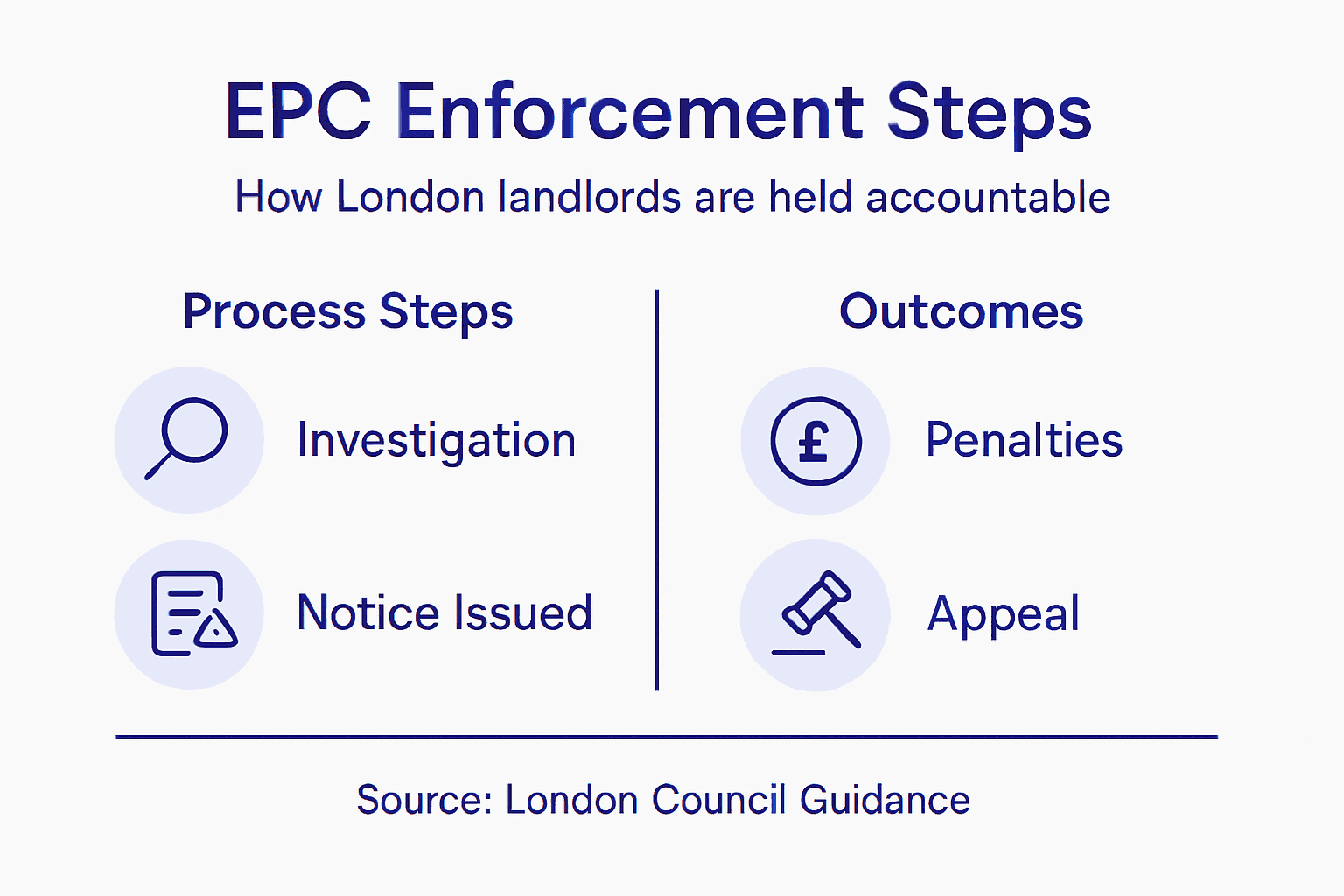
The enforcement process typically begins with an initial investigation triggered by either routine inspections or specific complaints about a property’s energy performance. Local council enforcement officers will first request documentation, requiring landlords to produce a valid Energy Performance Certificate. If a property lacks a current EPC or fails to meet minimum energy efficiency standards, the council will issue a formal compliance notice. This notice provides a specific timeframe for the landlord to rectify the situation, which may include obtaining a new EPC, making necessary energy efficiency improvements, or facing potential financial sanctions.
Should a landlord fail to address the compliance notice, the consequences become increasingly severe. Financial penalties can escalate quickly, with potential fines ranging from £500 to £5,000 depending on the property’s size and the duration of non-compliance. Local authorities have the power to publish enforcement notices, which can significantly damage a landlord’s professional reputation. Additionally, non-compliant properties may be restricted from being rented out, creating substantial financial risks for property owners who ignore their EPC obligations.
Pro tip: Maintain a comprehensive digital file of all your property’s EPC documentation, including historical certificates and improvement records, to streamline the enforcement process and demonstrate proactive compliance.
Penalties, Exemptions And Appeal Routes
EPC enforcement in London involves a complex landscape of potential penalties, strategic exemptions, and legal appeal mechanisms that landlords must carefully navigate. Understanding these nuanced regulations is crucial for property owners seeking to maintain compliance while protecting their financial interests. Landlords can explore EPC exemption routes that might provide relief from standard compliance requirements under specific circumstances.
Penalties for non-compliance can be substantial and multi-layered. Local authorities typically impose financial sanctions ranging from £500 to £5,000, depending on the property’s size and duration of violation. These fines can escalate quickly, potentially including additional penalties such as rent restriction orders that prevent landlords from leasing non-compliant properties. Beyond immediate financial consequences, repeated non-compliance can result in published enforcement notices that damage a landlord’s professional reputation and potentially impact future property transactions.
Exemption routes provide strategic alternatives for landlords facing genuine challenges in meeting EPC standards. Certain property types, such as listed buildings, temporary structures, or properties with prohibitively expensive improvement costs, may qualify for temporary or permanent exemptions. Landlords must meticulously document their exemption claims, providing comprehensive evidence to support their case. The appeal process requires a formal written submission to the local authority, detailing specific reasons why standard EPC requirements cannot reasonably be met, supported by professional assessments and technical documentation.
Pro tip: Maintain a comprehensive digital portfolio documenting all property improvement attempts, assessment reports, and exemption evidence to strengthen your position during potential enforcement reviews.
Here is a quick reference guide to EPC exemptions and the appeal process for London landlords:
| Exemption Category | Typical Reason | Required Evidence | Appeal Process Summary |
|---|---|---|---|
| Listed Buildings | Historic preservation criteria | Conservation officer report | Formal submission to local council |
| Temporary Structure | Short-term occupation | Lease or usage documentation | Submit professional assessments |
| Excessive Cost | Impractical improvement expenses | Contractor cost estimates | Provide technical and financial proof |
| Technical Limitation | Infeasibility of upgrade | Specialist engineering report | Comprehensive written statement |
Practical Tips To Achieve Compliance
Achieving Energy Performance Certificate (EPC) compliance requires a strategic and proactive approach from London landlords. Understanding the nuanced requirements and planning ahead can significantly reduce the risk of penalties and enhance property value. EPC legal compliance demands a comprehensive strategy that integrates technical improvements, documentation, and timely assessments.
Successful compliance begins with thorough property assessment and strategic energy efficiency upgrades. Landlords should prioritise cost-effective improvements that yield the most significant energy rating improvements. This might include upgrading insulation, replacing older heating systems, installing double-glazed windows, and implementing smart energy management technologies. Conducting a comprehensive energy audit can help identify the most impactful and financially sensible upgrades, potentially increasing property value while meeting regulatory requirements.
Timing and documentation are crucial elements of EPC compliance. Landlords should schedule EPC assessments well in advance of property transactions or rental agreements, allowing sufficient time for potential improvements. Utilizing certified and accredited EPC assessors ensures accurate certification and provides professional recommendations for energy efficiency enhancements. Additionally, exploring available government grants and energy efficiency incentive programmes can help offset upgrade expenses, making compliance more financially manageable for property owners.
Pro tip: Create a dedicated digital folder for each property containing EPC certificates, improvement records, and assessment documentation to streamline future compliance processes and demonstrate proactive management.
Navigate EPC Enforcement with Confidence Using Complete EPC
The challenge of adhering to the EPC enforcement process in London can be daunting for landlords facing strict energy performance standards and stiff penalties. The article highlights key pain points such as managing compliance notices, understanding minimum energy efficiency ratings, and avoiding hefty fines up to £5,000. Landlords must demonstrate proactive engagement with the regulations and maintain meticulous documentation to prevent rental restrictions and reputational damage.
Complete EPC is your trusted partner in this complex landscape. We offer expert EPC assessments tailored for both domestic and commercial properties across London, ensuring you meet current and upcoming legal requirements seamlessly. Benefit from our team of qualified assessors who provide detailed energy efficiency reports and bespoke improvement recommendations, helping you stay ahead of enforcement deadlines. Our commitment to competitive pricing and the lowest rates in the UK market means you receive professional service without financial strain.
Avoid the stress of non-compliance today. Discover how our comprehensive EPC services simplify the enforcement process, reduce your risk of penalties, and enhance your property’s value. Take control now by scheduling an assessment or accessing our expert guidance to secure peace of mind and legal compliance.
Explore how Complete EPC can support your energy efficiency journey by visiting our main website and learn more about maintaining compliance with EPC legal requirements. Act today and protect your property investment from the complexities of EPC enforcement.
Frequently Asked Questions
What is the EPC enforcement process for landlords?
The EPC enforcement process involves initial investigations by local authorities, requiring landlords to produce a valid Energy Performance Certificate. If a property does not meet minimum energy efficiency standards, a compliance notice will be issued, allowing a timeframe to rectify the situation.
What penalties do landlords face for failing to comply with EPC regulations?
Landlords can incur financial penalties ranging from £500 to £5,000, depending on the property’s size and the duration of the violation. Repeated non-compliance may result in additional penalties, such as enforcement notices that could affect a landlord’s reputation.
What types of properties may be exempt from EPC requirements?
Certain properties, such as listed buildings or those with excessively high improvement costs, may qualify for temporary or permanent exemptions from EPC standards. Documentation supporting the exemption claim is necessary for consideration by local authorities.
How can landlords prepare for upcoming EPC regulations in 2026?
Landlords can prepare by conducting a comprehensive energy audit at least 18 months in advance, identifying necessary upgrades to meet the new minimum Energy Performance Certificate rating of ‘C’. Strategic planning for staged improvements can help ease financial burdens and ensure compliance.