

Most British landlords in Central London now find that a property’s Energy Performance Certificate rating can mean the difference between high tenant demand and costly penalties. With over 70 percent of British tenants preferring energy-efficient homes, the pressure to comply with energy efficiency standards has never been greater. Understanding how EPC ratings shape rental prices and legal obligations helps property owners make smarter investment choices and avoid the hidden risks that could impact their bottom line.
Table of Contents
- Energy Performance Certificates Explained
- EPC Rating Bands And How They Work
- Legal Requirements For London Landlords
- How EPC Influences Rent And Tenant Demand
- Financial Implications And Investment Returns
- Improving Ratings To Boost Rental Value
Key Takeaways
| Point | Details |
|---|---|
| EPC Ratings Impact Property Value | Higher EPC ratings (A or B) can lead to increased rental prices and property value by attracting environmentally conscious tenants. |
| Legal Compliance for Landlords | Landlords must ensure properties have a minimum EPC rating of E to comply with legal rental standards, or they risk significant fines. |
| Investment in Energy Efficiency | Upgrading properties for better EPC ratings can reduce long-term energy costs and enhance marketability, leading to financial gains. |
| Regular Assessments Required | Conducting regular energy assessments helps landlords maintain compliance and identify potential upgrades to increase rental appeal. |
Energy Performance Certificates Explained
Energy Performance Certificates (EPCs) are crucial documents that provide essential information about a property’s energy efficiency in the United Kingdom. These certificates use a standardised rating system ranging from A (most efficient) to G (least efficient), offering potential renters and property owners a clear understanding of a building’s energy performance. When considering London properties, understanding how energy efficiency ratings work can significantly impact rental prices and property value.
The certificate itself contains comprehensive details about a property’s energy characteristics, including estimated energy costs, current energy efficiency ratings, and potential improvements that could enhance the property’s performance. Approved assessors conduct detailed evaluations using standard calculations, examining factors such as insulation, heating systems, lighting, and ventilation. These assessments help tenants and landlords understand the potential energy consumption and associated costs before entering a rental agreement.
In the competitive London property market, an EPC can directly influence rental prices. Properties with higher energy efficiency ratings (A or B) often command higher rents due to lower expected utility costs and reduced environmental impact. Landlords with well-rated properties can attract environmentally conscious tenants who are willing to pay a premium for energy-efficient homes. Conversely, properties with lower ratings might experience reduced rental demand or require significant energy improvement investments to remain competitive.
Top Tip: Before renting or purchasing a London property, always request and carefully review the Energy Performance Certificate to understand potential long-term energy costs and efficiency improvements.
EPC Rating Bands and How They Work
EPC rating bands provide a comprehensive snapshot of a property’s energy performance, ranging from A to G, with A representing the most energy-efficient properties and G representing the least efficient. These standardised ratings are crucial for understanding a property’s potential energy costs and environmental impact. Energy efficiency calculations consider multiple factors including insulation quality, heating systems, window specifications, and overall energy consumption patterns.

The rating system operates on a points-based methodology, where properties are assessed across various energy-related characteristics. Each band represents a specific range of energy efficiency, with significant implications for property owners and tenants. Properties rated A and B are considered highly efficient, typically featuring modern insulation, advanced heating systems, and sustainable design elements. These top-tier properties often attract environmentally conscious tenants and can command premium rental prices in the competitive London market.
London rental regulations mandate minimum energy performance standards, currently set at band E for residential properties. This means landlords cannot legally rent out properties falling below this threshold without undertaking necessary improvements. Properties in lower bands (F and G) may require substantial investments in energy upgrades, potentially including enhanced wall insulation, more efficient heating systems, or double-glazed windows. Such improvements not only ensure legal compliance but can also significantly reduce long-term energy expenses and increase the property’s overall market value.
Top Tip: Request a detailed breakdown of the EPC rating during property viewings to understand potential future energy costs and necessary improvement investments.
Legal Requirements for London Landlords
London landlords must navigate a complex landscape of energy performance regulations that directly impact their rental properties. Domestic private rented property regulations establish clear legal standards that require landlords to meet minimum energy efficiency requirements before leasing a property. Since April 2020, properties must achieve a minimum Energy Performance Certificate (EPC) rating of E, making it illegal to rent out properties classified as F or G without obtaining a specific exemption.
The legal framework surrounding EPC compliance is stringent, with local authorities empowered to enforce these regulations through significant financial penalties. Landlords who fail to comply can face substantial fines ranging from £1,000 to £5,000 for domestic properties, depending on the property’s rateable value and duration of non-compliance. These penalties serve as a strong deterrent, compelling property owners to invest in energy efficiency improvements and maintain up-to-date certification.
Compliance involves more than simply avoiding penalties; it represents a comprehensive approach to property management in London’s competitive rental market. Landlords must obtain a valid EPC before marketing a property, ensure the certificate is less than 10 years old, and provide a copy to potential tenants and local authorities upon request. The regulations apply to all tenancy types, including short-term lets, private rentals, and social housing, with only a few specific exemptions for listed buildings or properties with minimal potential for energy improvements.
Here’s a quick reference to EPC bands, legal rental status, and practical landlord actions in London:
| EPC Band | Rental Legality (London) | Recommended Landlord Action |
|---|---|---|
| A or B | Fully compliant | Market as premium property |
| C or D | Compliant | Maintain and consider upgrades |
| E | Meets minimum standard | Monitor for future regulation |
| F or G | Illegal without exemption | Invest in immediate improvements |
Top Tip: Maintain a proactive approach by scheduling regular energy assessments and keeping detailed records of your property’s EPC documentation to ensure continuous legal compliance.
How EPC Influences Rent and Tenant Demand
The Energy Performance Certificate has become a critical factor in determining rental attractiveness and pricing within London’s competitive property market. Rental market trends increasingly demonstrate how energy efficiency directly impacts tenant preferences and rental values. Properties with higher EPC ratings can command premium rents, as environmentally conscious tenants prioritise homes that offer lower utility costs and reduced carbon footprints.
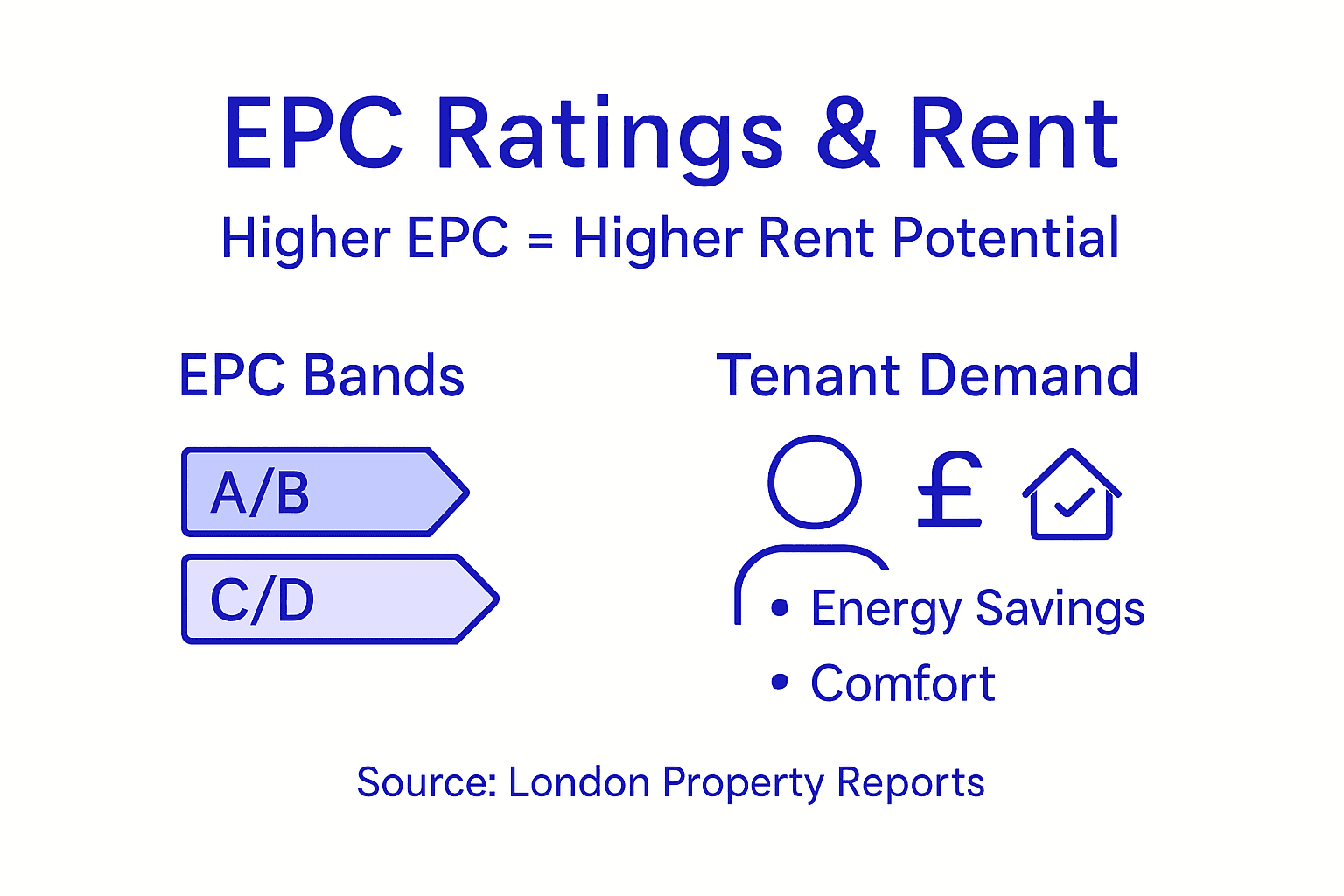
Modern tenants, particularly younger generations, are becoming increasingly sophisticated in their property selection criteria. They view the EPC rating as a key indicator of a property’s overall quality and running costs. A property with an A or B rating can potentially attract higher-quality tenants who are willing to pay more for energy-efficient living spaces. Conversely, properties with lower EPC ratings (F or G) may struggle to find tenants, face longer vacancy periods, and experience downward pressure on rental prices.
Landlords are recognising that investing in energy efficiency improvements is not just a legal requirement but a strategic financial decision. Upgrades such as improved insulation, modern heating systems, and double-glazed windows can significantly boost a property’s EPC rating, making it more attractive to potential tenants and potentially increasing its rental yield. The financial benefits of these improvements extend beyond immediate rental income, potentially increasing the property’s long-term market value and reducing maintenance costs.
Top Tip: Conduct a professional energy assessment to identify cost-effective upgrades that can improve your property’s EPC rating and rental potential.
Financial Implications and Investment Returns
Understanding the financial landscape of Energy Performance Certificates is crucial for property investors in London. Property investment strategies reveal that EPC ratings have become a fundamental consideration in determining a property’s market value and potential return on investment. Higher-rated properties (C and above) not only demonstrate superior energy efficiency but can also command premium prices and attract more discerning tenants.
The financial implications extend beyond immediate rental income. Lenders are increasingly factoring EPC ratings into mortgage considerations, potentially offering more attractive lending terms for properties with superior energy performance. Properties with lower ratings might face higher maintenance costs, reduced tenant interest, and potentially lower resale values. Investors who proactively invest in energy efficiency upgrades can expect to see significant financial benefits, including reduced utility expenses, increased property marketability, and enhanced long-term asset value.
Strategic improvements targeting EPC rating enhancements can yield substantial financial returns. Upgrades such as improved insulation, modern heating systems, and energy-efficient windows not only boost the property’s rating but also provide tangible economic advantages. These improvements can reduce annual energy costs, increase property value, and mitigate potential future regulatory risks. Smart investors view these upgrades as critical investments rather than expenses, recognising their potential to generate long-term financial benefits and competitive advantage in the London property market.
Top Tip: Conduct a comprehensive cost-benefit analysis of potential energy efficiency upgrades, considering both immediate improvements to EPC rating and long-term financial returns.
Improving Ratings to Boost Rental Value
Landlords can significantly enhance their property’s rental potential by strategically improving its Energy Performance Certificate (EPC) rating. Landlord improvement strategies focus on targeted upgrades that not only increase the property’s energy efficiency but also boost its market attractiveness and rental value. The most effective improvements typically involve addressing key areas such as insulation, heating systems, and overall energy consumption.
Prioritising specific upgrades can yield substantial returns for property owners. Key improvements might include installing double-glazed windows, adding loft or wall insulation, upgrading to a more efficient boiler, or implementing smart heating controls. These modifications can potentially move a property from a lower EPC band to a higher rating, which directly translates to increased rental appeal and potential rental income. Tenants are increasingly aware of energy efficiency, and properties with better ratings often command higher rents and attract more desirable long-term occupants.
The financial investment in EPC improvements should be viewed as a strategic long-term decision. While initial upgrade costs can be significant, the potential returns include reduced utility expenses, increased property value, and enhanced marketability. Landlords should conduct a comprehensive energy assessment to identify the most cost-effective improvements that will provide the greatest impact on their property’s EPC rating. Some upgrades may also qualify for government grants or tax incentives, further offsetting the initial investment and making energy efficiency improvements an even more attractive proposition.
The following table summarises how common energy efficiency improvements can enhance EPC ratings and affect London rental value:
| Upgrade Type | Typical EPC Impact | Effect on Rental Value |
|---|---|---|
| Double-glazed windows | May move up 1 rating | Attracts quality tenants |
| Loft/wall insulation | Substantial rating rise | Increases rental income |
| Modern boiler | Often boosts 1-2 bands | Reduces running costs |
| Smart heating controls | Improved efficiency | Appeals to tech-savvy renters |
Top Tip: Consult with a professional EPC assessor to develop a targeted improvement strategy that maximises your property’s energy efficiency and rental potential.
Elevate Your London Property’s Value with Expert EPC Services
Navigating the challenges of EPC ratings is essential for any landlord or property owner aiming to boost rental income and comply with London’s strict energy efficiency regulations. This article highlights how crucial an accurate Energy Performance Certificate is in influencing rent and tenant demand. If you find yourself concerned about meeting the minimum EPC standards or maximising your property’s appeal through improved ratings, understanding the detailed assessment process and tailored improvement recommendations becomes vital.
At Complete EPC, we specialise in delivering comprehensive EPC assessments designed to help you achieve better energy ratings and unlock higher rental values. Our professional consultants provide clear, actionable reports to guide your energy upgrades while ensuring complete legal compliance. Don’t wait until your property falls below the required standards and faces penalties or vacancy. Take control today and experience seamless certification service at the UK’s most competitive prices.
Explore how our expertise can make a difference by visiting Complete EPC and secure your property’s future in the London rental market. Request your assessment now and start increasing your property’s value through improved energy performance.
Frequently Asked Questions
What is an Energy Performance Certificate (EPC)?
An Energy Performance Certificate (EPC) is a document that provides information on the energy efficiency of a property, rated from A (most efficient) to G (least efficient).
How does an EPC rating affect rental prices in London?
Properties with higher EPC ratings (A or B) generally command higher rental prices due to lower expected utility costs and increased appeal to environmentally conscious tenants.
What are the legal requirements for landlords regarding EPC ratings?
Landlords must ensure their properties meet a minimum EPC rating of E before renting them out, as properties rated F or G cannot be legally rented without an exemption.
How can landlords improve their property’s EPC rating?
Landlords can improve their property’s EPC rating by upgrading insulation, installing modern heating systems, energy-efficient windows, and implementing smart heating controls, all of which enhance energy efficiency and rental potential.