

Every landlord in London faces new challenges as energy efficiency rules continue to evolve. Keeping up with Energy Performance Certificate requirements is no longer just a box-ticking exercise. These regulations directly influence lease renewals, property value, and legal compliance. Understanding how an EPC rating affects your rental strategy and future upgrades will help you protect your investment and meet legal obligations. This guide provides practical insights into maintaining compliance and improving property performance.
Table of Contents
- Energy Performance Certificates Explained
- Types of Lease Renewals and EPC Needs
- Minimum Energy Efficiency Standards (MEES)
- Legal Risks and Compliance for Landlords
- Costs, Validity and Exemption Scenarios
Key Takeaways
| Point | Details |
|---|---|
| Importance of EPCs | Energy Performance Certificates are vital for understanding a property’s energy efficiency and ensuring compliance with legal standards. |
| Evolving Standards | Landlords must prepare for increasing minimum EPC ratings, potentially rising to a C by 2030, requiring strategic property upgrades. |
| Legal Compliance Risks | Non-compliance with EPC requirements can lead to significant fines and restrictions on property lettings, making documentation crucial. |
| Exemption Scenarios | Landlords should understand various exemptions and their criteria to avoid costly upgrades while ensuring regulatory compliance. |
Energy Performance Certificates Explained
Energy Performance Certificates (EPCs) represent crucial documentation for property owners, tenants, and landlords in London, providing a comprehensive assessment of a building’s energy efficiency. These certificates deliver an objective rating system that helps stakeholders understand the energy performance and potential improvements for their properties.
EPCs deliver ratings from A (most efficient) to G (least efficient), offering a clear visual representation of a property’s energy consumption and environmental impact. Energy efficiency ratings highlight critical information about heating systems, insulation quality, and potential energy-saving opportunities. The assessment considers multiple factors including wall construction, heating mechanisms, lighting efficiency, and overall thermal performance.
In the United Kingdom, these certificates play a significant role in property transactions and rentals. Current regulations mandate that rental properties must achieve a minimum EPC rating of E, with proposed future changes potentially requiring a C rating by 2030. Landlords will need to invest in property upgrades to meet these evolving standards, which could involve improving insulation, upgrading heating systems, or implementing more energy-efficient technologies.
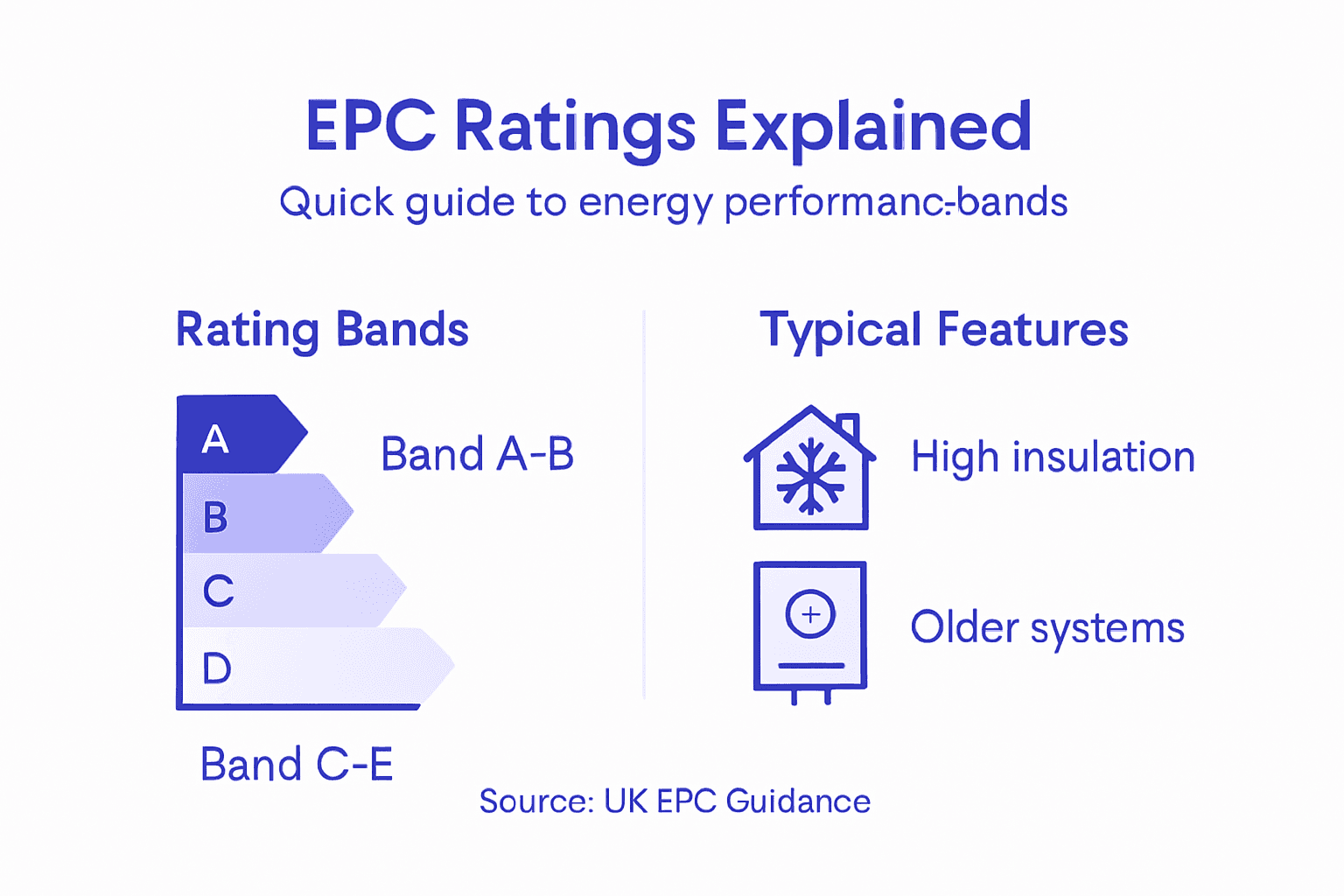
Here is a summary of EPC rating bands and what they typically indicate for London properties:
| EPC Rating Band | Typical Property Characteristics | Likely Upgrade Opportunities |
|---|---|---|
| A-B (Most efficient) | Modern insulation, advanced heating, LED lighting | Minimal, focus on maintenance |
| C-D | Average insulation, standard heating systems | Add loft or wall insulation |
| E-F | Poor insulation, dated heating or single glazing | Upgrade boilers, improve glazing |
| G (Least efficient) | No insulation, old boiler, inefficient lighting | Complete retrofit recommended |
Pro tip: Request a comprehensive EPC assessment before lease renewals to identify potential energy efficiency improvements and avoid potential legal complications.
Types of Lease Renewals and EPC Needs
Lease renewals in London present complex challenges for property owners, particularly when navigating the intricate landscape of Energy Performance Certificate (EPC) requirements. Different lease renewal scenarios demand specific approaches to meeting energy efficiency standards, which vary depending on the property type, age, and current energy performance rating.
In the private rental sector, landlords must carefully consider EPC requirements during lease negotiations. The most common lease renewal types include fixed-term renewals, periodic tenancies, and statutory periodic tenancies, each with unique implications for EPC compliance. Current regulations mandate a minimum EPC rating of E, with proposed changes potentially elevating this standard to a C rating by 2030, requiring proactive property improvements.

The lease renewal process now directly intersects with energy efficiency standards. Landlords must conduct thorough assessments before renewing leases, examining potential upgrades such as improved insulation, modern heating systems, and more efficient lighting. Strategic property investments can not only ensure legal compliance but also increase the property’s market value and attractiveness to potential tenants. Failure to meet these evolving standards can result in significant financial penalties and legal complications.
Pro tip: Conduct a comprehensive EPC assessment at least three months before lease renewal to identify and implement necessary energy efficiency improvements.
Minimum Energy Efficiency Standards (MEES)
Minimum Energy Efficiency Standards (MEES) represent a critical regulatory framework designed to improve energy performance in the private rental sector across England and Wales. These standards establish mandatory minimum energy efficiency requirements for residential properties, directly impacting landlords and property managers in their lease renewal processes.
Since April 2018, MEES regulations have transformed rental property standards, mandating that private rented properties must achieve a minimum Energy Performance Certificate (EPC) rating of E. The regulations initially applied to new tenancies and were extended to existing tenancies by April 2020. Landlords with properties falling below this rating must either upgrade their property’s energy efficiency or register an appropriate exemption to continue legally renting the property.
The government’s future plans are even more ambitious, with proposals to raise the minimum EPC rating to C by 2030. This progressive approach means landlords must strategically plan property improvements, considering cost-effective upgrades such as improved insulation, modern heating systems, and enhanced glazing. Non-compliance can result in substantial financial penalties, potentially reaching £5,000 for residential properties and up to £150,000 for commercial premises. Landlords are also required to invest up to £3,500 in energy efficiency improvements before being exempt from these standards.
Pro tip: Regularly review your property’s EPC rating and budget for incremental energy efficiency upgrades to stay ahead of evolving regulatory requirements.
Legal Risks and Compliance for Landlords
Legal compliance in the rental property sector has become increasingly complex, particularly regarding Energy Performance Certificates (EPCs) and associated regulatory requirements. Landlords must navigate a challenging landscape of evolving standards and potential financial penalties that can significantly impact their property management strategies.
Legal risks for non-compliance are substantial, with potential consequences ranging from financial penalties to restrictions on property lettings. Landlords who fail to provide a valid EPC can face invalidation of Section 21 notices, which effectively prevents them from evicting tenants through standard legal procedures. Local authorities have the power to impose fines up to £5,000, and repeated non-compliance can result in more severe sanctions, including prohibition from renting out properties.
The regulatory framework demands meticulous documentation and proactive management. Landlords must not only obtain and display valid EPCs but also ensure their properties meet minimum energy efficiency standards. This includes displaying EPC ratings in property advertisements, providing certificates to tenants promptly, and maintaining up-to-date energy performance documentation. Exemptions exist for certain property types, but landlords must provide rigorous documentation to substantiate these claims, with limited grounds for avoiding compliance requirements.
Pro tip: Maintain a comprehensive digital record of all EPC documentation and energy efficiency upgrades to streamline compliance and protect against potential legal challenges.
Costs, Validity and Exemption Scenarios
Navigating the complex landscape of Energy Performance Certificate (EPC) requirements demands a nuanced understanding of costs, validity periods, and potential exemption scenarios for London property owners. Landlords must carefully evaluate multiple factors to ensure compliance while managing financial implications of energy efficiency upgrades.
Exemption scenarios present critical considerations for property owners seeking to minimise mandatory improvement costs. The government has proposed a £15,000 spending cap for landlords attempting to meet EPC requirements, with potential £10,000 exemptions for affordability concerns. Specific exemptions apply when property upgrades would potentially devalue the property by more than 5%, render the property unlettable, or require tenant consent that is withheld. Historic or listed buildings may also qualify for exemptions if energy efficiency improvements would compromise their architectural integrity or character.
EPC certificates remain valid for 10 years, though proposed regulatory reforms suggest potential changes to validity periods to enhance accuracy and responsiveness. Landlords must register exemptions with comprehensive documentation, demonstrating that proposed improvements would create undue financial hardship or negatively impact the property’s fundamental characteristics. Strategic planning involves assessing upgrade costs against potential penalties, understanding trigger events that necessitate certificate renewal, and maintaining meticulous records to substantiate exemption claims.
The table below compares exemption scenarios for landlords seeking relief from EPC upgrade requirements:
| Exemption Type | Qualifying Criteria | Required Documentation |
|---|---|---|
| Financial cap | Costs above £15,000 | Contractor quotes, financial summaries |
| Property devaluation | Value drops >5% after upgrades | Independent property valuation report |
| Listed/heritage property | Upgrades harm architectural character | Heritage authority statement |
| Tenant consent withheld | Tenants refuse permission for work | Written evidence of refusal |
Pro tip: Consult with a professional energy assessor to conduct a comprehensive cost-benefit analysis before implementing EPC-related property upgrades.
Simplify Your EPC Needs for Lease Renewals in London Today
Navigating the complex legal rules and energy efficiency requirements for EPCs during lease renewals can be overwhelming. With evolving Minimum Energy Efficiency Standards and strict compliance demands, landlords and property owners face significant challenges including potential penalties and costly upgrades. Understanding your EPC rating and planning proactive improvements is vital to avoid legal risks and enhance your property’s value in London’s competitive market.
At Complete EPC, we specialise in providing fast, accurate, and competitively priced Energy Performance Certificates tailored for both domestic and commercial properties. Our team of qualified assessors offers detailed reports highlighting necessary energy efficiency improvements aligned with current regulations. Whether you need an EPC for lease renewal or comprehensive advice for compliance, our expert consultancy services make it easy to stay ahead of legal requirements while maximising your property’s potential.
Don’t wait for costly penalties or legal complications. Take control of your lease renewal process with a reliable EPC assessment from Complete EPC. Visit us now to secure your energy certification and safeguard your property’s future today.
Frequently Asked Questions
What is an Energy Performance Certificate (EPC) and why is it important for lease renewals?
An Energy Performance Certificate (EPC) is a document that assesses a property’s energy efficiency on a scale from A (most efficient) to G (least efficient). It is important for lease renewals as it influences compliance with legal standards, specifically the Minimum Energy Efficiency Standards (MEES), which require rental properties to have a minimum EPC rating of E.
What are the Minimum Energy Efficiency Standards (MEES) for rental properties?
Minimum Energy Efficiency Standards (MEES) require rental properties to achieve at least an EPC rating of E. These regulations apply to new tenancies, and as of April 2020, they extend to existing tenancies. Future proposals aim to raise this standard to a C rating by 2030.
What are the potential penalties for landlords not compliant with EPC regulations?
Landlords who do not comply with EPC regulations may face fines up to £5,000 for residential properties and even greater penalties for commercial premises. Non-compliance can also hinder the ability to evict tenants legally, resulting in significant legal complications.
How can landlords prepare for lease renewals to meet EPC requirements?
Landlords should conduct a thorough EPC assessment at least three months before lease renewal to identify necessary energy efficiency improvements. This includes upgrading insulation, modernising heating systems, and potentially enhancing lighting to ensure compliance with current and future EPC standards.