

The gap between compliance and missed opportunity often hinges on how up to date your property’s energy records are. For property owners and landlords in Greater London, understanding the true value of a Post-Improvement Energy Performance Certificate means not only avoiding steep fines but also boosting the market appeal of your investment. This overview will help you grasp what sets these certificates apart, why they matter with the latest regulations, and how they can directly support your financial goals.
Table of Contents
- What Is A Post-Improvement EPC?
- How It Differs From Initial EPC Assessments
- Legal Necessity And Current UK Requirements
- Benefits For Landlords And Property Owners
- Costs, Common Pitfalls, And Practical Steps
Key Takeaways
| Point | Details |
|---|---|
| Post-Improvement EPC | This certificate reflects the enhanced energy efficiency of properties after upgrades, showcasing investment effects and current environmental credentials. |
| Initial vs Post-Improvement EPC | Initial EPCs provide a baseline, while post-improvement EPCs reflect actual upgrades, offering a comprehensive assessment of energy performance. |
| Legal Compliance | UK regulations require landlords to meet increasing minimum energy performance standards, with failing to comply resulting in significant penalties. |
| Strategic Advantage | Post-improvement EPCs can enhance property value and attract tenants by documenting energy efficiency improvements and substantiating higher rental rates. |
What Is a Post-Improvement EPC?
A Post-Improvement Energy Performance Certificate (EPC) represents an updated energy assessment document that reflects the enhanced energy efficiency status of a property after significant upgrades or modifications have been implemented. Unlike standard EPCs, this specialised certificate captures the real-world improvements made to a building’s energy performance, providing property owners with a comprehensive overview of their investment’s impact.
When property owners invest in energy-saving measures like upgraded insulation, more efficient heating systems, or renewable energy installations, a post-improvement EPC documents these enhancements. This updated certificate demonstrates the tangible benefits of energy efficiency upgrades, showing potential buyers or tenants the property’s current environmental credentials and potential reduced running costs.
The primary purpose of a post-improvement EPC is to provide a transparent and precise representation of a property’s energy performance after targeted improvements. By capturing the enhanced rating, these certificates serve multiple stakeholders: property owners can validate their investment, potential buyers can understand the property’s energy efficiency, and regulatory bodies can track progress towards broader energy conservation goals.
Pro tip: Before commissioning a post-improvement EPC, ensure you have comprehensive documentation of all energy efficiency upgrades to maximise your potential rating improvement.
How It Differs From Initial EPC Assessments
Initial and post-improvement Energy Performance Certificates (EPCs) serve distinctly different purposes in assessing a property’s energy efficiency. While initial EPCs provide a baseline rating reflecting the building’s condition at the time of sale or rental, post-improvement EPCs capture targeted upgrades that demonstrate meaningful energy performance enhancements.
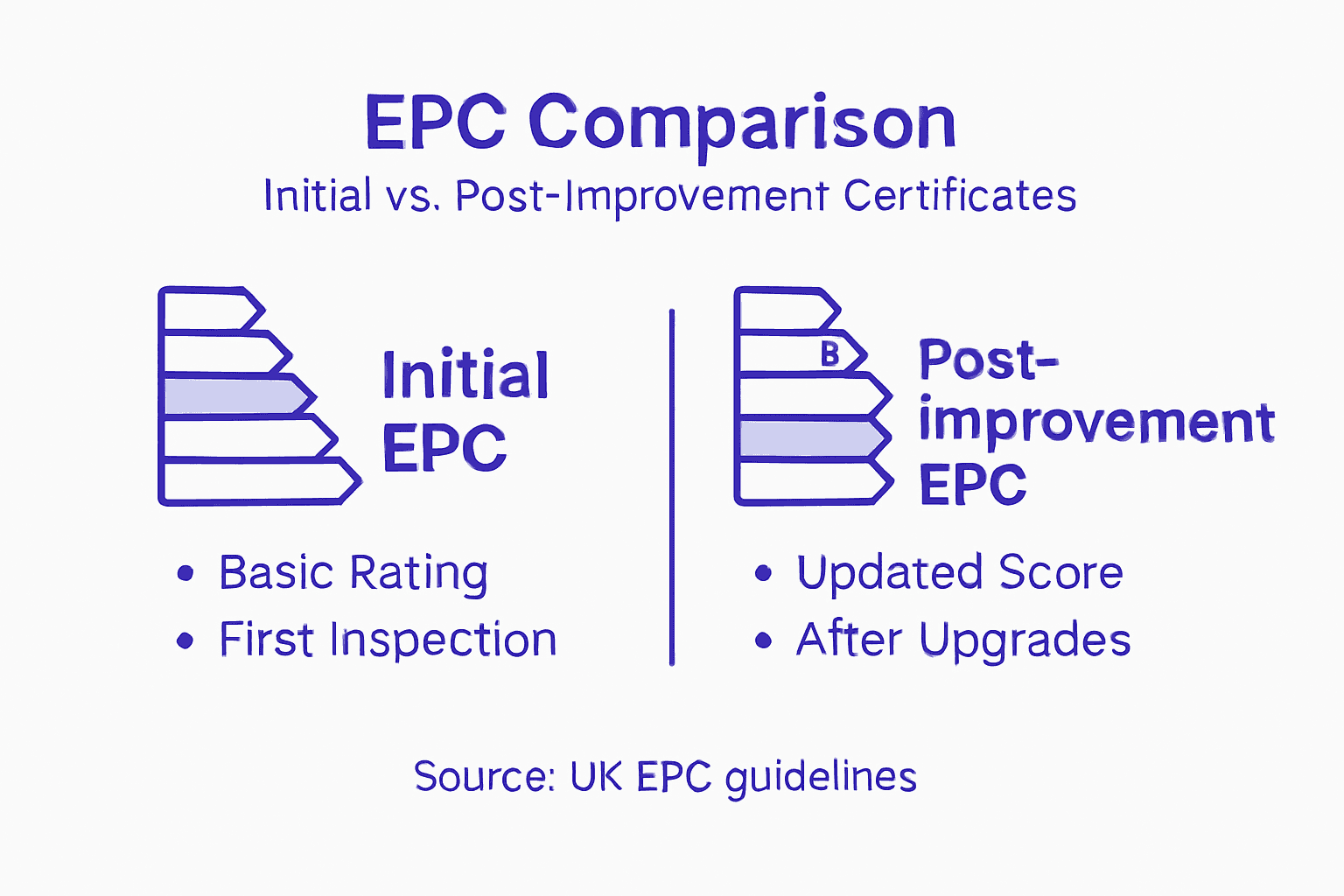
The key differences emerge in the depth and comprehensiveness of the assessment. Initial EPCs typically offer a snapshot of the property’s energy status at a specific moment, often relying on standard assumptions about building characteristics. In contrast, post-improvement EPCs provide a more dynamic evaluation that reflects actual modifications, including detailed insights into fabric performance, heating system efficiency, and potential smart technology integrations.
Government initiatives increasingly recognise the importance of these updated certificates. By supporting more accurate energy performance documentation, post-improvement EPCs help property owners validate their investments, assist potential buyers in understanding true energy efficiency, and contribute to broader regulatory compliance and sustainability goals. These updated assessments offer a more transparent and precise representation of a property’s current environmental credentials.
Pro tip: Collect comprehensive documentation of all energy efficiency upgrades before requesting a post-improvement EPC to ensure the most accurate and beneficial assessment possible.
Here is a concise summary of how initial and post-improvement EPCs compare:
| Aspect | Initial EPC Assessment | Post-Improvement EPC |
|---|---|---|
| Timing | At sale or rental point | After energy-saving upgrades completed |
| Data Used | Based on standard property features | Reflects actual improvements |
| Purpose | Provides energy performance baseline | Demonstrates enhanced energy efficiency |
| Regulatory Relevance | Minimum compliance check | Monitors compliance and best practice |
Legal Necessity and Current UK Requirements
The United Kingdom has established comprehensive legal frameworks governing Energy Performance Certificates (EPCs), with increasingly stringent regulations aimed at improving property energy efficiency. Minimum energy efficiency standards mandate that rental properties meet specific performance criteria, currently set at a minimum EPC rating of band E, with plans to elevate this requirement to band C by 2030.
Landlords and property owners face significant legal obligations under these regulations. Non-compliance can result in substantial financial penalties, with potential fines reaching up to £30,000 for properties that fail to meet the prescribed energy efficiency standards. The legal requirements extend beyond simple certification, demanding proactive improvements and regular reassessments to ensure properties maintain acceptable energy performance levels.
The evolving regulatory landscape reflects the UK’s commitment to reducing carbon emissions and improving building energy efficiency. Property owners must now view EPCs not just as a bureaucratic requirement, but as a crucial tool for demonstrating environmental responsibility and maintaining property marketability. This means investing in meaningful energy improvements, documenting upgrades comprehensively, and staying informed about upcoming regulatory changes that could impact property valuation and rental potential.
Pro tip: Maintain a detailed record of all energy efficiency upgrades and schedule regular EPC assessments to stay ahead of changing regulatory requirements and potential financial penalties.
Benefits for Landlords and Property Owners
Post-improvement Energy Performance Certificates offer substantial strategic advantages for landlords and property owners seeking to enhance their property’s market positioning. Property value improvements can be directly demonstrated through validated energy efficiency upgrades, creating a compelling narrative for potential tenants and buyers about the property’s sustainable credentials.

These enhanced certificates provide multiple financial and competitive benefits. Landlords can substantiate higher rental rates by showcasing tangible energy efficiency improvements, potentially reducing tenant energy expenditures and making the property more attractive in a competitive rental market. The documented upgrades serve as concrete evidence of investment in property maintenance and environmental responsibility, which increasingly resonates with environmentally conscious tenants and buyers.
Beyond immediate financial benefits, post-improvement EPCs support long-term property management strategies. They offer actionable insights into potential future energy efficiency upgrades, help property owners access targeted grants and funding, and demonstrate compliance with evolving regulatory standards. By proactively managing and documenting energy performance, landlords can position themselves ahead of mandatory efficiency requirements and potentially mitigate future retrofit costs.
Pro tip: Systematically document all energy efficiency upgrades and retain professional evidence to maximise the impact of your post-improvement EPC during property valuations and rental negotiations.
Costs, Common Pitfalls, and Practical Steps
Navigating the post-improvement EPC landscape requires strategic financial planning and understanding of potential challenges. Typical assessment costs range between £60 and £120, depending on property complexity and size, making it essential for property owners to budget accordingly and view this expense as a valuable investment in property value and compliance.
Property owners must be acutely aware of common pitfalls that can undermine their EPC improvement efforts. These include failing to commission a new certificate after significant upgrades, relying on outdated assessments, and misunderstanding Minimum Energy Efficiency Standards (MEES) thresholds. Engaging certified, accredited assessors who can provide comprehensive and accurate evaluations is crucial to avoiding potential regulatory complications and ensuring that all recent improvements are properly documented.
Practical steps for successfully managing post-improvement EPCs involve meticulous documentation and proactive planning. This includes maintaining detailed records of all energy efficiency upgrades, scheduling assessments immediately after improvement works are complete, and understanding the specific requirements for different property types. Property owners should also explore potential grants and support schemes that can help offset improvement costs, thereby making energy efficiency upgrades more financially accessible.
Pro tip: Create a dedicated file documenting all energy efficiency improvements, including invoices, technical specifications, and professional assessment reports, to streamline future EPC processes and support property valuation claims.
The following table outlines key practical steps and common pitfalls for post-improvement EPCs:
| Action Item | Explanation | Consequence of Neglect |
|---|---|---|
| Maintain upgrade documentation | Keep detailed records and invoices | Lower rating, compliance risk |
| Use accredited assessors | Ensure professional, certified evaluation | Inaccurate or invalid EPC |
| Schedule timely assessments | Assess soon after improvements are finished | Outdated performance rating |
| Understand MEES thresholds | Stay informed on changing minimum standards | Risk of substantial fines |
Maximise Your Property Value with a Post-Improvement EPC
Understanding the critical role a post-improvement Energy Performance Certificate plays in reflecting your property’s enhanced energy efficiency can be the difference between missing out and securing higher value. The article highlights common challenges such as maintaining detailed upgrade documentation and complying with evolving MEES regulations. These pain points often leave property owners vulnerable to costly fines and undervalued assets. By focusing on accurate assessments that showcase your energy-saving investments, you directly boost your property’s appeal to buyers and tenants in a competitive market.
Complete EPC specialises in helping landlords, estate agents, and property owners across London seamlessly navigate these complexities. Our team of qualified assessors ensures your post-improvement EPC accurately captures every upgrade you have made, helping you demonstrate improved energy efficiency and comply fully with legal requirements. With our competitive pricing and expert guidance, you gain clarity on your property’s true worth while avoiding regulatory pitfalls.
Are you ready to turn your energy efficiency improvements into increased property value and compliance confidence? Discover how our professional EPC services can support your goals today. Take action now and secure your comprehensive certification with Complete EPC to benefit from expert advice and the lowest rates in London. Visit us and book your assessment to ensure your property stands out for all the right reasons.
Frequently Asked Questions
What is a post-improvement EPC?
A post-improvement Energy Performance Certificate (EPC) reflects a property’s enhanced energy efficiency after significant upgrades or modifications have been made. It documents the improvements to demonstrate the property’s current environmental credentials and reduced running costs.
How does a post-improvement EPC differ from an initial EPC?
While an initial EPC provides a baseline rating based on a property’s condition at the time of sale or rental, a post-improvement EPC captures actual energy-saving modifications, offering a more accurate and comprehensive evaluation of a property’s energy performance.
Why is a post-improvement EPC important for landlords?
A post-improvement EPC allows landlords to validate their investments in energy efficiency upgrades, potentially justify higher rental rates, and demonstrate compliance with legal standards related to minimum energy efficiency requirements.
What costs should property owners expect when obtaining a post-improvement EPC?
Typical costs for a post-improvement EPC assessment range between £60 and £120, depending on the complexity and size of the property. It’s a valuable investment that can enhance property value and ensure regulatory compliance.
Recommended
- EPC and Tenant Attraction – Boosting Rental Appeal
- EPC Ratings: How They Shape London Property Value
- Why Improve Energy Ratings: Benefits for London Properties
- 7 Key EPC Benefits for Property Investors in London
- 14% van de Verenigingen van Eigenaren heeft al zonnepanelen geïnstalle – Holland Electric Duurzaam