

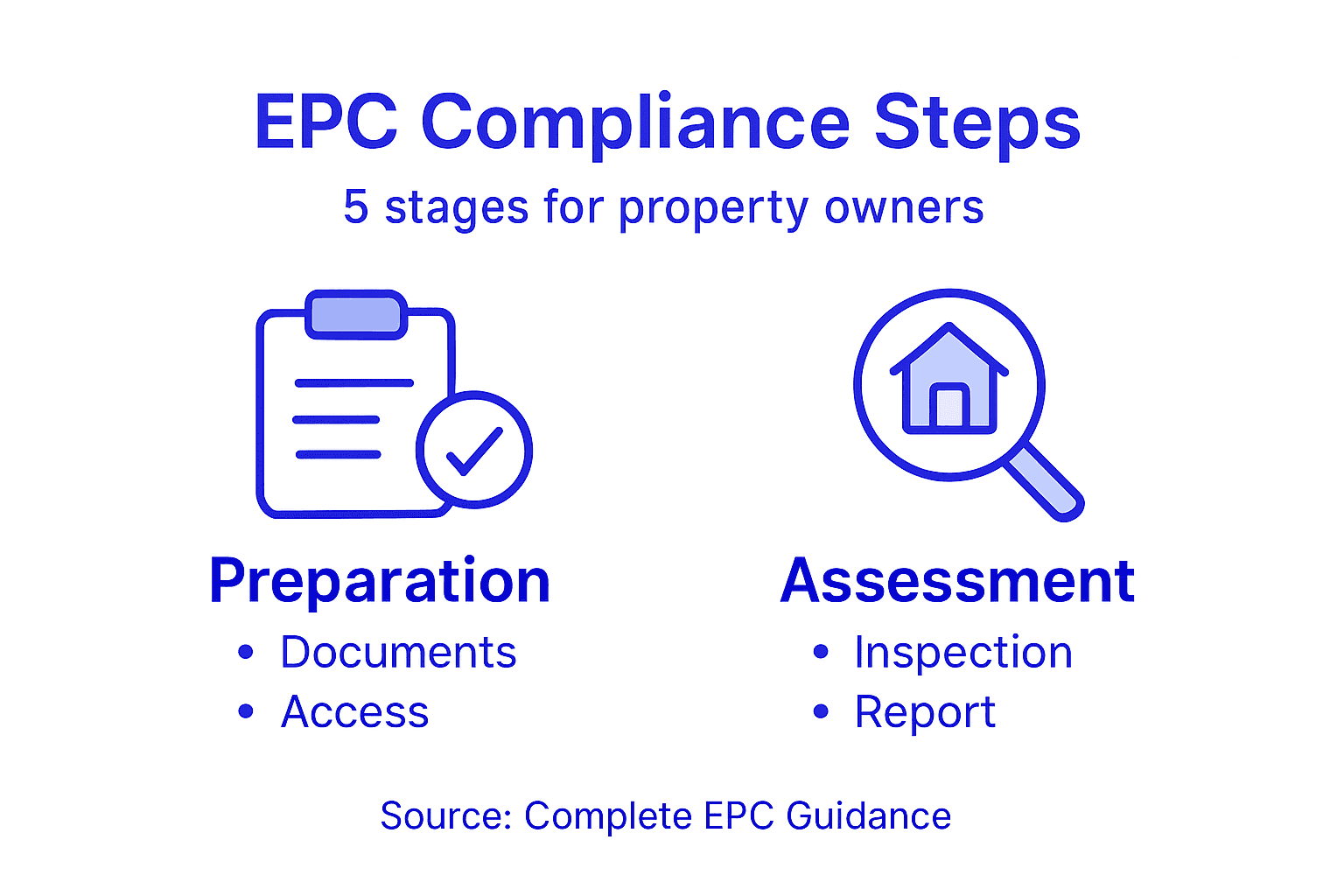
Securing an accurate Energy Performance Certificate can feel like a challenging process for many property owners in Central London. With regulations tightening and buyers paying closer attention to energy ratings, understanding the steps involved is vital for protecting both property value and legal standing. This guide explains the energy compliance process for EPC assessments from preparing documentation through to maintaining legal compliance, offering clear steps that make achieving a reliable EPC smoother and stress free.
Table of Contents
- Step 1: Prepare Property Documentation For EPC Assessment
- Step 2: Appoint A Certified Energy Assessor
- Step 3: Facilitate On-Site Property Evaluation
- Step 4: Review And Implement EPC Recommendations
- Step 5: Verify And Maintain Legal Compliance Status
Quick Summary
| Key Point | Explanation |
|---|---|
| 1. Prepare thorough property documentation | Ensure all relevant documents and improvement records are accessible for the EPC assessor to achieve an accurate rating. |
| 2. Hire a qualified energy assessor | Always select assessors accredited by government-approved schemes to ensure a legally valid EPC certificate. |
| 3. Ensure clear access for inspections | Make your property accessible and free from obstructions for an efficient on-site assessment, enhancing accuracy. |
| 4. Implement EPC recommendations wisely | Review and prioritise suggested improvements based on impact and cost to optimise energy efficiency and property value. |
| 5. Maintain compliance and renew EPCs | Regularly check compliance statuses and renew EPCs before expiration to avoid legal issues and penalties. |
Step 1: Prepare property documentation for EPC assessment
Preparing your property documentation is the foundation of a smooth EPC assessment. Getting this right means your assessor has everything needed to conduct a thorough inspection, which directly affects the accuracy of your energy rating. This step ensures you’re not caught off guard when the assessor arrives and helps you avoid delays that could impact your property transaction or compliance deadline.
Start by making your property accessible to the assessor on the scheduled day. They’ll need to inspect key areas including your heating systems, insulation, windows, and structural elements like walls and roof spaces. If your property is currently occupied, you’re required by law to give your tenants proper notice before the assessment takes place. This isn’t just a courtesy; it’s a legal obligation that protects both you and your tenants. When you contact a certified energy assessor, they’ll guide you on the specific notice period required in your area.
Gather any documentation that could influence your energy efficiency rating. This includes details on recent improvements you’ve made to the property, such as new boilers, loft insulation upgrades, double glazing installations, or renewable energy systems like solar panels. These improvements directly affect your EPC rating, and providing this information helps the assessor calculate an accurate score. For new builds, architectural plans are genuinely useful and should be prepared in advance. For existing properties, you typically don’t need to provide extensive documentation, but having records of energy-related upgrades readily available makes the process considerably faster.
Ready your property for the physical inspection itself. The assessor will take measurements and photographs during their visit to inform the EPC calculation, so ensure they can access all relevant areas without obstruction. Make sure heating system controls are visible and accessible, loft hatches can be opened safely, and external elements like windows and external doors can be inspected properly. If you have any documentation about your property’s construction, such as building regulations certificates or previous survey reports, keep these handy to share with the assessor if they request additional context.
Consider creating a simple checklist for yourself. Note down the heating fuel type used in your property, the approximate age of your boiler and windows, whether you have cavity wall insulation or loft insulation installed, and any other energy-related features. This preparation takes perhaps thirty minutes but prevents the common scenario where assessors need to make assumptions because information isn’t readily available, which can lead to less accurate ratings.
Professional tip Keep records of all energy-related improvements and maintenance in one accessible folder, both physical and digital, so you can quickly reference them for your assessor and provide evidence that supports your property’s actual energy performance.
Step 2: Appoint a certified energy assessor
Appointing the right energy assessor is crucial to getting a valid EPC that stands up to legal scrutiny. Your assessor must be qualified and accredited by government-approved schemes, which is non-negotiable for compliance. This step determines the quality and accuracy of your energy rating, so choosing carefully pays dividends when it comes to property value and regulatory acceptance.
Start by understanding what credentials matter. Only qualified energy assessors accredited by government-approved schemes can produce a legally valid EPC certificate. In the United Kingdom, this means the assessor must be registered with one of the recognised accreditation bodies that oversee domestic or commercial energy assessors depending on your property type. When you’re searching for an assessor, ask to see their accreditation credentials and verify them independently. Don’t simply take their word for it. You can check the accreditation body’s register online to confirm they’re currently certified. This protects you from working with unqualified assessors who might produce certificates that aren’t legally recognised.
Compare quotes from multiple certified assessors in your local area before making your appointment. Price matters, but it shouldn’t be your only deciding factor. Look for assessors who have experience with properties similar to yours, whether that’s Victorian terraced houses, modern flats, or listed buildings. Ask about their turnaround time for producing the EPC report, as this varies between assessors. Some can deliver your certificate within days, whilst others may take longer. Read reviews if you can find them, and don’t hesitate to ask for references from previous clients. A slightly higher quote from an assessor with proven experience often delivers better value than choosing the cheapest option, especially if the cheaper assessor requires multiple visits or produces inaccurate data.
When you contact potential assessors, be clear about your property type and your timeline. Tell them whether you’re dealing with a domestic property, a commercial building, or a mixed-use property, as this affects the assessment process and cost. Provide details about your property size, age, and heating system so they can give you an accurate quote. Most certified assessors will ask these questions themselves, which is a good sign they’re being thorough. Once you’ve selected your assessor, book your appointment well in advance. If your property is occupied, remember that you need to give your tenants proper legal notice before the assessor visits. Don’t book the appointment and then worry about notifying tenants afterwards. Coordinate the timing upfront to avoid delays.
Confirm the practical details with your assessor before the visit date. Ensure they know how to access your property, whether there are any challenging areas they should be prepared for, and whether you’ll be present during the assessment. Some property owners prefer to be there to answer questions, whilst others give the assessor a key and let them work independently. Either approach is fine, but clarify this when booking. Your assessor will collect detailed data on your building fabric, heating systems, insulation, windows, and energy usage patterns during the visit. They use approved calculation methodologies to convert this information into your EPC rating. The quality of the data they collect directly affects the accuracy of your final certificate.
Professional tip Choose an assessor who offers a property survey or detailed consultation before the formal assessment, as this often reveals potential energy improvements you can make beforehand, which could improve your final EPC rating and property value.
Step 3: Facilitate on-site property evaluation
Facilitating a smooth on-site evaluation is where theory meets practice. Your role during this step is to ensure the assessor has complete access to all areas of your property and can gather the accurate data needed for a reliable EPC rating. A well-organised evaluation saves time, prevents delays, and directly improves the quality of your final certificate.
Prepare your property for full access before the assessor arrives. They need to inspect heating systems, insulation, windows, lighting, ventilation systems, and the building fabric itself. This means ensuring loft hatches are accessible and safe to open, boiler cupboards are uncluttered, and external elements like walls and roof spaces can be examined properly. If you have renewable energy installations such as solar panels or heat pumps, make sure the assessor knows where they are located and can access them for inspection. Taking measurements and photographs forms a core part of the assessment, so clear pathways and good lighting in key areas make their job considerably easier. Don’t just unlock the front door and hope for the best. Walk through your property beforehand and identify any obstacles that might hinder access, then remove them.

If your property is currently occupied by tenants, you must have given appropriate notice before the assessment takes place. The legal minimum is 24 hours, though providing more notice is always preferable and demonstrates respect for your tenants’ privacy. Communicate clearly with them about what the assessor will be doing, roughly how long the visit will take, and whether you or the assessor will have a key. Some tenants feel more comfortable if you’re present during the assessment, whilst others prefer their privacy. Clarify this upfront to avoid misunderstandings on the day. If you’re not planning to be present yourself, ensure the assessor has clear instructions on how to access all areas of the property. Leave contact details in case they have questions or encounter any issues.
During the evaluation itself, the assessor works independently to gather factual data about your property. They’ll inspect the building fabric, examine your heating and ventilation systems, and record details about renewable energy installations if you have them. This data feeds into specialist EPC calculation software that generates your energy rating and recommendations. Your job is simply to stay out of their way unless they ask questions. However, if you know relevant details about your property that aren’t immediately obvious, share them. For example, if you’ve recently replaced your boiler or upgraded your insulation, mention it. If your property is listed or has unusual construction, let them know. These details help the assessor interpret what they’re seeing and produce a more accurate assessment.
After the assessor completes their on-site work, they’ll use approved calculation methodologies to convert the data they’ve collected into your EPC rating. The quality and accuracy of the measurements they took directly impact this calculation. A thorough on-site evaluation that takes time to inspect every detail produces a more reliable certificate than a rushed visit. This is why choosing an experienced assessor and facilitating their access properly matters so much. They may provide initial observations or recommendations during their visit, but your final EPC report will arrive separately once they’ve processed all the data through the calculation software.
Professional tip Document any energy improvements you’ve made to your property with photographs and receipts before the assessment takes place, so you can point them out to the assessor and ensure they’re correctly factored into your energy rating calculation.
Step 4: Review and implement EPC recommendations
Your EPC report isn’t just a compliance document; it’s a roadmap for improving your property’s energy performance and value. Reviewing the recommendations carefully and deciding which ones to implement puts you in control of your energy efficiency journey. This step transforms your EPC from a static certificate into an actionable plan that can reduce running costs, lower your carbon footprint, and enhance your property’s appeal to potential buyers or tenants.
Start by understanding the recommendations your assessor has provided. The EPC report prioritises improvements based on their potential impact on your energy rating and cost effectiveness. Common suggestions typically include upgrading to LED lighting, insulating hot water cylinders, installing better heating controls, and enhancing wall or loft insulation. Not all recommendations carry equal weight. Some offer quick wins with minimal investment, whilst others require significant capital expenditure and planning consideration. The prioritised list helps you focus on changes that deliver the greatest benefit first. Before implementing anything, consider your property type and circumstances carefully. If you own a listed building or a period property with historical significance, some recommendations may require planning permission or conservation area approval. Inappropriate improvements can damage your building’s character and may even reduce its value, so proceed thoughtfully, especially with older properties.
Implementing these recommendations helps meet Minimum Energy Efficiency Standards and can substantially reduce fuel costs and carbon emissions. Start with lower cost, high-impact improvements if budget is a constraint. LED lighting upgrades are relatively inexpensive and deliver immediate savings. Insulating a hot water cylinder or upgrading heating controls often requires minimal investment but yields noticeable reductions in energy consumption. As your budget allows, move towards larger projects like cavity wall insulation or window replacements. These take longer to plan and execute but have significant long-term impact on your energy rating and property comfort. Research the financial support available in your area. Various grants and schemes exist to help offset upgrade costs, particularly for landlords managing multiple properties or properties with poor energy ratings.
After implementing improvements, consider arranging a post-improvement EPC assessment. This generates a new certificate reflecting your upgraded property and demonstrates to prospective buyers or tenants that you’ve invested in energy efficiency. A higher EPC rating can improve lettability, support rental income growth, and strengthen your position in property sales. The investment in improvements often pays for itself through reduced operating costs and increased property value over time. Document what you’ve done and keep receipts and certificates for all work completed. This evidence proves your improvements are genuine when you eventually sell or let your property.
Be realistic about timescales and prioritisation. You don’t need to implement every recommendation immediately. Create a phased approach based on your budget, property needs, and urgency of compliance requirements. Some improvements naturally align with routine maintenance cycles. When you’re due to replace your boiler anyway, upgrade to a more efficient model. When decorating, consider improving insulation simultaneously. This approach spreads costs and integrates improvements into your normal property management rhythm rather than creating a large upfront expense.
Here’s a quick reference comparing the impact of common EPC recommendations:
| Improvement Type | Typical Cost Range | Expected EPC Impact | Suitable For |
|---|---|---|---|
| LED lighting upgrade | £50–£300 per property | Immediate, moderate gain | Most property types |
| Loft insulation | £400–£600 | Significant rating boost | Older homes, flats |
| Boiler replacement | £1,000–£3,000 | Major efficiency increase | Properties with old boilers |
| Solar panel installation | £4,000–£7,000 | Excellent rating uplift | Detached or semi-detached houses |
| Heating control upgrade | £200–£400 | Steady improvement | Dwellings with dated controls |
| Window replacement | £3,000–£10,000 | Noticeable comfort & rating | Older or draughty properties |
Professional tip Prioritise recommendations that address your property’s weakest areas first, as these typically deliver the greatest improvement in your EPC rating and energy bill savings, allowing you to see measurable progress quickly and stay motivated to complete the improvement plan.
Step 5: Verify and maintain legal compliance status
Verifying your legal compliance status isn’t a one-time box to tick. It’s an ongoing responsibility that protects you from enforcement action, fines, and reputational damage. This step ensures your EPC meets all current legal requirements and remains valid throughout your property’s letting or sale cycle. Getting this right gives you peace of mind and keeps your property portfolio operating within the law.
Start by confirming you have obtained a valid EPC from a certified assessor well before you need it. If you’re letting a property, landlords are legally required to provide a valid EPC before the property can be marketed to prospective tenants. This isn’t optional or something you can sort out later. The EPC must be obtained timely and included with any property marketing materials you produce. Failing to provide a valid EPC can trigger enforcement action from local authorities, resulting in substantial fines. If you’re selling, similar rules apply. Your solicitor will require an up-to-date EPC before marketing can begin. Check that your EPC is current and hasn’t expired. EPCs remain valid for ten years, but you should refresh yours if you’ve made significant energy improvements to your property, as a newer certificate reflects your upgrades and supports higher valuations.
Ensure your property meets Minimum Energy Efficiency Standards under MEES regulations. These rules require rental properties to achieve a minimum energy rating of E on the EPC scale. If your property falls below this standard, you cannot legally let it unless you have registered a valid exemption with your local authority. Review your current EPC rating carefully. If it’s below E, you have several options. You can implement energy improvements to raise the rating above E. Alternatively, if improvements are genuinely not technically or economically feasible, you can claim an exemption. However, exemptions require proper documentation and registration with your local authority. Don’t simply assume you can let a sub-E property without consequences. Local authorities actively enforce MEES regulations, and letting a non-compliant property can result in penalties and forced remediation.
Maintain detailed records of your compliance status and keep them organised and accessible. Document when you obtained your EPC, which certified assessor produced it, what the rating is, and when it expires. If you’ve made energy improvements, record these with dates and receipts. If you’ve registered an exemption, keep copies of the registration documentation. This evidence proves you’re taking compliance seriously and protects you if anyone questions your compliance status. If you’re managing multiple properties across Central London, create a simple spreadsheet or use property management software to track EPC status across your portfolio. This prevents the common scenario where an EPC expires and you only realise when a potential tenant queries it or when you’re ready to let the property.
Review your compliance status annually as part of routine property management. Check whether any EPCs are approaching expiration. If you’re planning to let or sell a property, arrange a new EPC assessment several months beforehand rather than last-minute. This gives you time to address any issues if the new rating is lower than expected or if improvements are needed to meet MEES standards. Keep abreast of regulatory changes. Energy efficiency standards and compliance requirements evolve over time, and what’s compliant today may change. Staying informed protects you from accidental non-compliance caused by regulatory shifts.
Below is a summary of key legal compliance checks for property owners:
| Compliance Area | Required Action | Enforcement Risk | Validity Period |
|---|---|---|---|
| EPC certificate acquisition | Assessor must be accredited | Fines if not provided | 10 years |
| MEES rating (minimum E) | Implement improvements or register exemption | Cannot legally let sub-E rating | Indefinite, unless improved |
| EPC expiry monitoring | Track expiry dates annually | Last-minute non-compliance | 10 years per certificate |
| Record keeping | Store certificates and receipts | Hard to prove compliance without records | As long as property is let/sold |
Professional tip Set calendar reminders for each property’s EPC expiry date and MEES compliance review dates, ensuring you never accidentally breach regulations and can plan energy improvements strategically rather than under urgent pressure.
Take Control of Your Energy Compliance Journey Today
Mastering the energy compliance process for EPC success means overcoming challenges like assembling accurate documentation, finding a certified assessor, and navigating legal requirements such as MEES regulations. The article highlights how vital thorough preparation and professional expertise are to avoid delays, costly mistakes, and compliance risks that can affect your property value and rental potential.
At Complete EPC, we understand these pain points deeply. Our team of qualified, accredited assessors simplifies your EPC journey by delivering fast, reliable energy performance certificates for both domestic and commercial properties across London. We ensure you meet all legal standards while uncovering practical energy-saving improvements detailed in your EPC report. With our competitive pricing and expert guidance, you gain peace of mind knowing you are supported every step of the way.
Ready to secure legal compliance, enhance your property value, and reduce your energy costs? Visit Complete EPC now to book your assessment or get expert advice. Dont wait until the last minute face compliance risks and fines instead start your energy efficiency journey today.
Frequently Asked Questions
What documents do I need to prepare for an EPC assessment?
To prepare for an EPC assessment, gather documentation that influences your energy efficiency rating, such as recent upgrades to heating systems, insulation, or renewable energy installations. Ensure all relevant areas of your property are accessible to the assessor to facilitate a smooth inspection.
How can I find a certified energy assessor for my property?
To find a certified energy assessor, look for professionals accredited by government-approved schemes. Request to see their credentials and verify them independently to ensure they can provide a legally valid EPC certificate.
What should I do if my property has a low EPC rating?
If your property has a low EPC rating, consider implementing recommended improvements such as upgrading insulation or heating controls. Begin with cost-effective enhancements that deliver quick wins, and aim to raise your rating to meet Minimum Energy Efficiency Standards if required.
How often should I review my EPC status?
You should review your EPC status annually to ensure it is still valid and compliant with current regulations. Set reminders to check for upcoming expirations and arrange assessments in advance to avoid penalties for non-compliance.
What actions can I take if I receive recommendations from my EPC report?
Take actionable steps based on the EPC report recommendations, focusing on improvements that offer the most significant impact on energy efficiency and cost savings. Prioritise changes that can be made alongside regular property maintenance to spread out costs efficiently.
How long is an EPC certificate valid for?
An EPC certificate is valid for ten years, after which it must be renewed. If you make significant energy improvements to your property, consider obtaining a new EPC sooner to reflect these changes and potentially increase your property value.