

Cold draughts and rising energy bills are frustrating facts of life for many property owners in Greater London. Recognising how the building envelope controls heat loss, air movement, and moisture can unlock practical ways to improve energy efficiency and boost your EPC rating. This guide cuts through common misconceptions, showing how each structural element—from walls to windows—plays a vital role in achieving effective performance and compliance with UK standards.
Table of Contents
- Building Envelope Defined And Common Misconceptions
- Core Components And Performance Factors
- How Envelope Design Impacts EPC Ratings
- Upgrading Building Envelope For Efficiency Gains
- Common Pitfalls In UK Building Envelopes
Key Takeaways
| Point | Details |
|---|---|
| Understanding the Building Envelope | The building envelope is a critical assembly of structural elements that actively regulates thermal performance and moisture control. |
| Importance of Professional Assessments | Engaging a qualified energy assessor can identify envelope weaknesses and recommend effective improvement strategies. |
| Impact on Energy Performance Certificate Ratings | A well-designed envelope significantly enhances energy efficiency, potentially improving a property’s EPC rating by several grades. |
| Common Design Pitfalls | Inadequate insulation and unaddressed thermal bridging are frequent issues that can severely compromise energy efficiency and comfort. |
Building Envelope Defined and Common Misconceptions
The building envelope represents the physical barrier separating interior living spaces from external environmental conditions. Understanding its critical role requires examining its complex composition and functional characteristics.
At its core, the building envelope includes key structural elements that protect and regulate a property’s internal environment:
- Exterior walls
- Roof systems
- Foundation structures
- Windows and doors
- Insulation materials
Contrary to popular misconceptions, the building envelope is not merely a passive structural boundary. Instead, it actively manages thermal performance, air circulation, and moisture control. Building regulations provide comprehensive guidance about constructing and maintaining effective envelope systems that meet safety and energy efficiency standards.
Many property owners misunderstand the building envelope’s complexity. They often assume that simple installation of insulation materials guarantees optimal thermal performance. However, professional assessments reveal that envelope effectiveness depends on intricate interactions between multiple components, requiring sophisticated design and precise implementation.
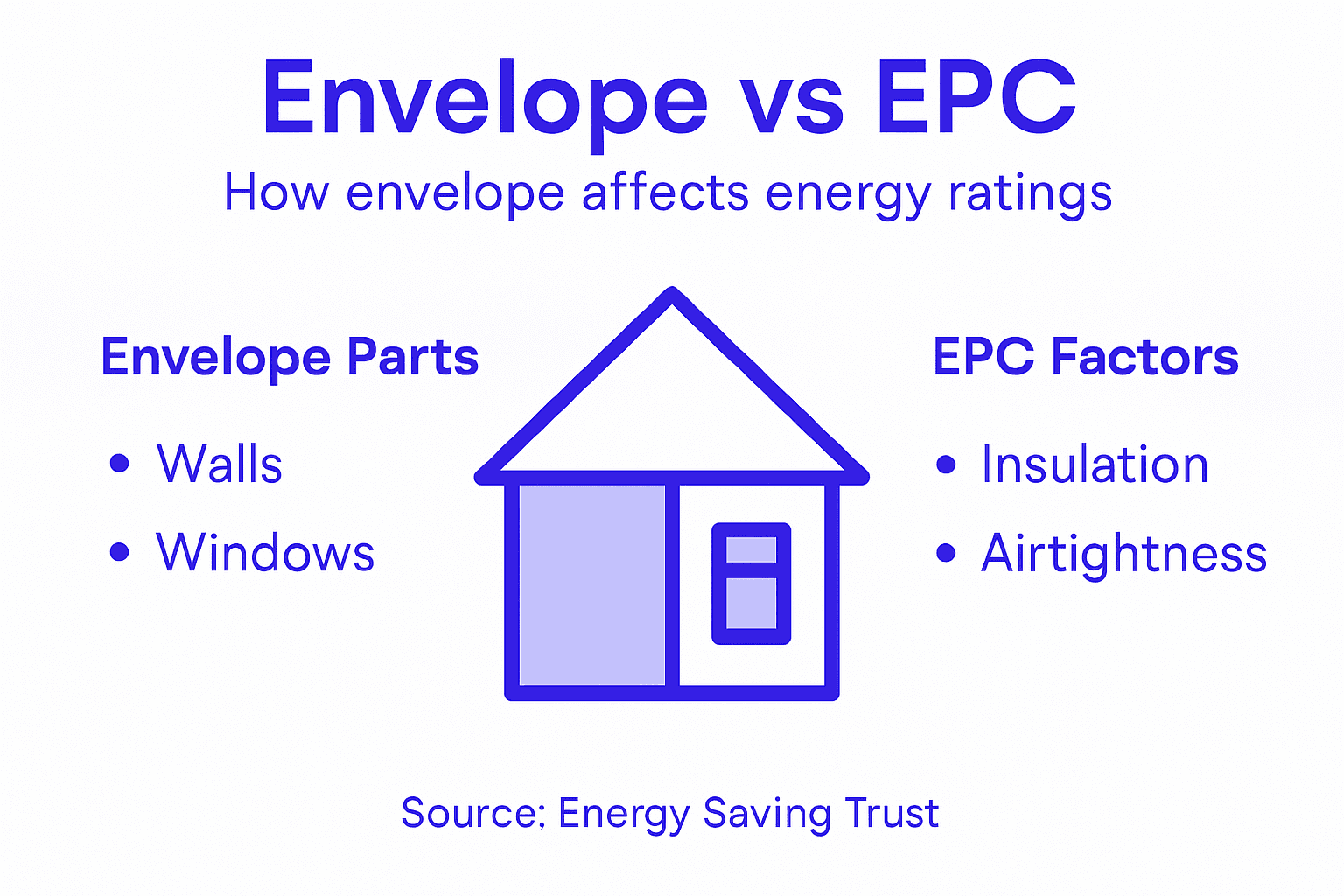
To clarify how different building envelope components work together, here’s a summary of their primary functions and impacts:
| Component | Main Function | Impact on Energy Efficiency |
|---|---|---|
| Exterior walls | Structural support, barrier | Limits heat loss; protects from elements |
| Roof systems | Weather shield, insulation | Reduces solar gain and heat escape |
| Windows and doors | Entry points, light access | Can cause draughts; impact insulation |
| Foundations | Ground stability, moisture | Prevents damp, minimises heat transfer |
| Insulation materials | Thermal resistance | Improves overall envelope efficiency |
Thermal bridging represents a critical consideration within envelope design. These points of increased heat transfer can dramatically reduce overall building efficiency, potentially increasing energy consumption by up to 30% in poorly constructed structures.
Pro tip: Consult a professional energy assessor to conduct a comprehensive building envelope evaluation and identify potential performance improvements.
Core Components and Performance Factors
The building envelope consists of interconnected components that collectively determine a property’s thermal performance and energy efficiency. Statutory guidance provides comprehensive standards for evaluating these critical structural elements.
Key performance factors that significantly influence building envelope effectiveness include:
- Thermal resistance (U-values)
- Air permeability
- Moisture control capabilities
- Structural integrity
- Material durability
- Insulation quality
The primary structural components responsible for managing environmental interactions comprise:
- Wall constructions
- Roof assemblies
- Floor systems
- Window and door installations
- External membranes and air barriers
Each component plays a nuanced role in managing heat transfer, preventing moisture infiltration, and maintaining internal environmental conditions. Thermal bridging remains a critical consideration, where poorly designed junctions can dramatically reduce overall thermal performance.
Effective building envelope design requires a holistic approach that considers the interaction between different structural elements, not just individual component performance.
Material selection dramatically influences overall envelope performance. Modern construction techniques prioritise materials with superior insulation properties, enhanced durability, and minimal thermal conductivity to maximise energy efficiency.
Pro tip: Request a comprehensive thermal performance assessment to identify specific improvement opportunities within your building’s envelope.
How Envelope Design Impacts EPC Ratings
The building envelope plays a pivotal role in determining a property’s energy performance certificate rating. EPC ratings range from A to G, with design and construction quality directly influencing the final assessment.
Key factors that significantly impact EPC ratings through envelope design include:
- Thermal insulation effectiveness
- Air tightness performance
- Quality of window and door installations
- Structural heat loss prevention
- Material thermal conductivity
- Overall architectural design efficiency
Each component of the building envelope contributes to thermal performance. Weak points in construction can create substantial energy inefficiencies, potentially reducing a property’s EPC rating by multiple grades. Poor insulation, unaddressed thermal bridges, and inadequate glazing can dramatically increase heat loss and energy consumption.
A well-designed building envelope can reduce energy consumption by up to 40%, directly improving the property’s EPC rating and long-term sustainability.
Modern construction techniques prioritise comprehensive envelope design that minimises thermal bridging and maximises energy retention. Upgrading elements like wall insulation, roof membranes, and window specifications can transform a building’s energy efficiency profile, potentially moving a property up several EPC rating bands.
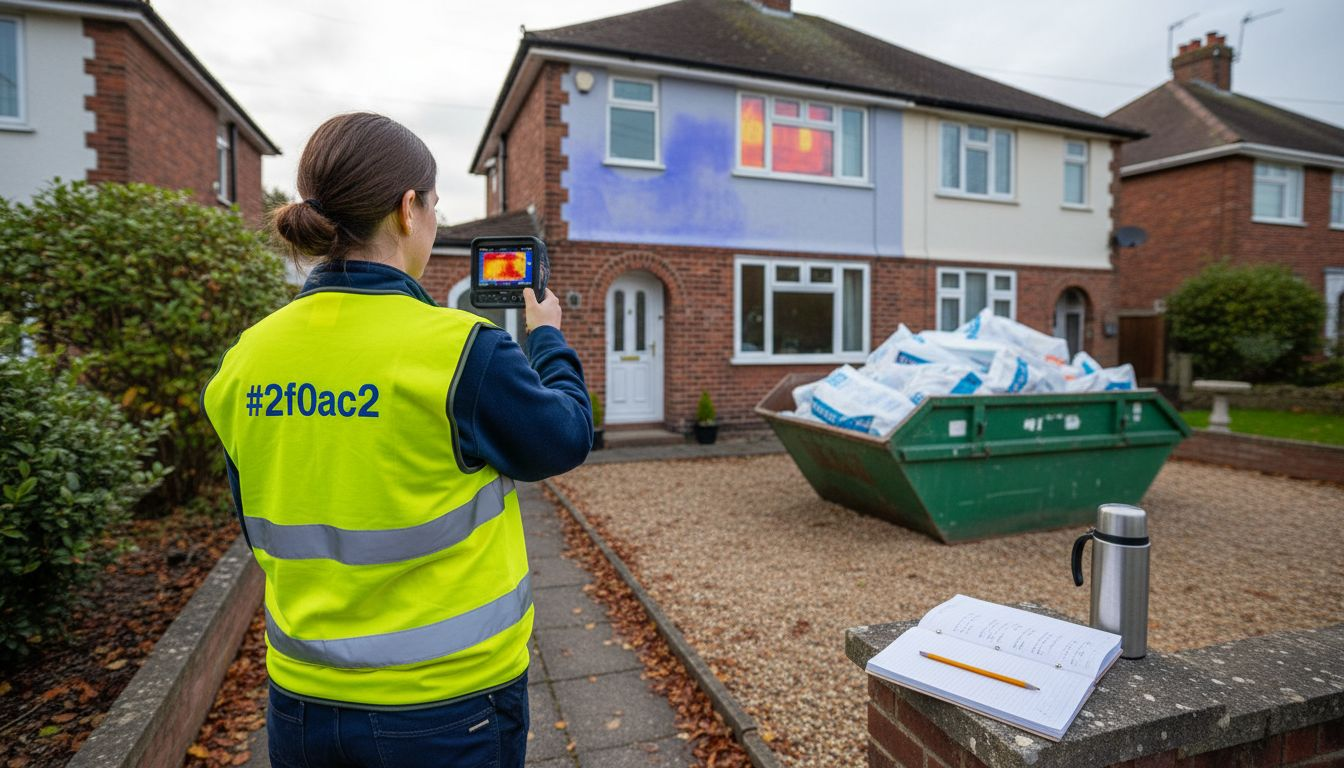
Pro tip: Conduct a professional thermal imaging survey to identify specific envelope weakness areas that could be impacting your EPC rating.
Upgrading Building Envelope for Efficiency Gains
The UK’s commitment to energy efficiency has led to significant focus on home upgrade strategies, with building envelope improvements at the forefront of reducing energy consumption and improving property performance.
Critical upgrade strategies for enhancing building envelope efficiency include:
- Comprehensive wall insulation
- Advanced window and door replacements
- Roof and floor thermal barrier improvements
- Air sealing and moisture control systems
- Thermal bridging reduction techniques
- High-performance material selections
Thermal performance represents the most significant area for potential energy efficiency gains. Property owners can dramatically reduce heat loss by addressing key structural weaknesses, potentially decreasing energy consumption by up to 40% through strategic envelope modifications.
A ‘fabric first’ approach prioritises improving the building’s physical structure before implementing complex heating solutions, maximising long-term energy efficiency and cost savings.
Modern retrofit technologies offer sophisticated solutions for envelope upgrades. Innovations like aerogel insulation, high-performance membranes, and intelligent glazing systems provide property owners with unprecedented opportunities to enhance thermal performance and reduce energy expenditure.
For quick comparison, see how common upgrade strategies differ by efficiency and complexity:
| Upgrade Strategy | Typical Efficiency Gain | Implementation Complexity |
|---|---|---|
| Wall insulation improvement | Up to 25% reduction | Moderate |
| Window and door replacement | Up to 15% reduction | Moderate to high |
| Roof thermal barrier enhancement | Up to 20% reduction | Moderate |
| Air sealing and moisture control | Up to 10% reduction | Low to moderate |
Pro tip: Prioritise professional energy assessment to identify the most cost-effective envelope upgrade strategies for your specific property.
Common Pitfalls in UK Building Envelopes
Building envelope design in the UK faces numerous challenges that can significantly compromise energy efficiency and structural integrity. Approved construction guidelines highlight critical areas where property owners frequently encounter performance issues.
Common technical pitfalls in building envelope construction include:
- Inadequate insulation installation
- Unaddressed thermal bridging zones
- Poor air tightness and ventilation management
- Inappropriate moisture control strategies
- Substandard material selection
- Incorrect interface detailing between building components
Thermal bridging represents a particularly insidious problem in UK building envelopes. These weak points allow heat to escape rapidly, potentially increasing energy consumption by up to 30% and dramatically reducing overall thermal performance. Structural connections between walls, floors, and roof junctions are especially vulnerable to these heat transfer mechanisms.
Improper building envelope design can transform what should be a protective barrier into an inefficient thermal sieve, compromising both energy performance and occupant comfort.
Historic and modern buildings alike suffer from complex retrofit challenges. Older properties often require nuanced approaches that balance preservation requirements with contemporary energy efficiency standards, making envelope upgrades a delicate technical and regulatory navigation.
Pro tip: Engage a qualified energy assessor to conduct a comprehensive thermal imaging survey, identifying hidden envelope weaknesses before they become costly problems.
Enhance Your Building Envelope and Boost Your EPC Rating Today
Understanding the critical role of the building envelope in managing thermal performance and energy efficiency is essential for every property owner in London. This article highlights common challenges such as thermal bridging, poor insulation, and air leakage that can significantly lower your property’s Energy Performance Certificate rating. If you are seeking to address these pain points and improve your property’s sustainability while reducing energy costs, expert guidance on energy assessments and upgrade recommendations is vital.
At Complete EPC, we specialise in providing comprehensive Energy Performance Certificate assessments performed by qualified professionals who understand the complexities of building envelope components and their impact on EPC ratings. Our service offers detailed insights into specific areas requiring improvement including insulation quality, air tightness, and thermal bridging solutions. Benefit from expert advice and competitive pricing with guaranteed lowest rates in the UK market. Do not wait until energy inefficiencies escalate your costs or lower your property value. Discover how an accurate EPC can transform your property’s energy profile and compliance status by visiting Complete EPC and take the first step towards a more efficient home or commercial building today.
Frequently Asked Questions
What is a building envelope?
The building envelope is the physical barrier that separates interior spaces from the external environment, including exterior walls, roofs, foundations, windows, and doors. It regulates thermal performance, air circulation, and moisture control.
How does the building envelope affect energy performance certificate (EPC) ratings?
The building envelope significantly impacts EPC ratings through factors such as thermal insulation effectiveness, airtightness, and heat loss prevention. A well-designed envelope can greatly improve a property’s energy efficiency, potentially raising its EPC rating.
What are common pitfalls in building envelope design?
Common pitfalls include inadequate insulation installation, unaddressed thermal bridging, poor airtightness, inappropriate moisture control strategies, and substandard material selection. These issues can compromise energy efficiency and occupant comfort.
How can I upgrade my building envelope for better efficiency?
Effective upgrades include installing comprehensive wall insulation, replacing windows and doors, enhancing roof thermal barriers, improving air sealing, and addressing thermal bridging. These modifications can lead to substantial energy savings and increased comfort.