

Many landlords assume the EPC assessment fee covers everything, only to discover an additional lodgement charge at registration. This separate cost, required by law to validate your Energy Performance Certificate on the official government register, often catches property owners off guard. Understanding lodgement fees is essential for Greater London landlords navigating compliance in 2026, as failing to pay means your EPC remains invalid regardless of the assessment quality. This guide clarifies what lodgement fees are, current rates, and how to manage them effectively to avoid penalties and ensure your properties meet legal requirements.
Table of Contents
- What Is A Lodgement Fee And Why Is It Charged?
- Current Lodgement Fees And Recent Changes In 2026
- How Lodgement Fees Fit Into The EPC Application And Compliance Process
- Common Issues And Practical Advice For Landlords Handling Lodgement Fees
- Get Expert Help Managing Your EPC Lodgement Fees In Greater London
- Frequently Asked Questions
Key takeaways
| Point | Details |
|---|---|
| Lodgement fees register EPCs officially | These charges cover administrative costs for entering your certificate onto the government EPC Register, making it legally valid. |
| Domestic and non-domestic fees differ | Domestic properties incur a £6.00 fee whilst non-domestic properties face a £15.50 charge in 2026. |
| Payment is legally mandatory | Without paying the lodgement fee, your EPC cannot be registered and remains invalid for property transactions or lettings. |
| Fees fund register quality and compliance | Revenue supports data integrity checks, regulatory oversight, and public access to energy performance information. |
| Recent changes reflect administrative costs | Fee adjustments in 2026 account for inflation and increased operational expenses in maintaining the EPC system. |
What is a lodgement fee and why is it charged?
A lodgement fee represents the charge for officially registering an Energy Performance Certificate on England and Wales’ EPC Register, separate from the assessment cost itself. This administrative charge ensures your certificate becomes part of the public record, accessible to prospective buyers, tenants, and regulatory bodies. Without lodgement, even a perfectly conducted EPC assessment holds no legal weight for property transactions or rental compliance.
The fee serves multiple critical functions within the energy certification system. Revenue collected supports maintaining data quality standards, funding compliance oversight teams, and operating the digital infrastructure that houses millions of certificates. These administrative costs ensure the register remains accurate, searchable, and secure for all stakeholders accessing energy performance data across England and Wales.
Legal requirements make paying the lodgement fee non-negotiable for property owners. Regulations mandate EPCs for new builds and properties being sold or rented, transforming lodgement fees into a routine compliance cost rather than an optional expense. Your certificate only achieves legal recognition after successful registration, meaning the lodgement fee directly determines whether your EPC fulfils statutory obligations for London landlords.
Several specific purposes justify the lodgement fee structure:
- Funding comprehensive data integrity checks that prevent fraudulent or inaccurate certificates entering the system
- Supporting regulatory bodies responsible for monitoring assessor compliance and certificate quality
- Maintaining public registers that provide transparent energy performance information to consumers
- Preventing duplicate certificates that could confuse property records and compliance tracking
- Ensuring ongoing system improvements that enhance user experience and data accessibility
Pro Tip: Always confirm the current fee rate and requirements before commissioning an EPC to avoid surprises and delays in your property compliance timeline.
Understanding these fundamentals helps landlords appreciate why lodgement fees exist beyond simple bureaucratic charges. The system protects both property owners and tenants by ensuring only verified, quality-assured certificates achieve legal status. This quality control mechanism ultimately strengthens confidence in the entire EPC framework across Greater London’s property market.
Current lodgement fees and recent changes in 2026
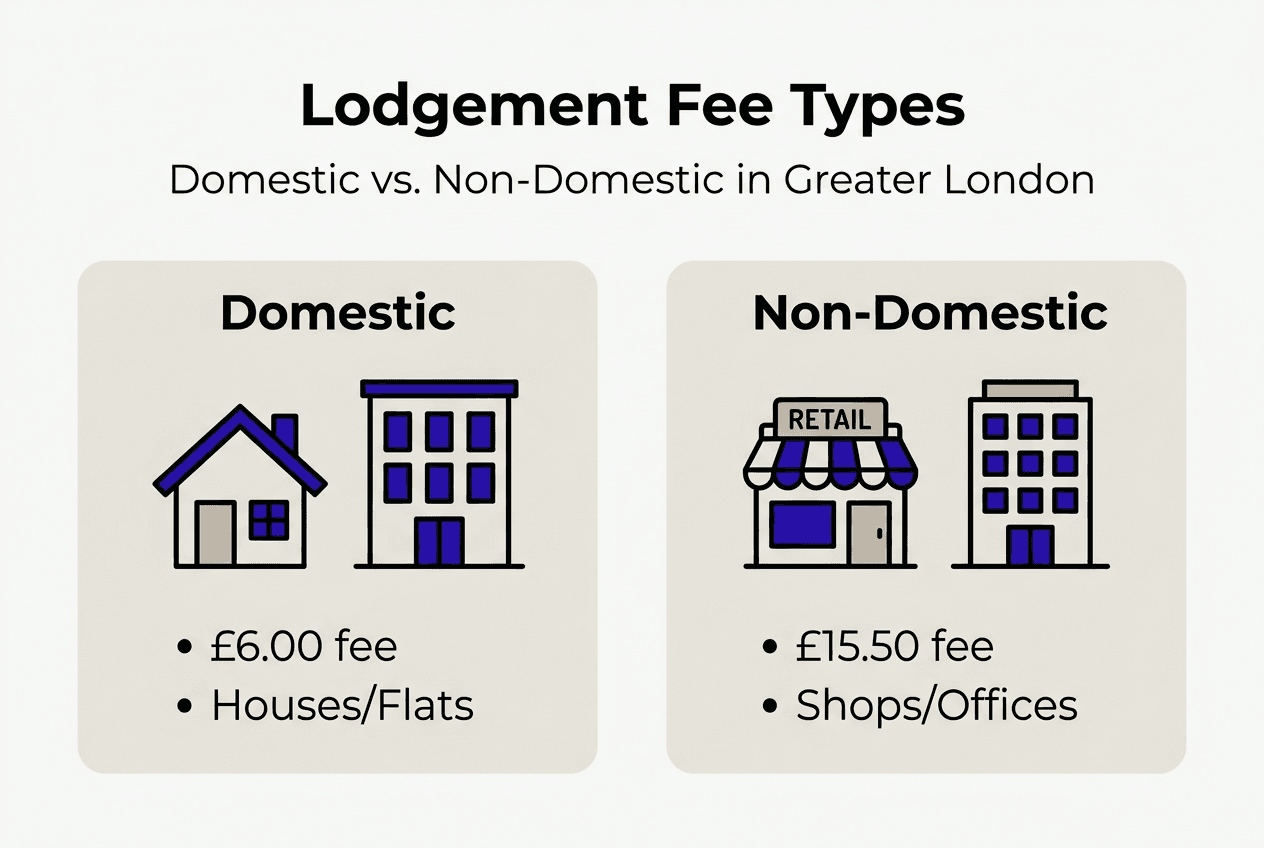
The domestic EPC lodgement fee stands at £6.00, whilst non-domestic properties face a £15.50 charge following consultations that shaped 2026 fee structures. These rates reflect administrative cost updates and inflation factors affecting the operation of England and Wales’ EPC registration system. Greater London landlords must factor these specific amounts into compliance budgets, recognising they represent mandatory costs beyond the assessor’s professional fee.

Recent fee adjustments acknowledge rising operational expenses in maintaining the comprehensive EPC database. The government periodically reviews these charges to ensure they adequately cover system administration without creating excessive burdens on property owners. Inflation pressures and increased quality assurance requirements have driven modest increases, though fees remain relatively stable compared to the total cost of obtaining an EPC for London properties.
| Property Type | Lodgement Fee | Purpose |
|---|---|---|
| Domestic | £6.00 | Registers residential EPCs for houses, flats, and rental properties |
| Non-domestic | £15.50 | Registers commercial, retail, office, and industrial building certificates |
These fees integrate into the overall EPC cost structure as unavoidable final steps. When budgeting for compliance, landlords should calculate the assessor’s professional fee, any travel charges, and the lodgement fee as distinct line items. The lodgement charge typically represents a small fraction of total costs, yet its payment remains essential for certificate validity regardless of how comprehensive or expensive the assessment itself proves.
Pro Tip: Factor in these lodgement fees early in the property compliance budget to avoid cash flow issues when multiple certificates require renewal simultaneously.
The distinction between domestic and non-domestic rates acknowledges the greater complexity and data volume associated with commercial property certificates. Non-domestic EPCs involve more detailed technical information, longer validity considerations, and additional regulatory oversight, justifying the higher lodgement charge. Greater London’s diverse property portfolio means landlords managing mixed residential and commercial assets must track these different fee structures carefully.
Timing considerations also matter when planning lodgement fee payments. The charge becomes due at the point of certificate registration, which assessors typically handle immediately after completing their evaluation. Delays in paying the lodgement fee can postpone certificate availability, potentially disrupting property transactions or creating compliance gaps for rental properties. Understanding this payment timing helps landlords coordinate with assessors and maintain smooth operational workflows.
How lodgement fees fit into the EPC application and compliance process
Lodgement fees occupy a specific position within the broader EPC workflow, representing the final administrative step that transforms an assessment into a legally recognised certificate. Understanding this process helps Greater London landlords coordinate timing, manage costs, and ensure compliance without unnecessary delays or complications.
The complete EPC process unfolds through these sequential steps:
- Property owner commissions a qualified assessor to evaluate the building’s energy performance characteristics.
- Assessor conducts on-site inspection, measuring insulation, heating systems, glazing, and other energy-relevant features.
- Assessment data gets processed through approved software to generate energy ratings and improvement recommendations.
- Assessor prepares the certificate document with all required technical details and performance metrics.
- Lodgement fee payment accompanies certificate submission to the official EPC Register for validation.
- Register administrators verify data quality and assessor credentials before accepting the lodgement.
- Certificate becomes publicly searchable and legally valid for property transactions or rental compliance.
This sequence demonstrates how lodgement fees enable the final validation stage rather than covering the assessment work itself. Landlords must recognise that applying for an EPC certificate involves both professional assessment fees and administrative registration charges as distinct cost components.
Legal compliance duties for landlords regarding EPCs and lodgement fees include:
- Ensuring valid EPCs exist before marketing properties for sale or rental in Greater London
- Maintaining certificate validity throughout tenancy periods, renewing before ten-year expiration
- Providing prospective tenants or buyers with EPC information at the earliest opportunity
- Paying lodgement fees promptly to avoid registration delays that could breach compliance deadlines
- Retaining lodgement confirmation records as proof of legal compliance during inspections or disputes
- Understanding that lodgement fee payment alone does not guarantee certificate acceptance without valid assessment data
Procedural differences exist between domestic and non-domestic buildings, particularly regarding assessment complexity and lodgement verification. Non-domestic certificates undergo more rigorous quality checks before acceptance, reflecting their higher technical complexity and longer validity periods. This enhanced scrutiny justifies the increased lodgement fee whilst ensuring commercial property data meets stricter accuracy standards.
A common misconception assumes paying the lodgement fee guarantees EPC issuance regardless of assessment quality. In reality, the register can reject certificates containing errors, incomplete data, or assessor credential issues even after fee payment. This quality control mechanism protects the system’s integrity but means landlords should verify their assessor’s qualifications and thoroughness before lodgement to avoid wasted fees and compliance delays.
Timely lodgement prevents penalties and legal complications that arise when properties lack valid EPCs during transactions or tenancy periods. The EPC legal compliance workflow requires certificates to be registered and publicly available before certain trigger points, making prompt lodgement fee payment essential for meeting statutory deadlines. Delays can result in fines, transaction failures, or rental agreement complications that far exceed the modest lodgement charge.
Key documentation requirements include the assessor’s qualification credentials, property identification details, and complete technical data meeting current methodology standards. The online registry interaction involves secure data transmission, automated validation checks, and confirmation messaging once lodgement succeeds. Landlords rarely handle this process directly, as qualified assessors typically manage lodgement as part of their service, but understanding the workflow helps you verify proper completion.
Pro Tip: Ensure all EPC assessment documents are complete before lodgement to prevent rejection and extra costs from resubmission requirements.
Common issues and practical advice for landlords handling lodgement fees
Several recurring challenges complicate lodgement fee management for Greater London landlords, though most prove easily avoidable with proper awareness and planning. Duplicate lodgement fee payments occur when assessors accidentally submit the same certificate twice or when landlords commission multiple assessments without cancelling earlier attempts. Whilst duplicate certificates are removed from datasets to improve accuracy, recovering duplicate fees requires administrative effort that delays compliance and wastes resources.
Delays in fee processing can postpone certificate availability, particularly during peak property transaction periods when register volumes surge. These delays rarely stem from payment issues but rather from verification backlogs or technical problems with the registration system. Landlords should build buffer time into compliance schedules, avoiding situations where certificate availability becomes the critical path item blocking property transactions or tenancy agreements.
Misunderstanding fee necessity leads some landlords to question why they must pay lodgement charges when they have already compensated the assessor. This confusion stems from conflating assessment services with registration administration, two distinct functions requiring separate funding. Clear communication from assessors about fee purposes and legal requirements helps prevent this misunderstanding from causing payment delays or compliance resistance.
Non-compliance risks escalate quickly when lodgement fees go unpaid, as certificates remain invalid regardless of assessment quality. Properties marketed without valid registered EPCs expose landlords to penalties, transaction failures, and potential legal action from buyers or tenants. The modest lodgement fee becomes insignificant compared to these compliance failure costs, making prompt payment a straightforward risk management decision.
Practical advice for preventing lodgement fee errors and complications:
- Verify your assessor includes lodgement fees in their quoted price or clearly itemises them separately to avoid payment confusion
- Request lodgement confirmation documentation immediately after certificate registration to verify successful completion
- Schedule EPC renewals at least two months before expiration to accommodate potential lodgement delays without compliance gaps
- Maintain digital records of all lodgement receipts and confirmations for audit protection and dispute resolution
- Confirm certificate appearance on the public register within 48 hours of lodgement to catch any processing issues early
- Use only qualified assessors who demonstrate familiarity with current lodgement procedures and fee structures
Properly managing lodgement fees unlocks significant benefits for London properties beyond mere compliance. Valid registered certificates provide legal protection during transactions, enhance property marketability through transparent energy information, and demonstrate professional management standards to prospective tenants. These advantages far outweigh the modest administrative costs involved in proper lodgement.
Handling disputes or fee queries requires understanding the correct escalation channels. If you believe a lodgement fee was charged incorrectly or a certificate was rejected unfairly, contact the assessor first to clarify the situation and review submission documentation. Persistent issues may require contacting the register administrators directly, though most disputes resolve through simple communication with the original assessor who handled lodgement.
Keeping comprehensive records proves invaluable during audits, property sales, or tenant disputes about EPC compliance. Digital copies of lodgement confirmations, payment receipts, and the final registered certificate create an audit trail demonstrating your diligence in meeting legal requirements. This documentation protects you from false compliance claims and streamlines EPC renewal processes by providing clear records of previous certificate dates and ratings.
Pro Tip: Keep digital copies of lodgement confirmations and receipts for audit and legal protection purposes, storing them alongside tenancy agreements and property maintenance records.
Vigilance in lodgement submissions becomes particularly important when managing multiple properties across Greater London. Tracking which properties have current valid certificates, upcoming renewal dates, and lodgement confirmation status requires systematic record keeping that prevents compliance gaps. Consider using spreadsheets or property management software to monitor EPC status across your portfolio, ensuring no properties slip through renewal schedules due to administrative oversights.
Get expert help managing your EPC lodgement fees in Greater London
Navigating lodgement fees and EPC compliance requirements becomes significantly easier with professional support tailored to Greater London’s specific regulatory environment. Complete EPC provides comprehensive assessment services that include proper lodgement fee handling, ensuring your certificates achieve valid registration without delays or complications. Our qualified assessors understand current fee structures, registration procedures, and quality standards that guarantee first-time lodgement acceptance.
We offer step-by-step support through London-specific legal requirements, coordinating assessment timing with your property transactions or tenancy schedules to maintain seamless compliance. Our team handles all lodgement administration, including fee payment, data submission, and confirmation tracking, removing these technical tasks from your operational workload. This professional management helps you avoid costly mistakes and delays that arise when landlords attempt to navigate the EPC system without expert guidance.
Whether you manage residential or commercial properties across Greater London, our services adapt to your specific portfolio needs. We provide clear pricing that includes both assessment and lodgement fees, eliminating surprise charges and simplifying your compliance budgeting. Trust Complete EPC to deliver accurate certificates, proper registration, and ongoing support for your energy performance compliance requirements throughout 2026 and beyond.
Frequently asked questions
What is a lodgement fee for an EPC?
A lodgement fee is the mandatory charge for registering your Energy Performance Certificate on the official government database, separate from the assessor’s professional fee. This administrative cost ensures your certificate becomes legally valid and publicly accessible for property transactions.
Who must pay the lodgement fee and when?
Property owners or their appointed assessors must pay the lodgement fee immediately upon certificate registration, typically within 24 hours of completing the assessment. The fee payment occurs as part of the submission process to the EPC Register.
What are the differences between domestic and non-domestic lodgement fees?
Domestic properties incur a £6.00 lodgement fee whilst non-domestic buildings face a £15.50 charge in 2026. The higher non-domestic fee reflects greater technical complexity and enhanced quality verification requirements for commercial property certificates.
What happens if I do not pay the lodgement fee?
Your EPC cannot be registered and remains legally invalid without lodgement fee payment, regardless of assessment quality. This leaves your property non-compliant for sales or lettings, potentially resulting in penalties, transaction failures, and legal complications.
How can I avoid common errors related to lodgement fees?
Verify your assessor includes lodgement in their service, request immediate confirmation after registration, maintain digital payment records, and schedule renewals well before certificate expiration. Using qualified professionals familiar with current procedures prevents most lodgement complications.