
TL;DR:
- A skilled domestic energy assessor provides accurate EPCs that impact property value and compliance.
- The upcoming shift to the Home Energy Model will make assessments more precise and detailed.
- Engaging proactively with accredited assessors helps landlords improve ratings and avoid future costs.
Most London landlords treat an EPC as a box to tick before a sale or let. That mindset can be costly. A skilled domestic energy assessor does far more than produce a certificate — they influence your property’s market position, your legal standing, and your long-term running costs. With regulations tightening and a major methodology change on the horizon, understanding what a domestic energy assessor actually does is one of the most practical things you can do as a property owner in London right now.
Table of Contents
- What is a domestic energy assessor and why are they important?
- How to become a domestic energy assessor: Qualifications and accreditation
- How EPC assessment works: The process, costs, and what to expect
- Upcoming changes: Home Energy Model (HEM) and the future of EPCs
- The real value of a proactive approach to energy assessments
- Book a trusted domestic energy assessor in London
- Frequently asked questions
Key Takeaways
| Point | Details |
|---|---|
| Accredited DEAs matter | Only accredited, trained DEAs can issue legally compliant EPCs and offer accurate advice. |
| Prepare for new rules | The Home Energy Model will soon change how EPCs are calculated and interpreted—start planning now. |
| Proactive action boosts value | Booking energy assessments early and acting on advice can increase property value and safeguard compliance. |
| Documentation is key | Proper paperwork and upgrade evidence helps DEAs produce the most beneficial EPC for your property. |
What is a domestic energy assessor and why are they important?
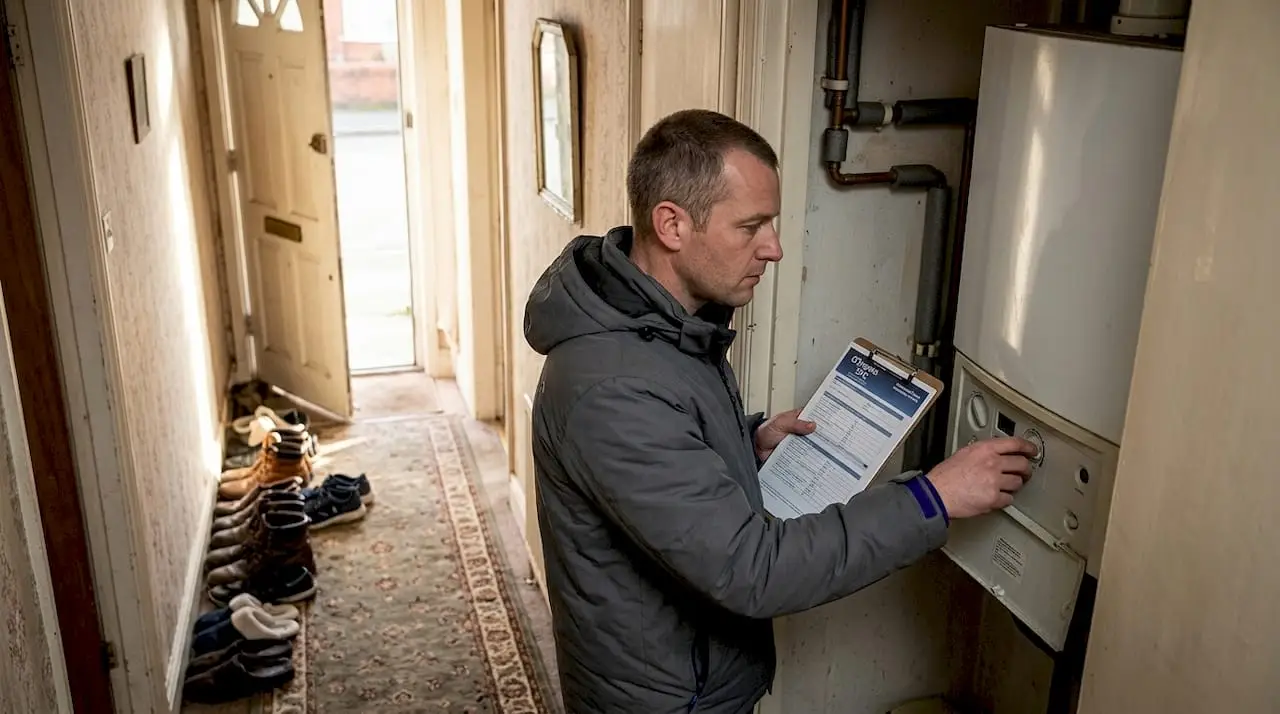
A domestic energy assessor, commonly referred to as a DEA, is a trained and accredited professional who evaluates the energy efficiency of residential properties. They inspect insulation, heating systems, windows, lighting, and the overall fabric of a building, then use specialist software to calculate an energy rating from A (most efficient) to G (least efficient). The result is your Energy Performance Certificate, or EPC.
EPCs are a legal requirement in England and Wales whenever a property is sold, let, or newly constructed. For landlords in London, this is not optional. Renting out a property without a valid EPC can result in a fine of up to £5,000. Beyond the legal obligation, the quality of your EPC depends heavily on the skill and thoroughness of the assessor conducting it.
A well-conducted assessment captures every relevant detail of your property, including recent upgrades you may have made. An assessor who rushes the visit or misses key features could leave you with a lower rating than your property deserves, which directly affects rental demand and sale price.
Here is what a DEA typically evaluates during a visit:
- Wall, roof, and floor insulation types and thickness
- Heating system age, type, and controls
- Window glazing and draught-proofing
- Renewable energy installations such as solar panels
- Hot water cylinder and pipe insulation
- Fixed lighting efficiency
“Choosing an accredited DEA is not just about legal compliance — it is about ensuring your property is assessed accurately, so you receive the rating your investment deserves.”
For landlords, the Minimum Energy Efficiency Standards (MEES) currently require rental properties to hold at least an E rating. Proposals to raise this threshold to C are under active discussion, making the accuracy of your current EPC more important than ever. Energy assessor qualifications confirm that DEAs must complete Level 3 training, build a portfolio, and join an approved accreditation scheme such as Elmhurst Energy, ECMK, Quidos, Stroma Certification, or CIBSE.
How to become a domestic energy assessor: Qualifications and accreditation
Understanding the pathway to becoming a DEA helps you, as a property owner, make a more informed choice when selecting one. The process is rigorous, which is precisely why accreditation matters.
Here is the typical route to becoming a qualified DEA:
- Complete a Level 3 Award in Domestic Energy Assessment — This is the foundational qualification, covering building physics, assessment methodology, and use of RdSAP (Reduced Data Standard Assessment Procedure) software.
- Build a portfolio of assessed properties — Candidates must demonstrate competency through real assessments, reviewed and signed off by an experienced mentor.
- Pass a quality assurance audit — An independent check of the candidate’s work ensures accuracy and consistency.
- Join an approved accreditation scheme — Only then can a DEA legally lodge EPCs on the national register.
The table below summarises the main accreditation bodies and what they offer:
| Accreditation scheme | Key features | Suitable for |
|---|---|---|
| Elmhurst Energy | Large network, strong CPD support | New and experienced DEAs |
| ECMK | Competitive membership fees | Independent assessors |
| Quidos | Known for quality auditing | Quality-focused professionals |
| Stroma Certification | Broad range of schemes | Multi-discipline assessors |
| CIBSE | Strong commercial crossover | DEAs moving into commercial work |
As a DEA training steps resource confirms, all accreditation schemes require ongoing Continuing Professional Development (CPD) to keep members current with regulatory changes. This is particularly relevant now, given the upcoming shift to the Home Energy Model.
Pro Tip: When hiring a DEA, ask which accreditation scheme they belong to and when they last completed CPD training. An assessor who stays current with regulations will produce more accurate and future-proof assessments for your property.
For property owners, the takeaway is straightforward. An accredited DEA is not simply someone who has done a short course. They have been trained, mentored, audited, and are held to ongoing professional standards. That rigour protects you.
How EPC assessment works: The process, costs, and what to expect
Once you have identified a qualified assessor, here is what you can expect during an EPC assessment and what preparation will save you time.
A typical EPC assessment follows these steps:
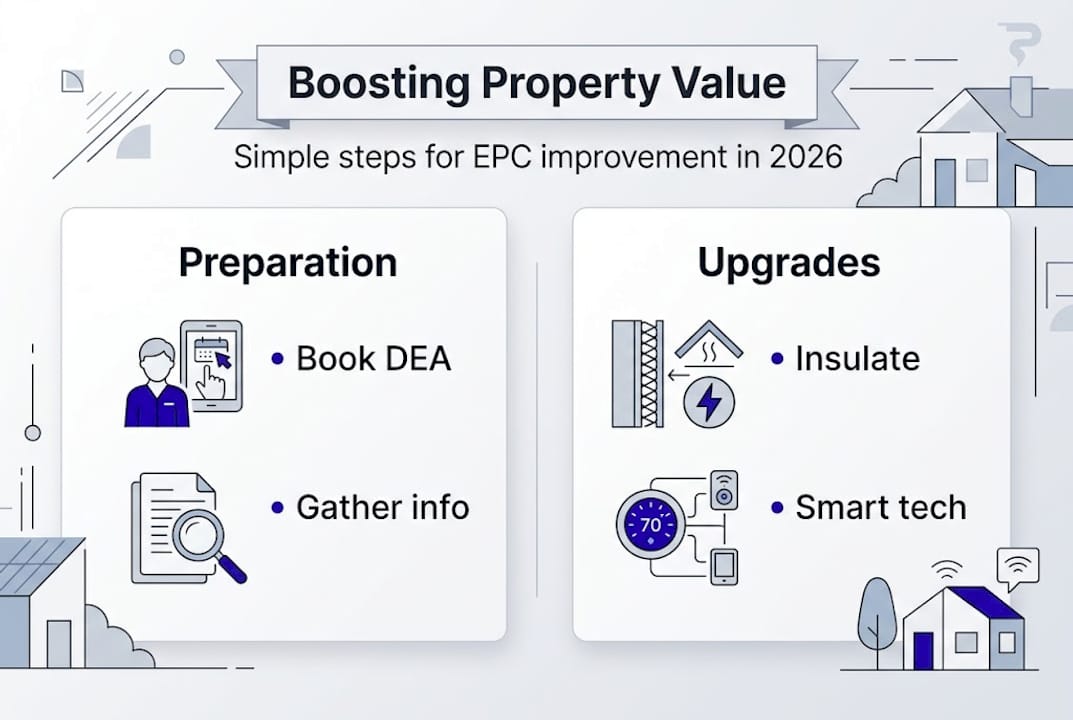
- Booking: You contact an accredited DEA or agency. Provide basic property details such as size, age, and property type.
- The visit: The assessor inspects all rooms, the loft, boiler, and any extensions. This usually takes 30 to 60 minutes for a standard flat or terraced house.
- Data entry: The assessor inputs findings into RdSAP software, which calculates the energy rating.
- Certificate lodgement: The completed EPC is lodged on the national register, typically within 24 to 48 hours of the visit.
To prepare effectively, gather the following documents before the assessor arrives:
- Boiler installation or service records
- Receipts or guarantees for insulation upgrades
- Evidence of solar panel installation or other renewables
- Window installation certificates for double or triple glazing
London landlords should book accredited DEA London early, particularly ahead of the RdSAP10 and HEM transition, and prepare all relevant documents including energy bills and upgrade records for the most accurate assessment possible.
Here is a general cost comparison for EPC services in London:
| Service level | Typical cost | What is included |
|---|---|---|
| Budget | £60 to £80 | Basic assessment, certificate only |
| Mid-range | £90 to £120 | Assessment, detailed recommendations report |
| Premium | £130 to £180 | Full assessment, improvement planning, follow-up advice |
It is worth noting that a cheaper assessment is not always better value. An experienced DEA who identifies improvements you have already made could shift your rating by one or two bands, which has a measurable effect on your property’s rental or sale price. Studies suggest that properties rated B or above can command a premium of several percentage points over equivalent G-rated homes.

Upcoming changes: Home Energy Model (HEM) and the future of EPCs
As regulations change, it is critical to keep an eye on upcoming updates to EPCs and the way DEAs work. The most significant shift in a generation is approaching.
The Home Energy Model methodology for EPCs confirms that RdSAP will be replaced by the Home Energy Model (HEM) around 2027, moving from simplified static calculations to half-hourly dynamic simulations with modular inputs. Four new metrics will be introduced: Fabric, Heating, Smart Readiness, and Cost. The traditional A to G rating will be retained during the transition period.
What does this mean in practice?
- More precise assessments: HEM will model how your property actually performs across different times of day and seasons, not just a snapshot estimate.
- New metrics matter: Your property will be rated on its fabric quality, heating system efficiency, ability to integrate smart technology, and running cost. A poor score in any one area could affect your compliance status.
- Assessor training: DEAs will need to retrain and recertify for HEM. Assessors who are already engaged in CPD will adapt more smoothly.
- Timing: Properties assessed under RdSAP before 2027 will likely need reassessment under HEM for future transactions.
“The shift to HEM is not just a technical update. It is a fundamental change in how energy performance is measured, and it will reward property owners who have invested in genuine improvements.”
Pro Tip: If you are planning energy efficiency upgrades such as insulation, a heat pump, or solar panels, consider timing them before your next EPC assessment. Under HEM, these improvements will be captured with greater precision, potentially delivering a stronger rating than the current RdSAP methodology would reflect.
For London landlords, acting now rather than waiting for 2027 gives you time to understand your current rating, plan improvements, and avoid a last-minute scramble when the new rules take effect.
The real value of a proactive approach to energy assessments
Here is a perspective you will not often hear: the landlords who gain the most from EPCs are not those who treat them as a compliance formality. They are the ones who build an ongoing relationship with a trusted DEA.
Many London property owners book an EPC only when legally required, then file it away. But a good DEA can advise you on which improvements deliver the strongest rating uplift for the lowest cost. Loft insulation and boiler upgrades, for example, often move a property up by a full band at relatively modest expense. That single band improvement can be the difference between a legally lettable property and one that requires costly emergency works.
There is also a common myth worth addressing: that EPC ratings are fixed and reflect only the age of a building. They do not. We have seen Victorian terraces in London achieve C ratings after targeted improvements, while newer builds have fallen short due to poor heating controls or missing documentation. The assessor’s skill and your preparation both matter enormously.
Waiting for regulatory deadlines to force action consistently costs more than planning ahead. The landlords who engage with the process early, ask questions, and act on recommendations are the ones who avoid compliance fines, attract better tenants, and protect their asset value over time.
Book a trusted domestic energy assessor in London
If you are a property owner or landlord in London, working with an accredited domestic energy assessor is one of the most straightforward steps you can take to protect your investment and stay compliant. At Complete EPC, we connect you with qualified, experienced assessors who understand London’s property landscape and the evolving regulatory environment. Whether you need a certificate for a sale, a rental, or want to plan ahead for the HEM transition, we make the process simple and cost-effective. Start by understanding EPCs in London, then follow our EPC process guide London, or get in touch with our EPC specialists London today.
Frequently asked questions
How long does an EPC assessment take for a typical London flat?
Most EPC assessments for flats take 30 to 60 minutes, depending on access and the documentation you have available. Larger or more complex properties may take slightly longer.
Can I use any domestic energy assessor or must they be accredited?
Only accredited DEAs can issue valid EPCs under UK law. DEAs must complete Level 3 training, build a portfolio, and join an approved scheme such as Elmhurst Energy, ECMK, Quidos, Stroma Certification, or CIBSE before they can legally lodge certificates.
What is the difference between RdSAP and the Home Energy Model?
The Home Energy Model replaces RdSAP with half-hourly dynamic simulations and four new metrics — Fabric, Heating, Smart Readiness, and Cost — from around 2027, while retaining the familiar A to G rating scale during the transition.
How does an EPC affect my property’s sale or rental price?
A higher EPC rating can increase buyer and tenant interest, support a stronger asking price, and confirm legal compliance for lettings. A poor rating risks fines under MEES and may reduce the pool of interested buyers or tenants significantly.