

TL;DR:
- Failing to check your EPC can lead to legal issues and financial penalties when selling or letting property.
- Regularly verifying your property’s energy rating ensures compliance with evolving standards and highlights necessary improvements.
Missing an EPC check is a costly mistake many London landlords only discover when a sale falls through or a fine lands in their inbox. Your property’s energy rating directly affects whether you can legally let or sell it, and with regulations tightening year on year, staying ahead matters more than ever. This guide walks you through exactly how to check your Energy Performance Certificate (EPC), what the results mean, how to spot potential errors, and what steps to take next to stay compliant and avoid surprises.
Table of Contents
- What is an Energy Performance Certificate and why does it matter?
- What you need before you check your EPC
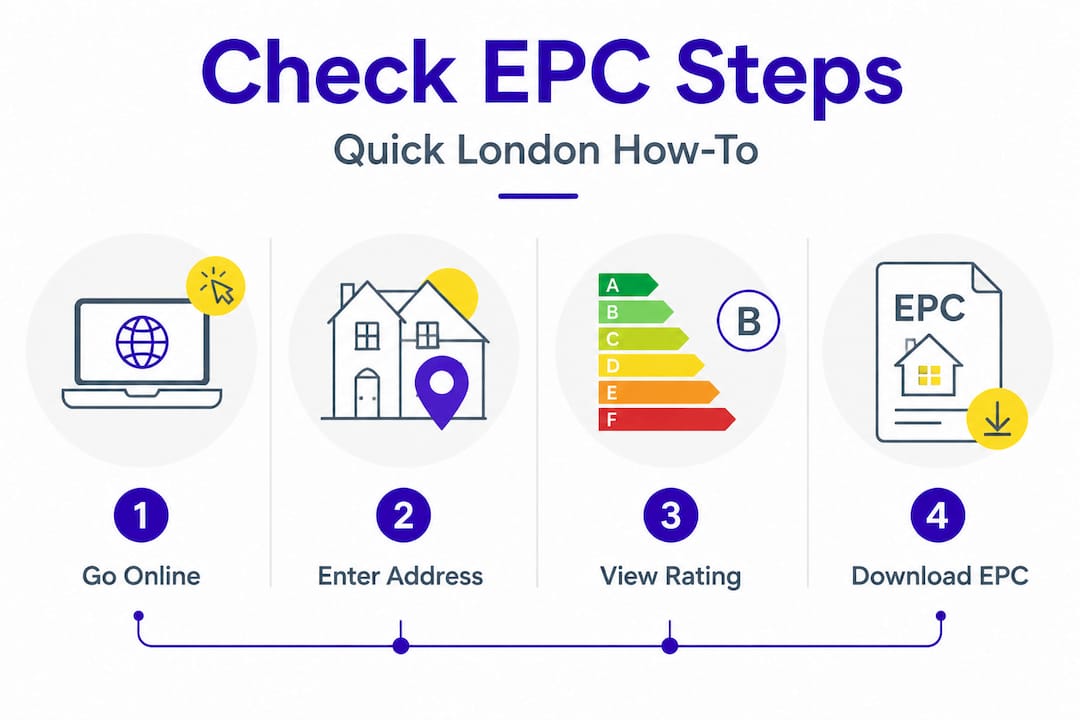
- Step-by-step: How to check your Energy Performance Certificate
- Making sense of your EPC results
- What’s next? Compliance, improvement, and coming reforms
- Why quick EPC checks alone aren’t enough: A practitioner’s view
- Need help with your EPC or compliance?
- Frequently asked questions
Key Takeaways
| Point | Details |
|---|---|
| EPCs are legally required | You must hold a valid EPC for selling, letting, or constructing a property in London. |
| Simple online checking | You can check your EPC instantly on the official GOV.UK register using just the address or postcode. |
| Ratings affect compliance | Your property’s rating determines legal compliance and can impact its market value. |
| Regular reviews advised | Review your EPC regularly since rules and required ratings will tighten by 2030. |
| Anticipate regulatory change | Be aware of upcoming reforms to EPCs and building energy standards for future compliance. |
What is an Energy Performance Certificate and why does it matter?
An EPC is an official document that rates a property’s energy efficiency on a scale from A (most efficient) to G (least efficient). It tells buyers, tenants, and owners how much energy the building uses, what it costs to run, and what improvements could be made. EPCs are required for domestic and non-domestic properties when constructed, sold, or let, are valid for 10 years, and must be produced by an accredited assessor.
In London, the legal framework surrounding EPCs is governed by the Minimum Energy Efficiency Standards (MEES). These regulations mean that privately rented properties must meet a minimum rating before a landlord can lawfully let them. Knowing your current rating is not just good housekeeping; it is a legal obligation.
Here is a quick summary of when you need a valid EPC:
- When marketing a property for sale or rent
- When a new building is constructed and ready for occupation
- When an existing EPC expires and you plan to re-let or sell
- When a buyer or tenant requests proof of energy performance
- When applying for certain government energy efficiency grants
Key fact: An EPC without a valid certificate number or issued by a non-accredited assessor carries no legal weight. Always verify the assessor’s credentials before accepting a report.
The ratings themselves are not arbitrary. They are calculated using the Standard Assessment Procedure (SAP) for residential properties and the Simplified Building Energy Model (SBEM) for commercial buildings. A higher SAP score translates directly into a lower energy bill and a more attractive property for prospective tenants.
What you need before you check your EPC
Before you start, make sure you have everything to hand. The process is straightforward, but having the right information ready saves time and avoids frustration.
Information you will need:
- The full property address, including flat or unit number
- The property’s postcode
- The EPC certificate number (optional, but useful if you have it)
- Access to a device with internet connectivity
You can check an existing EPC using your property’s address or postcode via the GOV.UK register. The register is publicly accessible, free to use, and updated regularly by accredited assessors when they lodge new certificates.
| Information type | Required? | Where to find it |
|---|---|---|
| Full address | Yes | Title deeds, tenancy agreement, or Land Registry |
| Postcode | Yes | Royal Mail postcode finder or council tax bill |
| Certificate number | Optional | Previous EPC document or email from assessor |
| Assessor details | Optional | Accreditation scheme website |
Pro Tip: If you manage multiple properties, create a simple spreadsheet listing each address, its EPC expiry date, and its current rating. Set a calendar reminder three months before each certificate expires. This small habit prevents compliance gaps across your entire portfolio.
It is worth noting that some older properties in London, particularly those in conservation areas or with non-standard addresses, can be harder to locate on the register. In these cases, searching by postcode alone and then browsing the results is often more effective than searching by full address.
Step-by-step: How to check your Energy Performance Certificate
With your details ready, you can now easily check your property’s EPC. Here is how to do it step by step.
- Go to the official GOV.UK register at find-energy-certificate.service.gov.uk. This is the only legally recognised database for England and Wales.
- Select your search type. You can search by postcode or by the certificate reference number if you have it.
- Enter your postcode and click “Find.” A list of properties in that postcode will appear. Select the correct address from the dropdown.
- Review the certificate summary. You will see the current rating, the potential rating if recommended improvements are made, the expiry date, and the assessor’s name and accreditation number.
- Download the full report. Click “Get this certificate” to access the full PDF, which includes the detailed recommendations section. Save this for your records.
- Note the expiry date. If the certificate expires within six months, begin the renewal process now rather than waiting until the last moment.
When you review the results, focus on four key fields: the current energy rating (the large letter displayed prominently), the potential rating, the certificate expiry date, and the assessor’s accreditation scheme. The potential rating shows how high your property could reach with improvements, which is essential planning information.
What to do if something goes wrong:
- EPC not found: The property may never have had one, or the address format differs slightly from the register. Try alternative postcode searches or contact an accredited assessor to check.
- EPC has expired: You cannot legally let the property until a new assessment is completed. Do not delay; arrange a new assessment immediately.
- Inaccurate information: Contact the original assessor to request a correction, or lodge a dispute with the relevant accreditation scheme.
Worth knowing: In Q1 2026, 416,000 domestic EPCs were lodged in England and Wales, with 87% of new dwellings rated A or B, while most existing homes landed at C or D. If your older London property shows a D or E rating, you are not alone, but you may need to act.
| Approach | Time required | Cost | Accuracy |
|---|---|---|---|
| DIY check via GOV.UK | 5 to 10 minutes | Free | Dependent on lodged data |
| Professional reassessment | Half a day | £60 to £150 | High, verified on site |
| Full energy audit | 1 to 2 days | £300 plus | Very high, includes thermal imaging |
Making sense of your EPC results
Once you have found your EPC record, understanding what it actually means is crucial to avoiding expensive mistakes.

The headline rating (A through G) is the first thing to look at. However, the numeric SAP score underneath tells a more nuanced story. SAP scores range from 1 to over 100, with thresholds determining each letter band. Importantly, upcoming reforms planned around 2027 will change how energy performance is expressed, moving towards a multi-metric model rather than a single score.
Here is what the main bands mean in practice for London landlords:
- A or B (92 and above / 81 to 91): Highly efficient. Typically new builds or recently refurbished properties with heat pumps, triple glazing, and high levels of insulation. Very low running costs.
- C (69 to 80): Good efficiency. Meets current recommended standards for private rentals. Most post-2000 properties with modest upgrades fall here.
- D (55 to 68): Average. Many older London terraces and maisonettes sit here. Compliant under current MEES rules but will not be compliant if the proposed C threshold is enforced.
- E (39 to 54): Minimum legal threshold for letting. Properties here are one enforcement notice away from being unlettable.
- F or G (38 and below): Cannot be legally let in England and Wales without a valid registered exemption.
The recommendations section of the EPC is often overlooked, but it is genuinely useful. It lists specific measures such as loft insulation, cavity wall fill, or upgrading heating controls, along with estimated costs and potential savings. Use this list as a starting point when planning any improvement works.
Pro Tip: Be cautious about listed buildings. Listed buildings are not automatically exempt from EPC requirements. They require an EPC unless required improvements would unacceptably alter their character, in which case an exemption must be registered formally. Many landlords assume they are exempt and then face enforcement action.
One common pitfall is the “performance gap.” Modelled SAP scores can be 20 to 40% higher than actual energy bills suggest, because the model assumes standard occupancy and average weather conditions. A property rated C on paper might perform closer to D in a cold winter with older boiler controls. This is why physical upgrades matter beyond simply chasing a letter rating.
What’s next? Compliance, improvement, and coming reforms
With your results in hand, here is what to do to stay compliant and get ahead, especially as rules evolve.
- If rated E or above: You are compliant under current MEES rules. Review the recommendations and prioritise improvements that will help you achieve a C rating ahead of the proposed 2030 deadline.
- If rated F or G: You cannot legally let the property. Arrange an assessment and improvement works urgently. If works are not feasible within the cost cap, register an exemption immediately.
- If your EPC has expired: Commission a new assessment before re-letting or remarketing the property. An expired EPC is treated as having no EPC for compliance purposes.
- Document everything: Keep records of assessments, quotes for improvement works, and any exemption registrations. These records protect you if a compliance dispute arises.
Under MEES, the current minimum requirement is an E rating for all privately rented properties. The government’s target is EPC C by October 2030, with a £10,000 cost cap per property. This means most London landlords with D or E rated properties will need to invest in upgrades within the next four years.
Looking ahead: The current EPC methodology will be replaced by the Home Energy Model, a more data-driven framework that reports multiple metrics including fabric performance, heating system efficiency, and carbon output separately. This shift means a single improvement could affect several metrics at once, making early action more strategic.
The improvement sequence matters. Focus on building fabric first: insulation in the roof, floors, and walls reduces heat loss regardless of which heating system you use. Then upgrade heating controls and the boiler or heat source. Finally, consider renewable technologies like solar panels once the fabric is sound. This order gives you the best return on investment and the greatest rating improvement per pound spent.
Why quick EPC checks alone aren’t enough: A practitioner’s view
Having walked through the practical steps, it is worth reflecting on what really matters for London property owners and investors.
Checking your EPC online takes five minutes. Genuinely managing your property’s energy performance is a different undertaking entirely. The letter rating on the register gives you a compliance snapshot based on a modelled assessment, not a live reading of how your building actually performs. We regularly see properties rated C on paper where tenants report persistently high bills and draughty rooms. The SAP score and the lived experience can be quite different.
The performance gap between modelled scores and actual bills is a known issue across the industry. It exists because assessors work from plans, dimensions, and construction types rather than from sensors or meters. If your boiler is ageing, your controls are outdated, or your insulation has settled and lost effectiveness, the model will not capture that accurately.
Our advice is this: treat the EPC check as the starting point, not the finish line. Once you know your rating, walk the property with the recommendations list in hand. Check whether the improvements suggested are already in place or genuinely absent. If you are anywhere near the boundary between two rating bands, a modest investment could move you up a grade and significantly improve your compliance position ahead of 2030.
London’s property stock is older than the national average, and a large proportion of lettings are in Victorian and Edwardian terraces where fabric improvements are both more complicated and more impactful. Getting ahead of the reforms now, rather than scrambling in 2029, will save you money and protect your rental income.
Need help with your EPC or compliance?
If checking your EPC has raised questions or revealed a rating that needs attention, professional support makes the process far more manageable. Understanding your obligations fully is the first step, and our energy performance certificates guide covers the legal framework in detail for London property owners. When you are ready to book a new or updated assessment, our EPC assessment process in London page explains exactly what to expect on the day and how results are produced. For properties with expired certificates or those approaching renewal, our step-by-step guidance on renewing your EPC helps you plan ahead with confidence. Our qualified assessors serve landlords, estate agents, and solicitors across London, offering accurate assessments and compliance advice at competitive rates.
Frequently asked questions
Where do I check my Energy Performance Certificate?
You can check your EPC using the official GOV.UK register by entering your property’s address or postcode at find-energy-certificate.service.gov.uk.
How long is an EPC valid for?
An EPC is valid for 10 years from its issue date, after which a new assessment must be commissioned before the property can be re-let or sold.
Who needs to obtain an EPC?
All property owners must obtain an EPC before marketing a property for sale, letting, or when completing a new build, without exception.
Are any buildings exempt from EPC requirements?
Listed buildings are not automatically exempt and must have an EPC unless required improvements would unacceptably alter their character, in which case a formal exemption must be registered.
What do the EPC ratings mean for my property?
EPC ratings run from A (most efficient) to G (least), and in Q1 2026, 87% of new dwellings were rated A or B, while the majority of existing homes fell into the C or D band.