
TL;DR:
- London homeowners and landlords face high energy bills that can often be reduced through deliberate, well-sequenced upgrades. Assessing air leaks, insulation, and heating controls first is essential before investing in more extensive improvements to ensure cost-effectiveness and lasting savings. Proper prioritization, professional audits, and a systems approach yield the most effective and efficient home energy performance improvements.
London homeowners and landlords are paying some of the highest energy bills in the country, and most of it is preventable. Understanding how can you make your home energy efficient is not just about swapping bulbs or turning down thermostats. It is about making deliberate, well-sequenced improvements that work together to cut waste at its source. This guide walks you through every practical step, from assessing where your property is losing energy to verifying that your upgrades are actually working, so you can reduce utility costs and improve comfort for years ahead.
Table of Contents
- Understanding energy efficiency basics and preparing for upgrades
- Executing the main energy-saving measures step by step
- Common challenges and how to avoid costly mistakes
- Measuring success and staying compliant in London
- Rethinking home energy efficiency: a systems approach for lasting impact
- Boost your home’s energy performance with expert EPC services in London
- Frequently asked questions
Key Takeaways
| Point | Details |
|---|---|
| Start with assessment | Begin improving energy efficiency by assessing your home’s current performance through a checklist or professional audit. |
| Air sealing first | Seal air leaks before adding insulation to ensure maximum heat retention and energy savings. |
| Integrated upgrades | Combine insulation, efficient heating controls, windows, and appliances for the best results. |
| Avoid common mistakes | Prioritise high-impact upgrades and avoid random fixes that do not reduce energy bills effectively. |
| Use government support | Take advantage of UK grants and comply with new regulations to afford and benefit from energy efficiency improvements. |
Understanding energy efficiency basics and preparing for upgrades
Energy efficiency means getting the same level of warmth, light, and comfort from less energy. For London homes, many of which are Victorian or Edwardian terraces with original walls and single-glazed windows, this matters enormously. Older building stock tends to leak heat through walls, roofs, floors, and gaps around doors and pipes.
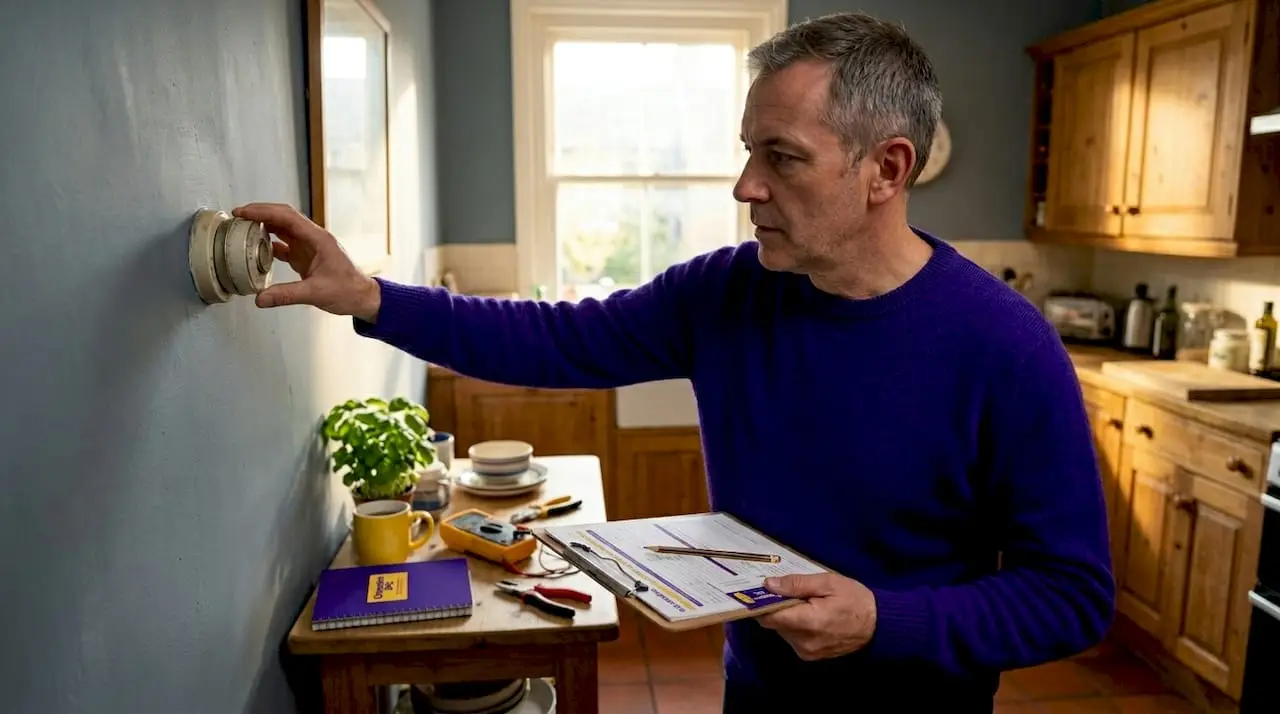
Before spending a penny on upgrades, you need a clear picture of where your property stands. The Department of Energy recommends beginning with a home energy checklist that prioritises lighting, heating controls, water heating, and air sealing. This prevents you from investing in the wrong areas first and wasting money on low-impact changes.
Key areas to assess during your initial review:
- Lighting: how many hours per day are lights on, and are they LED?
- Heating controls: do you have a programmable or smart thermostat?
- Water heating: what temperature is your boiler set to, and is the cylinder insulated?
- Air leaks: check around skirting boards, loft hatches, window frames, and pipework penetrations
- Insulation: attic, cavity walls, and underfloor insulation levels
A professional home energy assessment will include insulation checks and identify exactly where air sealing is needed. This is far more precise than a visual check alone.
Separating your gas and electricity bills is a genuinely underused tactic. When you know which fuel accounts for what proportion of your total spend, you can target the biggest consumers first. For most London homes, space heating dominates gas bills, while lighting and appliances drive electricity costs.
| Assessment area | What to check | Why it matters |
|---|---|---|
| Loft insulation | Depth and condition | Prevents up to 25% heat loss |
| Cavity walls | Insulation presence | Major source of heat escape |
| Air leaks | Gaps around pipes and frames | Undermines all other insulation |
| Heating controls | Thermostat type and zoning | Avoids unnecessary runtime |
| Windows and doors | Single vs double glazing | Significant heat loss point |
Pro Tip: Take a photo of every energy bill from the past 12 months and note seasonal patterns. If your gas spend spikes sharply in winter, space heating is your priority target, not appliances.
Executing the main energy-saving measures step by step
Having prepared and prioritised, here is how to put the key energy saving tips for home improvement into practice.
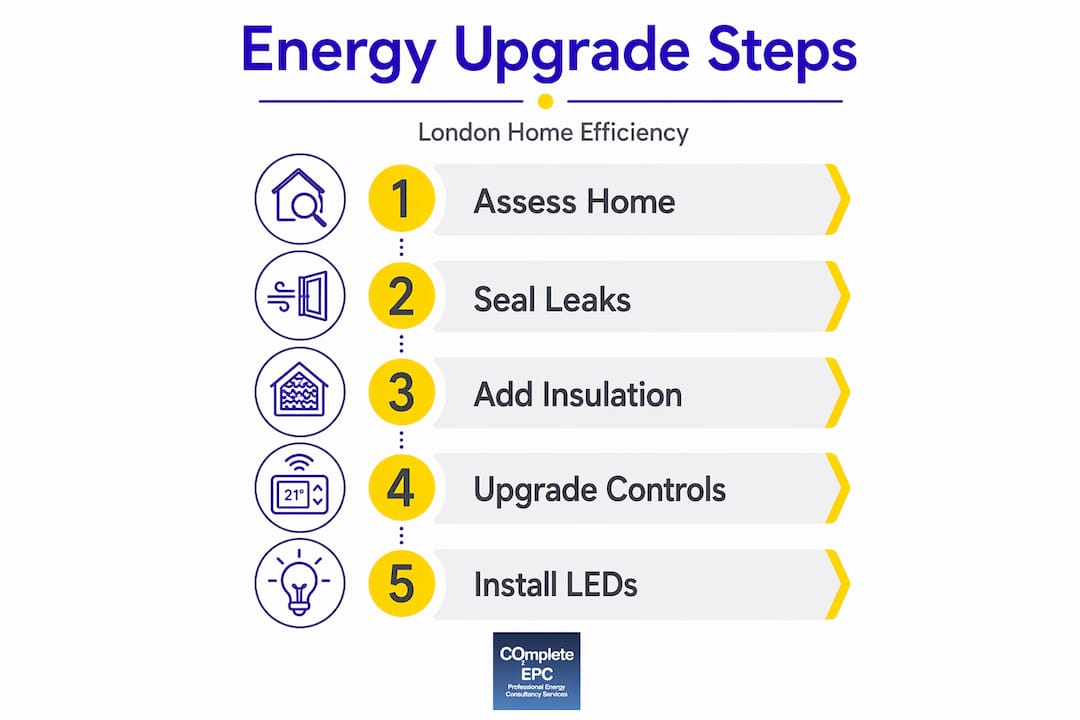
1. Seal air leaks first
Air sealing before insulation is the single most important sequencing decision you will make. Gaps around plumbing, chimneys, recessed lights, and loft hatches allow warm air to escape continuously. Sealing these gaps with appropriate materials (expanding foam, mineral wool, or fire-rated sealant near chimneys) costs very little and delivers immediate results.

2. Add insulation in the right order
Once air sealing is complete, add or top up insulation in the attic first, then walls, then floors above unheated spaces. Loft insulation to 270mm is the UK standard and is one of the fastest-payback improvements available. Cavity wall insulation can be retrofitted in most post-1920 properties. Solid wall insulation (internal or external) is more involved but delivers substantial savings for London’s many pre-war terraces.
3. Upgrade heating controls
Install a programmable or smart thermostat. Look for models with ENERGY STAR labels, which confirm independently tested performance. Smart thermostats learn your schedule, avoid heating empty rooms, and can be controlled remotely. In larger properties, zone controls that allow different temperatures in different rooms add further savings.
4. Replace lighting with LEDs
Replace incandescent bulbs with LEDs and reduce your water heater temperature to around 60°C (the UK recommended safe temperature). Start with the lights used most hours per day, typically kitchens, living rooms, and hallways. LEDs use around 75% less energy and last significantly longer.
5. Upgrade to best energy efficient appliances
When appliances reach end of life, replace them with A-rated or better models. Heat pumps are worth serious consideration for replacing gas boilers. They move heat from outside air into your home rather than generating it by burning fuel, making them significantly more efficient than conventional systems.
6. Address windows and doors
Weatherstripping around doors costs very little and stops draughts immediately. If your property still has single glazing, secondary glazing (a panel fitted inside the existing frame) is a cost-effective option in London where planning restrictions can limit full window replacements in conservation areas.
7. Maintain your heating system
An annual boiler service keeps efficiency high and extends the system’s life. Clean or replace HVAC filters every three months. Bleed radiators regularly to remove trapped air that reduces heat output.
| Insulation type | Where to apply | Typical cost (London) | Payback period |
|---|---|---|---|
| Loft (mineral wool) | Attic floor | £300 to £600 | 2 to 4 years |
| Cavity wall | External walls | £500 to £1,500 | 3 to 5 years |
| Solid wall (internal) | Pre-war terraces | £5,000 to £13,000 | 10 to 15 years |
| Underfloor | Suspended timber floors | £400 to £1,800 | 4 to 8 years |
| Draught proofing | Doors, windows, gaps | £50 to £200 | Under 1 year |
Pro Tip: Do not attempt attic insulation before checking for roof leaks. Wet insulation loses most of its effectiveness and can cause structural damage. Fixing the roof first is always the right order.
Common challenges and how to avoid costly mistakes
Understanding these common challenges lets you avoid expensive errors and make your upgrades count.
The most frequent mistakes London homeowners make:
- Insulating before sealing air leaks. Insulation cannot trap heat if warm air is still escaping through gaps. Skipping air-tightness checks means insulation that simply does not reduce bills effectively, regardless of its specification.
- Upgrading randomly without reviewing bills. Poor prioritisation leads to low-return upgrades. A new boiler will not make much difference if your loft has no insulation.
- Neglecting existing system maintenance. A poorly maintained boiler running on an inefficient setting can cost hundreds of pounds per year more than a well-serviced one. Maintenance is not glamorous but it is effective.
- Choosing the wrong insulation products. Not all insulation is equal. Thickness, material, and installation quality all affect performance. A 100mm loft installation where 270mm is needed is not half as good; it is far less effective than that ratio suggests.
- Ignoring windows. Heat loss through poorly insulated windows can account for over 25% of total heat loss in a home. This is not a secondary concern.
“The most effective home energy improvements are not the most expensive ones. They are the ones done in the right order, targeting the biggest losses first.”
Pro Tip: Hire a qualified energy auditor before committing to any upgrade costing more than £1,000. A professional diagnosis costs a fraction of what a poorly sequenced set of improvements would waste.
Measuring success and staying compliant in London
With improvements done and pitfalls avoided, it is important to confirm that your changes are working and that your property remains compliant with London’s evolving efficiency standards.
Verification steps to follow after upgrades:
- Compare energy bills month by month against the same period in the previous year. Allow for weather variation.
- Book a follow-up energy audit six to twelve months after major insulation or air sealing work to check performance.
- Use a smart meter to monitor real-time energy consumption and spot any remaining inefficiencies.
- Check your EPC rating. A professional assessment will confirm whether your upgrades have moved your property up a rating band.
- Review government support eligibility annually, as new schemes and funding rounds open regularly.
For landlords specifically, the regulatory picture is shifting significantly. The UK Warm Homes Plan commits £15 billion to upgrading 5 million homes and includes new requirements for landlords to invest in energy efficiency measures that reduce tenants’ energy bills directly. Falling behind on these requirements is not just a compliance risk; it affects lettability and property value.
| Action | Purpose | Government support available |
|---|---|---|
| Post-upgrade EPC assessment | Confirm new energy rating | None needed, cost is modest |
| Great British Insulation Scheme | Fund insulation improvements | Yes, means-tested grants |
| Boiler Upgrade Scheme | Heat pump installation funding | Yes, up to £7,500 grant |
| Smart Export Guarantee | Revenue for solar panel owners | Yes, per kWh exported |
| Landlord EPC compliance check | Confirm legal minimum (Band E) | Guidance via GOV.UK |
Rethinking home energy efficiency: a systems approach for lasting impact
Here is something most guides will not tell you plainly. Isolated upgrades almost never deliver the savings they promise on paper. A new heat pump fitted into a draughty, poorly insulated Victorian terrace will run almost constantly and still leave occupants cold. The equipment is not the problem. The building envelope is.
Fabric, HVAC controls, windows, and appliances all work together in a well-planned energy efficient home. The moment you treat them as separate projects, you lose the compounding benefit they create when done in sequence. Air sealing and insulation reduce the heating demand. A smaller demand means a smaller, cheaper, more efficient heating system does the job. That system then works less, lasts longer, and costs less to run.
The other insight that gets overlooked is this: projects without proper prioritisation consistently return less value than planned. Homeowners who invest in smart lighting before fixing their draughty sash windows are optimising around a fraction of their energy waste. Smart lighting is a good upgrade. But it will never move the needle the way a properly insulated and sealed building will.
The most cost-effective approach is almost always the least exciting one. Draught proofing. Loft insulation top-up. Cavity wall fill. These unglamorous measures often outperform solar panels, smart home systems, and premium appliances simply because they address the core problem: the building is losing heat it cannot afford to lose.
Patience matters too. A well-sequenced plan carried out over two to three years, targeting the biggest consumers first and verifying results along the way, will outperform a rushed overhaul every time.
Boost your home’s energy performance with expert EPC services in London
To make the most of your energy efficiency improvements and stay compliant with London’s regulations, you need accurate, up-to-date information about your property’s current performance. Complete EPC provides professional energy performance certificate assessments for homeowners and landlords across London, carried out by qualified assessors with extensive experience.
An EPC is not just a legal requirement for letting or selling a property. It is also one of the most practical planning tools available when you are deciding which upgrades to prioritise. Our step-by-step assessment process gives you a clear picture of where your property stands and exactly which improvements will move your EPC rating up the most efficiently. Whether you are a homeowner planning long-term improvements or a landlord navigating new compliance requirements, a current EPC assessment is the right starting point.
Frequently asked questions
What is the first step to making my home more energy efficient?
Start with a home energy checklist and, where possible, a professional energy audit. The home energy checklist recommended by the Department of Energy prioritises lighting, heating controls, water heating, and air sealing, giving you a clear action order rather than guesswork.
Why is air sealing important before adding insulation?
Air sealing prevents warm air from escaping through gaps in the building fabric, which makes insulation far more effective. As confirmed by insulation guidance from the Department of Energy, without proper sealing, insulation alone delivers poor energy savings.
What upgrades are landlords in London required to make under new regulations?
Landlords must invest in energy efficiency improvements such as insulation, heating controls, and clean heating technologies. The UK Warm Homes Plan includes specific new rules requiring landlords to cut energy bills for renters and social tenants.
Can smart thermostats significantly reduce heating costs?
Yes. Programmable and smart thermostats adjust temperatures based on your daily schedule, reducing unnecessary heating when rooms are empty. Smart thermostat controls that learn your routine can cut heating runtime considerably without affecting comfort.
Are LED bulbs worth switching to for energy savings?
Absolutely. Replacing incandescent bulbs with LEDs cuts lighting energy use by around 75% and pays back the cost quickly, often within a few billing cycles. Start with the lights you use most and work through the rest over time.