
TL;DR:
- Obtaining an EPC certificate in the UK requires hiring an accredited assessor and preparing appropriate property documentation to ensure accuracy.
- The process involves scheduling assessments, verifying registration on GOV.UK, and renewing every 10 years to maintain compliance.
- Proactive preparation and understanding of regulations help property owners and landlords optimize energy ratings and avoid legal issues.
If you are asking how can I get my EPC certificate, you are not alone. Thousands of property owners and landlords face the same question every year, particularly when preparing to sell or let a property. An Energy Performance Certificate is a legal requirement before you can market most properties in the UK, and getting the process wrong can delay completions, block possession claims, or result in fines. This guide walks you through every stage, from finding a qualified assessor to verifying your certificate is valid and on record.
Table of Contents
- Key takeaways
- Prerequisites for obtaining your EPC certificate
- The step-by-step process of getting your EPC
- Verifying and managing your EPC after assessment
- Best practices and compliance for landlords
- My honest take on getting an EPC right
- How Completeepc can help you get your EPC
- FAQ
Key takeaways
| Point | Details |
|---|---|
| Use an accredited assessor | Only qualified, accredited domestic energy assessors can produce a legally valid EPC in England, Wales, and Northern Ireland. |
| Prepare documents in advance | Gathering property evidence before the visit reduces the risk of inaccurate ratings caused by assessor assumptions. |
| Budget between £35 and £120 | EPC costs vary by property size, type, and location, so obtain at least two or three quotes before booking. |
| Verify online after assessment | Always confirm your EPC is live on the GOV.UK register before using it for marketing or letting. |
| EPCs last 10 years | A certificate is valid for a decade, but you must renew it if it expires before re-letting or selling. |
Prerequisites for obtaining your EPC certificate
Before you commission an assessment, there are a few things you need to understand and prepare. Getting this right saves time and produces a more accurate certificate.
Who can produce a valid EPC
You cannot produce an EPC yourself. Only accredited domestic energy assessors can produce valid EPCs in England, Wales, and Northern Ireland. The GOV.UK website holds a searchable register of these assessors, which is the safest place to start your search. In Scotland, the rules differ slightly. Valid EPCs in Scotland must be produced by approved organisations working under Scottish Government schemes, so check the correct register for your location.
When selecting an assessor, look beyond price. Check their accreditation scheme membership, read reviews from other landlords or property owners, and confirm they have experience with your property type. A flat above a commercial unit, for example, carries different assessment challenges to a mid-terrace house.
Documents and property information to prepare
Preparing documentation before the visit helps avoid inaccurate ratings and the need for a costly reassessment. Collect the following before the assessor arrives:
- Proof of insulation (loft, wall cavity, or floor insulation certificates or building control sign-offs)
- Boiler installation or service records confirming the make, model, and year
- Details of any double or triple glazing, including approximate installation dates
- Any solar panel or renewable energy system documentation
- Floor plans or construction drawings if available
The more evidence you provide, the fewer assumptions the assessor will need to make. When an assessor cannot confirm a detail, they are required to default to the least favourable option, which can drag your rating down unnecessarily.
How long does an EPC last
EPCs are valid for 10 years and must be renewed if they expire before a re-letting or sale. Many landlords assume their existing certificate is still current without checking. Always verify the expiry date before marketing a property, particularly if you acquired it some years ago with a certificate already in place.
Pro Tip: Search the GOV.UK EPC register using your property address before booking an assessor. A valid certificate may already exist for your property, potentially saving you the cost of a new one entirely.
The step-by-step process of getting your EPC
Here is exactly how to get my EPC certificate from start to finish.
-
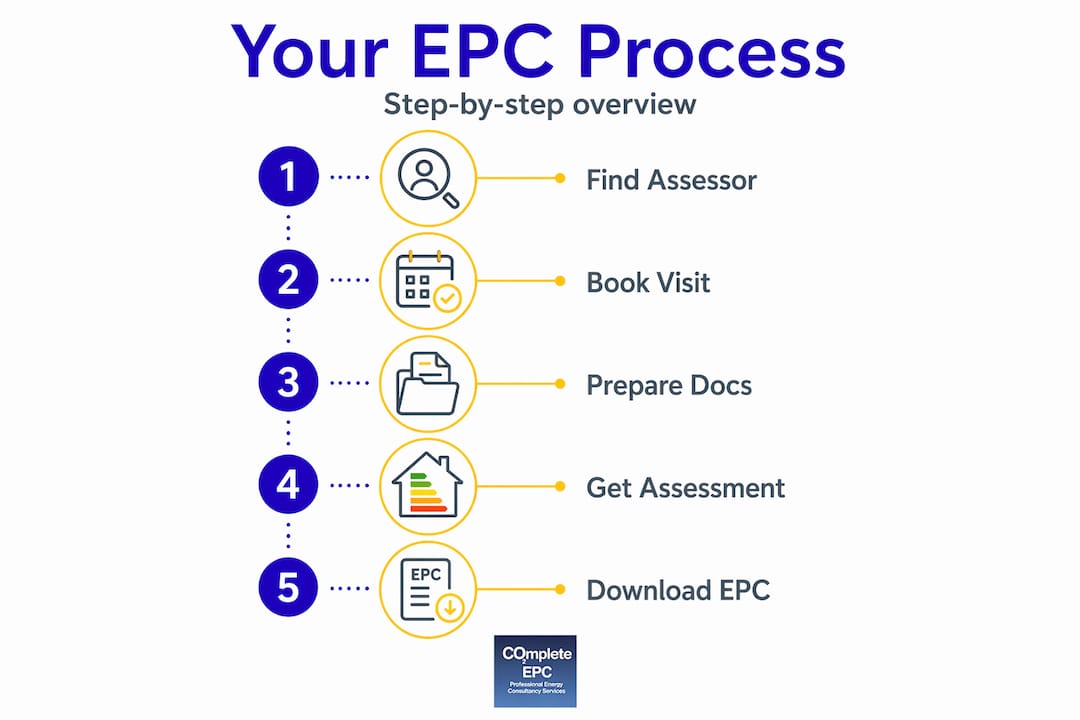
Search for accredited assessors. Use the GOV.UK assessor finder or a reputable local service to identify two or three qualified assessors in your area. Request quotes from each, specifying your property type and size to get accurate pricing.
-
Obtain and compare quotes. EPC costs vary from around £35 to £120 depending on property size, type, and location. Flats are typically cheaper to assess than large detached houses. Do not simply choose the lowest price. Confirm what is included, whether they use recognised software, and how quickly the certificate will be registered.
-
Schedule the visit with adequate lead time. Commission your EPC early before any marketing or letting deadlines. Last-minute bookings risk missing legal deadlines, particularly during busy periods when assessors have limited availability.
-
Prepare your property and evidence. Gather all the documentation listed in the section above. Make sure the assessor can access all rooms, the loft space, the boiler cupboard, and any outbuildings included in the property.
-
Attend or facilitate the assessment visit. The assessment visit typically takes 45 minutes to one hour. The assessor will measure rooms, inspect insulation, heating systems, windows, and lighting, and photograph key features. You do not need to do anything during the visit beyond making the property accessible.
-
Wait for registration. Once assessed, the EPC may take several days to appear on the national register. This delay can affect your ability to legally market or let the property, so factor this in when planning your timeline.
-
Download and verify the certificate. Once registered, you can access the certificate via GOV.UK. Confirm the details are correct, including the address, property type, and rating. If anything is wrong, contact your assessor promptly.
| Property type | Typical cost range | Assessment duration |
|---|---|---|
| One-bedroom flat | £35 to £60 | 30 to 45 minutes |
| Two to three-bedroom house | £60 to £90 | 45 to 60 minutes |
| Large detached house | £90 to £120 | 60 to 90 minutes |
| Commercial property | £150 and above | Varies by size |
Pro Tip: Ask your assessor to walk you through the findings before they leave. Understanding why a particular element was scored as it was helps you plan any future improvements far more effectively.
Verifying and managing your EPC after assessment
Once you have your certificate, your job is not quite finished. Knowing how to find your EPC certificate and confirm it is valid is just as important as obtaining it in the first place.

Using the GOV.UK register
You can look up your EPC using the GOV.UK online service by searching your property address or entering the report reference number directly. This is the official source and the only one you should rely on. The service allows you to download a PDF version of the certificate, which you can share with letting agents, solicitors, or prospective tenants and buyers.
To find out the EPC rating for any property, the same GOV.UK tool works perfectly. This is useful when you are buying a property and want to check its efficiency before making a decision.
Checking for replacement certificates
One issue many landlords overlook is the possibility that a certificate has been superseded. If a new certificate has replaced an older one, the GOV.UK lookup will display a warning and redirect you to the current version. This matters because storing previous EPC versions without checking for replacement status is a compliance risk. Using an outdated PDF you saved years ago could put you in breach of your legal obligations.
Pro Tip: Set a calendar reminder for 12 months before your EPC expiry date. This gives you ample time to commission a renewal without rushing, and it protects you from accidental non-compliance.
Key things to check when verifying your EPC:
- Confirm the full property address matches exactly
- Check the expiry date and calculate when renewal is due
- Verify the energy efficiency rating (A to G) and the environmental impact rating
- Review the improvement recommendations listed within the report
- Confirm the certificate has not been replaced by a newer version
Best practices and compliance for landlords
Getting an EPC is one step. Using it well is another.
Questions to ask your assessor
Asking specific questions yields better understanding and helps with long-term compliance planning. Before the assessor leaves, ask them which elements had the greatest negative impact on your rating, what evidence they used or assumed for insulation and glazing, and which recommended improvements would deliver the best return in terms of rating uplift per pound spent.
Understanding the assumptions made during the assessment is particularly valuable. Accurate rating depends heavily on property evidence presented during the visit. If an assessor assumed your loft had no insulation because you could not provide proof, you could commission a follow-up assessment with documentation and potentially achieve a higher rating.
Understanding MEES and future requirements
The Minimum Energy Efficiency Standards (MEES) currently require rental properties in England and Wales to achieve at least an E rating before being let. Future regulations are expected to tighten this requirement. Landlords whose properties sit at E or below should treat the EPC as evidence for compliance and investment planning, not just a regulatory obligation.
“An EPC is not simply a document you need to obtain and file away. It is a diagnostic tool that tells you exactly where your property is losing heat and money, and what you can do about it.”
You can also explore energy-saving lighting upgrades as a cost-effective improvement that assessors recognise, particularly when replacing halogen or fluorescent fittings with LED alternatives. Even straightforward changes can shift a property from an E to a D rating, which broadens your pool of eligible tenants and reduces void periods.
My honest take on getting an EPC right
I have worked alongside property owners and landlords who treat the EPC as an afterthought, something to tick off the list in the final days before a letting. That approach creates unnecessary stress and, more often than not, avoidable delays.
What I have found is that the landlords who get the best outcomes prepare thoroughly. They gather their insulation and boiler records before the assessor arrives. They ask questions during the visit rather than just handing over a key and walking away. And they look at the recommendations section of the certificate as a practical roadmap for future improvement, not a list of problems.
The properties I have seen rated most accurately are always the ones where the owner was present, prepared, and engaged. An assessor working with solid evidence produces a certificate that reflects reality. One working from assumptions tends to produce a rating that is lower than it should be.
My advice is simple. Commission your EPC well ahead of any deadlines, treat the assessment visit as a two-way conversation, and verify your certificate is live on GOV.UK before you rely on it for anything. The EPC renewal process is equally worth understanding before your current certificate approaches expiry.
— Danny
How Completeepc can help you get your EPC
If you are based in London and still wondering how to get a copy of your EPC certificate or how to obtain an energy performance certificate from a reliable assessor, Completeepc makes the process straightforward. The team works with domestic and commercial property owners across London, connecting them with qualified accredited assessors at competitive rates.
You can find detailed guidance on the EPC assessment process in London to understand exactly what to expect before your visit. For a thorough overview of what an EPC means for your property and your obligations as a landlord, the understanding EPCs guide covers everything from rating bands to MEES compliance.
Completeepc also provides guidance on sustainable lighting improvements that can meaningfully improve your property’s rating before or after assessment. Whether you are booking your first assessment or managing a portfolio of rental properties, Completeepc gives you the support and expertise to stay compliant and improve your energy performance without guesswork.
FAQ
How do I find my EPC certificate online?
You can find your EPC certificate using the official GOV.UK energy certificate lookup service. Search by property address or report reference number to view, verify, and download the current certificate.
How long does it take to get an EPC certificate?
The on-site assessment typically takes 45 minutes to one hour. Once the assessor completes the visit, the certificate may take a few days to be registered and appear on the national GOV.UK register.
How much does an EPC certificate cost?
EPC costs generally range from around £35 to £120, depending on property size, type, and location. Smaller flats tend to sit at the lower end, while larger detached homes cost more to assess.
Can I produce my own EPC certificate?
No. Self-generating an EPC is not permitted. Only accredited domestic energy assessors in England, Wales, and Northern Ireland, or approved organisations in Scotland, can produce a legally valid certificate.
How do I get a copy of my EPC certificate if I have lost it?
Use the GOV.UK energy certificate service to search for your property and download a PDF copy of the current valid certificate. Always check that the certificate shown has not been superseded by a newer version.