

TL;DR:
- The EPC rating system classifies properties in England and Wales from A to G based on energy efficiency, influencing legal compliance and property value. Property assessments guide cost-effective improvements such as insulation and LED lighting, aiming for the upcoming 2030 band C target. The new Home Energy Model will introduce more detailed metrics from 2027, but existing EPCs remain valid until 2030, emphasizing strategic long-term planning.
The EPC rating system classifies every property in England and Wales on an A to G energy efficiency scale, where A is the most efficient and G the least. An energy performance certificate is a legal requirement for selling, letting, or constructing a property, and assessments typically cost £65 to £120. For London landlords, property owners, and businesses, understanding this system is not optional. It determines legal compliance, affects rental income, and shapes long-term property value.
How is an EPC rating calculated and what does it mean?

EPC ratings are calculated using the Standard Assessment Procedure (SAP) or, for existing homes, the Reduced Data SAP model known as RdSAP. A qualified assessor visits the property and records physical data including wall and loft insulation, window glazing, heating systems, hot water provision, and fixed lighting. That data feeds into the RdSAP model, which produces a numerical score between 1 and 100. The score maps directly to a letter band.
EPCs are modelled under standard occupancy conditions, meaning the rating reflects the building’s fabric and systems rather than how you personally use energy. Two households in identical band D flats may have very different actual bills depending on their heating habits, occupancy hours, and appliance use. This distinction matters because owners sometimes dismiss a poor rating by pointing to low personal bills, which misses the legal and commercial point entirely.
Every certificate shows two ratings: the current rating and the potential rating. The potential rating assumes every recommended improvement on the certificate has been installed. This potential figure is aspirational and does not update automatically. Once you carry out improvements, you must commission a new assessment to legally record the higher band.
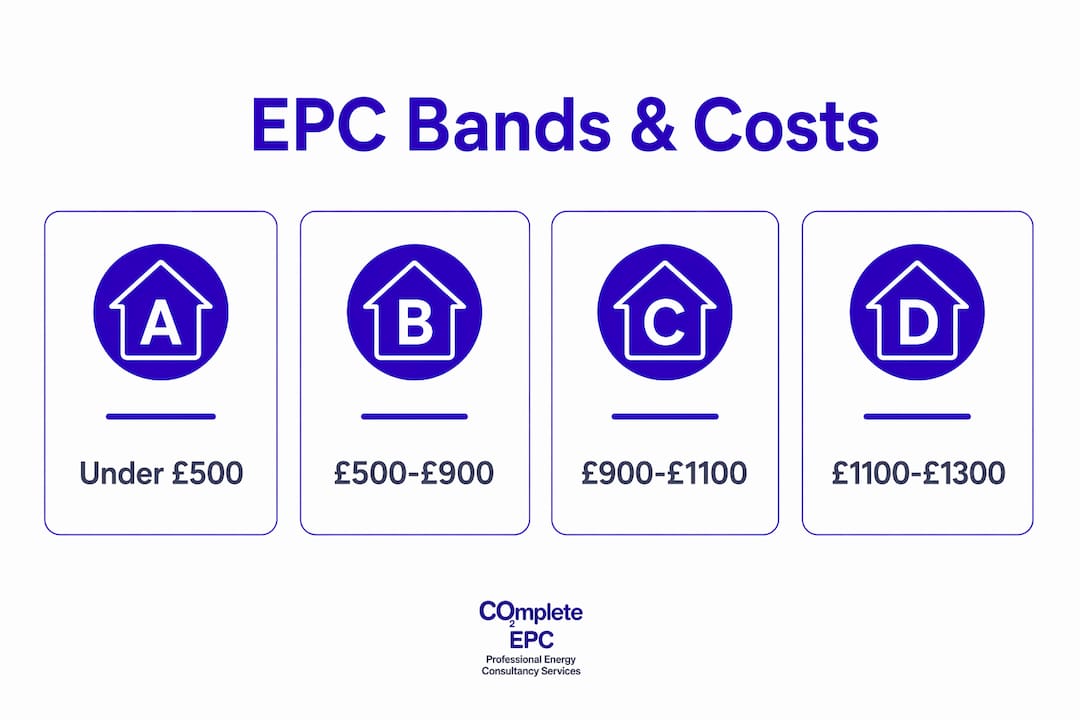
The table below shows how scores translate into bands and what they mean for annual energy costs.
| Band | SAP score | Typical annual energy cost |
|---|---|---|
| A | 92–100 | Under £500 |
| B | 81–91 | £500–£900 |
| C | 69–80 | £900–£1,400 |
| D | 55–68 | £1,400–£2,000 |
| E | 39–54 | £2,000–£2,700 |
| F | 21–38 | £2,700–£3,200 |
| G | 1–20 | Over £3,200 |
Band D is the most common rating, covering 35% of England’s housing stock. That means a large proportion of London properties sit just one band above the current legal rental minimum, making proactive improvement planning genuinely worthwhile rather than a distant concern.
Pro Tip: Ask your assessor to show you the individual line items that contribute most to your current score before you spend anything on upgrades. Targeting the highest-weighted items first gives you the best score gain per pound spent.
What EPC requirements must London landlords and property owners meet?
The current legal minimum for rental properties in England and Wales is band E under the Minimum Energy Efficiency Standards (MEES). Landlords who let properties rated F or G without a registered exemption face fines of up to £5,000. Failure to provide a valid certificate at the point of letting carries a separate £200 fixed penalty charge.
The government has proposed raising the minimum standard to band C by 2030 for all rental properties. For London landlords with large portfolios, this is a significant compliance horizon. Band C homes save considerably on annual energy costs compared to D or E rated properties, so tenants will increasingly expect this standard regardless of legislation.
Key compliance points for London property owners and landlords:
- A valid EPC must be provided to prospective tenants or buyers before marketing begins.
- Certificates are valid for 10 years from the date of issue; a new assessment is required after that period or following significant improvements.
- Commercial properties follow separate Display Energy Certificate (DEC) rules for public buildings and EPC rules for transactions.
- Exemptions exist for listed buildings, properties where improvements would damage the structure, or where the cost cap of £3,500 has been spent without reaching band E. All exemptions must be registered on the national PRS Exemptions Register.
- Properties marketed for sale also require a valid EPC lodged on the national register before the listing goes live.
The 2030 band C proposal is not yet law, but the direction of travel is clear. London properties built before 1980 and not yet retrofitted will require the most work to reach band C, and planning that retrofit now avoids rushed, expensive decisions later.
How can landlords and property owners improve their EPC rating cost-effectively?
The most cost-effective EPC improvements focus on the building fabric rather than heating technology. Loft insulation costs between £250 and £600 and typically adds 5 to 10 SAP points, making it one of the highest points-per-pound measures available. LED lighting across all fixed fittings costs £100 to £300 and adds 2 to 4 points. Cavity wall insulation costs more, typically £500 to £1,500, but can add 8 to 12 points depending on the property type.
The table below compares common measures by cost, typical SAP point gain, and payback period.
| Measure | Approximate cost | SAP point gain | Payback period |
|---|---|---|---|
| Loft insulation | £250–£600 | 5–10 points | 2–4 years |
| LED lighting | £100–£300 | 2–4 points | Under 2 years |
| Cavity wall insulation | £500–£1,500 | 8–12 points | 3–5 years |
| Air source heat pump | £8,000–£15,000 | 10–20 points | 10–15 years |
| Solar PV panels | £5,500–£7,500 | 15–25 points | 10–15 years |
Solar PV adds 15 to 25 SAP points but carries a 10 to 15 year payback period. For landlords whose primary goal is reaching band C for compliance, solar PV is rarely the first step. Start with insulation and controls, then consider renewables once the fabric is sound. You can learn more about solar technology options through energy efficiency resources if renewables form part of your longer-term plan.
Government grants reduce the financial burden significantly. ECO4 targets homes rated D to G and is means-tested, covering insulation and heating upgrades for eligible households. The Boiler Upgrade Scheme provides £7,500 towards an air source or ground source heat pump installation. London landlords with lower-income tenants may find their properties qualify for ECO4 funding, effectively reducing upgrade costs to zero.
A practical upgrade path for a band E property targeting band C might look like this: install loft insulation and cavity wall insulation first (combined gain of 13 to 22 points), switch all fixed lighting to LED (2 to 4 points), and upgrade heating controls to a programmable or smart thermostat (2 to 5 points). That combination alone can move many London terraced houses from band E to band C without touching the boiler or installing renewables.
Pro Tip: Focus on points-per-pound rather than headline improvements. Double glazing, for example, is expensive and adds relatively few SAP points compared to insulation. It improves comfort and reduces noise, but it is a poor choice if your sole goal is reaching band C for compliance.
What is the Home Energy Model and how does it affect your EPC?
The Home Energy Model (HEM) will supplement and eventually replace the current A to G EPC system from 2027. Rather than a single letter band, HEM introduces four separate metrics: energy cost, carbon emissions, energy demand, and heating system efficiency. Each metric gives a more granular picture of a property’s performance than a single letter can convey.
Current A to G certificates remain valid for their full 10-year term, and the legal minimum standards remain in force until at least 2030. This means you do not need to rush out and commission a new assessment simply because HEM is coming. What you should do is plan improvements that will perform well under both systems.
Four things London property owners should understand about the transition:
- Fabric-first improvements score well under both systems. Insulation, draught-proofing, and efficient windows reduce energy demand, which is one of HEM’s four metrics. Work done now will not become redundant.
- Heating system type will matter more under HEM. Gas boilers score lower on the carbon emissions metric than heat pumps. Properties planning long-term compliance should factor this into boiler replacement decisions.
- Existing certificates stay legally valid. A certificate issued in 2023 remains valid until 2033 regardless of HEM’s introduction. You are not required to reassess until the certificate expires or you carry out significant works.
- The A to G rating remains the legal standard for transactions until 2030. Estate agents, solicitors, and mortgage lenders will continue to use the current banding system for property sales and lettings throughout this period.
The A to G rating remains the legal standard until 2030, so meaningful energy improvements to the building fabric should take priority over cosmetic fixes. Forward-thinking London landlords are already planning retrofit programmes that will satisfy both the current MEES requirements and the anticipated HEM metrics.
Key takeaways
The EPC rating system determines legal compliance, annual energy costs, and long-term property value, making it one of the most consequential assessments a London property owner will face.
| Point | Details |
|---|---|
| Legal minimum is band E | Landlords renting below band E without exemption face fines up to £5,000. |
| Band C is the 2030 target | Government proposals require all rental properties to reach band C by 2030. |
| Insulation offers best value | Loft and cavity wall insulation deliver the highest SAP point gains per pound spent. |
| Potential rating is aspirational | The certificate’s potential rating only updates after a new assessment is commissioned. |
| HEM arrives in 2027 | Current A to G certificates remain legally valid; fabric improvements future-proof both systems. |
Why I think most London landlords are approaching EPC compliance the wrong way
After working with hundreds of London properties, the pattern I see most often is landlords treating the EPC as a box-ticking exercise rather than a genuine property asset decision. They commission an assessment when forced to by a transaction, note the band, and file the certificate away. That approach is increasingly costly.
The properties I see handled well are those where the owner treats the EPC recommendations as a starting point for a conversation with a qualified retrofit adviser, not as a definitive to-do list. The certificate tells you what the model says. A good adviser tells you what will actually work in your specific property without creating problems like trapped moisture in older solid-wall London terraces.
The other mistake I see regularly is spending money on improvements before commissioning a new assessment. You can install £3,000 worth of insulation and still be legally stuck on the old band because the certificate has not been updated. Physical improvements require a new assessment to update the rating legally. Time your assessment correctly and you get the compliance benefit immediately.
My honest advice: treat the 2030 band C deadline as a planning horizon, not a panic point. Properties that start fabric improvements now, claim available grants, and reassess strategically will reach compliance at a fraction of the cost of those that wait until 2029.
— Danny
Get your London EPC assessment right with Completeepc
Completeepc provides professional energy performance certificate assessments for domestic and commercial properties across London, carried out by qualified assessors with extensive field experience. Whether you need a certificate for a property transaction, want to understand your current compliance position, or are planning upgrades to reach band C, Completeepc delivers accurate assessments with clear, property-specific recommendations. The team also supports grant application processes, helping landlords access ECO4 and Boiler Upgrade Scheme funding where eligible. For a reliable, cost-effective assessment with the lowest rates in the UK market, start with Completeepc’s London EPC guidance or review the full EPC assessment process to know exactly what to expect.
FAQ
What is the minimum EPC rating required to let a property in London?
The legal minimum is band E under the Minimum Energy Efficiency Standards. Landlords letting properties rated F or G without a registered exemption face fines of up to £5,000.
How long does an EPC last?
An EPC is valid for 10 years from the date of issue. A new assessment is required once the certificate expires or after significant energy-related improvements have been made to the property.
How much does an EPC assessment cost in London?
EPC assessments typically cost between £65 and £120. Completeepc guarantees competitive pricing and covers all London boroughs with qualified, accredited assessors.
Can I improve my EPC rating without major building work?
Yes. Switching all fixed lighting to LED fittings and installing a programmable thermostat are low-cost measures that add SAP points without structural work. Loft insulation, where accessible, offers the best points-per-pound gain for most London properties.
What happens when the Home Energy Model replaces the current EPC system?
The Home Energy Model is expected from 2027 but current A to G certificates remain legally valid for their full 10-year term. Legal minimum standards for rentals remain in place until at least 2030, so existing certificates and compliance obligations are unaffected in the short term.