
TL;DR:
- Home energy savings begin with sealing and insulating the building fabric before upgrading technology or appliances. Simple behavioral changes, air leak sealing, and proper use of smart devices can reduce bills significantly without upfront costs. Prioritizing these steps ensures maximum efficiency and long-term savings in household energy consumption.
Home energy savings are the practical steps you take to reduce the amount of energy your household consumes, directly cutting what you pay on your utility bills. Heating and cooling alone account for 52% of home energy use, which means the average household has significant room to reduce waste before spending a penny on major upgrades. Homeowners implementing findings from a proper home energy audit reduce bills by 5 to 30%, saving between £100 and £600 annually. This guide ranks the most effective strategies by impact and cost, from zero-spend behavioural changes to targeted upgrades, so you can act in the right order.

1. The quickest no-cost actions to lower your energy bills
The fastest route to reducing energy bills requires no tools, no tradespeople, and no upfront spend. These are behavioural changes and simple habits that take effect immediately.
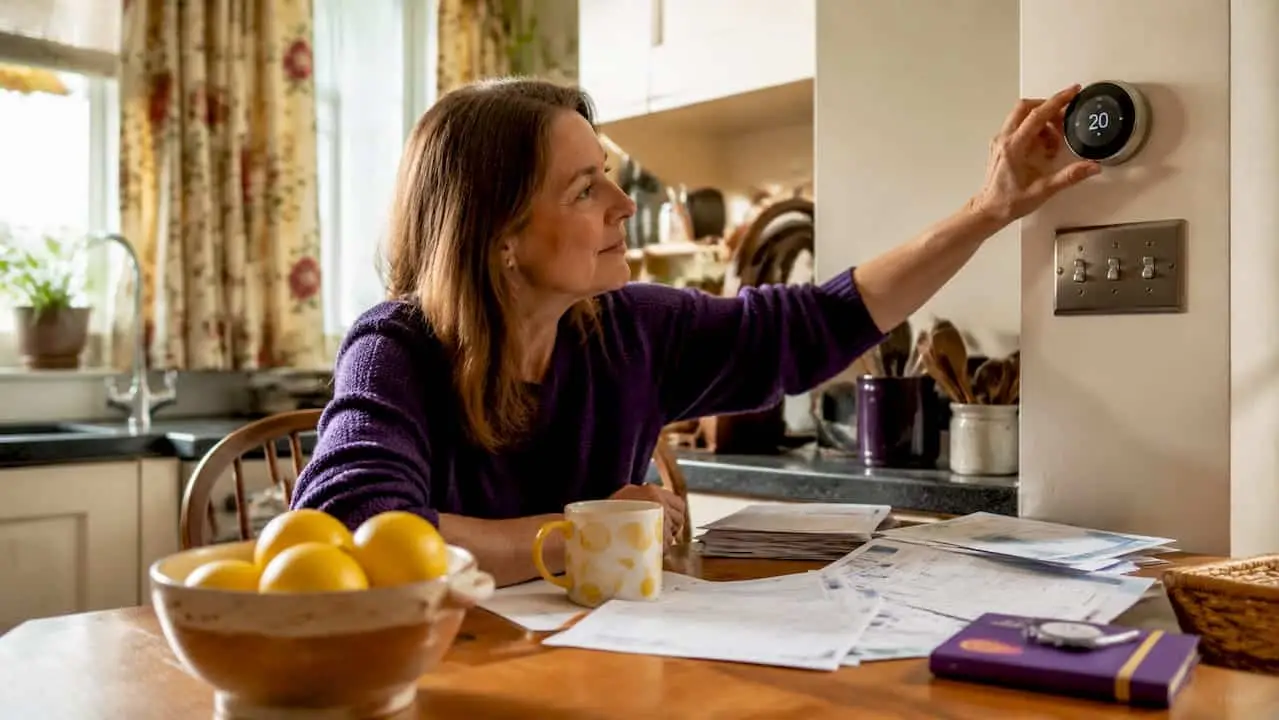
- Adjust your thermostat. Shifting the temperature by 7 to 10 degrees when you are asleep or away from home saves around 10% on your annual heating and cooling costs. A programmable or smart thermostat makes this automatic.
- Unplug devices on standby. Electronics left in standby mode draw power continuously. This phantom load costs households up to £150 per year and is eliminated simply by unplugging devices or using a switched extension lead.
- Switch to LED bulbs. LED lighting uses 75 to 80% less energy than incandescent bulbs and lasts 15 to 25 times longer, saving up to £200 annually across a full home.
- Use natural light. Opening blinds and curtains during daylight hours reduces the need for artificial lighting, particularly in south-facing rooms.
- Turn off what you are not using. Lights, televisions, and computers left on in empty rooms add measurable cost over a year.
Pro Tip: Set your thermostat schedule on a Sunday evening for the whole week ahead. Consistency in scheduling is what makes programmable thermostats outperform manual adjustments significantly.
2. How to find and seal air leaks for lasting savings
Air leaks are one of the most underestimated sources of energy waste in UK homes. Air leaks cause 20 to 40% of heating and cooling energy loss, yet sealing them costs very little.
The most productive areas to check are attic hatches, rim joists, door and window frames, electrical outlets on external walls, and duct joints. Run your hand along these areas on a cold day, or use an infrared thermometer to spot cold patches. For best results, perform your audit when the temperature difference between indoors and outdoors is at least 10 degrees Celsius. The contrast makes leaks far easier to detect.
The fixes are straightforward and inexpensive. Weatherstripping around doors and windows, door sweeps at the base of external doors, and caulk around window frames and pipe penetrations cover the majority of common leak points. Air sealing costs £20 to £50 in materials but saves £100 to £200 annually on heating and cooling. That is a payback period of under three months.
Pro Tip: Attic insulation is the single highest-impact upgrade for most UK homes. Proper attic insulation cuts heating and cooling costs by 15 to 30% and pays back within 2 to 4 years. Check your attic depth first: current UK guidance recommends 270mm of mineral wool.
| Fix | Typical cost | Annual saving | Payback period |
|---|---|---|---|
| Weatherstripping and caulking | £20 to £50 | £100 to £200 | Under 3 months |
| Attic insulation upgrade | £300 to £600 | £150 to £300 | 2 to 4 years |
| Loft hatch insulation | £20 to £40 | £60 to £100 | Under 6 months |
3. Which smart home devices offer the best return?
Smart home technology works best when it removes the need to rely on memory or habit. The devices below pay for themselves within one to three years for most households.
- Smart thermostats. Devices such as the Nest Learning Thermostat or Hive Active Heating reduce heating and cooling bills by 8 to 15% through programmable schedules and remote control via smartphone. The key is consistent scheduling. Programmable thermostats with regular schedules outperform manually adjusted ones by a significant margin.
- Smart power strips. Advanced power strips with individual socket switching eliminate phantom loads across entertainment systems and home offices. Savings of £80 to £150 annually are typical.
- Home energy monitors. Devices like the Hildebrand Glow or Loop connect to your smart meter and display real-time consumption by appliance. Households that monitor usage consistently identify wasteful devices they would otherwise overlook.
- Smart lighting systems. Systems such as Philips Hue or LIFX combine LED efficiency with automated schedules and occupancy sensing, reducing lighting energy use further beyond a simple bulb swap.
The effectiveness of every smart device depends on how you use it. A smart thermostat left on a single fixed temperature provides no benefit over a standard one. Set schedules, review the data your devices provide, and adjust based on what you find.
4. Water heating and appliance upgrades that cut costs
Water heating is the second largest energy cost in most homes after space heating. Two adjustments deliver immediate savings with no equipment purchase required.
Lowering your water heater thermostat to 49°C (120°F) saves 6 to 10% on water heating costs and reduces the risk of scalding. Wrapping an older hot water cylinder in an insulation jacket costs around £15 and cuts standby heat loss by up to 75%. Insulating the first metre of hot and cold pipes connected to the cylinder adds further savings at minimal cost.
For appliance upgrades, prioritise by frequency of use and age of the unit. Energy-rated appliances (A or above under the current UK scale) use 10 to 50% less energy than older equivalents. The upgrade priority order for most households is:
- Fridge and fridge-freezer: Running 24 hours a day, an inefficient fridge is a constant drain. An A-rated replacement pays back within 3 to 5 years.
- Washing machine: Switching to cold-water cycles (30°C) alone reduces the energy used per wash by up to 40%, regardless of machine age.
- Dishwasher: Running full loads on eco programmes cuts both water and energy use significantly.
- Tumble dryer: Heat pump dryers use 50 to 60% less energy than conventional vented models. Upgrading a heat pump water heater cuts water heating energy use by 60 to 70%, saving £300 to £550 annually.
| Appliance | Upgrade type | Typical annual saving |
|---|---|---|
| Water heater | Set to 49°C plus pipe insulation | £40 to £80 |
| Fridge-freezer | Replace with A-rated model | £50 to £100 |
| Washing machine | Use 30°C cycles | £30 to £60 |
| Tumble dryer | Switch to heat pump model | £100 to £150 |
5. How to prioritise energy-saving investments by budget
Not every improvement delivers the same return, and spending money in the wrong order wastes both budget and effort. Experts recommend a ‘fabric-first’ approach: seal and insulate the building before replacing heating or cooling equipment. A new boiler in a draughty, poorly insulated home will always underperform.
Here is a practical three-tier framework for prioritising your spending:
- Tier 1: No-cost changes. Thermostat adjustments, standby elimination, LED bulbs, and cold-water washing. These cost nothing and deliver immediate savings. Start here without exception.
- Tier 2: Low to moderate DIY improvements. Air sealing with weatherstripping and caulk (£20 to £50), loft insulation top-up (£200 to £400 with grants available), and HVAC filter replacement. Replacing HVAC filters regularly cuts energy consumption by 5 to 15%, saving £100 to £450 annually. These are the highest-return investments available to most households.
- Tier 3: Major equipment upgrades. Smart thermostats, heat pump water heaters, new appliances, and solar panels. These deliver strong long-term returns but only after Tier 1 and Tier 2 are complete.
Renters face different constraints to homeowners. You can act on all Tier 1 changes freely. For Tier 2 and Tier 3, speak to your landlord about improvements. Under the Minimum Energy Efficiency Standards (MEES) in England and Wales, landlords are legally required to meet minimum EPC ratings, which gives you a basis for requesting upgrades. A home energy audit is the most reliable way to identify which tier of improvements will deliver the greatest return for your specific property before you spend anything.
Pro Tip: Paying your energy bills by monthly direct debit rather than quarterly saves approximately £140 annually. It is one of the simplest financial adjustments available and requires no physical work at all.
Key takeaways
Effective home energy savings follow a clear sequence: seal and insulate first, then upgrade behaviour and technology, then invest in major equipment.
| Point | Details |
|---|---|
| Start with no-cost actions | Thermostat adjustments and LED bulbs deliver immediate savings with zero upfront spend. |
| Seal air leaks before upgrading | Air sealing costs under £50 and saves up to £200 annually, outperforming many expensive upgrades. |
| Use the fabric-first principle | Insulate and seal before replacing heating systems to avoid oversized, costly equipment. |
| Smart tech needs consistent use | Programmable thermostats only outperform manual ones when schedules are set and maintained. |
| Audit before you invest | A home energy audit identifies the highest-return improvements for your specific property. |
Why I always start with the building fabric, not the boiler
People often ask me whether they should invest in solar panels or a new heat pump first. My honest answer is: neither, until you have dealt with the building fabric. I have seen households spend thousands on renewable energy systems only to find their bills barely move because heat is escaping through an uninsulated loft and gaps around window frames. The generation capacity is there, but so is the waste.
The most productive thing you can do before spending any significant money is walk around your home on a cold morning with your hand near every door frame, window edge, and skirting board on an external wall. You will find the leaks. Then spend £30 on weatherstripping and caulk and fix them. That single afternoon of work will likely deliver a better return per pound spent than any piece of technology you could buy.
I also think energy monitoring is underused. Devices like the Hildebrand Glow cost very little and show you exactly where your consumption is going. Most people are surprised by what they find. Awareness alone changes behaviour, and changed behaviour compounds over months and years into real savings. Start with the audit, fix the fabric, then layer in the technology. That sequence works every time.
— Danny
How an EPC can support your energy savings plan
An Energy Performance Certificate (EPC) gives you a formal, independent assessment of your home’s energy efficiency, rated from A to G. For London homeowners and landlords, understanding your EPC rating is the starting point for identifying which improvements will have the greatest impact. Completeepc provides professional EPC assessments across London, carried out by qualified assessors who deliver detailed reports with specific improvement recommendations. You can learn more about what an EPC covers and how it applies to your property, or explore the benefits of an EPC for cost savings and property value. Completeepc offers the lowest assessment rates in the UK market, making it a practical first step before committing to any upgrade programme.
FAQ
What is the fastest way to reduce energy bills at home?
Adjusting your thermostat by 7 to 10 degrees during sleep or absence saves around 10% on HVAC costs immediately, with no upfront cost. Switching to LED bulbs and unplugging standby devices adds further savings from day one.
How much can a home energy audit save?
Homeowners who act on audit findings typically reduce bills by 5 to 30%, saving between £100 and £600 annually. The audit identifies which specific improvements deliver the highest return for your property.
Is it worth sealing air leaks before buying a new boiler?
Yes. Air sealing costs £20 to £50 and saves £100 to £200 per year, making it one of the highest-return improvements available. Installing a new boiler in a leaky home reduces its efficiency and increases running costs.
Do smart thermostats actually save money?
Smart thermostats reduce heating and cooling bills by 8 to 15% when used with consistent programmed schedules. The savings depend on how regularly you set and maintain those schedules rather than on the device itself.
What is the fabric-first approach to energy efficiency?
The fabric-first approach means improving insulation and sealing air leaks before replacing heating or cooling equipment. Experts recommend this sequence because it reduces the load on any new system and prevents oversizing, which wastes money on both purchase and running costs.