

Many London property owners assume commercial EPC requirements are optional or apply only at the point of sale. This misconception can lead to costly penalties and lost opportunities. Commercial properties in London require a valid EPC before marketing for sale or rent, with a minimum E rating under MEES for lettings since April 2023, applying to new leases, renewals, and existing tenancies. Understanding these regulations helps you avoid fines, attract quality tenants, and enhance property value through improved energy efficiency. This guide clarifies the legal framework, practical steps for compliance, and strategies to optimise your commercial property’s energy performance.
Table of Contents
- Key takeaways
- Understanding London’s commercial EPC regulations
- How to obtain and maintain a commercial EPC in London
- Improving your commercial property’s EPC rating and benefits
- Navigating enforcement and compliance challenges in London
- How Complete EPC supports your compliance journey
- Frequently asked questions
Key Takeaways
| Point | Details |
|---|---|
| EPC required before marketing | Commercial properties in London must hold a valid Energy Performance Certificate before they are marketed for sale or rent. |
| MEES minimum E rating | From April 2023 MEES requires at least an E rating for new tenancies, renewals and existing lettings. |
| Penalties for non compliance | Non compliance can trigger civil penalties ranging from five thousand to one hundred fifty thousand pounds depending on rateable value and breach duration. |
| Engage accredited assessor | Engage an accredited energy assessor to determine the property’s performance and obtain the certificate. |
Understanding London’s commercial EPC regulations
Commercial EPC regulations stem from UK legislation designed to reduce carbon emissions and improve building energy performance. An Energy Performance Certificate rates a property’s energy efficiency on a scale from A (most efficient) to G (least efficient). For commercial properties in London, obtaining a valid EPC before marketing for sale or rent is mandatory.
The Minimum Energy Efficiency Standards (MEES) legislation requires commercial properties to achieve at least an E rating before granting new tenancies or renewing existing ones. Since April 2023, this requirement extends to all existing commercial lettings, meaning landlords must upgrade substandard properties or face enforcement action. MEES applies to:
- New leases and tenancy agreements
- Lease renewals and extensions
- Existing tenancies where the property falls below the E threshold
- Properties marketed for sale or rent
Property owners, landlords, and businesses leasing commercial space must all understand their obligations. Landlords bear primary responsibility for securing EPCs and ensuring compliance before marketing properties. Tenants should verify EPC status during due diligence to avoid inheriting compliance issues. Estate agents and property managers must also ensure EPCs are available and displayed in marketing materials.
Common misconceptions include believing EPCs apply only to new builds or that owner-occupied properties are exempt. In reality, EPC requirements in London apply broadly across the commercial sector, with limited exemptions for listed buildings, temporary structures, and places of worship. Non-compliance triggers civil penalties ranging from £5,000 to £150,000, depending on rateable value and duration of breach. Local authorities enforce MEES through trading standards, and breaches can affect property transactions and tenant relationships.
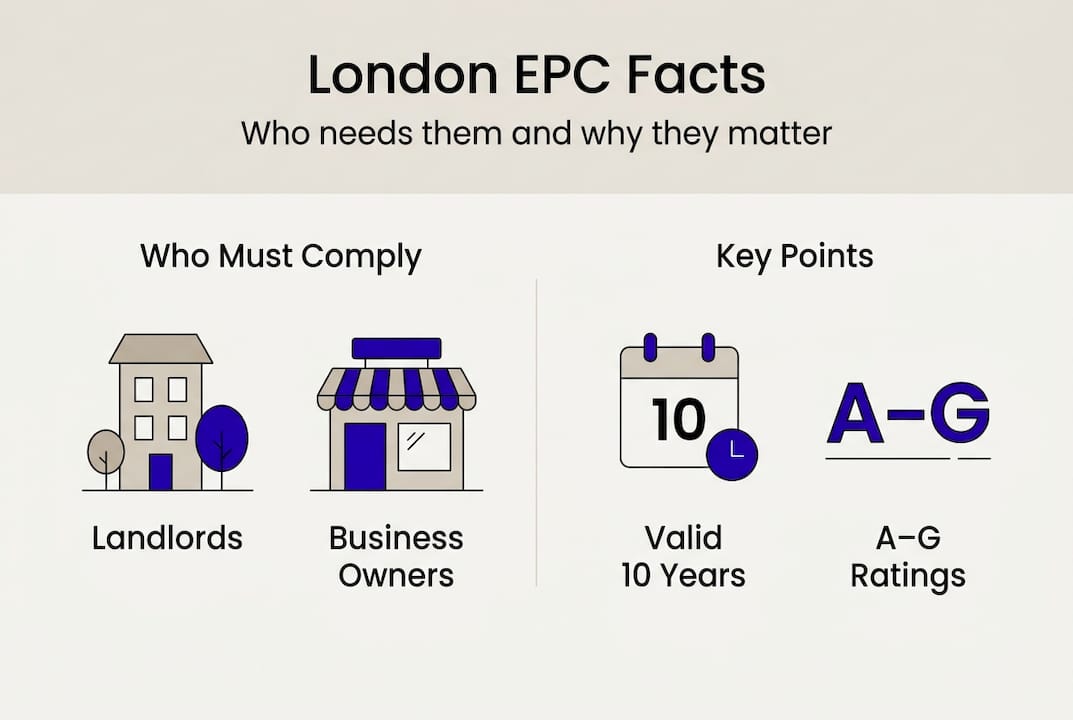
Understanding the EPC rules for businesses helps you plan property improvements strategically. Rather than viewing compliance as a burden, savvy property owners recognise EPCs as tools for identifying cost-effective upgrades that enhance asset value and tenant appeal.
How to obtain and maintain a commercial EPC in London
Securing a compliant commercial EPC involves engaging an accredited energy assessor who evaluates your property’s energy performance. The process differs from domestic EPCs due to commercial buildings’ complexity and varied uses. Here’s how to navigate the EPC assessment process efficiently:
- Select an accredited assessor: Choose a qualified professional registered with an approved accreditation scheme. Verify credentials and experience with properties similar to yours.
- Schedule the survey: Arrange a convenient time for the assessor to inspect the property. Ensure access to all areas, including plant rooms, heating systems, and building plans.
- Provide documentation: Supply construction details, heating and cooling specifications, lighting layouts, and previous energy bills to expedite the assessment.
- Undergo the inspection: The assessor examines building fabric, glazing, insulation, HVAC systems, lighting, and renewable energy installations. Surveys typically take several hours depending on property size.
- Review the EPC report: Receive a certificate showing the current rating and a recommendation report outlining cost-effective improvements.
- Lodge the certificate: The assessor registers the EPC with the national database, making it publicly accessible and valid for 10 years.
The EPC document displays an energy efficiency rating and an environmental impact rating, both on the A to G scale. The accompanying recommendation report categorises improvements by payback period: short (up to three years), medium (three to seven years), and long (over seven years). These recommendations guide strategic investment in energy upgrades.

Commercial EPCs remain valid for 10 years from the date of issue. However, significant alterations to heating systems, building fabric, or renewable installations may warrant an updated assessment to reflect improved performance. Plan EPC renewals well before expiry to avoid compliance gaps, especially if marketing the property or negotiating lease renewals.
Pro Tip: Before commissioning an EPC, conduct a preliminary energy audit to identify obvious deficiencies. Addressing quick wins like upgrading lighting or improving controls before the formal assessment can yield a better initial rating and reduce the need for costly remedial work.
Maintaining an up-to-date EPC demonstrates professionalism and attracts quality tenants who value energy efficiency. Regular reviews of your EPC commercial property status help you stay ahead of regulatory changes and market expectations.
Improving your commercial property’s EPC rating and benefits
Enhancing your commercial property’s EPC rating delivers financial, legal, and environmental advantages. Higher ratings reduce operating costs, attract premium tenants, and future-proof assets against tightening regulations. Focus on improvements that offer the best return on investment.
Common energy efficiency upgrades include:
- Insulation: Upgrading roof, wall, and floor insulation reduces heat loss and improves thermal performance significantly.
- Lighting: Replacing outdated fluorescent or incandescent bulbs with LED lighting cuts energy consumption and maintenance costs.
- Heating and cooling: Installing efficient boilers, heat pumps, or upgrading HVAC controls optimises energy use and comfort.
- Glazing: Double or triple glazing windows and doors minimise heat transfer and enhance occupant comfort.
- Renewable energy: Solar panels, biomass boilers, or ground source heat pumps generate clean energy and improve ratings substantially.
- Building management systems: Smart controls for heating, lighting, and ventilation optimise energy use based on occupancy and weather patterns.
The table below compares typical improvement measures by impact and cost:
| Improvement | Typical cost | EPC impact | Payback period |
|---|---|---|---|
| LED lighting | Low | Moderate | Short (1-3 years) |
| Loft insulation | Low to moderate | High | Short (2-4 years) |
| Efficient boiler | Moderate | High | Medium (4-7 years) |
| Double glazing | Moderate to high | Moderate | Medium (5-10 years) |
| Solar panels | High | High | Long (10-15 years) |
| Building management system | Moderate to high | Moderate to high | Medium (5-8 years) |
Achieving a higher EPC rating attracts environmentally conscious tenants and demonstrates corporate responsibility. Tenants increasingly scrutinise energy performance when selecting premises, recognising that efficient buildings reduce utility bills and align with sustainability goals. Properties rated C or above command rental premiums and experience lower vacancy rates.
Legal advantages include future-proofing against anticipated regulatory tightening. The government plans to raise minimum standards to C by 2030, meaning early investment positions you ahead of competitors. Environmental benefits include reduced carbon emissions and contribution to national climate targets, enhancing your brand reputation.
Pro Tip: Prioritise upgrades recommended by your EPC assessor with short payback periods first. These deliver immediate cost savings that fund subsequent improvements. Combining multiple measures in a single project often yields better results than piecemeal upgrades, as improvements work synergistically to enhance overall performance.
Investing in energy rating improvements transforms compliance obligations into competitive advantages. Understanding the benefits of EPCs for London properties helps you communicate value to tenants and stakeholders. Consult the commercial EPC requirements guide for detailed advice on optimising your property’s energy profile.
Navigating enforcement and compliance challenges in London
Enforcement of commercial EPC regulations falls to local trading standards authorities, who can investigate complaints and conduct proactive compliance checks. Understanding enforcement mechanisms and common challenges helps you mitigate risks and maintain compliant status.
MEES enforcement operates through civil penalties rather than criminal sanctions. Penalties for letting substandard properties range from £5,000 for breaches under three months to £150,000 for properties with rateable values over £50,000 let for more than three months below the E threshold. Authorities maintain public registers of enforcement actions, creating reputational risks beyond financial penalties.
Common compliance challenges include:
- Lack of awareness: Many landlords remain unaware of MEES requirements or assume exemptions apply when they don’t.
- Funding constraints: Upgrading older buildings to meet minimum standards requires capital investment that some owners struggle to justify.
- Complex ownership structures: Properties with multiple owners or leaseholders face coordination challenges in implementing improvements.
- Technical limitations: Listed buildings, conservation areas, and properties with specific technical constraints may struggle to achieve E ratings through conventional upgrades.
- Exemption registration: Landlords eligible for exemptions must register them on the national database; failure to do so results in non-compliance.
Preparing for potential audits or compliance checks involves maintaining comprehensive documentation. Keep records of:
- Current and historical EPCs
- Improvement works completed with invoices and specifications
- Exemption registrations and supporting evidence
- Tenancy agreements showing EPC provision to tenants
- Correspondence with assessors and contractors
If you discover non-compliance, act swiftly to rectify issues. Commission a new EPC assessment, implement necessary improvements, and register any applicable exemptions. Proactive engagement with trading standards demonstrates good faith and may mitigate penalties.
“Non-compliance with EPC regulations can result in legal penalties and fines under MEES, with enforcement actions creating lasting reputational damage and transaction complications.”
For London landlords, understanding compliance obligations prevents costly mistakes. Commercial EPC requirements for London businesses extend beyond landlords to tenants evaluating premises and investors conducting due diligence. Recognising the importance of EPCs helps all stakeholders navigate the regulatory landscape confidently.
Maintaining robust documentation and staying informed about regulatory developments positions you to respond quickly to enforcement inquiries and demonstrate compliance. Regular reviews of your property portfolio ensure no assets fall through compliance gaps, protecting your investment and reputation.
How Complete EPC supports your compliance journey
Navigating commercial EPC regulations requires expert guidance and reliable assessment services. Complete EPC specialises in helping London property owners, landlords, and businesses achieve and maintain compliance efficiently. Our qualified assessors bring extensive experience across diverse commercial property types, from offices and retail units to industrial facilities and hospitality venues.
We provide tailored advice on understanding EPCs specific to your property’s characteristics and compliance timeline. Our streamlined assessment process minimises disruption whilst delivering accurate, actionable reports. Beyond certification, we help you interpret recommendations and prioritise improvements that deliver the best return on investment.
Complete EPC’s value extends to ongoing compliance support. We track renewal dates, advise on regulatory changes, and help you understand the benefits of EPCs for your specific circumstances. Whether you’re preparing a property for market, responding to tenant inquiries, or planning strategic upgrades, our team provides the expertise you need to navigate compliance confidently and cost-effectively.
Frequently asked questions
What is a commercial EPC and why is it required?
A commercial EPC is an Energy Performance Certificate that rates a non-domestic property’s energy efficiency from A (most efficient) to G (least efficient). It’s legally required before marketing commercial properties for sale or rent in London, helping buyers and tenants understand energy costs and environmental impact. The certificate includes recommendations for improving energy performance and reducing operational expenses.
Who must obtain a commercial EPC in London?
Landlords and property owners must obtain EPCs before marketing commercial properties for sale or letting. This obligation applies regardless of property size or type, with limited exemptions for listed buildings and temporary structures. Businesses leasing commercial space should verify EPC compliance during due diligence to ensure the property meets minimum energy efficiency standards and avoid inheriting compliance issues.
How often must a commercial EPC be renewed?
Commercial EPCs remain valid for 10 years from the date of issue. Renewal is required before expiry to maintain compliance when marketing properties or managing tenancies. Significant alterations to heating systems, insulation, or renewable installations may warrant an updated assessment earlier to reflect improved performance. Consult our EPC renewal guide for detailed process steps and timing recommendations.
What are the penalties for not complying with EPC regulations?
Penalties for non-compliance with EPC regulations range from £5,000 to £150,000, depending on property rateable value and breach duration. Beyond financial penalties, non-compliance creates reputational damage through public enforcement registers and complicates property transactions. MEES enforcement by local trading standards authorities can result in loss of tenants who prioritise energy-efficient premises and legal complications during sales or refinancing.