

TL;DR:
- Rental properties in England must reach an EPC rating of C by 2030, requiring energy efficiency upgrades. Landlords should prioritize fabric insulation, heating systems, and smart measures in that order to reduce costs and improve scores. Professional audits, funding schemes, and proper exemption registration are essential for compliance and cost-effective improvement planning.
Energy efficiency in rental properties is defined by the legal requirement to achieve a minimum Energy Performance Certificate (EPC) rating of C by 1 october 2030, up from the current minimum of E. Currently, 55% of private rented sector properties in England fall below band C, placing millions of tenants in fuel poverty risk. The Minimum Energy Efficiency Standards (MEES) regulations, reinforced by the Government’s Warm Homes Plan, set the framework landlords must follow. This guide explains exactly what upgrades are required, which deliver the best return, and how to stay compliant without overspending.
What steps must landlords take to improve energy efficiency in rental properties?
The Home Energy Model (HEM) evaluates three criteria to determine an EPC rating: fabric performance, heating system efficiency, and smart readiness. Landlords must address all three to reliably reach band C. Knowing the order in which to tackle them saves both time and money.

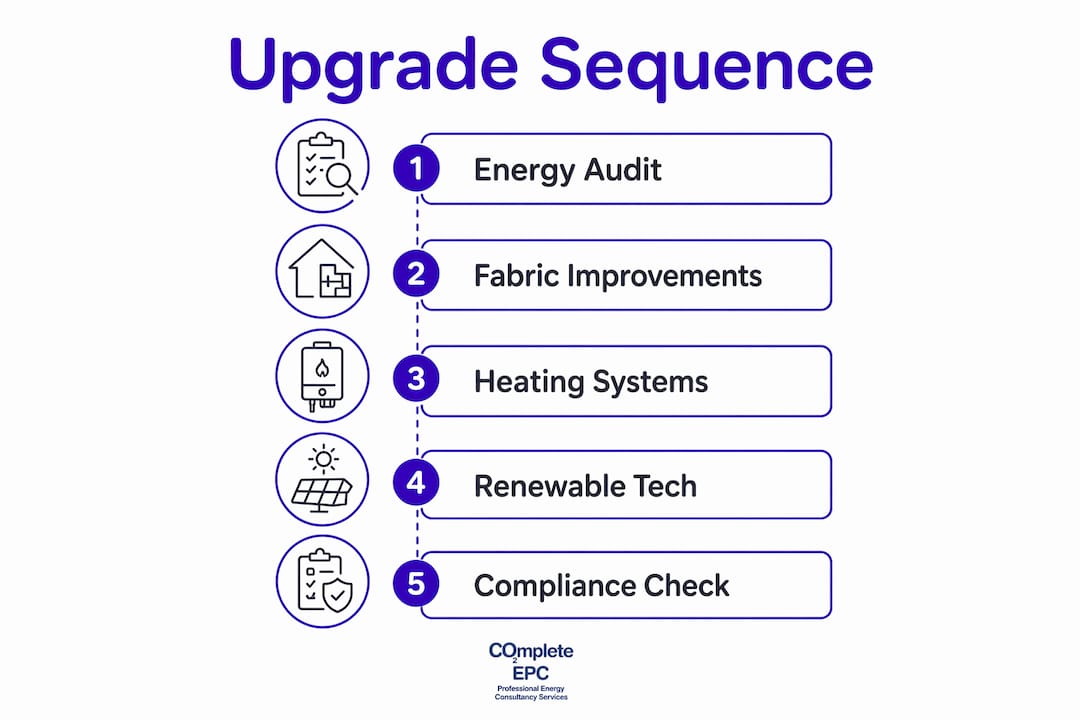
The right upgrade sequence
Follow this sequence to meet EPC C as cost-effectively as possible:
-
Seal the building fabric first. Loft insulation, cavity wall insulation, draught-proofing, and floor insulation form the foundation. Air sealing and weatherstripping typically pay back within 12–18 months and produce 10–15% reductions in heating bills. These are your highest-priority interventions.
-
Upgrade the heating system. Once the fabric is tight, a heat pump or high-efficiency boiler works far more effectively. Installing a heat pump in a poorly insulated property wastes most of its output. Sequence matters.
-
Add smart readiness measures. Solar PV panels, smart thermostats, and demand-response controls contribute to the HEM score. HEM methodology only credits these fully after fabric improvements are in place.
-
Commission a new EPC assessment. Once upgrades are complete, a qualified assessor scores the property under the updated model. The new rating must be documented before the next tenancy begins.
-
Register any exemption if required. If the total cost of all recommended improvements exceeds £10,000, you may apply for a high-cost exemption via the PRS Exemptions Register rather than spending beyond that threshold.
Pro Tip: Get a professional energy audit before spending a penny on upgrades. Auditors frequently find that landlords plan expensive window replacements when loft insulation alone would push the property to band C at a fraction of the cost.
The £10,000 spending cap is a firm legal ceiling, not a guideline. Exceeding this threshold without registering the exemption formally still counts as non-compliance. Register the exemption first, then decide whether additional voluntary upgrades make commercial sense.
Which energy improvements offer the best return for landlords?
Cost-effective energy upgrades vary significantly in payback period and impact on EPC score. The table below compares the most common interventions so you can prioritise your budget.
| Improvement | Typical cost | Tenant saving | Payback period |
|---|---|---|---|
| Loft insulation | £300–£600 | £150–£250 per year | 2–3 years |
| Cavity wall insulation | £500–£1,500 | £150–£300 per year | 3–5 years |
| Air sealing and draught-proofing | £100–£400 | £50–£150 per year | Under 2 years |
| Heat pump installation | £7,000–£13,000 | £300–£600 per year | 10–15 years |
| Solar PV panels | £5,000–£9,000 | £200–£400 per year | 12–20 years |
| Double or triple glazing | £3,000–£8,000 | £100–£200 per year | 20+ years |
Properties improved from EPC D to C save tenants an average of £499 annually. The typical landlord investment for that jump ranges from £1,200 to £4,000. That ratio makes fabric upgrades the strongest financial argument for acting early.
Energy-efficient shutters are a frequently overlooked addition. They reduce heat loss through glazing by a measurable margin and cost far less than full window replacement, making them a practical interim measure for properties with older single-glazed windows.
Solar panels attract attention, but solar panels alone will not guarantee EPC C. The HEM methodology weights fabric performance more heavily than renewable generation. A property with excellent insulation and a gas boiler will often score higher than a draughty property with solar panels fitted.
Pro Tip: Check eligibility for the Government’s Warm Homes: Local Grant and the Great British Insulation Scheme before paying full price for insulation. Many landlords with lower-income tenants qualify for partial or full funding.
Government grants and low-interest loans through schemes such as the Boiler Upgrade Scheme reduce the upfront cost of heat pumps significantly. Factor these into your financial planning before ruling out heating upgrades on cost grounds alone.
How to conduct an effective energy audit for rental units
A professional energy audit is the single most reliable way to identify which upgrades will move the EPC needle. Energy auditors consistently find that landlords misallocate budgets by guessing rather than measuring. A structured audit removes that guesswork entirely.
A thorough audit for a rental property covers the following areas:
- Fabric performance assessment. The assessor measures wall, roof, and floor U-values to identify where heat escapes fastest. This determines whether insulation or draught-proofing should come first.
- Heating system evaluation. The auditor checks boiler efficiency ratings, controls, and distribution losses. An old boiler running at 70% efficiency in a well-insulated property is a clear upgrade target.
- Air tightness testing. A blower door test quantifies how much uncontrolled air leaks through the building envelope. Properties built before 1990 almost always fail this test without intervention.
- Smart readiness review. The auditor checks whether the property has the electrical infrastructure to support solar PV or a heat pump. Upgrading the consumer unit is sometimes a prerequisite.
- EPC compliance mapping. The audit output should map directly onto the property energy assessment steps required for formal EPC documentation. This saves duplication of effort.
Professional energy audits prevent misallocation of improvement budgets and produce a prioritised list of interventions ranked by cost per EPC point gained. That ranking is the document you need before contacting any contractor.
Low-cost interventions such as air sealing and loft insulation frequently yield faster EPC improvements than more expensive window replacements. An audit makes this visible before you commit funds.
Navigating compliance, exemptions, and ongoing maintenance
MEES regulations require all new tenancies in England and Wales to meet EPC C from 1 october 2030. Existing tenancies follow the same deadline. Non-compliance carries financial penalties and can affect your ability to let the property legally.
Key compliance responsibilities for landlords include:
- Renew your EPC before it expires. EPCs are valid for ten years. If your certificate expires mid-tenancy, you must commission a new assessment. Letting a property without a valid EPC is a legal offence.
- Register exemptions formally. If upgrade costs exceed £10,000 or the property is listed, the exemption must be registered on the PRS Exemptions Register. An unregistered exemption provides no legal protection.
- Maintain upgrades after installation. Insulation that becomes damp or a heat pump that is not serviced annually will degrade in performance. A property that passes its EPC assessment today can fall below band C by the next renewal if maintenance is neglected.
- Keep records of all works. Invoices, installer certificates, and product specifications form your compliance evidence. Store these alongside the EPC certificate for each property.
- Monitor regulatory updates. The Government has already moved the deadline once, from 2028 to 2030. Further changes to the HEM methodology or spending cap are possible. Subscribe to MEES updates from the Department for Energy Security and Net Zero.
Energy efficiency upgrades reduce maintenance costs and improve tenant retention alongside their compliance function. Properties with lower energy bills attract tenants who stay longer, which directly reduces void periods and re-letting costs. Frame upgrades as a business decision, not just a regulatory obligation.
The financial consequences of non-compliance are real. Local authorities can issue civil penalty notices of up to £30,000 per property for serious breaches. Acting before the 2030 deadline gives you time to spread costs across multiple tax years and access grant funding that may not be available closer to the deadline.
Key takeaways
Improving rental property energy efficiency requires a fabric-first approach, formal compliance documentation, and early action to access grant funding before the 2030 EPC C deadline.
| Point | Details |
|---|---|
| EPC C is mandatory by 2030 | All rental properties in England and Wales must reach band C by 1 october 2030. |
| Fabric upgrades deliver fastest payback | Air sealing and insulation pay back within 12–18 months and score highest under HEM. |
| Solar panels alone are not enough | HEM weights fabric performance over renewables; insulate before installing solar PV. |
| The £10,000 cap requires formal registration | Exceeding the spending cap without registering the exemption still counts as non-compliance. |
| Audits prevent budget waste | A professional energy audit identifies the cheapest route to band C before any work begins. |
Why landlords who act now will outperform those who wait
I have worked with landlords across London for years, and the pattern is consistent. Those who treat energy efficiency as a compliance box to tick at the last moment always spend more than those who plan ahead. The 2030 deadline sounds distant. It is not.
The biggest misconception I encounter is the belief that solar panels solve the problem. Many landlords invest in high-cost renewables before the building fabric is addressed, then discover their EPC score barely moved. The emerging issues around new-build energy performance show that even newly constructed properties can fall short when technology is prioritised over fabric. The lesson applies equally to older rental stock.
My consistent advice is this: get the audit done first, fix the fabric second, and consider technology third. That sequence is not just best practice. It is the sequence the HEM methodology rewards. Landlords who follow it spend less, score higher, and attract better tenants.
Energy efficiency upgrades are a competitive advantage in a rental market where tenants increasingly factor energy bills into affordability calculations. A band C property commands stronger interest than a band E equivalent at the same rent. That is a commercial reality, not just a regulatory one.
Act before the grant schemes close. Act before contractors are overwhelmed with last-minute demand in 2029. The landlords who move in 2026 will have their pick of funding, assessors, and installers.
— Danny
How Completeepc supports landlords with EPC compliance
Completeepc provides professional EPC assessments for domestic rental properties across London, carried out by qualified assessors with direct experience of the HEM methodology. If your property needs a domestic EPC assessment to establish its current rating and identify the most cost-effective route to band C, Completeepc delivers accurate results at the UK’s lowest guaranteed rates. The team also guides landlords through the EPC exemption process, including formal registration on the PRS Exemptions Register, so your compliance position is fully documented. Whether you manage one property or a large portfolio, Completeepc provides the certification and guidance you need to meet the 2030 deadline with confidence.
FAQ
What is the minimum EPC rating for rental properties in 2030?
UK landlords must achieve a minimum EPC rating of C for all rental properties by 1 october 2030. This applies to both new and existing tenancies in England and Wales.
How much does it cost to improve a rental property to EPC C?
Typical landlord investment ranges from £1,200 to £4,000 for properties moving from band D to C, depending on the upgrades required. Properties requiring heating system replacements or extensive insulation work may cost more, but the £10,000 spending cap limits mandatory expenditure.
Can landlords claim a spending cap exemption for EPC improvements?
Landlords are not required to spend more than £10,000 on EPC improvements. If costs exceed this threshold, you must formally register a high-cost exemption on the PRS Exemptions Register to remain compliant.
Do solar panels guarantee an EPC C rating?
Solar panels alone do not guarantee EPC C. The Home Energy Model prioritises fabric performance and heating system efficiency over renewable energy generation, so insulation and draught-proofing must come first.
How often does a rental property need a new EPC?
An EPC is valid for ten years. Landlords must commission a new assessment before the certificate expires and must hold a valid EPC at all times when the property is let or marketed for letting.