

Every british landlord faces the challenge of balancing strict energy efficiency rules with smart property investment decisions. Fact: properties with higher EPC ratings can command up to 14 percent higher rents in London compared to those that fall short of standards. Navigating EPC assessments is vital for landlords who want to meet legal requirements, avoid penalties, and enhance property value while keeping costs manageable.
Table of Contents
- Step 1: Gather Key Property Information
- Step 2: Arrange A Qualified Energy Assessor Visit
- Step 3: Conduct A Thorough On-Site Inspection
- Step 4: Review The Draft EPC Report
- Step 5: Implement Recommended Improvements
Quick Summary
| Key Insight | Explanation |
|---|---|
| 1. Gather Detailed Property Info | Document your property’s age, construction type, and heating systems for accurate energy assessment. |
| 2. Hire a Qualified Assessor | Choose an accredited energy assessor to ensure a comprehensive property evaluation and correct certification. |
| 3. Conduct a Comprehensive Inspection | Ensure the assessor performs a thorough examination of insulation, heating systems, and energy performance. |
| 4. Review Draft Report Carefully | Check for accuracy in the draft EPC report, focusing on energy ratings and improvement recommendations. |
| 5. Implement Recommendations | Prioritise energy efficiency upgrades based on cost-effectiveness to enhance your property’s performance. |
Step 1: Gather key property information
Getting an accurate Energy Performance Certificate (EPC) starts with thorough property information collection. This initial step helps assessors precisely evaluate your building’s energy efficiency and identify potential improvement areas.
Begin by compiling comprehensive details about your property. You’ll want to gather specific information including the building’s age, construction type, total floor area, and current heating systems. Swansea City Council recommends documenting key structural characteristics that directly impact energy performance. This means measuring wall thicknesses, checking insulation levels in walls and roofs, and understanding the property’s thermal envelope.
Your documentation should include architectural drawings, previous renovation records, and any existing energy assessment reports. Take photographs of key areas like heating systems, windows, and external walls. Pay special attention to details such as window glazing type, boiler age, and wall construction materials. These specifics help assessors generate a more accurate energy rating and provide targeted recommendations for improving your property’s efficiency.
Pro tip: Create a dedicated digital folder to store all property documentation, making future assessments and energy efficiency upgrades substantially smoother and more straightforward.
Here is a summary of key factors that influence your property’s energy efficiency rating:
| Factor | Description | Impact on EPC Rating |
|---|---|---|
| Insulation Quality | Thickness and material in walls, roof | High impact on heat loss |
| Window Glazing Type | Single, double, or triple glazed units | Affects thermal performance |
| Heating System Efficiency | Age and type of boiler, heating units | Determines energy usage |
| Construction Age/Type | Year built and method of construction | Influences structural rating |
| Draught Proofing | Seals on doors and windows | Reduces unwanted air loss |
Step 2: Arrange a qualified energy assessor visit
Arranging a professional energy performance assessment is a critical step in obtaining your Energy Performance Certificate. This stage involves connecting with an accredited professional who will comprehensively evaluate your property’s energy efficiency.
Swansea City Council recommends identifying a qualified energy assessor who can conduct a thorough property inspection. Start by researching certified professionals registered with official bodies like the Energy Performance Certification scheme. When contacting potential assessors, confirm their professional credentials and ask about their specific experience with properties similar to yours. Request a clear breakdown of their assessment process, expected duration of the visit, and the documentation they will require from you.
Prepare for the assessor’s visit by gathering all relevant property information collected in the previous step. This includes architectural drawings, renovation records, heating system specifications, and photographic documentation of key structural elements. During the visit, the assessor will conduct a detailed survey of your property, measuring room dimensions, checking insulation quality, examining heating systems, and evaluating overall energy performance potential.
Pro tip: Schedule your energy assessment during daylight hours to ensure the assessor can accurately inspect exterior elements and natural light conditions.
Step 3: Conduct a thorough on-site inspection
Conducting a comprehensive on-site energy performance inspection represents the most critical phase of your Energy Performance Certificate assessment. During this stage, the assessor will systematically evaluate your property’s energy efficiency and identify potential improvement opportunities.
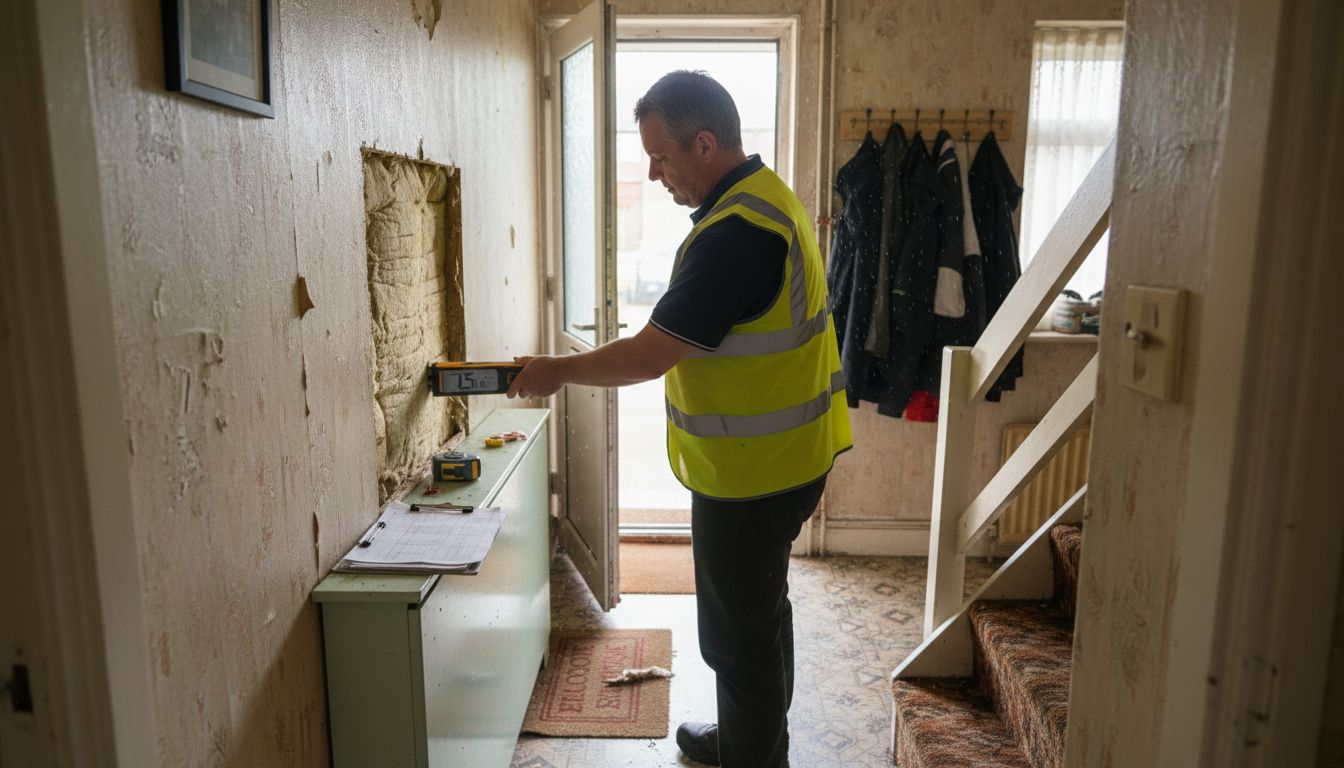
Essex University guidelines recommend a systematic examination of the property’s key energy systems. The assessor will methodically inspect heating infrastructure, ventilation systems, insulation quality, and electrical equipment. They will measure room dimensions, assess window and door seals, check wall and roof insulation thickness, and evaluate the overall thermal performance of your property. Expect the professional to use specialised measuring equipment to determine precise heat loss calculations and identify potential energy efficiency weak points.
During the inspection, the assessor will document their findings through detailed notes, photographs, and measurements. They will assess the condition and efficiency of your boiler, radiators, hot water systems, and any renewable energy installations. Pay close attention to their observations and be prepared to provide additional context about recent renovations, previous energy efficiency upgrades, or unique property characteristics that might impact the assessment.
Pro tip: Accompany the assessor during the inspection and be ready to share specific details about your property’s energy history to ensure the most accurate assessment possible.
Step 4: Review the draft EPC report
Reviewing your draft Energy Performance Certificate report is a crucial step in understanding your property’s energy efficiency and ensuring all details are accurately represented. This phase allows you to verify the technical information and recommendations before finalising your official certification.
Sussex University recommends a comprehensive technical analysis of the draft report. Carefully examine each section for precision and completeness, starting with the property details. Check that information such as total floor area, construction type, heating systems, and room measurements are exactly correct. Pay particular attention to the energy efficiency ratings displayed on the graph, which range from A (most efficient) to G (least efficient). Verify that the calculated ratings reflect the on-site inspection findings and match your property’s actual characteristics.
Focus on the recommendations section, which outlines potential energy efficiency improvements. These suggestions are tailored to your specific property and can help reduce energy consumption and lower utility costs. Consider the estimated costs and potential savings for each recommended upgrade. If any recommendations seem unclear or you disagree with the assessment, discuss these points directly with your energy assessor. They can provide additional context and clarify any technical details that might seem complex or ambiguous.
Pro tip: Request a digital copy of the draft report for easier review and keep a printed version for your records to track potential future energy improvements.
Step 5: Implement recommended improvements
Implementing the energy efficiency recommendations from your EPC report transforms your property’s performance and can significantly reduce long-term utility expenses. This strategic process involves prioritising and executing targeted upgrades that enhance your building’s overall energy performance.
Loughborough University research highlights the importance of retrofitting properties with carefully planned improvements. Begin by categorising the recommended upgrades based on their potential impact and cost effectiveness. Prioritise improvements that offer the most substantial energy savings and shortest payback periods. This might include upgrading insulation in walls and roofs, installing more efficient heating systems, replacing old windows with double or triple glazing, and improving draught proofing. Consider seeking quotes from multiple qualified contractors to ensure competitive pricing and high quality workmanship.
Budget planning is crucial when implementing these recommendations. Some improvements may qualify for government grants or tax incentives, which can offset initial installation costs. Track your energy consumption before and after implementing upgrades to measure their real world impact. Keep detailed documentation of all improvements, as these can be valuable for future property valuations and potential resale opportunities.
Pro tip: Photograph and document each improvement stage for your records and potential future EPC assessments, which can help demonstrate your property’s ongoing energy efficiency enhancements.
The following table explains potential results of implementing EPC recommendations:
| Improvement | Expected Benefit | Example Payback Period |
|---|---|---|
| Roof insulation upgrade | Reduced heating costs | 2-5 years |
| Efficient boiler | Lower energy consumption | 3-6 years |
| Double glazing | Enhanced comfort, efficiency | 5-10 years |
| LED lighting | Decreased electricity demand | 1-2 years |
Streamline Your Property Energy Assessment with Expert Support
Accurately completing each step of your property’s Energy Performance Certificate process can feel overwhelming. From gathering detailed building information to conducting thorough inspections and interpreting technical reports, you need trusted, professional guidance to ensure full compliance and maximise energy efficiency. Common challenges include understanding complex assessment requirements, coordinating with qualified assessors, and implementing cost-effective improvement recommendations that truly enhance your property’s rating.
Complete EPC specialises in simplifying these complexities for property owners, estate agents, landlords, and solicitors across London. Our experienced energy assessors deliver precise evaluations backed by clear, actionable reports tailored to your specific building. We ensure you understand every element of your EPC—from draft review to final certification—helping you save on energy costs and increase property value while meeting legal obligations. Discover hassle-free service with guaranteed lowest rates on the market by visiting our Complete EPC homepage. Ready to move forward confidently with your property’s energy compliance? Schedule your assessment today at Complete EPC and let our expert consultancy guide you through all the essential steps with ease.
Frequently Asked Questions
What key property information should I gather for an Energy Performance Certificate assessment?
Gather comprehensive details about your property, including its age, construction type, total floor area, and current heating systems. Document structural characteristics such as insulation levels and wall thicknesses to support an accurate energy efficiency evaluation.
How can I locate a qualified energy assessor for my property?
Find a qualified energy assessor by researching certified professionals registered with official accreditation bodies. Contact them to confirm their credentials and experience with properties similar to yours, ensuring they are competent to conduct a thorough assessment.
What should I expect during the on-site energy performance inspection?
During the inspection, the assessor will evaluate key energy systems, including heating infrastructure and insulation quality. Prepare to provide context about your property’s characteristics and history, as this information can significantly enhance the accuracy of the assessment.
How can I review my draft Energy Performance Certificate report effectively?
Examine the draft report carefully by verifying all property details, including measurements and energy efficiency ratings. Pay particular attention to the recommendations section to understand potential energy upgrades that can save costs and improve efficiency.
What steps should I take to implement the recommended improvements from my EPC report?
Begin by prioritising the recommended improvements based on their cost-effectiveness and impact on energy savings. Consider obtaining quotes from multiple contractors and check for available funding or grants to reduce initial costs of upgrades.
How can I track the effectiveness of the implemented energy improvements?
Monitor your energy consumption before and after making the improvements to assess their impact. Keep detailed records of changes and any new costs to demonstrate the effectiveness of your efforts during future evaluations.
Recommended
- Why Energy Efficiency Matters for London Properties
- Complete Guide to Energy Efficiency Metrics – Complete EPC
- EPC Legal Compliance Workflow for London Properties
- Landlord EPC Checklist: Step-by-Step Compliance Guide – Complete EPC
- Hazardous Waste Regulations 2025: A Guide for UK Businesses – Venture Waste