


Many London landlords assume energy efficiency ratings focus solely on heating systems, but this misconception can cost you thousands. These ratings evaluate your entire property’s energy performance, from insulation and lighting to ventilation and hot water systems. Understanding how EPCs work, what they measure, and how to leverage them is essential for meeting legal requirements, reducing operational costs, and maximising property value in London’s competitive market.
Table of Contents
- Introduction To Energy Efficiency Ratings And Epcs
- How Energy Efficiency Ratings Are Determined
- Legal Requirements And Compliance For Landlords In London
- Impact Of Energy Efficiency Ratings On Costs And Sustainability
- Common Misconceptions About Energy Efficiency Ratings
- Typical EpC Report Recommendations And Practical Steps
- How Energy Efficiency Ratings Affect Property Value And Marketability
- Complete EpC Services For London Landlords
- Frequently Asked Questions
Key takeaways
| Point | Details |
|---|---|
| EPC ratings span A to G | Properties must display standardised energy performance on a scale from A (most efficient) to G (least efficient). |
| Minimum band E now, band C by 2028 | London landlords face current band E requirements, with mandatory band C compliance from 2028. |
| Improved ratings cut bills by 30% | Higher EPC scores reduce energy consumption by up to 30% compared to poorly rated properties. |
| Reports guide targeted improvements | EPC assessments provide actionable recommendations for insulation, heating, and glazing upgrades to boost compliance and savings. |
Introduction to energy efficiency ratings and EPCs
Energy Performance Certificates represent the official framework for measuring how efficiently your property uses energy. Energy efficiency ratings for properties in England and Wales range from A (most efficient) to G (least efficient), based on standardised measurement under EPCs. Every landlord in London must obtain a valid EPC before marketing properties for sale or rent, making these certificates legally essential rather than optional extras.
EPCs inform you about your property’s current performance and identify specific areas requiring improvement. The assessment evaluates multiple components working together to determine your overall rating:
- Heating systems and controls
- Wall, roof, and floor insulation quality
- Window glazing and draught proofing
- Lighting efficiency throughout the property
- Ventilation and hot water systems
Understanding these elements helps you prioritise upgrades that deliver the strongest impact on your rating. Properties with better energy performance attract environmentally conscious tenants whilst reducing your exposure to rising energy costs. The official EPC guide provides detailed information on legal requirements and assessment standards.
London’s property market increasingly rewards efficiency, with tenants seeking homes that promise lower bills and landlords recognising the competitive advantage of achieving higher energy ratings in London. Your EPC remains valid for ten years unless you make significant energy improvements, allowing you to spread upgrade costs over multiple tenancy agreements. Each certificate includes projected energy costs, carbon emissions data, and tailored recommendations to help you plan improvements strategically.
How energy efficiency ratings are determined
Qualified assessors use two distinct methodologies to calculate EPC ratings depending on your property type. SAP is detailed and used for new builds, RdSAP is simplified for existing buildings but maintains legal compliance. Both systems evaluate identical performance factors but differ in assessment depth and calculation complexity.
The Standard Assessment Procedure (SAP) requires comprehensive technical specifications, making it suitable for newly constructed properties where full design documentation exists. Assessors input precise data about building materials, thermal performance values, and installed systems to generate highly accurate ratings. The Reduced Data SAP (RdSAP) adapts this methodology for existing buildings where detailed specifications may be unavailable, using visual inspections and standardised assumptions to produce legally valid certificates.
Several key factors influence your final score:
- Insulation quality: Wall cavity filling, loft insulation depth, and floor treatment significantly affect heat retention.
- Heating efficiency: Boiler age, fuel type, and control systems determine how effectively you convert energy into warmth.
- Glazing performance: Double or triple glazing reduces heat loss through windows and improves overall thermal efficiency.
- Lighting technology: LED bulbs throughout the property score higher than traditional incandescent or halogen alternatives.
- Ventilation systems: Controlled ventilation with heat recovery improves indoor air quality whilst minimising energy waste.
| Property Type | Assessment Method | Typical Duration |
|---|---|---|
| New build homes | SAP | 2 to 4 hours |
| Existing residential | RdSAP | 45 to 90 minutes |
| Commercial buildings | SBEM or DSM | 2 to 6 hours |
Only certified assessors holding valid accreditation can produce legally recognised EPCs for your property. These professionals undergo rigorous training and regular audits to ensure assessment accuracy. The EPC assessment process in London follows strict protocols, with assessors measuring room dimensions, photographing key features, and recording system specifications during site visits.
Pro Tip: Schedule your EPC assessment after completing any energy improvements to ensure your certificate reflects all upgrades and maximises your rating potential.
Legal requirements and compliance for landlords in London
Since April 2018, landlords must ensure rental properties meet at least EPC band E, with minimum band C from 2028. These Minimum Energy Efficiency Standards (MEES) apply to all new tenancies and renewals, making compliance essential for maintaining rental income streams. Properties falling below the minimum threshold cannot be legally let until you implement sufficient improvements to achieve the required rating.
You must obtain a valid EPC before marketing any property for sale or rent, with certificates displayed prominently in property listings. This legal obligation applies regardless of property size, age, or current condition. Failing to comply triggers enforcement action from local authorities, who can issue substantial fines for violations.
Penalties for non-compliance include:
- Fines up to £5,000 for renting properties below minimum EPC standards
- Civil penalties of £200 for failing to provide an EPC when required
- Publication of enforcement notices on public registers, damaging your professional reputation
- Potential prosecution for repeated or serious breaches of energy efficiency regulations
Common pitfalls include assuming temporary exemptions apply when they require formal registration, or believing properties with sitting tenants escape MEES requirements. The regulations cover nearly all residential lettings, with limited exemptions for listed buildings and properties where improvements prove technically unfeasible or cost prohibitive. Understanding minimum EPC requirements for London landlords prevents costly mistakes and ensures continuous compliance.
Pro Tip: Register for exemptions before they expire rather than waiting until the last moment, as processing times can delay your ability to legally let properties.
Local authorities actively monitor compliance through property databases and tenant complaints. The EPC enforcement in London involves systematic checks and targeted investigations of suspected violations. Many councils publish enforcement statistics quarterly, demonstrating their commitment to improving London’s housing stock energy performance. The upcoming 2028 band C requirement means landlords with band D or E properties should begin planning improvements now to spread costs and avoid last-minute compliance pressure.
You must provide tenants with valid EPC certificates within specified timeframes, typically before signing tenancy agreements. Keep copies of all EPCs and improvement works documentation to demonstrate compliance during inspections or disputes. The MEES regulations for landlords continue evolving, so regular reviews of your property portfolio ensure you stay ahead of regulatory changes.
Impact of energy efficiency ratings on costs and sustainability
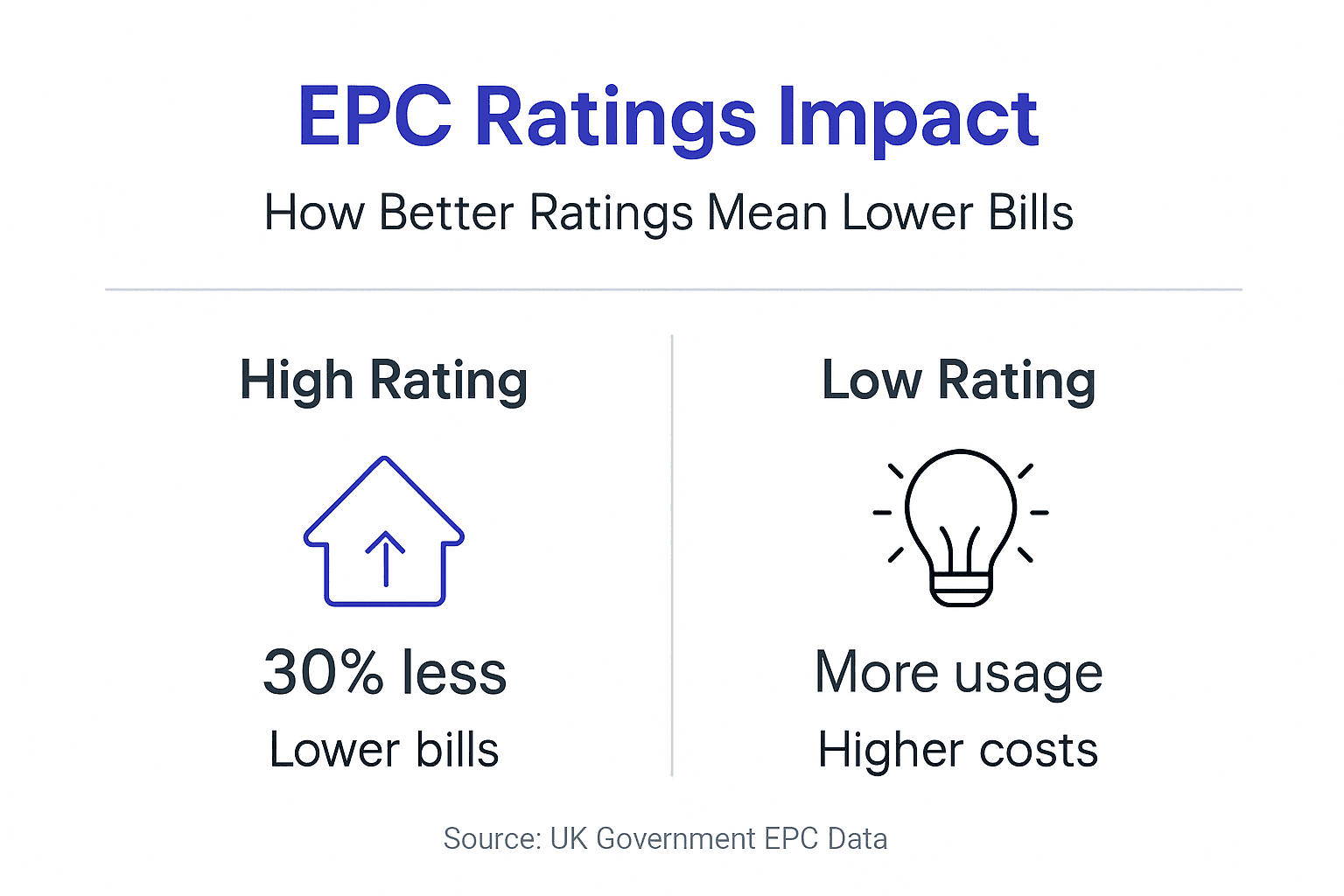
Higher EPC ratings correlate with 30% lower energy usage and bills compared to low-rated properties. This dramatic difference directly affects tenant satisfaction and your property’s attractiveness in competitive rental markets. Tenants increasingly prioritise running costs when choosing homes, with efficient properties commanding premium rents whilst experiencing lower vacancy rates.

| EPC Band | Average Annual Energy Cost | Potential Savings vs Band G |
|---|---|---|
| A | £500 to £700 | £900 to £1,200 |
| B | £700 to £900 | £700 to £1,000 |
| C | £900 to £1,100 | £500 to £800 |
| D | £1,100 to £1,300 | £300 to £600 |
| E | £1,300 to £1,500 | £100 to £400 |
Energy efficiency improvements contribute significantly to London’s climate goals and the UK’s legally binding net zero 2050 target. Buildings currently account for approximately 40% of UK carbon emissions, making residential property upgrades essential for achieving national environmental commitments. Each band improvement on the EPC scale reduces your property’s carbon footprint by roughly 20%, demonstrating measurable environmental impact from individual landlord actions.
Tenants living in energy-efficient homes enjoy better thermal comfort, reduced condensation and mould risks, and lower utility bills freeing household budgets for other expenses. These quality-of-life improvements translate to longer tenancies, fewer maintenance complaints, and enhanced landlord-tenant relationships. Properties maintaining comfortable temperatures year-round with minimal energy input appeal to a broader tenant demographic, including families, professionals, and retirees prioritising home comfort.
Pro Tip: Calculate your potential energy savings using your current EPC recommendations before investing in improvements, allowing you to prioritise upgrades delivering the strongest financial returns.
The correlation between efficiency and profitability extends beyond reduced bills to encompass lower maintenance requirements for modern, well-insulated properties. Improved ventilation prevents damp-related deterioration, upgraded heating systems require fewer repairs, and quality insulation protects building fabric from temperature fluctuations. These factors combine to reduce your long-term ownership costs whilst simultaneously increasing property value and rental appeal.
Understanding benefits of improving EPC ratings helps you make informed investment decisions balancing immediate costs against long-term gains. Properties demonstrating strong environmental credentials align with growing tenant expectations for sustainable living, positioning your portfolio advantageously as regulations tighten and energy costs rise.
Common misconceptions about energy efficiency ratings
Energy efficiency ratings evaluate overall energy use including heating, lighting, insulation and ventilation, not just heating costs. This comprehensive approach means focusing solely on boiler upgrades often yields disappointing rating improvements without addressing insulation deficiencies or inefficient lighting. Many landlords waste money on partial improvements that fail to shift their EPC band because they misunderstand how assessors calculate overall scores.
Another widespread misbelief suggests EPCs remain optional for certain property types or long-term tenancies. Nearly all residential properties require valid certificates regardless of size, age, or rental arrangements. The limited exemptions cover only specific situations like listed buildings where alterations would unacceptably harm character, or properties scheduled for demolition within defined timeframes. Assuming your property qualifies for exemption without formal verification creates significant compliance risks.
Landlords frequently confuse EPC ratings with precise energy bill predictions. Your certificate shows standardised performance based on assumed occupancy patterns and heating schedules, not actual consumption. Real energy costs vary substantially depending on:
- Number of occupants and their daily routines
- Thermostat settings and heating preferences
- Hot water usage patterns and appliance efficiency
- Individual behaviour regarding lights, electronics, and ventilation
EPC ratings provide comparative baselines rather than guaranteed cost forecasts. Two identical properties can generate different utility bills based entirely on occupant behaviour, even when sharing the same EPC band. This distinction explains why tenants sometimes report costs diverging from EPC projections, reflecting personal choices rather than assessment inaccuracies.
Some landlords believe older properties cannot achieve good EPC ratings without prohibitively expensive renovations. Whilst period buildings face unique challenges, targeted improvements like secondary glazing, cavity wall insulation where appropriate, and modern heating controls can substantially boost ratings without compromising character. Working with experienced assessors who understand heritage property constraints helps identify cost-effective upgrades respecting architectural significance.
The assumption that EPC validity extends indefinitely once obtained creates compliance gaps when certificates expire after ten years. Regular reassessment ensures your documentation remains current and captures any improvements implemented since the previous assessment. Understanding energy efficiency explained 2026 clarifies these common confusions, enabling better decision making around compliance and property improvements.
Typical EPC report recommendations and practical steps
EPC reports provide tailored improvement recommendations ranked by cost-effectiveness and potential impact on your rating. Common suggestions include loft insulation upgrades, cavity wall filling, condensing boiler installation, double glazing replacement, and LED lighting conversion. Each recommendation includes estimated implementation costs and projected energy savings, helping you prioritise investments delivering optimal returns.
Typical improvement measures and their benefits:
- Loft insulation to 270mm depth: Costs £300 to £500, saves £100 to £200 annually, typically improves rating by one band
- Cavity wall insulation: Costs £500 to £1,500, saves £150 to £300 annually, often crucial for achieving band C
- Condensing boiler replacement: Costs £2,000 to £3,500, saves £200 to £400 annually, significantly boosts heating efficiency scores
- Double glazing installation: Costs £3,000 to £8,000, saves £100 to £200 annually, reduces heat loss and improves comfort
- LED lighting throughout: Costs £50 to £200, saves £30 to £60 annually, quick win for marginal rating improvements
Follow these steps to maximise your EPC recommendations:
- Review your current certificate identifying all suggested improvements and their projected impacts.
- Prioritise low-cost, high-impact measures like insulation and lighting that deliver quick returns.
- Obtain multiple quotes from qualified contractors experienced with energy efficiency installations.
- Schedule works strategically between tenancies to minimise disruption and maximise upgrade scope.
- Arrange a new EPC assessment after completing improvements to update your certificate and rating.
- Store all documentation including invoices, warranties, and updated certificates for compliance records.
Engaging properly qualified contractors ensures installations meet Building Regulations and perform as expected. Many improvement measures require specialist skills, particularly insulation work that must avoid creating condensation risks or blocking ventilation. Reputable installers provide insurance-backed guarantees protecting your investment against defective workmanship.
Maintaining comprehensive records of all energy improvements serves multiple purposes beyond compliance. Documentation supports insurance claims, assists future property sales, and demonstrates your commitment to sustainability when marketing to environmentally conscious tenants. Updated EPCs reflecting recent improvements help justify premium rents by evidencing lower running costs for prospective tenants.
Understanding energy efficiency improvement steps ensures you approach upgrades systematically, avoiding wasted expenditure on measures delivering minimal rating improvements. Regular reviews of your property portfolio identify opportunities for proactive improvements before regulatory deadlines create urgency and potentially inflate contractor costs.
How energy efficiency ratings affect property value and marketability
Properties with high EPC scores sell faster and can command price premiums of up to 5%. This market dynamic reflects growing buyer awareness of energy costs and environmental impact, with purchasers increasingly factoring long-term running costs into affordability calculations. Properties offering immediate move-in readiness without requiring expensive efficiency upgrades attract stronger offers and shorter marketing periods.
London’s competitive lettings market demonstrates clear preference for energy-efficient properties. Tenants recognise that band C or higher properties deliver tangible monthly savings whilst providing superior comfort and environmental credentials. This demand translates to:
- Reduced void periods between tenancies for efficient properties
- Premium rents justified by lower running costs and enhanced comfort
- Stronger tenant retention as occupants appreciate cost savings and reliability
- Enhanced property reputation attracting higher-quality tenant applications
Investment benefits extend beyond immediate rental income to encompass long-term capital appreciation. Properties meeting or exceeding minimum standards face no compliance-driven upgrade requirements, protecting your cash flow from regulatory pressures. Early investment in efficiency improvements positions your portfolio ahead of market competitors who delay upgrades until legal deadlines force action.
The EPC role in London property market continues growing as environmental awareness shapes buyer and tenant preferences. Properties with poor ratings increasingly face market resistance, with some mortgage lenders restricting finance for low-rated buildings and insurers applying premium loadings reflecting climate risks. Proactive efficiency improvements future-proof your investments against tightening market conditions.
Marketing materials highlighting strong EPC ratings attract environmentally conscious demographics willing to pay premium prices for sustainable homes. Professional property listings prominently featuring band A or B certificates differentiate your offerings in crowded marketplaces. Photographic evidence of energy-efficient features like solar panels, modern insulation, and smart heating controls reinforces your property’s competitive advantages.
Understanding property value and EPC rating relationships helps you make strategic investment decisions balancing improvement costs against enhanced marketability and capital appreciation. Properties positioned in higher EPC bands enjoy sustained competitive advantages as regulations tighten and tenant expectations evolve, delivering stronger financial performance across ownership lifecycles.
Complete EPC services for London landlords
Navigating energy efficiency requirements demands expert guidance tailored to London’s diverse property landscape. Complete EPC provides comprehensive assessment services ensuring your properties meet current standards whilst preparing for upcoming regulatory changes. Our qualified assessors bring extensive experience evaluating everything from period conversions to modern developments, delivering accurate certificates that reflect your property’s true performance potential.
We specialise in helping landlords understand understanding EPCs in London, translating technical requirements into practical action plans aligned with your investment goals. Beyond basic certification, our team offers strategic advice on prioritising improvements that maximise your rating gains whilst respecting budget constraints. This consultative approach ensures you invest wisely in upgrades delivering measurable compliance and financial returns.
Our services support you in meeting minimum EPC requirements London regulations, with clear guidance on exemption applications where appropriate and realistic timelines for achieving band C compliance before 2028 deadlines. We help you implement energy rating improvement steps for UK properties systematically, coordinating assessments with your property maintenance schedules to minimise disruption whilst maintaining continuous compliance.
Complete EPC combines competitive pricing with reliable service delivery, ensuring you receive valid certificates promptly without compromising assessment quality. Our certified assessors stay current with regulatory developments, providing forward-looking advice that protects your portfolio against future compliance challenges whilst enhancing property value and tenant satisfaction.
Frequently asked questions
What is the validity period of an EPC?
EPCs remain valid for ten years from the assessment date unless you undertake significant energy improvements warranting earlier reassessment. You must obtain a new certificate before the expiry date to maintain legal compliance for ongoing lettings or property sales.
Can I rent my property without a valid EPC?
No, renting properties without valid EPCs is illegal and triggers substantial fines up to £5,000. You must obtain and provide an EPC to prospective tenants before marketing properties or signing tenancy agreements, regardless of property type or rental arrangement.
How soon must I upgrade to band C by 2028?
The band C requirement takes effect from 2028 for all new tenancies and renewals. Starting improvements now allows you to spread costs over multiple years whilst avoiding last-minute contractor availability issues and potential price increases as deadlines approach.
Will tenant behaviour affect my EPC rating?
No, EPC ratings reflect your property’s inherent energy performance based on standardised assumptions, not actual tenant behaviour. However, occupant habits significantly influence real energy bills, explaining why actual costs may vary from EPC projections despite accurate ratings.
Can improvements lower my council tax band?
No, energy efficiency improvements do not affect council tax banding, which reflects property value at April 1991 levels in England. EPC upgrades may increase property market value but council tax bands remain unchanged unless you successfully appeal based on other grounds.
How quickly can I obtain an EPC for my property?
Most residential EPC assessments can be scheduled within days, with certificates issued within 24 to 48 hours after the site visit. Ensure assessors have full property access including lofts and boiler rooms to complete evaluations efficiently and avoid delays requiring return visits.
Recommended
- Save on Energy Bill: Your EPC-Backed Landlord Guide
- Achieving a Higher Energy Rating: EPC Insights for London Residents – Complete EPC
- 7 Essential Energy Saving Tips for Landlords in London
- 7 Key EPC Recommendations for Landlords and Property Owners
- Home Energy Systems: 15% Cost Savings for Benelux Homes