

TL;DR:
- Many London landlords overlook the strategic value of Energy Performance Certificates by treating them as mere compliance documents.
- Properly utilizing EPC ratings can improve energy efficiency, attract quality tenants, and enhance property value over time.
Many London landlords and property owners treat an Energy Performance Certificate as a form to file and forget. That view is understandable, yet it costs money, risks legal penalties, and leaves real value on the table. In the UK, an EPC usually means an Energy Performance Certificate, a document that shapes how your property is marketed, priced, and legally occupied. This guide walks you through what an EPC actually is, when you need one, how the rating is calculated, and precisely how to turn that knowledge into lower running costs, stronger tenant demand, and a more valuable asset.
Table of Contents
- What is an EPC and why does it matter?
- When do you need an EPC? Legal requirements and exemptions
- How are EPC ratings calculated?
- How to use EPCs to boost property value and save costs
- What most landlords get wrong about EPCs
- Get expert help with EPCs in London
- Frequently asked questions
Key Takeaways
| Point | Details |
|---|---|
| EPCs are essential | You must have a valid EPC to sell or let a property in London, and it makes your property more marketable. |
| EPCs indicate efficiency | The A-G banding provides instant insight into your building’s energy efficiency and improvement opportunities. |
| Compliance avoids fines | Ensuring you have an up-to-date EPC is critical to avoid penalties and delays in sales or letting. |
| Upgrades increase value | Making recommended EPC improvements can enhance your property value and lower running costs. |
| Ratings use models | EPC ratings are calculated using standardised building models that may not match your actual energy bills. |
What is an EPC and why does it matter?
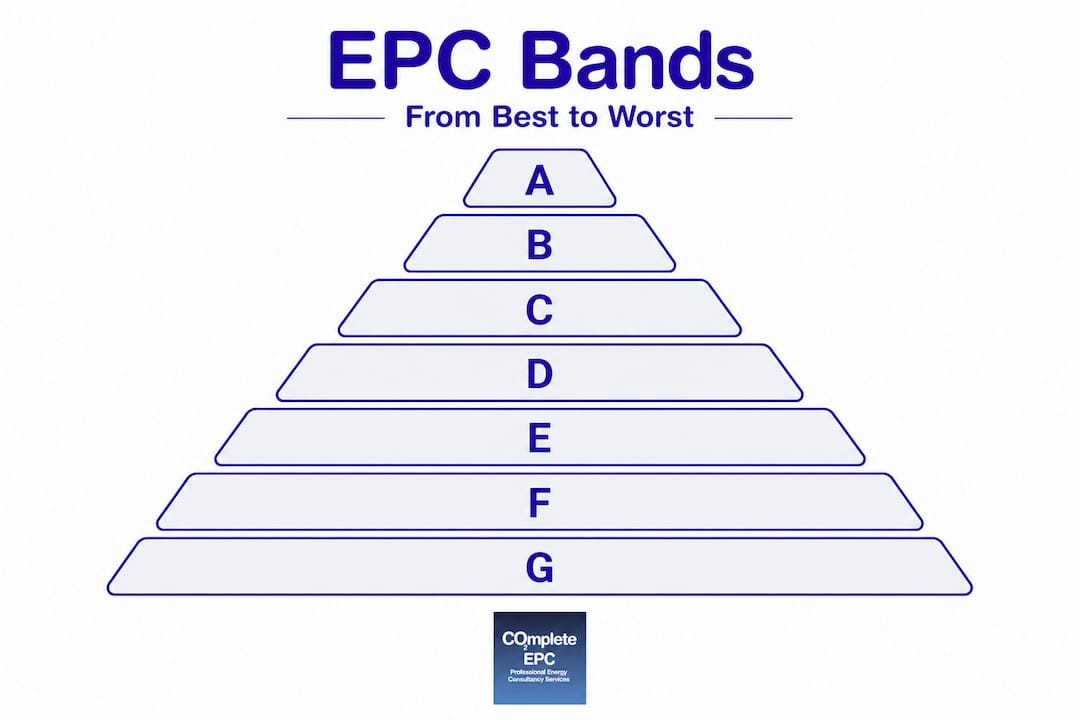
An Energy Performance Certificate is an official document that grades a building’s energy efficiency on a scale from A (or A+ for the most exceptional properties) down to G, which represents the lowest performance. Think of it as a nutritional label for your building: it tells buyers, tenants, and regulators exactly how energy-hungry the property is before anyone signs a contract.
In the UK, an EPC is the document used to evidence a property’s energy performance for all letting and sales marketing. Without a valid EPC, you cannot legally market a property for sale or rent in England and Wales. That is not a technicality: local authorities can issue fines to landlords and sellers who breach this rule.
Key fact: An EPC is not optional paperwork. It is a legal prerequisite for marketing any property and a direct signal of quality to prospective tenants and buyers in one of the world’s most competitive rental markets.
Higher EPC ratings genuinely attract better outcomes. Tenants increasingly prioritise lower fuel bills, and buyers are weighing energy costs against mortgage repayments. A property rated B or C stands out clearly against a comparable D or E-rated property on the same street. The certificate itself also lists recommended improvements, which gives you a ready-made upgrade roadmap.
EPC rating bands at a glance
| Band | SAP score range | What it indicates | Typical property features |
|---|---|---|---|
| A/A+ | 92 to 100+ | Exceptional efficiency | New-build, high-spec insulation, heat pumps, solar panels |
| B | 81 to 91 | Very good | Modern double glazing, condensing boiler, good insulation |
| C | 69 to 80 | Good | Cavity wall insulation, double glazing, gas central heating |
| D | 55 to 68 | Average | Mixed insulation, older boiler, some draughts |
| E | 39 to 54 | Below average | Poor insulation, ageing heating system |
| F | 21 to 38 | Poor | Minimal insulation, inefficient heating |
| G | 1 to 20 | Very poor | No meaningful insulation, off-grid or very old systems |
The minimum legal standard for privately rented properties in England is currently band E. Regulatory direction of travel strongly suggests this threshold will rise, making early upgrades a sound long-term investment rather than a reactive cost.
Now that you understand why EPCs cannot be ignored, let us clarify exactly when you need one and whose responsibility it is.
When do you need an EPC? Legal requirements and exemptions
EPCs are required when a property is constructed, sold, or let (unless an exemption applies), and they are valid for 10 years. As a London landlord or property owner, this covers more situations than many people realise.
Common scenarios that trigger an EPC requirement
- Letting a residential property: You must have a valid EPC before marketing begins, not at the point of signing.
- Selling a property: The EPC must be available to any prospective buyer as soon as marketing starts.
- Constructing a new building: The developer must commission an EPC upon completion.
- Significantly modifying an existing building: Major renovations affecting the building envelope (walls, roof, glazing) may require a new EPC.
- Re-letting after a tenancy ends: If your existing EPC has expired during the tenancy, you need a new one before re-marketing.
- Converting a property: Changing use (for example, converting offices to flats) typically triggers the need for a fresh EPC.
Pro Tip: Always check the expiry date on your existing EPC before re-letting a property. An EPC issued in 2014 expired in 2024. Relying on an expired certificate is one of the most common compliance pitfalls we see among London landlords, and it is entirely avoidable with a quick check of the national EPC register.
Exemptions worth knowing
Not every property needs an EPC. Recognised exemptions include listed buildings where compliance would unacceptably alter the character of the structure, temporary buildings with a planned use of two years or less, standalone buildings with a total useful floor area of under 50 square metres, and some holiday lets where the owner does not also use the property as a main residence.
For London landlords concerned with compliance, where minimum EPC standards apply, owners typically must either improve to meet the threshold or rely on a registered exemption where eligible. Exemptions are not automatic: you must apply and register them formally. Attempting to let a sub-standard property without a registered exemption exposes you to substantial financial penalties.
With the legal context clear, let us break down how EPCs are actually calculated and what the ratings mean for your property.
How are EPC ratings calculated?
Understanding the maths behind your EPC rating helps you make smarter decisions about which improvements to prioritise. The calculation is more nuanced than most people expect.

For domestic EPCs in England and Wales, the EPC contents are produced from modelling: domestic EPCs use the Standard Assessment Procedure (SAP) model, typically the reduced-data version called RdSAP for existing dwellings. SAP simulates how a property would perform under standardised occupancy and climate conditions across an average year. It does not read your actual meter.
Key factors in EPC calculation
| Factor | What the assessor records | Effect on rating |
|---|---|---|
| Construction and fabric | Wall type, floor, roof construction | High: insulation quality is a primary driver |
| Insulation levels | Loft, cavity wall, floor insulation | High: directly reduces heat loss score |
| Heating system | Boiler type, age, efficiency rating | High: central heating fuel type matters significantly |
| Glazing | Single, double, or triple glazing | Medium: affects heat loss and solar gain |
| Lighting | Proportion of low-energy fittings | Lower: but still contributes to overall score |
| Renewable energy | Solar panels, heat pumps, biomass | High where present: can lift rating substantially |
| Hot water system | Cylinder insulation, solar thermal | Medium: contributes to energy demand total |
Steps from survey to certificate
- A qualified assessor visits the property and records all relevant physical features.
- The assessor enters the collected data into approved RdSAP software.
- The software runs the SAP model to produce an energy efficiency score out of 100.
- The score is mapped to the A to G band.
- The software generates a list of recommended improvements with estimated cost and potential rating gain.
- The final certificate is lodged on the national EPC register and a copy is issued to you.
Pro Tip: Even modest upgrades such as topping up loft insulation to 270mm or switching to LED lighting throughout the property can meaningfully improve your SAP score. Assessors look at what is present at the time of inspection, so completing straightforward improvements before the assessment rather than after gives you a better result immediately.
EPC calculations are based on standardised modelling inputs rather than measured real-world energy use, so the rating can differ from what occupants experience in practice. A family of five using electric showers daily will have higher bills than the model predicts. Conversely, a single professional who travels frequently may have lower bills. This is important context: your EPC tells you about the property’s inherent efficiency, not the lifestyle of its occupants.
Now that you know what goes into an EPC and its scoring, let us explore how you can use this knowledge to improve energy performance and property value.
How to use EPCs to boost property value and save costs
Your EPC is not just a compliance document. It is a strategic tool. Every EPC includes a table of recommended improvements ranked by their expected impact on your rating and their approximate installation cost. Used well, this section of the certificate functions as a prioritised action plan.
In the UK, an EPC details specific recommendations that, if acted upon, could lift a property from one band to the next. Each improvement listed includes a potential rating gain and an indication of typical cost range, helping you weigh up what to tackle first.
Top improvements for cost-to-rating benefit
- Loft insulation (up to 270mm): One of the highest-impact, lowest-cost upgrades available. Most London terraces and semi-detached homes have accessible loft space. Payback periods are typically short, and the rating gain is meaningful.
- Cavity wall insulation: Where structurally suitable, filling cavity walls significantly reduces heat loss. Many properties built between the 1920s and 1990s have unfilled cavities that a straightforward injection process can address.
- Upgrading to a condensing boiler: Older G-rated or non-condensing boilers are significant drags on EPC scores. A modern A-rated condensing boiler with programmable controls can lift a rating by several points.
- Double or triple glazing: Replacing single-glazed windows improves both the SAP score and tenant comfort. For London properties with older timber frames, secondary glazing is often an acceptable alternative that preserves character while reducing heat loss.
- LED lighting throughout: While lighting contributes a smaller share to the overall score, replacing all fixed light fittings with LEDs is low-cost, quick to implement, and adds a visible upgrade that tenants notice.
- Smart heating controls: Thermostatic radiator valves and programmable room thermostats are recognised within the SAP model and demonstrate to prospective tenants that heating costs are manageable.
Properties with higher EPC ratings consistently experience lower void periods, because energy-conscious tenants actively filter by efficiency. In London’s competitive market, a band C or B property commands attention. You can legitimately reference the EPC rating in your marketing materials, and many tenants will request it before viewing. Using your EPC proactively, rather than simply attaching it at the offer stage, positions your property ahead of the competition.
The longer-term financial case is equally strong. Lower running costs mean tenants are less likely to leave due to unaffordable bills. Reduced tenant churn saves you void costs, letting agent fees, and the time involved in finding new occupants. An improving asset, better maintained and more energy-efficient, also holds and grows its value more reliably over time.
Having explored practical application, let us step back and reassess prevailing wisdom about EPCs and what actually matters for London property owners.
What most landlords get wrong about EPCs
The most common mistake we observe is treating an EPC purely as a compliance exercise. Landlords commission the certificate because the law requires it, file it away, and move on. That is leaving genuine strategic value unacknowledged.
EPC calculations are based on standardised modelling inputs rather than real-world energy use, which means the rating reflects the property’s potential, not just its current performance. That gap between potential and current rating is your opportunity. Every point between your existing score and the next band represents tenant appeal, rental positioning, and future-proofed compliance.
In London specifically, the rental market is uniquely sensitive to energy costs. When energy prices rise, tenants in poorly rated properties feel the pressure acutely and move on. Landlords with energy-efficient stock retain tenants for longer, command rents that reflect the lower running costs, and avoid the reactive scramble to comply with regulatory changes under time pressure.
The strategic mindset shift is simple but powerful: instead of asking “what is the minimum EPC standard I must meet?”, ask “what improvements deliver the best return and position this property for the next five to ten years?” The EPC recommendations section is your starting point. A qualified assessor can walk you through which upgrades will shift your band, what they are likely to cost, and where grant funding or financing may be available to reduce your outlay.
London is also unusual in that property values are high enough that even marginal efficiency improvements can translate into meaningful increases in market value. Buyers and institutional investors increasingly apply sustainability criteria to acquisitions. A well-rated property is simply more sellable, more lettable, and more resilient against future regulatory tightening. That is not a prediction: it is the direction that government policy has moved consistently for over a decade, and there is no sign of that changing.
Get expert help with EPCs in London
If you want to move beyond basic compliance and use your EPC as a genuine property asset, professional support makes the process straightforward and cost-effective. Our qualified assessors across London handle everything from initial surveys through to lodgement, and we offer the most competitive rates in the UK market.
Start by reading our EPC guide for London if you want a thorough grounding in how certification works in the capital. When you are ready to book, our detailed walkthrough of the EPC assessment process explains exactly what to expect on the day. And if improving your rating is the goal, our dedicated EPC rating improvement resource outlines the most effective upgrades for London property types. Whether you need a straightforward renewal or guidance on exemptions and complex multi-unit buildings, we are ready to help you achieve compliance and maximise your property’s value.
Frequently asked questions
How long is an EPC valid in London?
An EPC is valid for 10 years from the date of issue; after that, you will need to obtain a new one when selling or re-letting your property.
What does the EPC rating A to G actually mean?
In the UK, an EPC grades a property from A (most energy-efficient) to G (least efficient), reflecting its expected energy demand for heating, lighting, and hot water under standard conditions.
Do all landlords have to improve their EPC rating?
Most landlords must meet the minimum EPC standard (currently band E) for letting, but registered exemptions may apply where improvements are not practical or cost-effective; you must apply formally rather than assume exemption status automatically.
Why is my EPC rating different from my actual energy bills?
EPC ratings use standardised modelling rather than your actual meter readings, so real-life bills can be higher or lower depending on how many people live in the property and their daily habits.
Can EPC improvements really increase property value?
Yes. Upgrading to a higher EPC band makes a property more attractive to buyers and tenants and in the UK, an EPC rating is increasingly used as a direct proxy for running cost quality, supporting both stronger rental demand and higher sale prices.