

Many London landlords remain uncertain about what an EPC rating of E actually means for their rental properties. Confusion surrounds whether this rating meets legal standards, how it affects tenants, and what steps are needed for compliance. This guide cuts through the complexity to explain exactly what an E rating signifies, the legal obligations it creates, and practical options for maintaining or improving your property’s energy performance. You’ll discover clear answers to help you navigate MEES regulations, avoid penalties, and make informed decisions about your London rental portfolio.
Table of Contents
- Key takeaways
- Understanding what an EPC rating E means for your property
- Legal requirements and implications for London landlords with an EPC rating E
- Improving an EPC rating from E: options, costs, and benefits
- Maintaining compliance and maximising property value with an EPC rating E
- Complete EPC services for London landlords
- Frequently asked questions about EPC rating E
Key Takeaways
| Point | Details |
|---|---|
| E rating meaning | An EPC rating E indicates the property uses more energy than necessary and sits below the midpoint on the energy efficiency scale. |
| Energy cost range | Properties with E ratings typically incur annual energy costs between £1,200 and £1,600, higher than those with C or better. |
| Affordable uplift options | Targeted measures such as upgrading heating controls or adding cavity wall insulation can raise an E rating to D or C for under £3,000. |
| MEES obligations and penalties | MEES requires at least an E rating to let, with enforcement from 2018 for new tenancies and 2020 for existing ones, and penalties up to £5,000 plus potential fines for false information. |
Understanding what an EPC rating E means for your property
An EPC rating categorises a property’s energy efficiency on a scale from A (most efficient) to G (least efficient). An E rating sits below the midpoint, signalling that your property uses more energy than necessary for heating, lighting, and hot water. Homes with this rating typically face annual energy costs between £1,200 and £1,600, considerably higher than properties rated C or above.
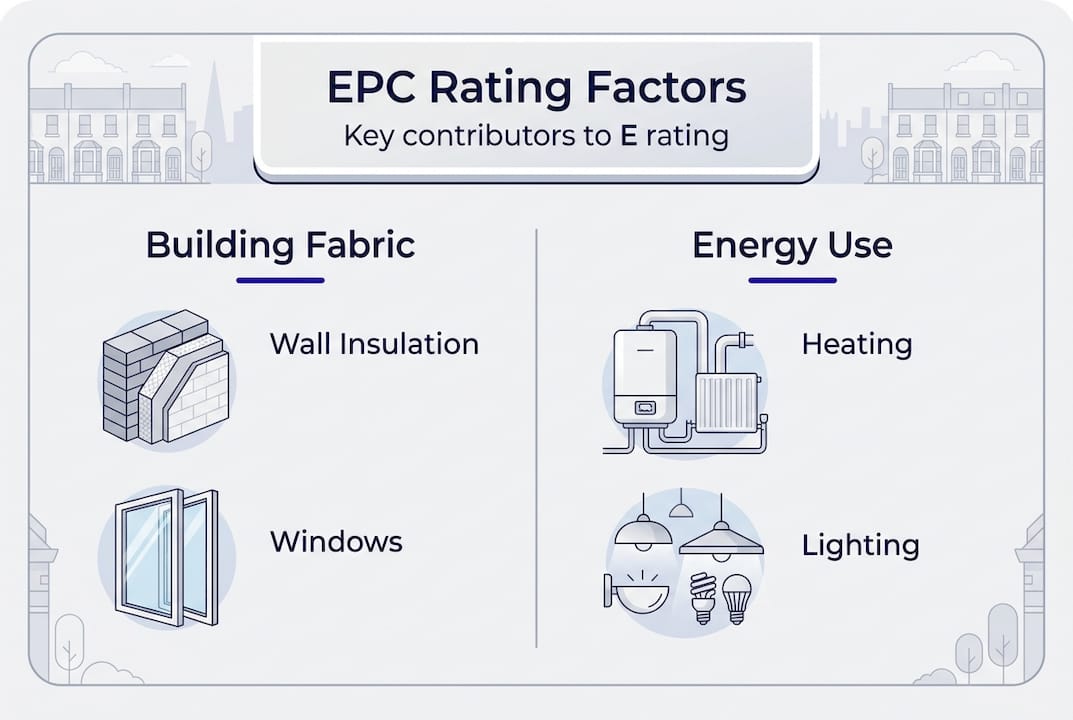
The rating reflects how well your building retains heat and manages energy consumption. Properties earning an E rating often share common characteristics that drag down performance. Older boiler systems operating below 85% efficiency waste significant fuel. Single glazed windows allow heat to escape rapidly. Inadequate loft or wall insulation creates thermal bridges where warmth leaks out. Uninsulated hot water cylinders lose heat constantly.
These features combine to create higher carbon emissions and utility bills. A typical E-rated property produces around 60 to 80 kg of CO2 per square metre annually. For context, a C-rated home produces roughly 40 to 55 kg. This difference matters financially and environmentally, affecting both tenant satisfaction and your property’s marketability.
Pro Tip: Before commissioning expensive renovations, request a detailed EPC report showing specific recommendations. Many E-rated properties can jump to D or C with targeted improvements costing under £3,000, such as upgrading heating controls or adding cavity wall insulation.
The EPC rating system uses standardised calculations based on building fabric, heating systems, lighting, and renewable energy installations. Understanding where your property loses points helps prioritise improvements that deliver maximum rating uplift for your investment.
Legal requirements and implications for London landlords with an EPC rating E
Since 2018, the Minimum Energy Efficiency Standards require rental properties in England and Wales to have a minimum EPC rating of E to be let legally. This regulation transformed EPC ratings from advisory documents into enforceable compliance requirements. Landlords cannot grant new tenancies or renew existing ones for properties rated F or G without facing substantial penalties.

The enforcement timeline matters for planning. From April 2018, the rule applied to new tenancies and renewals. From April 2020, it extended to all existing tenancies, regardless of renewal dates. This means every rental property in your London portfolio must maintain at least an E rating continuously. Trading Standards authorities handle enforcement and can investigate complaints from tenants or conduct proactive compliance checks.
Fines can reach up to £5,000 for non-compliance with MEES regulations when renting below an E rating. The penalty structure scales with breach severity. Letting a sub-E property for under three months incurs fines up to £2,000. Breaches lasting three months or longer attract penalties up to £5,000. Providing false information about compliance can trigger additional fines of £1,000. These financial consequences accumulate per property, making widespread non-compliance extremely costly.
Beyond penalties, an E rating affects property marketability. Prospective tenants increasingly prioritise energy efficiency when choosing rentals. Properties with poor ratings face longer void periods and potentially lower achievable rents. Estate agents report that E-rated properties take 15 to 20% longer to let compared to C or D-rated equivalents in the same area.
Compliance with minimum EPC requirements protects landlords from financial penalties whilst maintaining property competitiveness in London’s demanding rental market.
Limited exemptions exist for specific circumstances. Properties where improvements are not cost-effective (payback period exceeds seven years), listed buildings facing conservation restrictions, or properties with tenant refusals for improvements may qualify for temporary exemptions. These require formal registration on the national exemptions register and last maximum five years. Most London landlords with E-rated properties cannot rely on exemptions and must maintain active compliance through valid certificates and appropriate ratings.
The regulatory landscape continues evolving. Government proposals have suggested raising minimum standards to C by 2025 for new tenancies and 2028 for existing ones, though implementation timelines remain under review. Staying informed about EPC rules for landlords helps you anticipate requirements and plan upgrades strategically.
Improving an EPC rating from E: options, costs, and benefits
Raising your property from an E rating requires strategic investment in energy efficiency measures. The most effective improvements target the specific weaknesses identified in your EPC report. Typical improvements include installing better insulation, upgrading heating systems, and double glazing windows. Each measure contributes differently to your overall rating, with some delivering better value than others.
Here’s a practical upgrade sequence that many London landlords follow:
- Obtain your current detailed EPC report to identify recommended improvements and their predicted impact.
- Prioritise measures offering the highest rating uplift relative to cost, typically insulation and heating controls.
- Request quotes from multiple accredited installers to ensure competitive pricing and quality workmanship.
- Complete improvements in logical order, addressing building fabric before heating systems for maximum efficiency gains.
- Commission a new EPC assessment once works finish to certify your improved rating officially.
- Update your property marketing and tenant communications to highlight the enhanced energy performance.
| Improvement measure | Estimated cost | Typical rating impact | Payback period |
|---|---|---|---|
| Loft insulation (270mm) | £300 to £500 | +5 to +8 points | 2 to 3 years |
| Cavity wall insulation | £800 to £1,200 | +8 to +12 points | 3 to 5 years |
| Condensing boiler replacement | £2,000 to £3,500 | +10 to +15 points | 5 to 7 years |
| Double glazing (full property) | £4,000 to £8,000 | +5 to +10 points | 8 to 12 years |
| Heating controls upgrade | £200 to £400 | +3 to +5 points | 1 to 2 years |
| LED lighting throughout | £100 to £200 | +1 to +2 points | Under 1 year |
The benefits extend beyond compliance. Improved energy efficiency reduces tenant utility bills by £200 to £400 annually for a typical E to D upgrade, and £400 to £700 for E to C. Lower running costs make your property more attractive, reducing void periods and supporting higher rental values. Research shows C-rated properties command rental premiums of 3 to 5% compared to E-rated equivalents in similar London locations.
Pro Tip: Focus budget on measures your EPC report specifically recommends. A £1,500 investment in targeted improvements often delivers better rating gains than £3,000 spent on generic upgrades not matched to your property’s particular weaknesses.
Financial support programmes can offset upgrade costs. The government periodically offers grants and schemes for energy efficiency improvements. Check eligibility for programmes targeting landlords or specific property types. Some local authorities provide additional support for older properties or those in conservation areas. While grants fluctuate with policy changes, they can reduce your net investment by 20 to 40% when available.
Consider the broader property value impact. Energy efficient homes sell faster and achieve higher prices. Analysis of London property transactions shows C-rated homes sell for approximately 2 to 3% more than E-rated equivalents after controlling for location and size. For a £400,000 property, this represents £8,000 to £12,000 additional value, often exceeding the cost of improving EPC ratings from E to C.
Maintaining compliance and maximising property value with an EPC rating E
Ongoing compliance requires active management rather than one-off certification. EPC certificates remain valid for 10 years from issue date, but regular EPC renewals and proactive energy performance management help landlords stay compliant and competitive. Waiting until expiry risks discovering rating drops that require urgent remediation before you can legally let the property.
Schedule EPC reviews every three to four years, even with valid certificates. Building components degrade over time. Boilers lose efficiency. Insulation settles and compresses. Seals around windows and doors permeate. These gradual changes can push an E rating toward F without obvious symptoms. Early detection through periodic assessments allows planned improvements rather than emergency compliance work.
Beyond minimum E requirements, upgrading to D or C unlocks substantial advantages. Financial benefits include lower maintenance costs, as efficient heating systems require less frequent repair. Environmental benefits matter increasingly to tenants, particularly younger renters who prioritise sustainability. Properties demonstrating strong energy performance attract higher quality tenants willing to pay premium rents for lower running costs.
Consider these do’s and don’ts for managing an E-rated property effectively:
- Do maintain detailed records of all energy efficiency improvements with invoices and certificates for future EPC assessments.
- Do inform tenants about efficient heating and ventilation practices to optimise actual energy consumption.
- Do monitor government announcements regarding potential changes to minimum EPC standards affecting future requirements.
- Don’t assume your E rating remains valid without checking the certificate expiry date before marketing or letting.
- Don’t ignore minor maintenance issues like draughty windows or faulty thermostats that cumulatively impact energy performance.
- Don’t delay improvements if you anticipate stricter standards, as contractor availability tightens when regulatory deadlines approach.
Tenant retention improves with better energy performance. Surveys show 68% of renters consider energy efficiency important when selecting properties. Homes with lower utility bills reduce tenant financial stress and complaints. Comfortable, well-insulated properties with responsive heating systems generate fewer maintenance calls and higher tenant satisfaction scores.
Property valuation reflects energy performance increasingly. Mortgage lenders now factor EPC ratings into lending decisions. Some institutions apply stricter criteria or higher rates for properties below C rating. This trend affects both landlord refinancing and buyer mortgage availability, directly impacting your property’s marketability and achievable sale price.
The benefits of EPC certificates extend to portfolio management. Tracking ratings across multiple properties identifies underperformers requiring attention and high performers worth replicating. Systematic approaches to energy efficiency create operational efficiencies, reduce overall portfolio risk, and position you favourably as regulations tighten.
Establish a compliance calendar noting certificate expiry dates, planned improvement projects, and regulatory review periods. This proactive approach prevents last-minute scrambles and allows budget planning for necessary upgrades. Many successful London landlords allocate annual maintenance budgets specifically for energy performance improvements, treating them as strategic investments rather than reactive costs.
Complete EPC services for London landlords
Navigating EPC requirements demands expertise and local knowledge. Complete EPC specialises in helping London landlords understand EPCs and maintain compliance efficiently. Our qualified assessors bring extensive experience evaluating properties across all London boroughs, providing accurate ratings and actionable improvement recommendations tailored to your specific circumstances.
Whether you need initial certification, renewal assessments, or strategic advice on improving from an E rating, our team delivers fast, reliable service at competitive rates. We guide you through the EPC assessment process from booking to certificate issue, typically completing assessments within 48 hours. Our detailed reports highlight cost-effective improvements that maximise your EPC rating uplift whilst respecting your budget constraints. Contact Complete EPC today to arrange your assessment and ensure your London rental properties meet all compliance requirements whilst optimising energy performance and tenant appeal.
Frequently asked questions about EPC rating E
What exactly does an EPC rating E indicate about my property’s energy efficiency?
An E rating places your property in the lower half of the efficiency scale, typically indicating annual energy costs between £1,200 and £1,600 with carbon emissions of 60 to 80 kg per square metre. Common causes include inefficient heating systems, poor insulation, and single glazing that allow significant heat loss.
Can I rent out my property legally if it has an EPC rating of E?
Yes, an E rating meets the current legal minimum standard under MEES regulations for rental properties in England and Wales. You can legally grant new tenancies and renew existing ones, though ratings below E (F or G) are prohibited and attract substantial penalties.
How often must I renew my EPC certificate to remain compliant?
EPC certificates remain valid for 10 years from the issue date. You must obtain a new certificate before the current one expires if you continue letting the property. Proactive renewal every few years helps identify performance changes early.
What penalties exist for renting a property below EPC rating E?
Fines range from £2,000 for breaches under three months to £5,000 for longer violations. Providing false compliance information attracts additional £1,000 penalties. Trading Standards enforces these rules, and penalties apply per property, making portfolio-wide non-compliance extremely expensive.
Are there grants available to help improve my EPC rating from E?
Government grant programmes for energy efficiency improvements vary by policy period and property type. Check current schemes targeting landlords or specific building characteristics. Local authorities sometimes offer additional support, potentially reducing upgrade costs by 20 to 40% when programmes operate.