

TL;DR:
- Prioritizing insulation and air sealing before HVAC upgrades maximizes energy savings and comfort for homeowners.
- Effective upgrades, such as smart thermostats and LED lighting, offer quick payback and accessibility for tenants.
Most homeowners know their energy bills are higher than they should be, but choosing which home efficiency upgrades to tackle first is where good intentions stall. The options are genuinely overwhelming: insulation, heat pumps, smart thermostats, LED lighting, new appliances. Each one promises savings, but not all of them deliver equally for every property type or budget. This guide cuts through the noise. You will find a clear, sequenced list of the most effective energy saving upgrades available in 2026, along with honest cost and payback comparisons to help you decide where to start.
Table of Contents
- Key takeaways
- How to evaluate home efficiency upgrades before you spend
- 1. Air sealing: the upgrade most people overlook
- 2. Loft and roof insulation
- 3. Wall insulation: cavity and solid walls
- 4. Double or triple glazing
- 5. Heat pumps for efficient heating and cooling
- 6. Smart thermostats for automated savings
- 7. LED lighting throughout the home
- 8. Energy-efficient appliances
- 9. Comparison of top upgrades at a glance
- My take on getting home efficiency upgrades right
- Take the next step with an energy performance assessment
- FAQ
Key takeaways
| Point | Details |
|---|---|
| Sequence matters more than speed | Doing insulation and air sealing before HVAC upgrades maximises comfort and return on investment. |
| Weatherisation delivers the biggest baseline savings | Insulation and air sealing can reduce heating costs by 15%, making them the most impactful starting point. |
| Smart thermostats pay back quickly | Typical payback sits at 1 to 3 years, making them one of the most cost effective energy upgrades for most homes. |
| Incentives can dramatically reduce upfront costs | Rebates and tax credits can cover a significant share of upgrade costs, but documentation and timing are critical to claiming them. |
| Tenants have options too | LED lighting, efficient appliances, and smart thermostats are accessible upgrades for renters that do not require landlord permission in most cases. |
How to evaluate home efficiency upgrades before you spend
Not every upgrade makes sense for every home. Before committing to anything, you need a clear way to compare your options.
Energy savings potential is the most obvious measure. Ask what percentage reduction in heating or cooling costs a given upgrade typically delivers. Insulation and air sealing routinely feature at the top of any energy efficiency upgrades list for this reason.
Cost-effectiveness is about payback period, not just price. A £1,500 smart thermostat installation that saves £400 a year pays back in roughly four years. A £6,000 insulation job that saves £250 a year takes much longer. Both might be worth doing, but for different reasons at different times.
Suitability depends on your home type and tenure. Some upgrades, particularly those involving structural work or HVAC replacement, are only realistic for homeowners. Tenants should focus on portable or low-impact upgrades unless their landlord is willing to invest.
Available incentives change the maths entirely. Tax credits and rebates can cover up to 30% of qualifying upgrade costs, with specific caps depending on the upgrade type. Always check what is currently available before finalising your budget.
Pro Tip: A home energy assessment is often the foundational step that unlocks rebate eligibility and tells you exactly which upgrades your property needs most. Skipping it can mean losing access to incentives altogether.
Upgrade sequencing also matters more than most guides acknowledge. Doing air sealing and insulation before HVAC upgrades means your heating or cooling system operates in a better-sealed building, which improves its efficiency and reduces equipment cycling.
1. Air sealing: the upgrade most people overlook
Air sealing is arguably the most underrated item on any energy efficiency upgrades list. Gaps around windows, doors, skirting boards, loft hatches, and pipe penetrations allow warm air to escape in winter and cool air to leak out in summer. The result is a home that never quite reaches the temperature you set, no matter how powerful your boiler or heat pump.
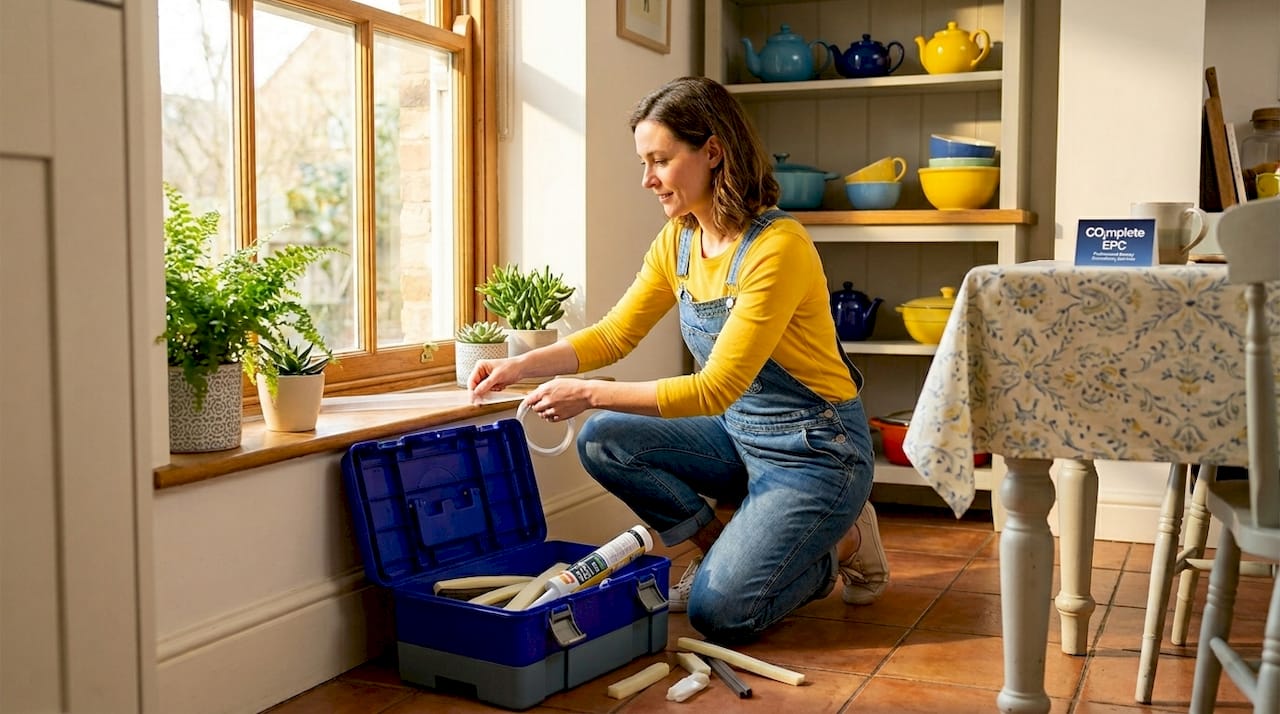
The work itself can be done partially as a DIY project. Draught-proofing strips, expanding foam around pipe entry points, and silicone sealant around window frames are all accessible to a confident homeowner. For a more thorough job, a professional will use blower door testing to locate hidden leaks and seal them systematically. Blower door testing is often required to verify air-tightness improvements before rebates are released.
The savings are real and measurable. Air sealing combined with insulation can cut heating and cooling costs by around 15%, and the comfort improvement is immediate.
2. Loft and roof insulation
Heat rises. In an uninsulated or poorly insulated home, a significant portion of your heating budget exits through the roof. Loft insulation is one of the highest-return upgrades you can make, and in many UK homes it remains underlevel or absent entirely.
Mineral wool laid between and over the joists is the standard approach for accessible lofts. For converted loft spaces, insulating between the rafters or using rigid foam boards is more appropriate. Most professional installations take less than a day.
For households on lower incomes, some programmes cover 75 to 100% of insulation costs through rebates. Even without that support, the payback period for loft insulation is typically three to five years.
Pro Tip: Always seal air leaks before laying additional insulation. Adding insulation on top of gaps simply traps draughty air inside the insulation layer, which reduces its effectiveness.
3. Wall insulation: cavity and solid walls
After the loft, walls account for the next largest source of heat loss. If your home was built after the 1920s, it likely has cavity walls that can be filled with mineral wool or polystyrene beads injected by a professional. The job takes a few hours and causes minimal disruption.
Solid wall homes, common in older UK properties, require either internal wall insulation (dry lining) or external wall insulation cladding. Both options are more expensive and more disruptive, but they deliver substantial savings and can transform the appearance and performance of an older property.
Check whether your local authority or energy supplier offers a support scheme before paying full price. Funding availability for cavity and solid wall insulation has improved considerably in recent years under various UK government programmes.
4. Double or triple glazing
Single-glazed windows lose heat at roughly twice the rate of double-glazed units. Replacing them improves thermal comfort, reduces condensation on internal glass surfaces, and lowers heating demand. Triple glazing goes further still, though the additional cost over double glazing takes longer to recover through energy savings alone.
The secondary benefit is acoustic insulation. If you live near a busy road or railway line, the difference in background noise after upgrading glazing is often more noticeable to occupants than the energy saving itself.
When selecting units, look for a BFRC Window Energy Rating of Band C or above. This gives you a standardised way to compare products across manufacturers.
5. Heat pumps for efficient heating and cooling
Heat pumps move heat rather than generate it, which is why they can deliver efficient heating and cooling year-round at a fraction of the running cost of a standard electric heater. Air source heat pumps extract warmth from outside air even in cold weather. Ground source heat pumps draw from the more stable temperature of the ground.
The critical point is that heat pumps perform best in well-insulated, well-sealed homes. This is why weatherisation should come first. A heat pump installed in a draughty property will still save money compared to a direct electric system, but it will not reach its potential.
Rebates and incentive programmes exist specifically for heat pump installations, and incentive availability varies by system type and installation scale. The UK Boiler Upgrade Scheme currently provides grants toward air source and ground source heat pump installations for eligible properties.
6. Smart thermostats for automated savings
A smart thermostat is one of the fastest-returning cost effective energy upgrades available. By automating temperature setbacks when the house is empty or occupants are asleep, these devices remove the single biggest cause of wasted heating energy: forgetfulness.
Smart thermostats can reduce heating and cooling costs by around 8% through consistent automation. The savings come primarily from enforcing setback schedules rather than from learning algorithms, which means you get most of the benefit simply by setting up the schedule correctly during installation.
Payback on a typical smart thermostat sits at one to three years depending on your current manual scheduling habits and how much you heat or cool your home. For households with irregular routines, the savings skew toward the higher end.
Pro Tip: If you have a heat pump rather than a gas boiler, choose a thermostat specifically designed for heat pump systems. Standard thermostats use setback strategies that can work against heat pump efficiency.
7. LED lighting throughout the home
Switching from halogen or incandescent bulbs to LED is one of the most accessible examples of energy saving upgrades, and it applies equally to homeowners and tenants. LEDs use roughly 75% less electricity than the bulbs they replace and last significantly longer, which reduces replacement costs too.
The upfront cost is low. A decent LED bulb costs between £2 and £5, and most households can complete a full switch for under £100. Incentive programmes support affordability for these smaller upgrades, particularly for tenants and budget-conscious owners.
For external lighting, motion-activated LEDs add a security benefit alongside the energy saving.
8. Energy-efficient appliances
Major appliances, particularly washing machines, dishwashers, and tumble dryers, account for a meaningful share of household electricity use. Replacing an old D or E-rated appliance with an A-rated equivalent reduces running costs noticeably over time.
The key consideration here is not to replace appliances that are still functioning well simply for efficiency gains. The embodied carbon and upfront cost of a new appliance can outweigh the running cost savings for several years. Plan replacements around the natural end of an appliance’s life.
When the time does come to replace, always check the energy label, compare annual kWh consumption figures between models, and check whether your energy supplier or local authority offers a rebate on high-rated appliances.
9. Comparison of top upgrades at a glance
Use this table as a quick reference when deciding where to focus your budget and effort.
| Upgrade | Typical savings | Upfront cost | Best suited for | Incentives available |
|---|---|---|---|---|
| Air sealing | Up to 15% heating/cooling | Low to moderate | All home types | Yes, via rebates |
| Loft insulation | Significant heat loss reduction | Low to moderate | Homeowners, some tenants | Yes, including free schemes |
| Wall insulation | High for solid/cavity walls | Moderate to high | Homeowners | Yes |
| Double/triple glazing | Moderate | Moderate to high | Homeowners | Limited |
| Heat pump | High, year-round | High | Homeowners in insulated homes | Yes, Boiler Upgrade Scheme |
| Smart thermostat | ~8% heating/cooling | Low | Homeowners and tenants | Sometimes |
| LED lighting | Up to 75% lighting cost | Very low | All, including tenants | Sometimes |
| Efficient appliances | Moderate per appliance | Varies | All | Sometimes |
Weatherisation first, HVAC second, and appliances and lighting throughout. That sequence gives you the best return on every pound spent.
My take on getting home efficiency upgrades right
I have seen homeowners spend significant money on a new heat pump only to find it struggles in a home riddled with draughts. The technology is sound, but the building was not ready for it. The sequencing advice in this guide is not abstract theory. It reflects what actually happens when upgrades are done out of order.
What I have also noticed is that tenants consistently underestimate their options. LED lighting, a smart thermostat, and switching to an A-rated appliance when the old one fails are all realistic for renters. Together, they can make a meaningful dent in monthly bills without needing a landlord’s agreement.
On incentives: the paperwork matters more than most people realise. Documentation and timing must align with the tax year for credits to apply. Keep receipts, installer certificates, and any energy assessment reports in a single folder from day one. Chasing credits retrospectively is far harder.
My overall advice is to approach this stepwise. Pick the one upgrade that addresses your home’s biggest weakness, do it properly, and then reassess. One well-executed improvement beats three half-finished ones every time.
— Danny
Take the next step with an energy performance assessment
Understanding where your property currently stands is the most practical starting point before committing to any upgrades. An Energy Performance Certificate gives you a standardised rating for your home’s efficiency, along with a list of recommended improvements ranked by impact and cost-effectiveness.
At Completeepc, we help homeowners and landlords across London obtain accurate EPC assessments quickly and at competitive rates. Whether you need to understand your EPC rating before planning upgrades or want a full guide to energy performance certificates, our qualified assessors can support you. Use your EPC as the foundation for every upgrade decision you make.
FAQ
What are the most cost-effective home efficiency upgrades?
Air sealing, loft insulation, and smart thermostats offer the fastest payback for most homes. Together, they address the biggest sources of heat loss and wasted energy with relatively modest upfront costs.
Should I insulate before fitting a heat pump?
Yes. Weatherisation should precede HVAC upgrades such as heat pumps to maximise performance, reduce equipment cycling, and improve rebate eligibility.
What upgrades can tenants make without landlord permission?
Tenants can typically install LED bulbs, smart thermostats (where they replace an existing unit), and upgrade to energy-efficient appliances when replacements are due, all without structural changes.
How much can a smart thermostat save?
A smart thermostat can reduce heating and cooling costs by around 8% through automated temperature setbacks, with payback typically achieved within one to three years.
Do I need a home energy assessment before claiming rebates?
In many cases, yes. A home energy assessment report is often required to qualify for rebates, as it verifies existing conditions and directs the sequence of qualifying upgrades.