

Missing a valid Energy Performance Certificate (EPC) before marketing or letting your property in London can result in fines of up to £5,000 and serious delays to your transaction. Whether you are selling, renting, or simply ensuring compliance, getting your EPC sorted quickly and correctly is non-negotiable. This guide walks you through every stage of the process, from understanding what an EPC involves to verifying your certificate after assessment, so you can move forward with confidence and avoid costly mistakes.
Table of Contents
- Why you need an EPC and what it involves
- What you need before booking your EPC
- Step-by-step: how to book an EPC in London
- Avoiding common mistakes when booking your EPC
- How to verify and use your EPC after assessment
- Expert support for booking your EPC quickly in London
- Frequently asked questions
Key Takeaways
| Point | Details |
|---|---|
| EPC is a legal must | An energy performance certificate is a legal requirement for most property sales and lettings. |
| Prepare before booking | Have all relevant property details and access ready before arranging your EPC assessment. |
| Choose an accredited assessor | Only book your EPC assessment with an assessor accredited by the government for it to be valid. |
| Avoid booking mistakes | Common errors include using non-accredited assessors and failing to prepare your property. |
| Use your EPC for compliance | The EPC is essential for selling, letting, and marketing properties in London and must meet the current minimum rating. |
Why you need an EPC and what it involves
An EPC is an official document that rates a property’s energy efficiency on a scale from A (most efficient) to G (least efficient). It tells buyers, tenants, and agents how much energy the property is likely to use and what improvements could reduce those costs. As a landlord or property owner in London, you cannot legally market a property for sale or rent without one.
EPCs are a legal requirement for nearly all property sales and lettings in the UK. Failing to provide one can delay your sale, invalidate a tenancy agreement, or trigger a financial penalty. The government EPC rules are clear: the certificate must be available to prospective buyers or tenants at the earliest opportunity.
During the assessment, a qualified assessor will inspect key elements of your property, including:
- Wall and loft insulation
- Heating system type and age
- Windows and glazing (single, double, or triple)
- Hot water system
- Lighting and renewable energy features
The benefits of an EPC go beyond compliance. A good rating can increase your property’s appeal to tenants and buyers, and the recommendations included in the report can guide cost-effective improvements.
An EPC is valid for 10 years, so once you have one in place, you are covered for the duration unless significant changes are made to the property.
With the importance of EPCs clear, let’s look at what you need before booking one.
What you need before booking your EPC
Being prepared before you book saves time on assessment day and helps ensure an accurate rating. Assessors work more efficiently when they have the right information to hand, and gaps in documentation can slow the process down.
Here is what you should gather in advance:
- Full property address and postcode
- Property type (flat, terraced house, detached, commercial unit)
- Details of any recent insulation upgrades or cavity wall treatments
- Boiler make, model, and installation year
- Any planning documents or building regulations certificates for extensions
- Access arrangements for all rooms, loft, and meter cupboards
Providing access to all parts of the property is essential for a complete EPC assessment. If the assessor cannot reach the loft or inspect the boiler, the rating may be estimated conservatively, which could lower your score unnecessarily.

Pro Tip: Clear any clutter blocking access to the loft hatch, boiler cupboard, or meter boxes before the assessor arrives. A tidy, accessible property leads to a faster and more accurate assessment.
Residential and commercial properties have different requirements. The table below outlines the key differences:
| Requirement | Residential property | Commercial property |
|---|---|---|
| Assessor type | Domestic energy assessor | Non-domestic energy assessor |
| Documentation needed | Boiler info, insulation records | Floor plans, building services data |
| Assessment duration | 30 to 60 minutes | 1 to 3 hours or more |
| Complexity | Standard | Higher, more detailed |
Use the EPC assessment checklist to make sure you have everything ready before your appointment.
Once you have the essentials ready, you can move on to the actual booking process.
Step-by-step: how to book an EPC in London
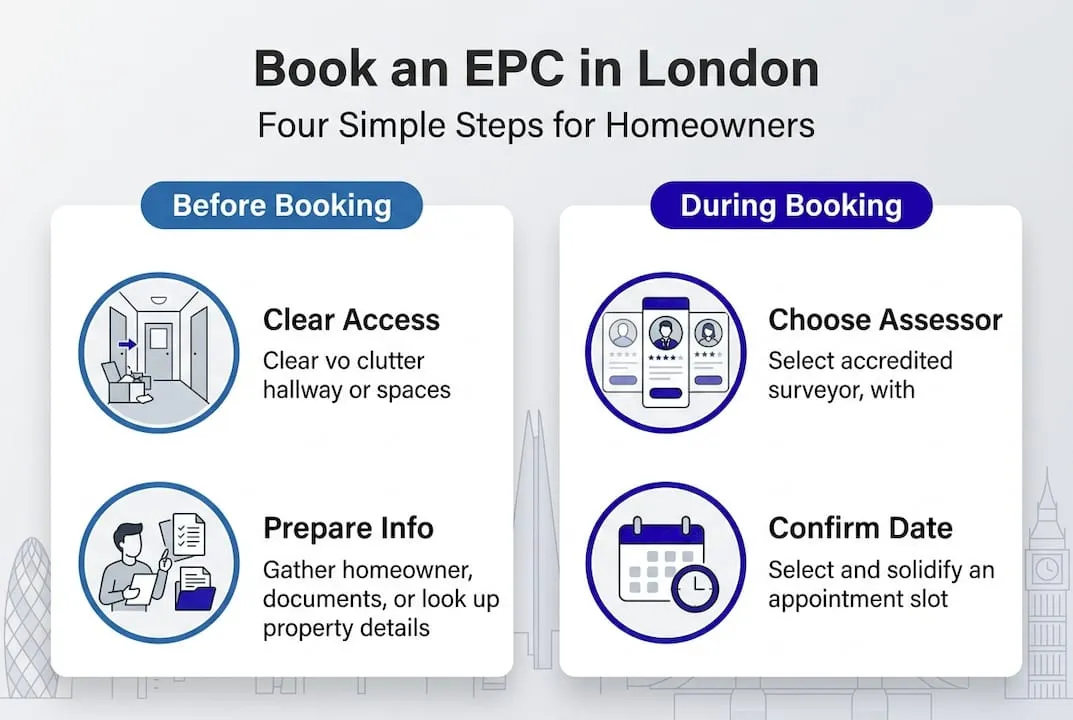
Booking an EPC is straightforward when you follow the right steps. Here is exactly how to do it:
- Research qualified assessors in London. Search for providers who specialise in your property type, whether domestic or commercial.
- Verify accreditation. You must use an accredited EPC assessor to ensure your certificate is valid and recognised. Unaccredited certificates are not legally accepted.
- Find an approved assessor. Use the official find an accredited assessor tool to confirm credentials before booking.
- Choose your booking method. You can book an EPC online, by phone, or through your letting agent. Online booking is typically the fastest option.
- Provide property details. Supply your address, property type, and any relevant documentation at the time of booking.
- Confirm the appointment. Agree on a date, time, and any specific access instructions with the assessor.
- Prepare the property. Ensure all areas are accessible and any relevant documents are ready on the day.
The table below shows typical turnaround times for different booking methods:
| Booking method | Typical confirmation time | Assessment availability |
|---|---|---|
| Online booking | Within a few hours | Often within 24 to 48 hours |
| Phone booking | Same day | 1 to 3 business days |
| Via letting agent | 1 to 2 business days | 2 to 5 business days |
Pro Tip: If you are working to a tight deadline, such as a property listing going live, always book online and mention your deadline. Many London assessors can accommodate urgent requests.
For a broader overview of the process, the London EPC guide covers everything from assessment types to rating improvements in detail.
With your booking complete, let’s cover the next steps and typical pitfalls to avoid.
Avoiding common mistakes when booking your EPC
Even experienced landlords make avoidable errors when arranging EPCs. Knowing what to watch out for can save you time, money, and stress.
Using an unaccredited assessor is the most serious mistake. A certificate issued by someone without proper accreditation is not legally valid. Always verify credentials before paying.
Failing to prepare the property is another frequent issue. Incomplete information or blocked access can delay the EPC process, meaning the assessor may need to return for a second visit, adding cost and time.
Common mistakes to avoid:
- Booking too late and missing your compliance deadline
- Not informing tenants in advance so access is available
- Assuming an old EPC is still valid without checking the issue date
- Forgetting to download and save your certificate once issued
- Overlooking commercial EPC requirements if you own mixed-use or business premises
Always check the issue date on any existing EPC. A certificate more than 10 years old is expired and you will need a new assessment before marketing the property.
Deadlines matter. In 2026, regulatory scrutiny around EPC compliance for rental properties remains high. Leaving your booking until the last minute risks missing your legal obligations, particularly if assessors are in high demand in your area of London.
Having side-stepped potential pitfalls, here is how to verify and use your EPC post-assessment.
How to verify and use your EPC after assessment
Once your assessment is complete, your assessor will lodge the certificate on the national register. You can find your EPC online using your property’s postcode. Always check the certificate carefully before using it.
Here is what to verify:
- Correct address. Confirm the property address matches exactly, including flat number and postcode.
- Assessor accreditation number. This should appear on the certificate and be verifiable online.
- Issue date and expiry. Confirm the certificate is current and will remain valid for your intended transaction.
- Energy rating. Note the current rating and the potential rating if recommended improvements are made.
The minimum EPC requirement for rental properties in England is currently an E rating. If your property falls below this, you cannot legally let it without first making qualifying improvements or obtaining a valid exemption.
If your rating is below the required minimum, act promptly. Review the recommendations section of your EPC report, which will list specific improvements such as loft insulation, a new boiler, or double glazing, along with estimated costs and potential savings. For commercial landlords, the commercial EPC guide provides detailed guidance on meeting minimum standards for business premises.
Once verified, your EPC should be shared with prospective tenants or buyers at the earliest opportunity. Include it in your property listing, provide a copy at viewings, and retain a digital copy for your records.
Expert support for booking your EPC quickly in London
Navigating EPC requirements on your own is manageable, but working with specialists makes the process faster and removes the risk of errors. At Complete EPC, we provide rapid bookings for both domestic and commercial properties across London, with fully accredited assessors who understand local compliance requirements inside out. Whether you need find EPC guidance on what your certificate means or want a clear walkthrough of the EPC process guide, our team is ready to help. We offer competitive pricing with a lowest-rate guarantee, and our assessors are available at short notice across all London boroughs. Ready to get started? Get an EPC quote today and secure your certificate without the hassle.
Frequently asked questions
How long does it take to get an EPC in London?
Most domestic EPC assessments can be completed within 24 to 72 hours from booking. Online bookings can quickly secure assessments, often within a few days, though timing varies by provider and property type.
What should I have ready for my EPC assessment?
Have your address, access details, any recent upgrades, and information about insulation and heating ready before your assessment. Providing recent upgrade details helps ensure an accurate EPC rating.
Can I book an EPC for a commercial property the same way as a home?
Commercial EPC bookings follow a similar process but may require more detailed documentation and a qualified commercial assessor. Commercial EPCs often demand additional documentation compared to domestic assessments.
What if my property does not meet the minimum EPC rating?
You may need to make improvements before letting or selling. The minimum EPC requirement for rental properties in England is currently an E rating, and letting below this threshold without an exemption is unlawful.
How long is an EPC valid for?
EPC certificates are valid for 10 years from the date of issue, unless substantial changes are made to the property or regulations require a new assessment.
Recommended
- How to Apply for an EPC Certificate in London – Complete EPC
- EPC Assessment Process Guide: Step-by-Step for London – Complete EPC
- EPC Requirements in London: What You Need to Know – Complete EPC
- How to get an EPC in Greater London efficiently in 2026
- Step-by-Step Guide to Building Inspections Success – Florida Licensed Engineers