

Over 80 percent of British commercial landlords in Greater London face growing pressure to meet strict energy efficiency rules. As sustainability standards evolve and energy costs rise, understanding UK Energy Efficiency Policies has become a top priority for property owners. This guide breaks down the government’s latest requirements and reveals practical strategies to help you protect your investments, comply with current regulations, and benefit from energy-saving upgrades.
Table of Contents
- Defining UK Energy Efficiency Policies
- Types of EPC Ratings and MEES Standards
- How EPC Assessments Work in London
- Legal Duties and Compliance Deadlines
- Costs, Exemptions, and Common Pitfalls
Key Takeaways
| Point | Details |
|---|---|
| Energy Efficiency Policies | UK Energy Efficiency Policies mandate that all domestic rented properties achieve a minimum EPC rating of E, with significant penalties for non-compliance. |
| Investment in Improvements | Landlords are encouraged to invest in energy-saving upgrades, as the average cost to meet standards ranges from £6,100 to £6,800. |
| Compliance Deadlines | Landlords must be aware of compliance deadlines; existing properties must meet the minimum standards set since April 2020. |
| Avoiding Compliance Pitfalls | Common pitfalls include poor record-keeping and delayed upgrades, which can lead to legal consequences and financial penalties. |
Defining UK Energy Efficiency Policies
UK Energy Efficiency Policies represent a comprehensive governmental framework designed to reduce carbon emissions, enhance building sustainability, and promote more environmentally responsible property management. These policies are crucial for landlords, particularly those operating in urban centres like London, where environmental regulations are increasingly stringent.
The strategic priorities for energy policy are rooted in the Energy Act 2013, which establishes clear objectives for achieving energy security and supporting the national transition towards net zero carbon emissions. Under these regulations, property owners and landlords are required to meet specific energy performance standards, ensuring their buildings contribute to broader environmental goals.
Key components of these policies include mandatory Energy Performance Certificates (EPCs), which provide detailed assessments of a property’s energy efficiency. These certificates not only help landlords understand their buildings’ current performance but also offer targeted recommendations for improvements. The government’s energy efficiency schemes like the Energy Company Obligation and Great British Insulation Scheme provide additional support and potential financial incentives for property owners implementing energy-saving measures.
The policies are comprehensive, covering various aspects of property management including heating systems, insulation standards, and renewable energy integration. For landlords, this means proactively assessing and upgrading their properties to meet increasingly strict environmental benchmarks.
Pro tip: Regularly review and update your property’s energy efficiency measures to stay ahead of evolving regulatory requirements and potentially increase your property’s market value.
Types of EPC Ratings and MEES Standards
Energy Performance Certificates (EPCs) provide a comprehensive assessment of a property’s energy efficiency, using a rating scale from A to G. Where A represents the most energy-efficient properties and G represents the least efficient, these ratings play a critical role in helping landlords understand and improve their properties’ environmental performance.
Under the Minimum Energy Efficiency Standards, domestic private rented properties must achieve a minimum rating of E. Properties rated F or G cannot be legally let unless a specific exemption is registered. This regulation significantly impacts landlords, compelling them to invest in energy efficiency improvements or face potential legal constraints.

Commercial property regulations are equally stringent. According to recent guidelines, commercial landlords must ensure their properties achieve an EPC rating of at least E, with proposed future requirements targeting ratings of C by 2027 and B by 2030. These progressive standards demonstrate the UK’s commitment to reducing carbon emissions and improving overall building energy performance. Key considerations for landlords include conducting thorough energy assessments, implementing recommended improvements, and maintaining up-to-date certification.
The EPC rating system evaluates multiple aspects of a property’s energy performance, including insulation quality, heating systems, lighting efficiency, and potential renewable energy integration. Landlords can use these detailed assessments as strategic roadmaps for property upgrades, potentially increasing property value and reducing long-term energy costs.
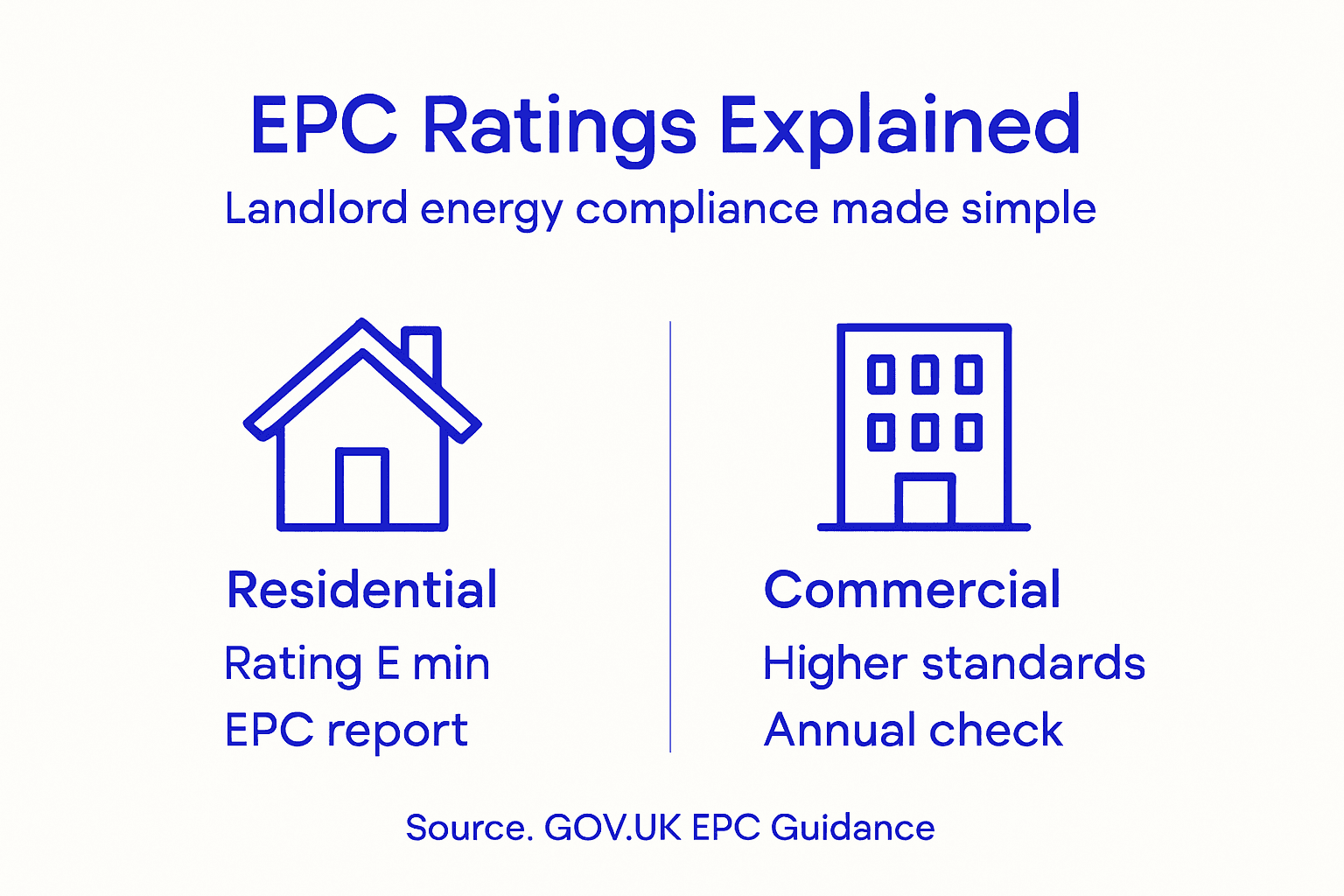
The following table summarises how EPC ratings affect residential versus commercial property requirements in the UK:
| Regulation Aspect | Residential Properties | Commercial Properties |
|---|---|---|
| Current Minimum EPC Rating | E (let since 2020) | E (current standard) |
| Proposed Future Standards | No announced upgrade | C by 2027, B by 2030 |
| Legal Impact of Low Rating | Cannot let if rated F or G | Letting restrictions for F or G |
| Exemption Pathways | Evidence-based, listed status | Similar, with sector criteria |
Pro tip: Invest in professional energy assessments and prioritise targeted improvements that can quickly elevate your property’s EPC rating, focusing on cost-effective upgrades with the highest potential impact.
How EPC Assessments Work in London
EPC assessments in London represent a critical process for property owners, providing a comprehensive evaluation of a building’s energy efficiency. These detailed inspections involve qualified energy assessors in London who systematically examine various aspects of a property’s energy performance, generating a standardised rating that helps landlords understand their building’s environmental impact.
The assessment process typically involves a thorough on-site inspection where the energy assessor meticulously documents key elements such as wall and roof insulation, heating systems, lighting installations, and windows. Assessors use specialised equipment and follow strict methodological guidelines to collect precise measurements, ensuring an accurate representation of the property’s energy characteristics. They create a comprehensive report that not only provides an energy efficiency rating but also recommends specific improvements to enhance the property’s performance.
In the context of London’s dense urban environment, these assessments are particularly crucial. Properties in the city often have unique architectural features and historical considerations that can significantly impact energy efficiency. The assessment takes into account factors specific to London’s building landscape, including compact living spaces, older building stock, and the potential for retrofit technologies. By providing a detailed analysis, these assessments help landlords make informed decisions about potential energy-saving investments and compliance with increasingly stringent environmental regulations.
The final EPC document serves multiple purposes beyond mere compliance. It provides a roadmap for potential energy improvements, can influence property market value, and offers transparency for potential tenants or buyers about the building’s energy performance. Landlords receive a colour-coded graph and detailed recommendations that outline potential upgrades, estimated costs, and potential energy savings.
Pro tip: Schedule your EPC assessment during optimal daylight hours to ensure the most accurate measurements and comprehensive property evaluation.
Legal Duties and Compliance Deadlines
Landlords in England and Wales must navigate a complex landscape of legal compliance requirements related to Energy Performance Certificates and Minimum Energy Efficiency Standards. Since April 2020, these regulations mandate that all domestic private rented properties must achieve a minimum EPC rating of E, with significant legal implications for non-compliance.
The regulatory framework establishes clear timelines and expectations for property owners. For existing tenancies, landlords were required to ensure their properties met the minimum E rating by April 2020. New tenancies have been subject to these standards since 2018, creating a phased approach to implementation. Failure to comply can result in substantial financial penalties, with potential fines up to £5,000 for continued letting of substandard properties without a registered exemption.
Commercial property regulations follow a similar trajectory, with proposed future standards aiming to raise the minimum EPC rating to C by 2027 and B by 2030. These progressive requirements reflect the UK’s commitment to reducing carbon emissions and improving overall building energy performance. Landlords must proactively plan for these upcoming changes, conducting regular energy assessments and implementing necessary improvements to meet evolving regulatory standards.
The compliance mechanism includes specific enforcement actions. Landlords cannot continue to let properties rated F or G unless they have registered a valid exemption or completed required improvements. This includes both new and existing tenancies, creating a comprehensive approach to improving the energy efficiency of the UK’s rental property stock.
Pro tip: Maintain a comprehensive record of your property’s EPC assessments and improvement works to streamline compliance and demonstrate proactive energy management.
Costs, Exemptions, and Common Pitfalls
Landlords navigating the complex landscape of energy efficiency regulations must understand the financial implications and potential exemption criteria associated with property upgrades. The average cost of improving a property to meet current EPC standards ranges between £6,100 and £6,800, representing a significant investment for property owners.
The regulations provide specific cost-related exemptions that landlords can leverage. If the cheapest energy efficiency improvements exceed £3,500 inclusive of VAT, landlords may apply for an exemption by providing comprehensive documentation such as multiple quotation evidence. Additional exemptions exist for listed buildings or properties where improvements would unacceptably alter their historical character. However, landlords must carefully register these exemptions on the Private Rented Sector Exemptions Register to avoid potential penalties.
Common pitfalls in compliance often stem from inadequate planning and documentation. Many landlords underestimate the complexity of meeting energy efficiency standards, leading to delayed action or improper implementation. Typical mistakes include misinterpreting exemption criteria, failing to maintain proper records, and neglecting ongoing property maintenance post-improvements. Proactive landlords should develop a strategic approach that includes regular energy assessments, understanding available government grants, and maintaining meticulous documentation of all improvement works.
Financial planning is crucial in navigating these regulatory requirements. While the initial investment might seem substantial, landlords should consider the long-term benefits, including potential increases in property value, reduced energy costs, and compliance with evolving environmental standards. Government schemes and grants can help offset some of the upgrade expenses, making the transition more financially manageable.
This table provides a quick reference for common compliance pitfalls and their consequences for landlords:
| Compliance Pitfall | Likely Consequence | Suggested Solution |
|---|---|---|
| Poor record-keeping | Fines, failed exemption claims | Implement a digital records policy |
| Delayed upgrades | Penalties, tenancy disruption | Plan upgrades in advance |
| Misinterpreting standards | Unintentional non-compliance | Consult regulatory resources |
| Ignoring maintenance | EPC rating declines | Schedule regular property reviews |
Pro tip: Create a dedicated financial and compliance folder for each property, documenting all energy efficiency assessments, improvement works, and potential exemption evidence to streamline future regulatory requirements.
Stay Ahead with Expert EPC Services from Complete EPC
Navigating the evolving UK Energy Efficiency Policies can feel overwhelming for landlords striving to meet Minimum Energy Efficiency Standards and secure the right Energy Performance Certificate ratings. Challenges like understanding complex legal duties, managing exemption criteria, and making cost-effective upgrades demand precise and reliable guidance. With government deadlines tightening and penalties for non-compliance rising, acting now is crucial to protect your investments and avoid legal setbacks.
At Complete EPC, we specialise in delivering accurate and comprehensive EPC assessments tailored for both domestic and commercial properties across London. Our team of qualified energy assessors helps landlords decipher complex regulations, provides detailed reports with clear improvement recommendations, and supports compliance with confidence. Avoid common pitfalls such as poor record keeping or delayed upgrades by trusting our seamless, competitively priced services designed to maximise your property’s value and sustainability.
Ready to secure your property’s future and comply with legal requirements effortlessly Visit Complete EPC today for a professional consultation and take the first step towards enhanced energy efficiency and peace of mind.
Frequently Asked Questions
What are the Minimum Energy Efficiency Standards (MEES) for landlords?
Landlords must ensure that domestic private rented properties achieve a minimum EPC rating of E. Properties rated F or G cannot be legally let unless a valid exemption is registered.
How often do I need to have my property’s EPC assessed?
It is recommended to review and update your property’s energy efficiency measures regularly, especially every 10 years, or whenever significant changes or improvements are made to the property.
What financial exemptions are available for landlords regarding energy efficiency improvements?
If the cheapest energy efficiency improvements exceed £3,500 inclusive of VAT, landlords can apply for an exemption. Additional exemptions are available for listed buildings or properties where changes would harm their historical character, but these must be registered properly.
What can landlords do if their property has a poor EPC rating?
Landlords should conduct thorough energy assessments, implement recommended improvements such as upgrading insulation or heating systems, and maintain up-to-date certification to enhance their property’s EPC rating and comply with regulations.