

Most British property owners believe energy assessments are expensive and disruptive, yet over 90 percent of London properties can receive a standard Energy Performance Certificate in under two hours. For landlords, having a clear energy rating is more than just legal compliance. It cuts ongoing costs and increases property appeal for buyers and tenants. This guide breaks down what energy assessors truly do, exposes common myths, and shows why efficient EPCs matter for your property’s future.
Table of Contents
- Energy Assessors Explained And Common Myths
- Types Of Energy Assessors And Certifications
- Energy Assessment Process For EpCs
- Legal Duties And Compliance For Assessors
- Impact On Costs, Property Value, And Sustainability
Key Takeaways
| Point | Details |
|---|---|
| Role of Energy Assessors | Energy assessors evaluate property energy performance and identify potential efficiency improvements through non-invasive inspections. |
| Types of Assessors | Domestic and Non-Domestic Energy Assessors specialise in residential and commercial properties, respectively, requiring distinct expertise and certifications. |
| Financial Impact | Higher energy efficiency ratings can lead to increased property values and reduced running costs, making properties more attractive to buyers and tenants. |
| Legal Compliance | Energy assessors must adhere to strict regulations and maintain professionalism, as failure to comply can result in significant penalties. |
Energy assessors explained and common myths
Energy assessors play a pivotal role in evaluating property energy performance across London, providing critical insights into building efficiency and environmental impact. These professionals are trained specialists who conduct comprehensive property energy inspections) that help property owners understand their building’s energy characteristics and potential improvements.
Contrary to popular misconceptions, energy assessors do not perform invasive procedures during their evaluations. Instead, they systematically survey key property elements including insulation quality, heating systems, window installations, and overall thermal performance. Their assessments follow the Standard Assessment Procedure (SAP), a standardised methodology that generates precise energy efficiency ratings ranging from A (extremely efficient) to G (least efficient). By producing an Energy Performance Certificate (EPC), these experts provide property owners with a comprehensive snapshot of their building’s energy consumption and potential environmental impact.
Many property owners harbour myths about energy assessments, believing them to be expensive, time-consuming, or unnecessarily complex. However, the reality is quite different. Typical assessments for standard residential properties generally cost between £75 and £100 and usually take less than two hours to complete. Professional energy assessors offer impartial, technical evaluations designed to help consumers and businesses optimise their energy use and implement targeted efficiency improvements.
Pro tip: Always request your energy assessor’s accreditation credentials before scheduling an assessment to ensure you receive a professional and legally recognised evaluation.
Types of energy assessors and certifications
Energy assessors in the United Kingdom are categorised into distinct professional levels, each requiring specific qualifications and expertise to conduct comprehensive property energy evaluations. Accredited energy assessors play a crucial role in delivering precise and legally recognised energy performance assessments across residential and commercial properties.
The primary categories of energy assessors include Domestic Energy Assessors (DEAs) and Non-Domestic Energy Assessors (NDEAs). DEAs specialise in residential properties, conducting detailed inspections of houses, flats, and apartments to evaluate their energy efficiency. These professionals are trained to analyse building fabric, heating systems, lighting installations, and overall thermal performance. Non-Domestic Energy Assessors, by contrast, focus on commercial and public buildings, requiring more complex technical knowledge to assess larger, more intricate property structures.
To become a qualified energy assessor, professionals must complete rigorous training programmes and obtain specific certifications. The process typically involves completing an accredited course, passing comprehensive examinations, and registering with recognised professional bodies. Essential property energy assessment steps include demonstrating technical competence, understanding complex energy calculation methodologies, and maintaining ongoing professional development to stay current with evolving building regulations and assessment techniques.
Here is a comparison of Domestic and Non-Domestic Energy Assessors in the UK:
| Assessor Type | Property Focus | Required Expertise | Common Certificate Issued |
|---|---|---|---|
| Domestic Energy Assessor | Houses, flats | Residential insulation, heating | Domestic EPC |
| Non-Domestic Energy Assessor | Offices, warehouses | Complex commercial building systems | Commercial EPC |
Pro tip: Always verify an energy assessor’s current accreditation and professional membership before scheduling an assessment to ensure you receive a high-quality, legally compliant evaluation.
Energy assessment process for EPCs
The Energy Performance Certificate (EPC) assessment is a systematic process that provides crucial insights into a property’s energy efficiency and potential environmental impact. EPC Assessment Process Guide reveals the intricate steps energy assessors follow to evaluate a building’s thermal performance and generate comprehensive energy ratings.
Typically, the EPC assessment involves a detailed on-site inspection where a qualified energy assessor conducts a thorough examination of the property. The assessment encompasses multiple critical elements including building construction, heating systems, insulation quality, windows, lighting, and ventilation. Assessors use specialised measurement tools and professional software to calculate precise energy efficiency ratings, generating a certificate that ranges from A (most efficient) to G (least efficient).

The comprehensive evaluation involves several key stages. Initially, the assessor will conduct a visual survey of the property, measuring room dimensions, examining construction materials, and documenting existing energy-related installations. Photographic evidence and detailed notes are compiled to support the assessment. Specialised calculation methodologies are then applied to determine the property’s heat loss, potential energy consumption, and carbon dioxide emissions. These technical calculations form the foundation of the final Energy Performance Certificate, which not only provides a current efficiency rating but also includes recommended improvements to enhance the property’s energy performance.
Pro tip: Prepare for your EPC assessment by gathering recent documentation about your property’s heating systems, insulation upgrades, and previous energy efficiency improvements to streamline the evaluation process.
Legal duties and compliance for assessors
Energy assessors in the United Kingdom operate within a stringent regulatory framework that demands exceptional professional standards and legal accountability. EPC Legal Compliance Workflow outlines the comprehensive requirements that govern their professional conduct and assessment responsibilities.
The legal duties of energy assessors encompass multiple critical dimensions. They are legally obligated to maintain professional accreditation, conduct accurate assessments, and provide impartial evaluations that meet precise governmental standards. Assessors must register with approved professional bodies, undergo regular training, and demonstrate continuous professional development. Their certification requires adherence to strict technical protocols, including using standardised assessment methodologies, maintaining detailed documentation, and ensuring the accuracy of every Energy Performance Certificate (EPC) they generate.
Compensation for non-compliance can be significant, with potential legal penalties including substantial fines, suspension of professional credentials, and potential legal action for fraudulent or negligent assessments. Energy assessors must meticulously document their inspection processes, maintain comprehensive records, and ensure their assessments comply with current building regulations. This includes accurately measuring property characteristics, using calibrated equipment, and providing transparent, verifiable energy efficiency ratings that support property owners in understanding and improving their buildings’ environmental performance.
Pro tip: Maintain meticulous professional records and stay updated with the latest regulatory changes to ensure ongoing compliance and protect your professional certification.
Impact on costs, property value, and sustainability
Energy assessments have profound implications for London property owners, extending far beyond simple compliance requirements. Energy efficiency regulations demonstrate how strategic property management can simultaneously reduce operational costs, enhance market value, and contribute to broader environmental sustainability objectives.
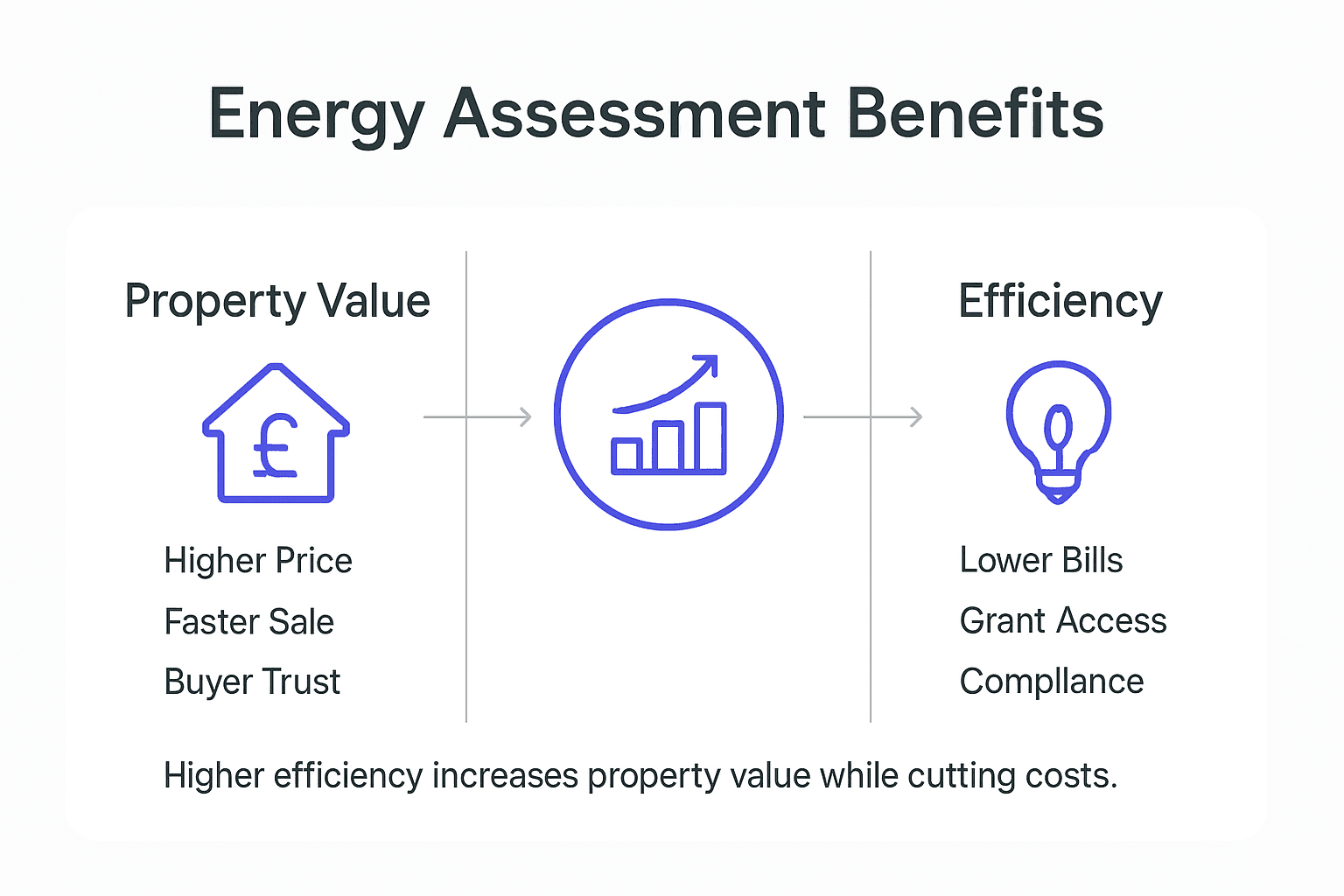
From a financial perspective, properties with higher energy efficiency ratings typically command premium market valuations. Energy Performance Certificates (EPCs) provide potential buyers and tenants with transparent insights into a building’s operational expenses, directly influencing purchasing decisions. Properties with superior energy ratings frequently attract lower utility costs, reduced maintenance expenses, and more attractive rental or sales pricing. Modern tenants and investors increasingly prioritise sustainable properties, recognising that energy-efficient buildings represent not just an environmental commitment but a sound long-term financial investment.
The sustainability impact of energy assessments extends well beyond individual property boundaries. By identifying precise energy consumption patterns and recommending targeted improvements, these assessments contribute significantly to London’s broader carbon reduction strategies. Implementing recommended energy efficiency measures can substantially decrease a property’s carbon footprint, supporting national and municipal climate action goals. These improvements range from simple interventions like enhanced insulation and draught-proofing to more comprehensive upgrades involving heating system modernisation and renewable energy integration.
This table summarises the key impacts of improved energy ratings for property owners:
| Impact Area | Positive Outcome | Example Benefit |
|---|---|---|
| Market Value | Higher property sale prices | Increased buyer interest |
| Running Costs | Reduced energy bills | Lower monthly utility expenses |
| Sustainability | Smaller carbon footprint | Supports climate action targets |
| Tenant Attraction | More appealing to tenants | Lower vacancy and better yields |
Pro tip: Prioritise energy efficiency improvements identified in your EPC assessment, as these can deliver compound benefits through reduced energy expenses, increased property value, and meaningful environmental contributions.
Ensure Your London Property Meets Energy Compliance with Expert Assessors
Understanding the vital role of energy assessors in evaluating your property’s energy efficiency is key to unlocking multiple benefits. Whether managing a residential or commercial building, challenges such as meeting legal requirements, obtaining accurate and impartial Energy Performance Certificates, and identifying cost-effective improvement recommendations are at the forefront. Complete EPC specialises in bridging these gaps by delivering professional, accredited assessments that guarantee compliance and clarity. Our qualified assessors provide detailed reports that not only comply with regulations but also help you reduce running costs and increase your property’s market value.
Don’t let uncertainty about energy certifications delay your property transactions or improvement plans. Take control now by choosing Complete EPC for reliable and competitively priced energy performance certificates. Discover how our comprehensive services for both domestic and non-domestic evaluations support your sustainability goals and legal obligations. Visit our EPC assessment process guide to learn more and book your efficient energy assessment today.
Frequently Asked Questions
What is the role of an energy assessor?
Energy assessors evaluate the energy performance of properties, conducting inspections to identify energy efficiency and potential improvements, ultimately generating Energy Performance Certificates (EPCs) that inform property owners about their building’s energy consumption.
How long does an energy assessment take?
Typically, an energy assessment for a standard residential property takes less than two hours to complete, providing a comprehensive evaluation without being excessively time-consuming.
How much does an energy assessment cost?
The cost of an energy assessment generally ranges between £75 and £100 for standard residential properties, making it a relatively affordable process for property owners.
What are the benefits of having an Energy Performance Certificate (EPC)?
An EPC provides valuable insights into a property’s energy efficiency, potentially improving its market value, reducing running costs, attracting tenants, and contributing to sustainability goals by identifying opportunities for energy efficiency improvements.
Recommended
- What Is an Accredited Energy Assessor in London?
- How to Choose an EPC Assessor for London Properties
- The Role of Energy Performance Certificates in London’s Property Market – Complete EPC
- Why Energy Efficiency Matters for London Properties
- Waarom energiebesparing essentieel is voor huiseigenaren – Holland Electric Duurzaam