

Many property owners confuse air permeability with ventilation, mistakenly believing that a leaky building provides healthy airflow. In reality, uncontrolled air leakage wastes energy, drives up heating costs, and undermines your Energy Performance Certificate rating. This guide clarifies what air permeability actually means for London landlords and property owners, explaining how to measure it, where leaks typically occur, and practical steps to improve airtightness. You’ll gain the knowledge needed to reduce energy bills, enhance tenant comfort, and meet regulatory standards.
Table of Contents
- What Is Air Permeability And Why Does It Matter?
- How Air Permeability Affects Your Property’s Energy Use And EPC Rating
- Common Causes Of Air Permeability In London Properties And How To Identify Them
- How To Measure And Improve Air Permeability For Better Energy Performance
- Get Expert Help To Improve Your Property’s Energy Efficiency
- Frequently Asked Questions
Key takeaways
| Point | Details |
|---|---|
| Air permeability measures building envelope leakage | It quantifies how easily air passes through walls, floors, and roofs, directly affecting heating costs and EPC ratings. |
| Testing identifies hidden energy waste | Professional air permeability testing reveals leakage points that visual inspections miss, enabling targeted improvements. |
| Common leaks occur at junctions and penetrations | Windows, doors, pipework entries, and structural joints are typical weak spots where air escapes. |
| Regulatory standards enforce airtightness limits | Building regulations set maximum air leakage rates that London properties must meet for compliance. |
| Sealing gaps delivers measurable savings | Simple draught-proofing and professional sealing reduce energy consumption and improve property value. |
What is air permeability and why does it matter?
Air permeability measures building fabric leakage, quantifying how easily air passes through your property’s envelope. Engineers express this as cubic metres per hour per square metre of envelope area at a standardised pressure difference, typically 50 Pascals. Think of Pascals as the force pushing air through gaps, similar to wind pressure on a breezy day.
Why does this technical measurement matter for your London property? Unwanted air leakage forces your heating system to work harder, replacing warm air that escapes through cracks and gaps. This invisible energy waste inflates bills and lowers your Energy Performance Certificate rating, potentially affecting rental income and property value.
Professional air tightness testing uses fan pressurisation to measure exactly how much air escapes. Testers seal your property’s intentional openings like vents and chimneys, then use powerful fans to create pressure differences. Air changes per hour at 50 Pascals reveals your building’s airtightness, with lower values indicating better performance.
Understanding these measurements helps you interpret test results and prioritise improvements. A property with high air permeability wastes energy continuously, even with excellent insulation. Conversely, good airtightness ensures your heating investment stays inside where it belongs.
Pro Tip: Request a copy of your air permeability test report and ask the assessor to mark leakage points on building plans, creating a clear roadmap for targeted improvements.
Key factors affecting air permeability include:
- Building age and construction methods
- Quality of original installation and subsequent maintenance
- Number and type of penetrations through the envelope
- Condition of seals around windows, doors, and service entries
- Junction detailing between different building elements
How air permeability affects your property’s energy use and EPC rating
Infiltration, the technical term for unintentional air leakage, directly impacts your energy consumption and running costs. Research shows infiltration accounts for approximately 6% of commercial building energy use, with residential properties often experiencing similar or higher percentages. Every cubic metre of warm air escaping requires heating replacement cold air entering through gaps.
Your EPC rating reflects this energy waste through calculations that factor in air permeability test results. Properties with poor airtightness receive lower ratings, potentially falling below the legal minimum for rental properties. London landlords face particular pressure as Minimum Energy Efficiency Standards require rental properties to achieve at least an E rating, with future regulations likely to tighten further.
Building codes set maximum air leakage limits that new constructions and major renovations must meet. These standards recognise that controlling air leakage delivers substantial energy savings and improved indoor comfort. Meeting these requirements isn’t just about compliance, it’s about creating properties that cost less to heat and appeal to energy-conscious tenants.
Beyond energy costs, air permeability affects indoor air quality and comfort. Uncontrolled leakage creates draughts, cold spots, and moisture problems. Tenants complain about rooms that never feel warm despite constant heating, often unaware that air leakage rather than inadequate heating causes the problem.
Improving airtightness delivers multiple benefits for thermal efficiency and EPC ratings. Lower air permeability means heating systems work more efficiently, indoor temperatures stabilise, and energy bills decrease. These improvements translate directly into better EPC ratings and increased property value.
Pro Tip: Calculate potential savings by comparing your current EPC rating with projected ratings after airtightness improvements, helping justify investment costs against long-term energy savings.
Consider these energy impacts:
- Heating costs increase roughly 1% for every 0.1 air changes per hour above optimal levels
- Draughts create perceived temperature drops of 2-3°C even when thermostats show adequate readings
- Moisture infiltration through gaps can damage insulation effectiveness
- Uncontrolled ventilation undermines mechanical ventilation system efficiency
Following proven energy rating improvement steps that prioritise airtightness delivers measurable results. Properties that address air permeability before adding insulation achieve better outcomes because sealed envelopes prevent insulation bypass, where air flows around rather than through insulated areas.
Common causes of air permeability in London properties and how to identify them
Most air leakage occurs at junctions and penetrations rather than through solid building elements. Gaps around pipework, wall-floor joints, electrical outlets, and window-door frames create pathways for air movement. Understanding where leaks typically occur helps you inspect your property systematically.
Windows and doors represent obvious potential weak points, particularly in older properties where seals have degraded. However, less visible leakage paths often contribute more significantly. Service penetrations where pipes, cables, and ducts pass through walls create gaps that builders sometimes inadequately seal. Loft hatches, particularly older designs without proper seals, allow significant air movement between living spaces and roof voids.
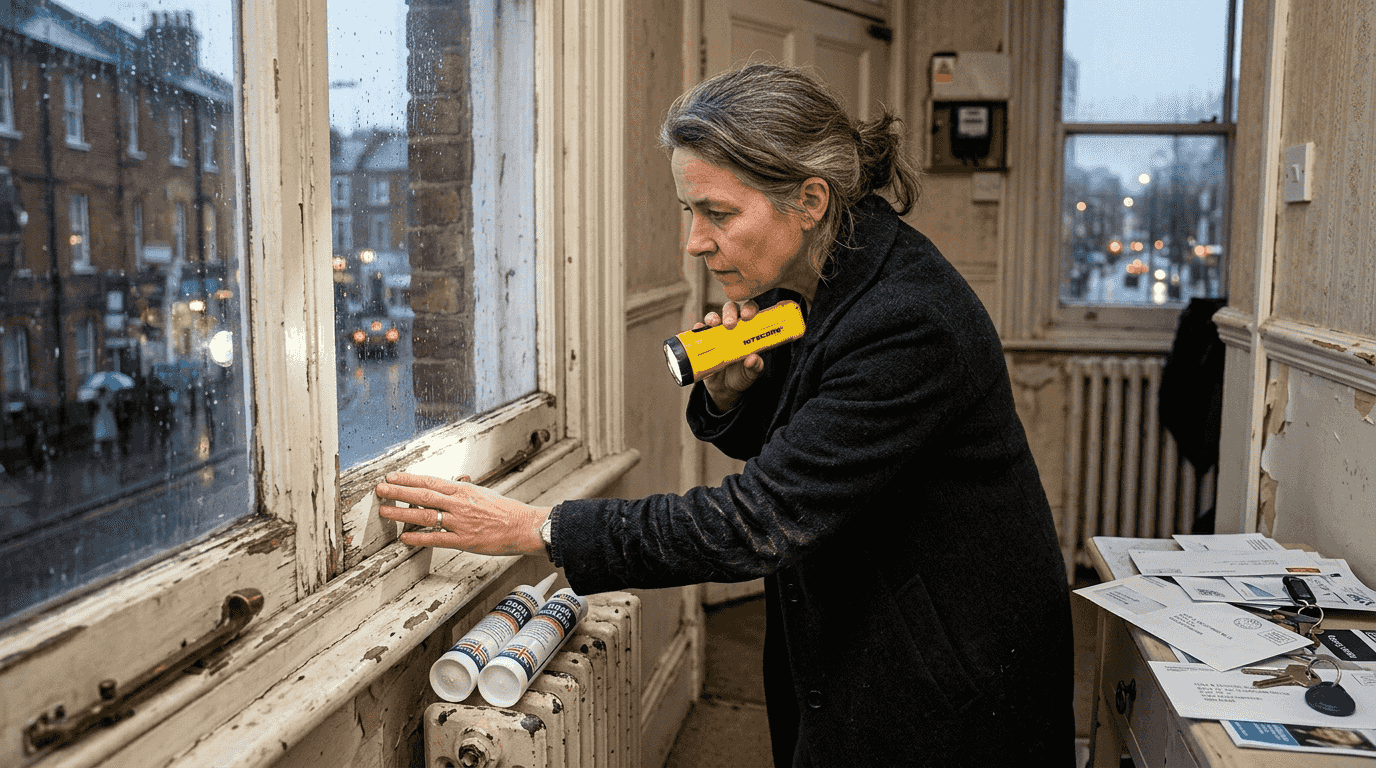
Structural joints between different building elements create natural weak points. The junction where walls meet floors, where extensions join original structures, and where different materials interface all require careful sealing during construction. Over time, building movement and material shrinkage can open gaps that weren’t present initially.
Ageing buildings face particular challenges as materials deteriorate and seals fail. Mortar joints develop cracks, window putty hardens and shrinks, and expansion foam around service entries degrades. London’s Victorian and Edwardian housing stock, whilst characterful, typically exhibits high air permeability without targeted improvements.
Identifying leakage points requires systematic inspection:
- Conduct visual surveys on windy days when draughts become more noticeable
- Check around all window and door frames for visible gaps or damaged seals
- Inspect loft spaces where roof meets walls, looking for daylight or insulation displacement
- Examine areas where pipes and cables enter the property from outside
- Review junction points between extensions and original structures
- Assess condition of airbricks and ventilation openings for oversized gaps
Professional air pressure testing provides definitive identification. Testers use thermal imaging cameras during pressurisation to visualise air leakage paths, revealing hidden problems that visual inspection misses. Smoke pencils, which produce visible smoke streams, show air movement direction and intensity at suspected leakage points.
Weather conditions influence how noticeable air permeability becomes. Winter winds and temperature differences between inside and outside create pressure differentials that drive air movement. Properties that feel comfortable in summer may reveal significant draughts during colder months when heating systems struggle to maintain temperature.
Implementing home energy efficiency improvements starts with understanding your property’s specific leakage patterns. Generic solutions rarely address actual problems effectively, whilst targeted interventions based on testing data deliver optimal results.
How to measure and improve air permeability for better energy performance
Professional air permeability testing uses calibrated equipment to measure leakage rates accurately. Testers install a temporary fan system in an external doorway, sealing the opening around the fan. They close all internal doors and windows, seal intentional ventilation openings, and run the fan to create a pressure difference of 50 Pascals between inside and outside.
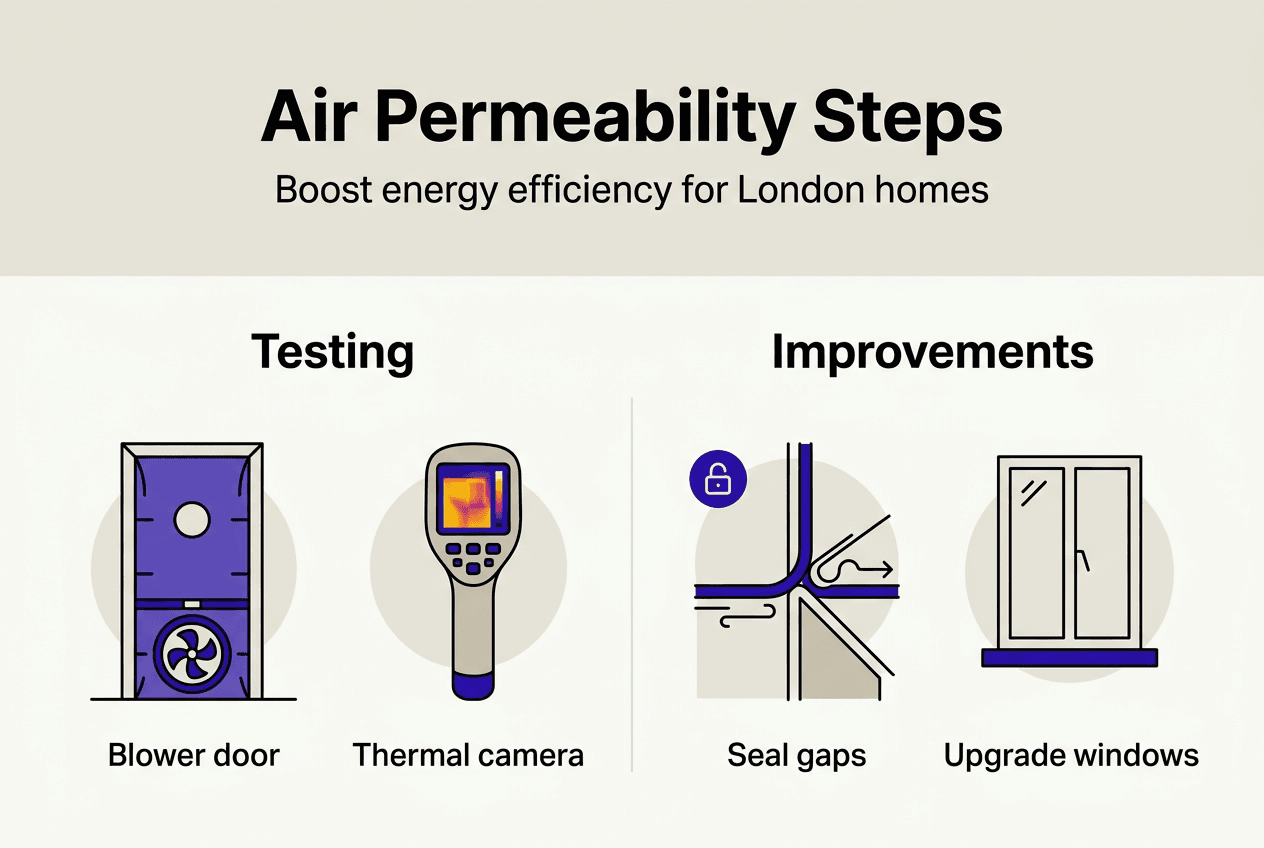
The fan flow rate required to maintain this pressure reveals total air leakage. Testers calculate air permeability by dividing leakage volume by envelope area, producing a result in cubic metres per hour per square metre. They also express results as air changes per hour, showing how many times the building’s entire air volume escapes and replaces hourly under test conditions.
Understanding Pascals prevents assessment errors and ensures meaningful comparisons. The 50 Pascal standard represents moderate wind conditions, allowing consistent measurement across different properties and weather conditions. Results at this pressure enable comparison with building regulations and industry benchmarks.
Interpreting test results requires context. New build properties should achieve 5 cubic metres per hour per square metre or better. Existing properties vary widely, with Victorian buildings sometimes exceeding 15 cubic metres per hour per square metre before improvements. Your EPC calculation uses actual test results when available, or assumes default values that typically penalise untested properties.
| Testing Method | Advantages | Limitations | Best Used For |
|---|---|---|---|
| Fan Pressurisation | Quantifies total leakage accurately | Requires specialist equipment | Compliance testing and benchmarking |
| Thermal Imaging | Visualises leakage locations | Needs temperature differential | Identifying specific problem areas |
| Smoke Testing | Shows air movement direction | Qualitative rather than quantitative | Pinpointing gaps during remediation |
Improvement measures depend on leakage locations and severity. Common interventions include:
- Applying sealant around window and door frames where gaps exist
- Installing brush or compression seals on doors and loft hatches
- Sealing service penetrations with expanding foam or specialised grommets
- Improving junction detailing with flexible sealants that accommodate movement
- Upgrading to double or triple glazed windows with integral seals
- Installing draught excluders on external doors
Pro Tip: Prioritise sealing loft hatches and service penetrations first, as these typically deliver the best return on investment with minimal disruption and cost.
Maintaining airtightness requires ongoing attention. Annual inspections catch deteriorating seals before they significantly impact performance. When undertaking any building work, ensure contractors understand airtightness requirements and use appropriate sealing techniques. Simple habits like closing doors and windows properly also preserve the benefits of improvement work.
Professional air tightness testing services provide baseline measurements, identify priority improvements, and verify intervention effectiveness. Post-improvement testing demonstrates actual performance gains and supports higher EPC ratings. These verified improvements add tangible value when marketing or refinancing your property.
Combining airtightness improvements with other energy rating enhancement strategies maximises overall performance. Sealed envelopes make insulation more effective, reduce heating system runtime, and improve occupant comfort. This integrated approach delivers better results than addressing individual measures in isolation.
Get expert help to improve your property’s energy efficiency
Navigating building regulations, testing requirements, and improvement options can feel overwhelming for busy landlords and property owners. Professional guidance ensures you meet compliance standards whilst maximising energy performance and property value. Complete EPC specialises in helping London property owners understand and improve their EPCs, providing clear advice tailored to your specific property and circumstances.
Our experienced assessors conduct thorough air tightness testing using calibrated equipment, delivering detailed reports that identify exactly where improvements will deliver the best returns. We explain results in plain language, helping you prioritise investments based on actual performance data rather than guesswork.
Taking action to reduce air permeability pays dividends through lower energy bills, improved tenant satisfaction, and enhanced property value. Following proven improvement strategies positions your London property competitively in an increasingly energy-conscious market whilst ensuring ongoing regulatory compliance.
Frequently asked questions
What is air permeability?
Air permeability quantifies how easily air passes through a building’s fabric, measured as cubic metres per hour per square metre of envelope area at 50 Pascals pressure. Lower values indicate better airtightness and improved energy efficiency. This measurement directly affects heating costs and EPC ratings.
Why is air permeability testing important for London landlords?
Testing ensures compliance with building regulations and Minimum Energy Efficiency Standards that govern rental properties. It identifies specific heat loss areas, enabling targeted improvements that reduce energy bills and enhance tenant comfort. Professional testing also supports higher EPC ratings, protecting rental income and property value in London’s competitive market where tenants increasingly prioritise energy efficient homes.
How can I reduce air permeability in my property?
Start by sealing visible gaps around windows, doors, and pipework using appropriate sealants and draught excluders. Install compression seals on loft hatches and external doors where gaps exist. Consider professional air permeability testing to identify hidden leakage paths, then implement targeted improvements based on test results. Following systematic energy efficiency improvements delivers measurable reductions in air leakage and energy consumption.
What air permeability value should my London property achieve?
New builds must meet current building regulation standards, typically 5 cubic metres per hour per square metre or better for residential properties. Existing properties vary widely, but achieving values below 10 represents good performance for older buildings. Your target depends on property age, construction type, and whether you’re pursuing specific EPC ratings for rental compliance.
Does improving air permeability affect ventilation and indoor air quality?
Reducing uncontrolled air leakage doesn’t compromise healthy ventilation when you maintain or install appropriate controlled ventilation systems. Modern building design separates airtightness from ventilation, using mechanical systems or trickle vents to provide fresh air where needed. This approach delivers better indoor air quality than relying on random gaps and draughts.
How much does professional air permeability testing cost in London?
Testing costs vary based on property size and complexity, typically ranging from £200 to £500 for standard residential properties. This investment provides definitive performance data that guides improvement decisions and supports EPC ratings. Many landlords find testing pays for itself through targeted improvements that deliver better returns than generic energy efficiency measures.