
TL;DR:
- A domestic energy assessor inspects homes, collects detailed on-site data, and produces legally valid EPCs with improvement recommendations.
- The role requires accredited training, certification scheme membership, and the collection of evidenced information to ensure accurate assessments.
- Upcoming changes to assessment methodologies and capacity constraints make early booking and thorough preparation crucial for homeowners and landlords.
A domestic energy assessor (DEA) is a certified professional who visits residential properties to evaluate their energy efficiency and produce an Energy Performance Certificate (EPC) rated on a scale from A to G. The EPC includes specific improvement recommendations that help homeowners and landlords reduce energy costs and meet legal requirements. For London property owners, understanding what a domestic energy assessor does is directly relevant to compliance with private renting regulations, property transactions, and planning cost-effective energy upgrades. This guide explains the assessor’s role, the energy assessment process, the qualifications required, and what changes are coming that will affect how assessments are carried out.
What does a domestic energy assessor do on a property visit?
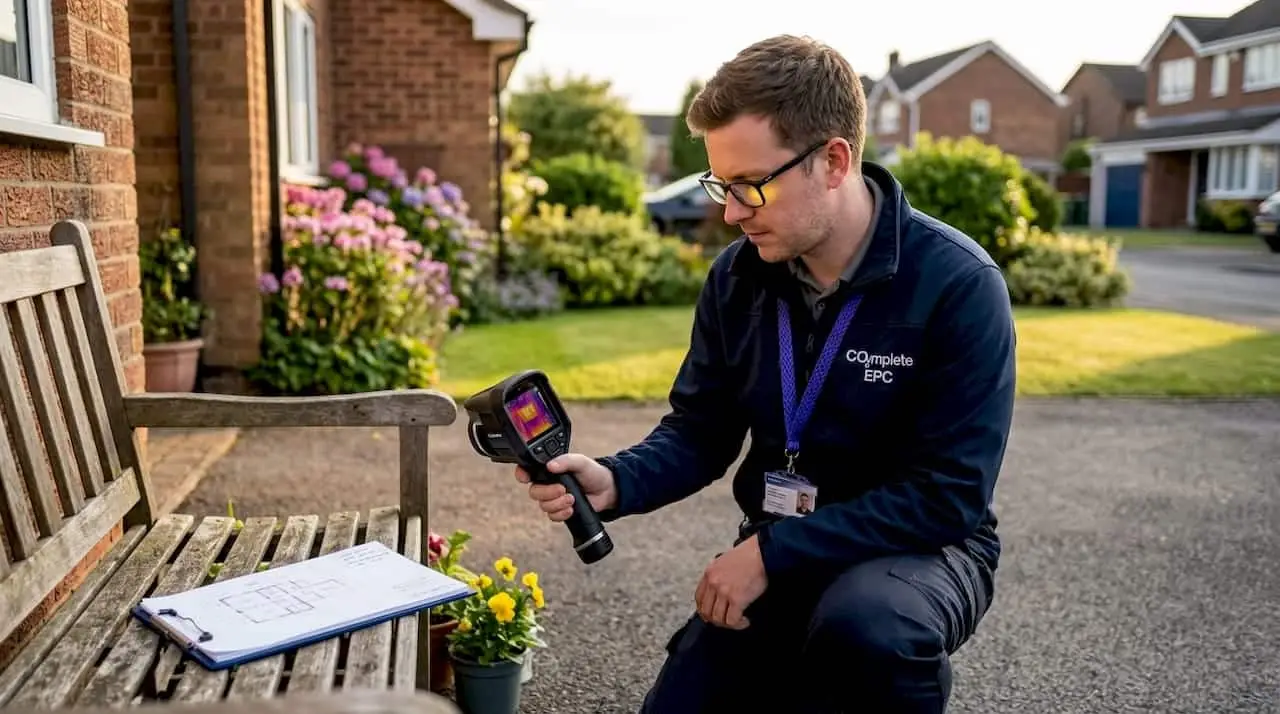
A domestic energy assessor collects on-site information about a dwelling and produces an EPC with an A-to-G rating and improvement recommendations. The assessor does not simply walk through a property and make notes. The visit follows a structured process designed to capture consistent, reliable data across every property type, from Victorian terraces in Hackney to modern flats in Canary Wharf.
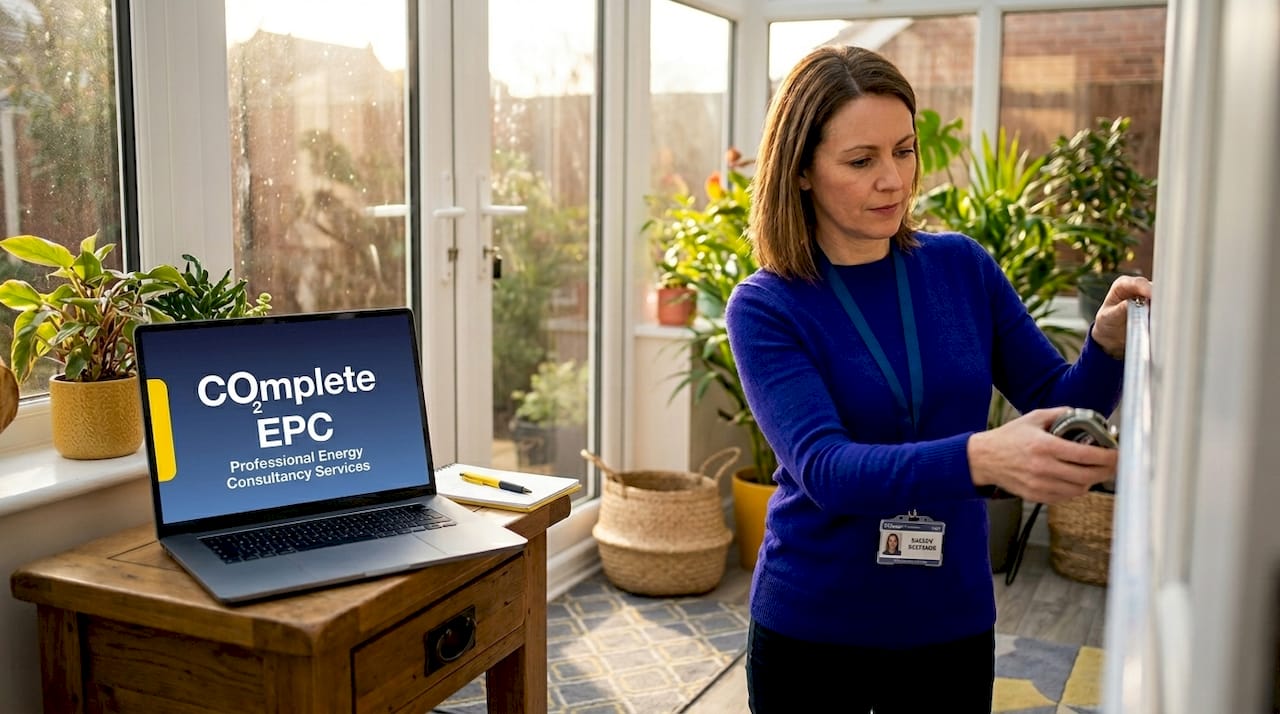
The inspection covers the building’s fabric and key energy systems. The assessor examines wall construction and insulation, roof and floor insulation, the boiler and heating controls, window glazing types, lighting, and any renewable energy systems such as solar panels. Each element is measured or recorded using a defined methodology, not estimated or guessed. Physical observation of walls, insulation, heating systems, windows, and lighting is mandatory. Desktop or remote assessments without an on-site inspection are not legally valid under English and Welsh regulations.
Once data collection is complete, the assessor inputs all findings into accredited RdSAP software, which standardises EPC production and ensures compliance and consistency across all assessors. The software calculates the property’s energy rating and generates the improvement recommendations that appear on the certificate. The final EPC is then lodged on the national register, making it legally valid and accessible to buyers, tenants, and agents.
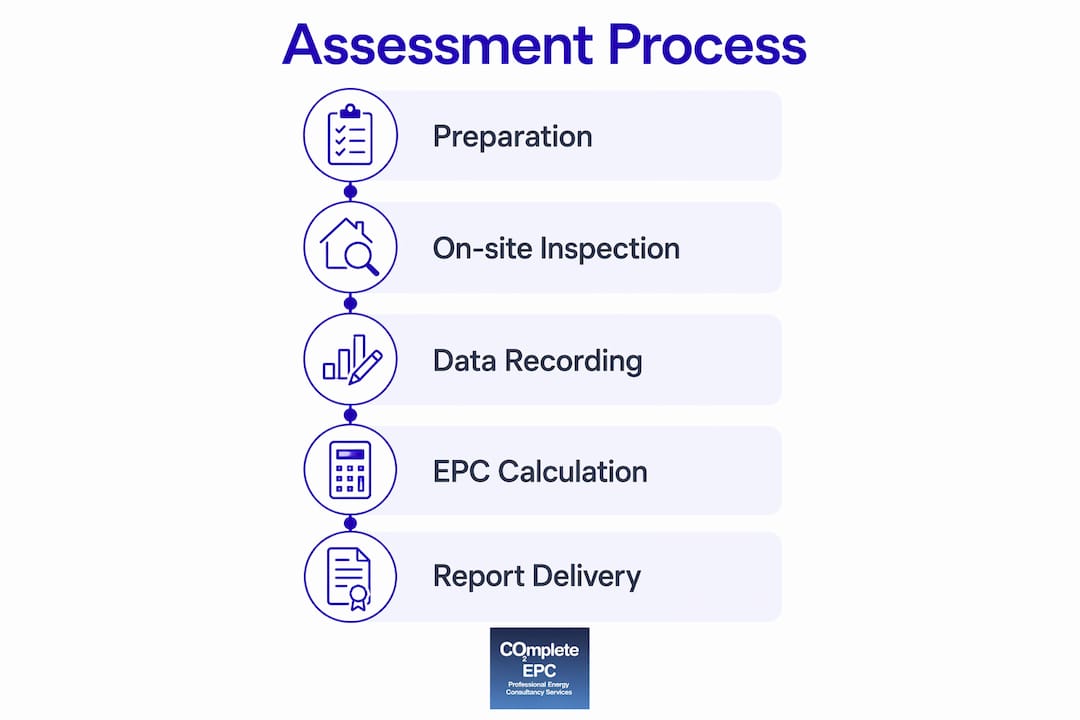
Here is the typical sequence of a domestic energy inspection:
- Pre-visit preparation. The assessor reviews property details and confirms access requirements.
- External inspection. Wall construction type, roof structure, and any visible insulation or renewable installations are recorded.
- Internal room-by-room survey. Each room is assessed for floor area, ceiling height, window type, and heating provision.
- Heating system review. The boiler make, model, age, and controls are documented.
- Lighting and renewables check. The proportion of low-energy lighting and any solar or heat pump systems are noted.
- Data entry and EPC generation. All collected data is entered into RdSAP software to produce the certificate.
Pro Tip: Ask your assessor to confirm which elements they have recorded as evidenced versus assumed. This distinction directly affects your rating and your upgrade planning.
What qualifications do domestic energy assessors need?
Becoming a Domestic Energy Assessor requires completing an accredited training course, passing a formal examination, and joining a government-approved certification scheme. The qualification is specifically designed to train assessors in the RdSAP methodology, property construction types, and the legal requirements surrounding EPC production. Training is available through several approved awarding bodies, and the course typically combines online learning with practical assessment work.
Certification schemes audit assessors, require continuing professional development (CPD), and provide access to the EPC lodgement system. Without membership of an approved scheme, an assessor cannot legally lodge an EPC on the national register. This means any certificate they produce has no legal standing for property transactions or rental compliance. The approved schemes in England and Wales include organisations such as Elmhurst Energy, Stroma Certification, and ECMK, each of which maintains quality standards and handles complaints.
In Scotland, the framework operates differently. The Scottish EPC Accreditation Scheme requires assessors to be fit and proper persons with verified competence, regulated by Approved Organisations to ensure consistent and accurate assessments. Membership and registration systems enforce quality and compliance across the Scottish market.
Key requirements for a qualified and legally compliant domestic energy assessor include:
- Completion of an accredited DEA training programme covering RdSAP methodology and property construction
- Passing a formal examination set by an approved awarding body
- Membership of a government-approved certification scheme such as Elmhurst Energy or Stroma Certification
- Ongoing CPD to maintain scheme membership and stay current with regulation changes
- A valid Disclosure and Barring Service (DBS) check, as assessors access occupied residential properties
- Professional indemnity insurance, required by most certification schemes
How do EPC assessments benefit homeowners and landlords?
The EPC produced by a domestic energy assessor is more than a legal formality. It is a practical tool that tells you exactly where your property loses energy and which upgrades will deliver the greatest improvement in rating and running costs. For London landlords, this matters directly. Private rented properties in England must currently meet a minimum EPC rating of E to be legally let, and the government has proposed raising this to C by 2030 for new tenancies.
Understanding the evidenced versus assumed data in your EPC is the most underused advantage available to landlords. When an assessor cannot verify an element, such as inaccessible loft insulation or an unknown boiler control type, the software applies a default assumption that is typically less favourable than the actual situation. This can reduce your rating without reflecting the true condition of your property. Knowing which items were assumed gives you a clear list of what to evidence at a reassessment to improve your rating without spending money on physical upgrades.
The benefits of an accurate energy assessment include:
- A clear A-to-G rating that informs buyers and tenants about expected energy costs
- Specific, costed improvement recommendations prioritised by impact
- Compliance evidence for rental transactions and property sales in London
- A baseline for planning retrofit works such as insulation, heat pumps, or solar panels
- Potential to increase property value by improving the EPC band
Pro Tip: If your EPC rating is borderline between two bands, request a copy of the assessor’s data report. Correcting a single assumed element, such as confirming cavity wall insulation with a guarantee certificate, can shift your rating upward without any physical work.
What challenges face domestic energy assessors going forward?
The most significant change on the horizon for the sector is the planned transition from RdSAP to the Home Energy Model (HEM), expected in the second half of 2026 or 2027. HEM uses separate metrics for fabric performance, heating systems, smart readiness, and energy costs, making it a considerably more detailed methodology than RdSAP. This means assessors will need to collect more data per property and spend longer on each visit.
The transition also requires comprehensive retraining for every practising assessor, which may limit market capacity and delay assessments if demand surges. For London landlords facing a 2030 compliance deadline, this creates a real risk of booking backlogs if action is left too late. Properties assessed under RdSAP may also need reassessment under HEM, particularly where ratings are close to the minimum threshold.
| Challenge | Impact on landlords and homeowners |
|---|---|
| Transition from RdSAP to HEM | Existing EPCs may need reassessment under the new methodology |
| Assessor retraining requirements | Reduced assessor availability during the transition period |
| Longer assessment times under HEM | Higher assessment costs and longer booking lead times |
| Potential demand surge before 2030 | Risk of booking delays for landlords seeking compliance |
| More detailed data collection | Greater preparation required from property owners before visits |
The practical advice for London landlords is to act before the transition creates capacity constraints. Booking an assessment now under RdSAP gives you a valid certificate and a clear picture of where your property stands, with time to plan and fund any necessary improvements before the 2030 deadline.
How to prepare your property for an energy assessment
Preparation directly affects the accuracy of your EPC. Providing access to lofts, boilers, and relevant records reduces the assessor’s reliance on default assumptions and produces a more precise rating. A well-prepared property visit is more likely to result in a certificate that accurately reflects the property’s actual energy performance.
Before your assessor arrives, work through this checklist:
- Clear access to the loft hatch. The assessor needs to measure insulation depth. A blocked or inaccessible hatch means the insulation will be assumed rather than measured.
- Locate your boiler documentation. The make, model, and installation date affect the efficiency rating applied. If you have the installation certificate or service records, have them ready.
- Gather insulation guarantees or installation certificates. Cavity wall or solid wall insulation that cannot be visually confirmed will be assumed absent unless you can provide evidence.
- Confirm heating controls are accessible. Thermostats, programmer units, and thermostatic radiator valves (TRVs) all affect the rating. Point them out to the assessor.
- Provide details of any renewable systems. Solar photovoltaic panels, solar thermal systems, or heat pumps should be documented with installation records where possible.
- Inform tenants in advance. For occupied rental properties, tenants need to know the assessor is coming and why access to all rooms is required.
The energy assessment process for London properties follows a defined sequence, and your preparation at each stage directly influences the outcome.
Key takeaways
A domestic energy assessor’s role is defined by structured on-site inspection, accredited software, and legally valid EPC production. Preparation and understanding of the assessment process are the most direct ways to improve your rating and compliance position.
| Point | Details |
|---|---|
| Structured on-site inspection | Assessors follow a defined process covering fabric, heating, insulation, windows, and lighting. |
| Legal validity requires physical visit | Remote or desktop assessments are not legally valid under English and Welsh regulations. |
| Accreditation is non-negotiable | Only assessors registered with an approved scheme can lodge a legally valid EPC. |
| Evidenced data beats assumptions | Providing documentation for insulation and heating improves rating accuracy without physical upgrades. |
| HEM transition requires early action | London landlords should book assessments now to avoid capacity delays ahead of the 2030 deadline. |
Why assessor professionalism matters more than most landlords realise
Working in the London property market, I have seen the full range of EPC outcomes, from certificates that genuinely reflect a property’s performance to ones that underrate it simply because the assessor could not access the loft or the landlord had no paperwork for the cavity wall insulation installed a decade ago. The gap between an accurate EPC and an assumed one is not always about the property. It is often about preparation and the quality of the assessor conducting the visit.
What concerns me about the coming HEM transition is not the methodology itself. HEM is a more honest and detailed way to assess energy performance, and that is a good thing for the market. What concerns me is the capacity crunch that retraining will create. London has a high density of rental properties, many of which will need reassessment or significant upgrades to reach a C rating by 2030. If landlords wait until 2028 or 2029 to act, they will find booking slots scarce and costs higher. The landlords I would advise to act now are those with properties currently rated D or E, particularly older Victorian or Edwardian stock where assumptions about insulation are most likely to drag the rating down.
The importance of energy assessments is not just regulatory. A well-evidenced EPC gives you a genuine roadmap for improving your property’s value and reducing your tenants’ bills. That is worth investing in properly.
— Danny
How Completeepc can help with your London energy assessment
Completeepc provides professional domestic energy assessments across London, carried out by fully qualified and accredited assessors with extensive experience across all property types. Whether you are a landlord preparing for compliance, a homeowner planning a sale, or a property owner seeking clarity on your energy performance, Completeepc delivers accurate EPCs with fast turnaround and the UK’s most competitive pricing. Booking is straightforward, and you receive your certificate promptly after the visit. For a clear, step-by-step overview of what to expect, visit the EPC assessment guide for London properties. If you want to understand how an improved EPC rating can boost your property value and support compliance in 2026 and beyond, Completeepc’s team is ready to help.
FAQ
What does a domestic energy assessor do during a visit?
A domestic energy assessor inspects a property’s walls, insulation, heating system, windows, lighting, and any renewable energy installations, then enters all data into accredited RdSAP software to produce a legally valid EPC. The visit typically takes 30 to 60 minutes for a standard two or three bedroom home.
How long does a domestic energy assessment take?
On-site data collection takes 30 to 60 minutes for a standard home, with larger or more complex properties taking longer. The assessor then completes data entry and lodges the EPC after the visit.
Do I need a qualified assessor to get a valid EPC?
Yes. Only assessors who are members of a government-approved certification scheme can produce a legally valid EPC. Certificates issued by unaccredited individuals cannot be lodged on the national register and have no legal standing.
What is the difference between RdSAP and the Home Energy Model?
RdSAP is the current accredited methodology used to calculate EPC ratings, while the Home Energy Model (HEM) is a more detailed replacement planned for introduction in 2026 or 2027. HEM assesses fabric, heating, smart readiness, and energy costs separately, requiring more data collection and assessor retraining.
Can I improve my EPC rating without doing building work?
Yes, in some cases. If your assessor recorded certain features as assumed rather than evidenced, providing documentation such as insulation installation certificates or boiler records at a reassessment can improve your rating without any physical changes to the property.