

TL;DR:
- A home energy assessment provides a comprehensive evaluation of your property’s energy use, safety issues, and inefficiencies using professional diagnostic tools. It results in tailored, priority-based recommendations that can reduce energy bills, improve comfort, and enhance safety by identifying hidden problems like carbon monoxide leaks. Acting on these findings with a phased approach ensures optimal upgrades and long-term energy performance improvements.
A home energy assessment is a detailed evaluation of your property’s energy consumption, inefficiencies, comfort, and safety issues, also referred to in the industry as a home energy audit. It is the recognised starting point before making any energy improvements or adding renewables to your home. Professionals use diagnostic tools including blower doors, infrared cameras, and carbon monoxide detectors to build an accurate picture of where your property loses energy and where safety risks may exist. For homeowners and renters in the UK, understanding this process is the difference between spending money on the right upgrades and guessing.
What is a home energy assessment and what does it cover?
A home energy assessment provides a comprehensive overview of your home’s energy use, identifying inefficiencies, comfort problems, and safety priorities in a single visit. It covers the whole property, from the loft insulation and cavity walls to the boiler, windows, and appliances. The goal is to give you a precise, evidence-based picture rather than a general impression.
The assessment covers insulation levels, heating and cooling systems, hot water provision, lighting, and the airtightness of the building envelope. It also flags safety concerns such as carbon monoxide risks and poor ventilation, which can affect indoor air quality. This breadth is what separates a professional energy efficiency evaluation from a simple utility bill review.
Critically, the findings are not generic. Recommendations depend on your home’s specific climate zone, construction type, and how your household uses energy. A Victorian terrace in London will receive a very different set of priorities from a 1970s semi-detached in Manchester.
What happens during a professional home energy assessment?
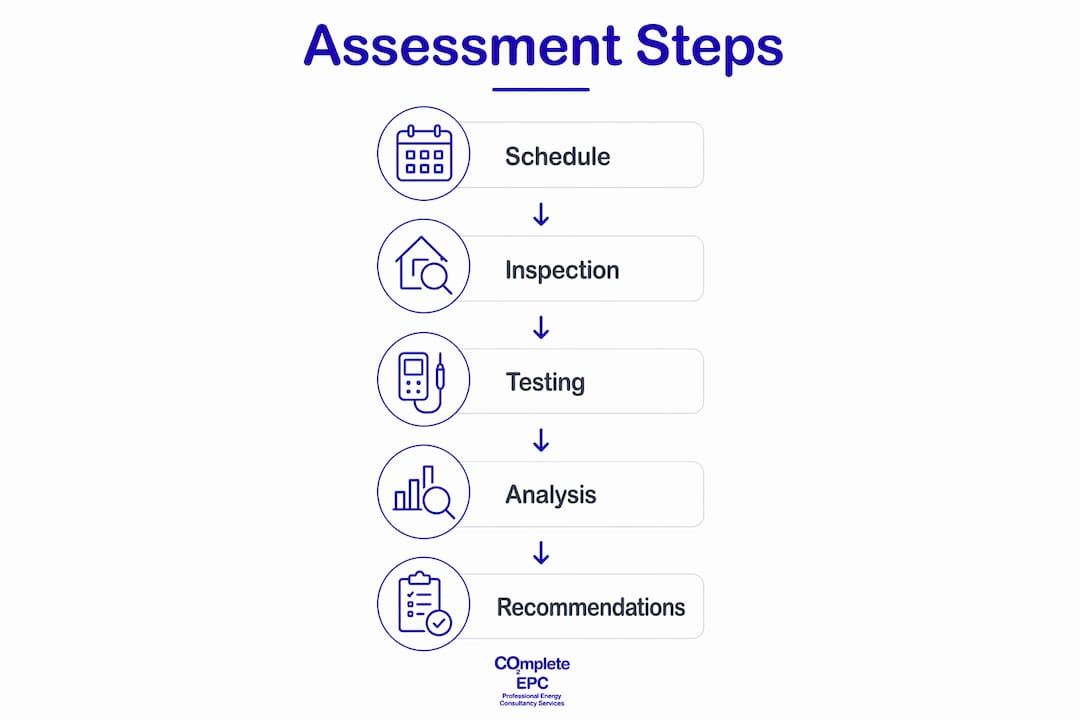
A professional on-site audit typically takes between 2 and 4 hours and follows a structured process from arrival to final report. The assessor works through the property room by room, combining visual inspection with specialist equipment. Here is what you can expect:
- Environmental monitors installed first. Devices measuring CO, CO2, temperature, humidity, and particulate levels are placed early in the visit. This ensures any safety hazards are identified before efficiency work begins, directly influencing which fixes are prioritised.
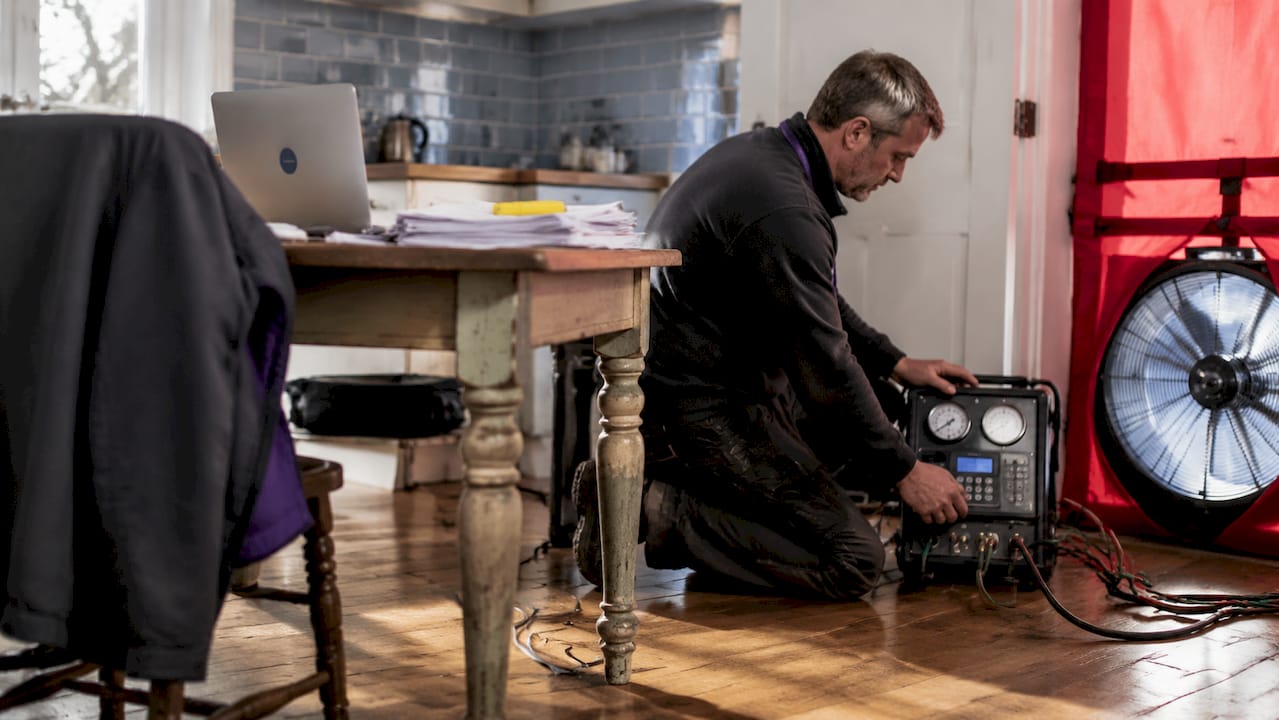
- Blower door test. A large fan is fitted to an external door frame to pressurise or depressurise the building. Blower-door testing quantifies air infiltration rates precisely, going far beyond what a draught you can feel with your hand would reveal.
- Infrared thermal imaging. An infrared camera scans walls, ceilings, and floors to detect heat loss and cold spots caused by missing or degraded insulation. These thermal images make invisible problems visible in seconds.
- CO and gas leak detection. Specialist detectors check boilers, gas appliances, and flues for dangerous leaks that standard visual checks would miss entirely.
- Moisture meter readings. Damp and moisture in walls or floors affect both energy performance and structural integrity. Moisture meters give the assessor hard data rather than guesswork.
- Smoke pens. These are used around window frames, skirting boards, and service penetrations to trace air movement and confirm where draughts are entering.
Pro Tip: Ask your assessor to walk you through the blower door results in real time. Seeing the pressure readings alongside the thermal images gives you a much clearer understanding of where your biggest heat losses are occurring.
The assessor then collects data on your heating system, hot water cylinder, appliances, and lighting. Safety diagnostics like carbon monoxide monitoring are treated as critical early steps because unsafe indoor air conditions change which fixes should be implemented first. An assessor who skips this step is not conducting a thorough audit.
How does a DIY home energy assessment compare to a professional one?
DIY home energy assessments are less comprehensive but useful for identifying obvious problem areas and deciding whether a professional audit is warranted. The table below summarises the key differences.
| Factor | DIY assessment | Professional assessment |
|---|---|---|
| Cost | Free to low cost | Paid, though free schemes may apply |
| Tools available | Visual checks, draught detection, utility bills | Blower doors, infrared cameras, CO detectors |
| Depth of analysis | Surface level | Quantified, data-driven |
| Safety diagnostics | Not possible | Carbon monoxide, air quality monitoring |
| Report quality | Self-noted observations | Formal prioritised recommendations |
| Time required | 1 to 2 hours | 2 to 4 hours on site |
A DIY check is a reasonable first step. You can review your energy bills for seasonal spikes, check loft insulation depth with a ruler, feel for draughts around window frames, and inspect radiators for cold spots that suggest trapped air. These observations cost nothing and can flag areas worth investigating further.
The limitations become significant when the problems are hidden. Missing wall insulation, a cracked flue liner, or a slow carbon monoxide leak are not detectable without specialist equipment. Professionals stress that DIY checks provide only a partial picture, and acting on incomplete information can lead to spending money on the wrong upgrades.
- When to choose a professional assessment:
- You are planning significant home improvements or installing renewables such as solar panels or a heat pump
- Your energy bills are high but you cannot identify the cause
- You are buying or selling a property and want to understand its true energy performance
- You suspect damp, poor ventilation, or a safety issue
Many homeowners qualify for free or reduced-cost assessments through certified contractors and local authority programmes. Checking your eligibility before paying full price is worth doing.
What recommendations come from a home energy assessment?
After the on-site visit, the assessor analyses all collected data using industry-approved software to produce a tailored, prioritised report. The software models your home’s energy performance and calculates the likely impact of each potential improvement. This transforms raw readings into a clear action plan.
Typical recommendations follow a logical sequence based on impact and cost:
- Air sealing. Leakage mapping from the blower door test identifies exactly where to seal. Air sealing is almost always the highest-impact, lowest-cost first step because it reduces heat loss and improves every other upgrade’s effectiveness.
- Insulation upgrades. Loft, wall, and floor insulation are assessed against current standards. Adding or improving insulation addresses the thermal losses confirmed by infrared imaging.
- Heating system improvements. An ageing boiler or poorly balanced radiator circuit is flagged for replacement or adjustment. The report will specify whether a like-for-like replacement or a switch to a heat pump is appropriate for your property.
- Ventilation and indoor air quality. Where air sealing tightens the building envelope, the report will recommend controlled ventilation such as a mechanical ventilation with heat recovery (MVHR) system to maintain air quality without losing heat.
- Appliance and lighting upgrades. Older appliances and halogen lighting are identified as secondary savings opportunities once the building fabric is addressed.
Pro Tip: Do not skip straight to the most expensive upgrade on the list. Assessors consistently find that air sealing and insulation deliver better returns per pound spent than new heating equipment in a leaky building.
The phased approach matters because recommendations vary significantly by home. A flat in a converted Edwardian building has different constraints from a new-build detached house. The software accounts for these variables, which is why the report you receive is specific to your property rather than a generic checklist.
What are the benefits of a home energy assessment?
Acting on a professional audit’s findings can reduce energy bills by 5% to 30%. That range reflects the variation in starting conditions across different properties, but even the lower end represents a meaningful annual saving. The benefits extend well beyond the energy bill.
- Lower running costs. Targeted improvements identified through the assessment reduce waste at source rather than applying generic fixes.
- Improved comfort. Eliminating cold spots, draughts, and uneven temperatures makes the home noticeably more comfortable throughout the year, not just in winter.
- Better indoor air quality. Safety diagnostics identify carbon monoxide risks, excess humidity, and poor ventilation. Addressing these protects occupant health directly.
- Regulatory compliance. In the UK, landlords must meet minimum energy efficiency standards. An assessment identifies what is needed to comply and prepares the property for an Energy Performance Certificate (EPC) rating review.
- Informed investment decisions. The report tells you which upgrades to prioritise before installing solar panels, a heat pump, or an EV charger, preventing costly sequencing errors.
- Long-term property value. Properties with higher EPC ratings attract stronger buyer and tenant interest. An assessment gives you the roadmap to improve that rating systematically.
The safety dimension is frequently underestimated. Carbon monoxide is undetectable without specialist equipment, and a professional audit is one of the few routine opportunities to check for it comprehensively across all gas appliances and flues.
Key takeaways
A home energy assessment is the most reliable method for identifying exactly where your property wastes energy, which safety risks exist, and which improvements will deliver the greatest return.
| Point | Details |
|---|---|
| Definition and scope | A home energy audit covers the whole property, from insulation and heating to safety hazards and air quality. |
| Professional tools matter | Blower doors, infrared cameras, and CO detectors reveal problems that visual checks and DIY methods cannot detect. |
| Tailored recommendations | Software analysis produces a prioritised, home-specific action plan rather than generic advice. |
| Financial and safety benefits | Acting on findings can reduce energy bills by 5% to 30% and identify carbon monoxide risks before they cause harm. |
| EPC and compliance link | Assessment findings directly inform EPC ratings and help landlords and homeowners meet UK energy efficiency regulations. |
Why safety should come before savings
I have seen a pattern repeat itself across many energy consultations. Homeowners arrive focused on insulation and boiler upgrades, which is understandable given the cost of energy. But the most important finding from a professional audit is often nothing to do with heat loss. It is a carbon monoxide reading from a poorly maintained flue, or a ventilation problem that has been quietly degrading indoor air quality for years.
The industry standard of deploying environmental monitors at the start of an audit exists for good reason. Safety findings change the sequence of everything else. You do not seal a building tighter before fixing a combustion appliance that is leaking CO. That sequencing is not obvious to most homeowners, and it is one of the clearest arguments for choosing a professional assessment over a DIY approach.
I also see too many people rush to expensive upgrades before addressing the building fabric. A heat pump installed in a draughty, poorly insulated house will underperform and cost more to run than the old boiler it replaced. The assessment report tells you the correct order. Following it is not optional if you want the savings to materialise.
The other misconception worth addressing is that assessments are only for older properties. New builds can have significant air leakage from poor workmanship, and even recently built homes benefit from a baseline evaluation before adding renewables. The data is always more useful than the assumption.
— Danny
How Completeepc can support your energy assessment journey
If your assessment findings point to the need for an updated energy rating or you are preparing a property for sale, let, or compliance review, Completeepc provides professional EPC assessments for domestic and commercial properties across London. Understanding your property’s current EPC rating is a direct extension of the energy assessment process, and it is a legal requirement for most property transactions and lettings. You can read the full EPC assessment process guide to understand exactly what is involved, or explore the complete EPC guide for London properties to see how ratings, compliance, and improvements connect. Completeepc’s qualified assessors bring the same data-driven approach to certification that a thorough home energy audit brings to improvement planning.
FAQ
What is the difference between a home energy assessment and an EPC?
A home energy assessment is a detailed diagnostic process covering efficiency, safety, and comfort across the whole property. An EPC is a formal certificate that rates a property’s energy efficiency on a scale from A to G and is a legal requirement for most property sales and lettings in the UK.
How long does a professional home energy audit take?
A professional on-site audit typically takes 2 to 4 hours, depending on the size and complexity of the property. The assessor uses this time to conduct equipment tests, room-by-room inspections, and safety monitoring.
Can I do a home energy assessment myself?
You can carry out a basic self-check by reviewing energy bills, inspecting insulation, and feeling for draughts. However, DIY assessments cannot replicate the diagnostic depth of professional tools like blower doors and infrared cameras, and they cannot detect safety hazards such as carbon monoxide leaks.
How much does a professional home energy assessment cost?
Costs vary by provider and property size, but many homeowners qualify for free or subsidised assessments through local authority schemes or certified contractor programmes. Checking eligibility before booking a paid assessment is always worth doing.
What improvements are most commonly recommended after an assessment?
The most frequently recommended improvements are air sealing, insulation upgrades, and heating system optimisation. Audit data analysed through specialist software produces a prioritised list specific to each property, so the exact recommendations will vary based on your home’s construction, age, and current condition.