

Over 1.6 million Energy Performance Certificates were issued to british properties in a single year, highlighting how energy regulations now touch almost every corner of the market. Staying on top of these rules is crucial for anyone who owns, lets, or manages buildings across the UK. This guide breaks down what every property owner needs to know, from the purpose of energy ratings to the latest legal updates and financial consequences.
Table of Contents
- Defining Energy Performance Regulations UK
- Types of Properties and EPC Requirements
- Legal Framework and Recent Updates
- Compliance, Exemptions, and Penalties
- Financial Implications and Market Impact
Key Takeaways
| Point | Details |
|---|---|
| Energy Performance Certificates (EPC) | EPCs are mandatory for all properties in the UK, providing a crucial assessment of energy efficiency and informing potential improvements. |
| Upcoming Regulatory Changes | Changes in regulations may impact rental properties, making it essential for landlords to stay informed about energy efficiency requirements. |
| Legal Compliance | Property owners must ensure compliance with the Energy Act 2023 to avoid substantial penalties, including fines for failing to obtain valid EPCs. |
| Financial Implications | Properties with lower EPC ratings risk significant devaluation, making energy efficiency improvements beneficial for marketability and investment value. |
Defining Energy Performance Regulations UK
Energy Performance Regulations in the United Kingdom represent a critical framework designed to assess and improve building energy efficiency across residential and commercial properties. According to the gov.uk guidelines, these regulations mandate Energy Performance Certificates (EPCs) as a standardised method to evaluate and communicate a building’s energy consumption and carbon emissions.
The legal foundation for these regulations is established through comprehensive legislation, with the Energy Act 2023 serving as a pivotal document that outlines specific requirements for energy efficiency standards. This legislation encompasses multiple aspects of energy performance, including:
- Carbon dioxide transport and storage protocols
- Hydrogen production standards
- Building energy efficiency requirements
- Compliance mechanisms for property owners
At its core, these regulations aim to drive meaningful change in how buildings consume and manage energy. Property owners must obtain an EPC that provides a comprehensive rating from A (most efficient) to G (least efficient), highlighting potential improvements and estimated energy costs. By mandating these assessments, the UK government creates a structured approach to reducing carbon emissions and promoting sustainable infrastructure.
Navigating these regulations can be complex, which is why understanding the nuances is crucial. Learn more about EPC legal requirements for UK property owners to ensure you remain compliant and contribute to the nation’s broader environmental goals.
Types of Properties and EPC Requirements
Understanding the nuanced EPC requirements across different property types is crucial for compliance. According to gov.uk, Energy Performance Certificates are mandatory for both domestic and non-domestic properties in England and Wales, with specific requirements varying based on property usage and characteristics.
The primary categories of properties subject to EPC regulations include:
-
Residential Properties
- Single-family homes
- Apartments and flats
- Student accommodations
- Social housing
-
Commercial Properties
- Office buildings
- Retail spaces
- Warehouses
- Industrial facilities
- Hospitality venues
Particularly for rental properties, the landscape is evolving rapidly.
 Homemove reports that upcoming changes could potentially impact over half of rental properties in the UK, emphasizing the critical need for property owners to stay informed and proactive about their energy efficiency ratings.
For landlords and property managers, understanding these requirements is not just about legal compliance, but also about contributing to broader environmental sustainability goals. Learn more about EPC requirements for rental properties to ensure you’re fully prepared for the latest regulatory changes.
Legal Framework and Recent Updates
The legal landscape for energy performance regulations in the UK continues to evolve with significant legislative developments aimed at addressing climate change and promoting sustainable energy practices. According to Wikipedia, the Energy Act 2023 represents a pivotal piece of legislation that introduces comprehensive provisions for energy performance, including critical governance mechanisms for gas and electricity industry codes.
Key legislative milestones in the energy regulation framework include:
- Energy Act 2023: Establishing comprehensive energy performance standards
- Provisions for carbon dioxide transport and storage licensing
- Enhanced governance of industry energy codes
- Regulatory mechanisms for clean energy development
Moreover, Wikipedia highlights the Great British Energy Act 2025, which takes an innovative approach by establishing a publicly owned energy company. This groundbreaking legislation aims to accelerate clean energy development and substantially support the UK’s ambitious net-zero commitments.
Navigating these complex regulatory changes requires a proactive approach. Learn more about comprehensive EPC legal compliance in the UK to ensure your property meets the latest energy performance standards and contributes to the nation’s sustainable energy goals.
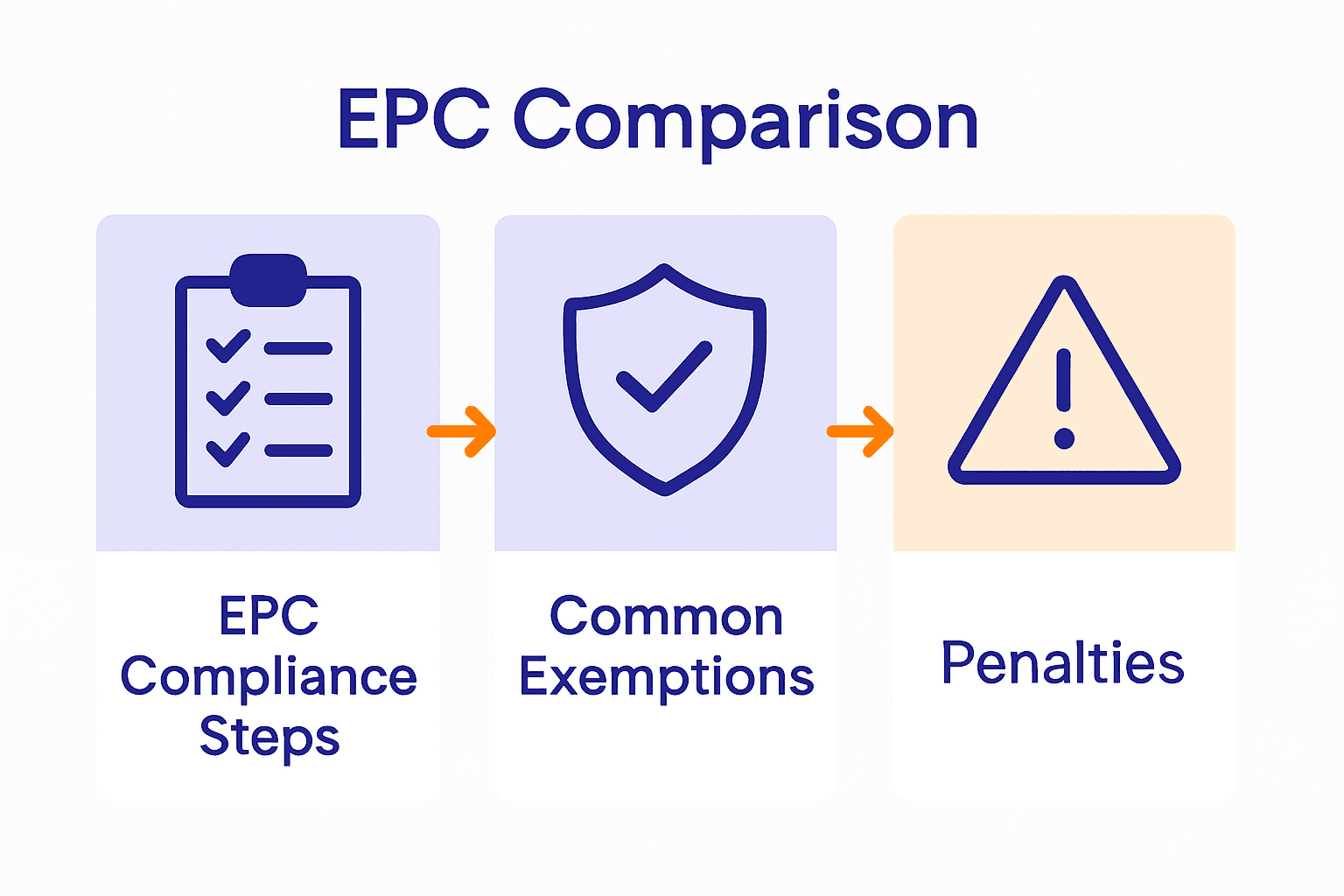
Compliance, Exemptions, and Penalties
Navigating the complex landscape of Energy Performance Certificate (EPC) regulations requires a comprehensive understanding of compliance requirements, potential exemptions, and the potential financial consequences of non-adherence. Property owners must be meticulous in meeting the mandatory standards to avoid substantial penalties and legal complications.
Key compliance considerations include:
-
Mandatory Certification
- Obtain valid EPC before marketing property
- Ensure certificate is less than 10 years old
- Display energy rating prominently
-
Potential Exemptions
- Listed buildings with significant alteration restrictions
- Temporary structures with planned demolition
- Places of worship
- Industrial sites with low energy demand
- Standalone buildings under 50 square metres
The penalties for non-compliance can be significant, with potential fines ranging from £500 to £5,000 depending on the property type and duration of violation. Repeat offenders may face escalating financial penalties and potential legal restrictions on property lettings or sales.
Explore the comprehensive EPC exemption register to understand the specific conditions under which properties might qualify for exemption and ensure you’re fully informed about your legal obligations.
Financial Implications and Market Impact
The energy performance of properties is increasingly becoming a critical financial consideration for property owners, investors, and potential buyers. Homebuilding reveals a stark financial landscape, with potential fines reaching up to £1.66 billion if proposed 2030 energy regulations were enforced today, specifically targeting properties failing to achieve an EPC rating of ‘C’ or above.
Financial impacts manifest in multiple dimensions:
-
Property Valuation
- Lower EPC ratings can significantly reduce market value
- Energy inefficient properties become less attractive to buyers
- Potential devaluation of 5-20% for poor energy performance
-
Investment Considerations
- Higher energy efficiency correlates with better rental potential
- Lower operational costs for energy-efficient properties
- Increased marketability and tenant attractiveness
Focus News underscores that non-compliance with Minimum Energy Efficiency Standards (MEES) can dramatically impact property valuation, marketability, and overall investment appeal. Commercial property owners face particularly complex challenges in meeting these evolving standards.
Learn more about comprehensive EPC legal compliance strategies to understand how proactive energy efficiency improvements can protect and potentially enhance your property’s financial value.
Ensure Full Compliance with UK Energy Performance Regulations Today
The article reveals the growing complexities and strict legal requirements surrounding Energy Performance Certificates in the UK. Property owners and landlords face significant challenges keeping pace with evolving regulations such as the Energy Act 2023 and upcoming EPC rating deadlines, risking costly penalties and diminished property value. The pressure to achieve and maintain minimum energy efficiency standards can feel overwhelming especially with the risk of fines soaring up to £1.66 billion if action is delayed.
Complete EPC specialises in helping you navigate these challenges with ease. Our expert assessors provide fast, accurate, and competitively priced EPC services for both domestic and commercial properties in London. We focus on delivering thorough energy assessments that not only ensure you meet all current legal obligations but also highlight practical improvements to increase your property’s value and reduce energy costs. Don’t let uncertainty or regulatory complexity hold you back. Discover how our professional EPC solutions can protect your investment and keep you fully compliant by visiting Complete EPC. For detailed guidance tailored to rentals, explore our EPC certificates for rental properties guide and to understand legal requirements better, see our EPC legal requirements UK property owners guide.
Take action now to secure your peace of mind and future-proof your property. Contact Complete EPC today for a swift, expert EPC assessment that puts you ahead of regulatory changes.
Frequently Asked Questions
What are Energy Performance Regulations in the UK?
Energy Performance Regulations in the UK are a framework designed to assess and improve the energy efficiency of residential and commercial properties. They mandate Energy Performance Certificates (EPCs) to evaluate and communicate a building’s energy consumption and carbon emissions.
What is an Energy Performance Certificate (EPC)?
An Energy Performance Certificate (EPC) is a document that provides a rating of a property’s energy efficiency on a scale from A (most efficient) to G (least efficient), detailing estimated energy costs and potential improvements for the property.
What types of properties require an EPC in the UK?
Both residential and commercial properties are required to obtain an EPC in the UK. This includes single-family homes, apartments, office buildings, retail spaces, and more, with specific requirements varying based on property type and usage.
What are the penalties for not complying with EPC regulations?
Penalties for non-compliance with EPC regulations can range from £500 to £5,000, depending on the property type and length of violation. Repeat offenders may face escalating fines and restrictions on property lettings or sales.
Recommended
- Energy Performance Data Explained: UK Complete Guide – Complete EPC
- Complete Guide to EPC Rating Scales UK – Complete EPC
- How to Make Home Energy Efficient: Step-by-Step UK Guide – Complete EPC
- Complete Guide to Energy Efficiency Metrics – Complete EPC
- Diesel Engine Emission Standards 2025: What Technicians Need to Know – My WordPress