

Many London landlords invest thousands in modern boilers and smart heating controls, only to watch their EPC ratings remain stubbornly low. The missing piece? Building fabric. High-tech heating systems may boost EPC rating but do not compensate for poor insulation and air leakage. Understanding how walls, roofs, floors, windows, and doors work together to retain heat is your key to genuine energy savings, compliance, and tenant comfort.
Table of Contents
- Understanding Building Fabric: Definition And Components
- How Building Fabric Influences Energy Efficiency
- The ‘Fabric First’ Approach Vs Technology Upgrades
- Building Fabric And EPC Regulation Compliance In The UK
- Common Misconceptions About Building Fabric And Energy Efficiency
- Practical Steps To Improve Building Fabric For London Properties
- Benefits Of Enhanced Building Fabric: Comfort, Cost, And Compliance
- Enhance Your London Property’s Energy Performance Now
Key Takeaways
| Point | Details |
|---|---|
| Building fabric forms the thermal envelope | All fixed elements like walls, roofs, floors, windows, and doors control heat flow in your property. |
| Up to 61% of home energy lost through fabric | Conduction and infiltration through building fabric account for the majority of heating energy waste. |
| Fabric first approach reduces long-term costs | Prioritizing insulation before technology upgrades delivers permanent savings and smaller heating system requirements. |
| EPC ratings depend heavily on fabric quality | Insulation, U-values, thermal bridging, and airtightness are core factors in your assessment score. |
| London properties outperform England average | Better building fabric helps London homes achieve median band C versus national band D ratings. |
Understanding Building Fabric: Definition and Components
Building fabric includes all fixed elements that create the thermal envelope of a property: roofs, walls, floors, windows, and doors. Think of it as your property’s skin, the barrier between comfortable indoor spaces and the harsh external environment. The thermal envelope controls how quickly heat escapes during winter and enters during summer.
Identifying these components accurately is critical for EPC assessments. Your assessor examines each element’s construction, thickness, materials, and condition to calculate heat loss. Poor fabric quality means higher U-values, which indicate faster heat transfer and lower efficiency scores.
The main components work together as a system:
- Walls form the largest surface area and typically account for 30-35% of heat loss
- Roofs and lofts where warm air naturally rises can lose 25% of your heating energy
- Floors, especially suspended types with air gaps beneath, contribute significant cold infiltration
- Windows and doors create weak points in the envelope, responsible for 20-25% of losses
- Junctions where these elements meet often create thermal bridges that leak heat
Understanding building envelope and EPC ratings helps you prioritize which components need attention first. The Carbon Trust building fabric guide provides detailed technical specifications for each element.
How Building Fabric Influences Energy Efficiency
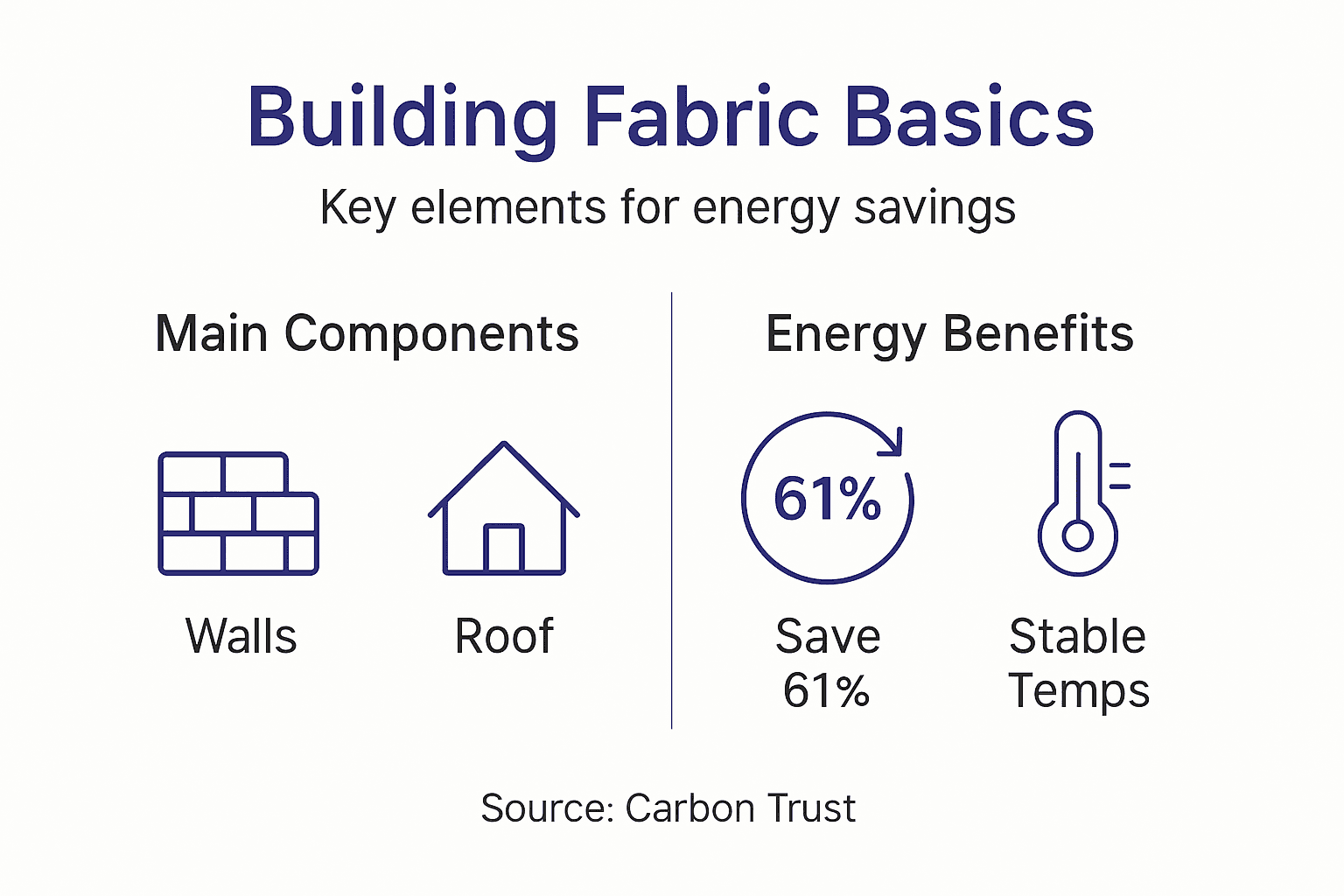
Heating represents the single largest energy expense in UK homes. Up to 61% of home energy use is for space heating, and much of this energy escapes through poor building fabric via conduction and infiltration. Every degree of heat lost translates directly to higher bills and lower tenant satisfaction.
Heat loss occurs through three primary mechanisms. Conduction transfers warmth through solid materials like walls and roofs. The rate depends on the material’s thermal conductivity and thickness. Convection moves heat via air currents, especially noticeable near cold windows where warm air cools and sinks. Air infiltration lets heated air leak out through gaps, cracks, and poorly sealed junctions while cold drafts enter.
Improving insulation and airtightness directly reduces heating demand:
- Better insulation slows conduction by trapping air pockets within materials
- Sealed gaps eliminate infiltration pathways that waste conditioned air
- Reduced heat loss means smaller, cheaper heating systems operate less frequently
- Lower energy consumption cuts bills and carbon emissions simultaneously
Pro tip: A property losing 10kW of heat requires a 10kW boiler running constantly. Cut losses to 5kW through fabric improvements, and you need only a 5kW system running half as often.
Reducing heat loss creates stable indoor temperatures that boost comfort and health. Tenants experience fewer drafts, less condensation, and more consistent warmth. You can improve your EPC ratings significantly by addressing fabric before considering expensive heating replacements. Understanding energy use through building fabric transforms how you approach property efficiency.

The ‘Fabric First’ Approach vs Technology Upgrades
The fabric first strategy prioritizes envelope improvements before investing in advanced heating or renewable systems. Improving building fabric first results in lower capital expenditure on heating and cooling systems, better thermal comfort, and improved productivity due to reduced drafts and better temperature control. This approach permanently reduces heating demand regardless of which technology you install later.
Technology upgrades alone create hidden problems. A high efficiency boiler in a poorly insulated property still operates constantly, fighting heat loss. The system works harder, wears faster, and costs more to run than necessary. You pay premium prices for equipment that cannot deliver promised savings because the building envelope undermines performance.
| Approach | Initial Cost | Long-term Savings | Durability | Comfort Impact |
|---|---|---|---|---|
| Fabric First | Moderate to High | Highest (permanent) | 40+ years | Excellent |
| Technology Only | High | Lower (depends on fabric) | 10-20 years | Moderate |
| Combined (Fabric + Tech) | Highest | Maximum | Varies | Exceptional |
Combining both strategies yields optimal results, but sequence matters. Install insulation, seal air gaps, upgrade windows, then select appropriately sized heating systems. The improved fabric reduces required system capacity, lowering equipment costs and installation complexity.
Pro tip: Fabric improvements enhance thermal comfort beyond energy savings. Warmer internal surface temperatures eliminate cold spots and reduce condensation risk, creating healthier living spaces that attract better tenants.
Comparing low carbon tech vs fabric upgrades reveals that fabric delivers more consistent returns. The Carbon Trust fabric first approach emphasizes this priority, showing how envelope quality multiplies technology effectiveness.
Building Fabric and EPC Regulation Compliance in the UK
EPC assessments evaluate fabric variables: construction type, insulation levels, U-values, thermal bridges, and air leakage rates. Each factor contributes to your property’s overall efficiency score. Poor fabric performance in any area drags down your rating, triggering compliance issues and rental restrictions.
UK Building Regulations enforce minimum thermal performance standards. Part L specifies maximum U-values for walls, roofs, floors, windows, and doors. New construction and major renovations must meet these thresholds. Existing properties face increasing pressure to upgrade fabric when changing tenants or selling.
Homes in London have a higher median EPC score (70, band C) compared to the overall England average (68, band D), reflecting better building fabric and energy efficiency investments. This regional advantage creates competitive pressure. Properties with poor fabric struggle to attract tenants who expect modern comfort standards.
Non-compliance carries serious consequences:
- Rental properties must achieve minimum band E by law
- Selling a property without a valid EPC incurs fines up to £5,000
- Prospective tenants increasingly reject inefficient properties
- Poor ratings reduce property values by 5-10% in competitive markets
Meeting fabric standards benefits you financially through lower running costs and higher rental yields. Understanding building envelope impact on EPCs and EPC legal requirements protects your investment. Review the EPB regulations report and ONS housing energy efficiency report for detailed compliance guidance.
Common Misconceptions About Building Fabric and Energy Efficiency
Many landlords believe upgrading to a modern condensing boiler or heat pump will solve efficiency problems. Reality check: high-tech heating systems cannot compensate for poor insulation and air leakage. A state-of-the-art boiler in a leaky property is like pouring water into a bucket full of holes. You achieve minimal improvement at maximum cost.
Another common myth suggests double glazing alone fixes energy problems. Windows typically account for only 20% of heat loss. Install premium triple glazing while ignoring uninsulated walls and roofs, and you waste money addressing a minor issue while major problems persist.
Some property owners fear adding insulation without understanding ventilation needs. Tightening the envelope without adequate controlled ventilation can trap moisture, causing condensation and mold growth. The solution isn’t avoiding insulation but implementing balanced ventilation strategies alongside fabric improvements.
Key misconceptions to avoid:
- Myth: New heating tech eliminates need for insulation. Reality: Poor fabric undermines any system’s efficiency.
- Myth: Cavity wall insulation alone achieves band C. Reality: Comprehensive fabric upgrades across multiple elements are usually necessary.
- Myth: Fabric improvements offer poor return on investment. Reality: Insulation and airtightness provide 40+ years of continuous savings.
- Myth: Older properties cannot achieve good EPC ratings. Reality: Appropriate fabric upgrades can significantly improve historic building performance.
Pro tip: Assess your property holistically. An EPC report identifies specific fabric weaknesses. Address the worst performers first for maximum rating improvement per pound spent.
Understanding these realities helps you avoid expensive mistakes. Improving EPC ratings realistically requires balanced fabric investment. The Carbon Trust insights on building fabric debunk these myths with evidence-based guidance.
Practical Steps to Improve Building Fabric for London Properties
Start by assessing current fabric condition. Your EPC report details specific weaknesses: wall U-values, loft insulation depth, window types, and estimated air leakage rates. This baseline guides your improvement priorities and investment decisions.
Cavity wall insulation can reduce heat loss by up to 35%, while loft insulation saves up to 25%. These two measures deliver the highest returns for typical London properties. Many Victorian and Edwardian homes have cavity walls perfect for retrofit insulation at reasonable cost.
Follow this priority sequence:
- Upgrade loft insulation to 270mm depth minimum (quick, affordable, massive impact)
- Install cavity wall insulation if suitable construction exists (35% heat loss reduction)
- Address thermal bridging at junctions where walls meet floors and roofs
- Upgrade to double or triple glazing with low-e coatings (20-25% window loss reduction)
- Seal air gaps around doors, windows, pipes, and service penetrations
- Consider solid wall insulation (internal or external) for properties without cavities
- Insulate suspended floors from below or add insulation above floor level
| Improvement | Typical Cost | Heat Loss Reduction | EPC Band Impact |
|---|---|---|---|
| Loft insulation (270mm) | £300-600 | 25% | 1-2 bands |
| Cavity wall insulation | £500-1,500 | 35% | 1-2 bands |
| Double glazing (whole property) | £4,000-8,000 | 20% | 0-1 band |
| Draft sealing | £100-300 | 10-15% | 0-1 band |
| Solid wall insulation | £8,000-15,000 | 45% | 2-3 bands |
Pro tip: Review ventilation after insulation upgrades. Trickle vents in windows or mechanical ventilation prevent condensation in tighter buildings.
Balance investment costs against EPC improvement targets. Moving from band E to D might require only loft and cavity wall insulation. Achieving band B demands comprehensive fabric overhaul including solid wall treatments. Understanding energy efficiency steps in London and legal EPC upgrade requirements helps you plan strategically. The Carbon Trust fabric improvement measures provide detailed technical specifications.
Benefits of Enhanced Building Fabric: Comfort, Cost, and Compliance
Improved fabric quality delivers multiple advantages beyond regulatory compliance. Reduced heating demand cuts energy bills by 30-50% in typical London properties, putting hundreds of pounds annually back in your pocket. Lower energy consumption simultaneously reduces carbon emissions, supporting sustainability goals and appealing to environmentally conscious tenants.
Thermal comfort improvements are immediately noticeable. Better insulation creates warmer internal surface temperatures, eliminating cold spots and drafts. Stable temperatures reduce condensation risk, protecting property structure and preventing mold growth. Tenants experience healthier, more pleasant living conditions that justify higher rents and reduce turnover.
Compliance benefits protect your investment and income stream. Poor building fabric compliance in the UK can lead to safety, energy inefficiency, and legal risks under Building Regulations related to thermal performance, fire safety, acoustic performance, and structural integrity. Meeting standards avoids penalties, maintains rental eligibility, and preserves property value.
Additional fabric quality benefits include:
- Enhanced acoustic insulation reduces noise transmission between rooms and from outside
- Improved structural durability as moisture control prevents rot and decay
- Higher property valuations reflecting energy efficiency and modern comfort standards
- Reduced heating system maintenance as equipment operates less frequently
- Future-proofing against increasingly strict EPC requirements
Good fabric quality creates a virtuous cycle. Lower bills attract better tenants who stay longer. Reduced maintenance costs improve returns. Higher EPC ratings command premium rents and sale prices. Your property becomes more competitive in London’s demanding rental market.
Review legal requirements summary to understand current and upcoming obligations. The building fabric compliance risks guide explains consequences of non-compliance across multiple regulatory areas.
Enhance Your London Property’s Energy Performance Now
Complete EPC offers expert guidance tailored for London landlords looking to improve building fabric and boost EPC scores. Our qualified assessors understand the unique challenges of London properties, from Victorian terraces to modern conversions. We provide detailed fabric assessments identifying exactly which improvements deliver maximum rating gains for your investment.
Our services streamline compliance with the latest UK Building Regulations and EPC requirements. Get personalized recommendations prioritizing cost-effective upgrades based on your property type and target rating. We connect fabric improvements with overall energy strategy, ensuring your investments work together for optimal results.
Explore our guide to EPCs in London for comprehensive background. Understand EPC regulations in London to stay ahead of changing requirements. Follow proven energy efficiency steps for London properties to maximize your property’s performance and value.
Frequently Asked Questions
What is building fabric in construction?
Building fabric refers to all fixed structural elements forming the thermal envelope: walls, roofs, floors, windows, and doors. These components determine how effectively your property retains heat. Better fabric quality means less energy waste and lower heating costs.
How does building fabric affect EPC ratings?
EPC ratings heavily depend on insulation quality, U-values, thermal bridging, and airtightness within the building fabric. Poor fabric allows rapid heat loss, lowering your score. Improving these elements directly boosts ratings and reduces energy bills.
Can modern heating systems replace poor building fabric?
No, advanced heating technology cannot compensate for heat lost through poorly insulated, leaky fabric. Even the most efficient boiler wastes energy fighting continuous heat loss. Upgrading fabric first ensures any heating system operates efficiently and economically.
What are cost-effective improvements for London property fabrics?
Cavity wall insulation and loft insulation typically offer the best heat loss reductions, cutting losses by 35% and 25% respectively. Draft sealing provides quick wins at low cost. These improvements deliver strong EPC rating gains and immediate comfort benefits for reasonable investment.