

Did you know that nearly 40% of UK rental properties still fail to meet the minimum EPC rating required by law? Many landlords underestimate the complexity of EPC compliance, viewing it as a simple box-ticking exercise rather than an ongoing legal obligation with serious financial consequences. This guide explains what EPC compliance truly entails, upcoming deadlines, penalties, and practical improvement strategies to help you navigate 2026 regulations confidently while enhancing property value.
Table of Contents
- Understanding EPC Compliance: Legal Framework And Definition
- Key Deadlines And Legal Obligations For Property Owners And Landlords
- How To Obtain And Maintain EPC Certificates Efficiently
- Common Misconceptions About EPC Compliance And Energy Efficiency
- Energy Efficiency Benefits And Financial Impacts Of EPC Compliance
- EPC Compliance As Part Of The UK’s National Climate Strategy
- Practical Tips For Property Owners To Improve EPC Ratings And Ensure Compliance
- Ready To Ensure Your EPC Compliance With Confidence?
- Frequently Asked Questions
Key takeaways
| Point | Details |
|---|---|
| Legal requirement | EPC compliance is mandatory for all UK properties sold or rented, with minimum rating thresholds enforced. |
| Changing standards | Minimum band E applies now; band C required by 2028 and band B by 2030 for new tenancies. |
| Financial penalties | Non-compliance risks fines up to £5,000 per property plus reputational damage. |
| Certificate validity | EPC certificates last 10 years; reassessment before expiry is mandatory to maintain compliance. |
| Value benefits | Energy improvements reduce costs by up to 20% and increase rental income by 5-10%. |
Understanding EPC compliance: legal framework and definition
EPC compliance in the UK is mandated under the Energy Performance of Buildings (England and Wales) Regulations 2012, requiring properties sold or rented to have valid EPC ratings. The rating scale runs from A (most efficient) to G (least efficient), providing prospective buyers or tenants with clear information about a property’s energy performance.
The requirements differ between sales and rentals. While properties for sale simply need a valid EPC certificate, rental properties face stricter thresholds under the Minimum Energy Efficiency Standards (MEES). Since April 2020, rental properties in England and Wales must meet a minimum EPC rating of band E, with planned increases to band C by 2028 and band B by 2030 for new tenancies.
These regulations aren’t suggestions. Landlords who fail to comply face substantial fines and potential legal action. Understanding the energy performance regulations UK framework helps property owners avoid costly mistakes whilst improving their investment’s long-term viability.
Key compliance points include:
- Valid EPC certificate required before marketing any property for sale or rent
- Minimum band E rating for all existing rental tenancies
- Higher thresholds coming for new lettings in 2028 and 2030
- Exemptions available only in limited circumstances with proper registration
For comprehensive information on understanding EPCs and their implications, property owners should familiarise themselves with the rating methodology and improvement pathways.
Key deadlines and legal obligations for property owners and landlords
Timing matters enormously in EPC compliance. Since April 2020, rental properties must meet minimum band E standards, but tighter requirements loom. By April 2028, new tenancies will require band C ratings. By 2030, this extends to all existing tenancies, meaning landlords must upgrade or face removal from the rental market.
Which properties must comply? All privately rented domestic properties in England and Wales fall under MEES regulations. Properties sold require valid EPCs but no minimum rating threshold currently applies. However, poor ratings significantly impact marketability and sale prices.
Penalties for non-compliance reach up to £5,000 per property. The fine structure works as follows:
- Renting a sub-band E property for under three months: up to £2,000
- Renting a sub-band E property for three months or longer: up to £4,000
- Providing false information: up to £1,000
- Failing to register an exemption: £1,000
Local authorities actively enforce these rules through civil penalties. They can publish landlord details on a public register, causing reputational damage beyond financial costs.

Landlords must also ensure EPC certificates are provided to prospective tenants at the earliest opportunity and uploaded to official registers. Marketing materials must reference the EPC rating. Following the landlord EPC compliance checklist helps avoid oversights.
Pro Tip: Don’t wait until deadlines approach. Start planning energy improvements now to spread costs and secure contractor availability before demand surges in 2027.
How to obtain and maintain EPC certificates efficiently
Obtaining an EPC certificate involves hiring a qualified domestic energy assessor accredited by an approved scheme. The process typically follows these steps:
- Research and select an accredited assessor through official registers or trusted providers
- Schedule an onsite inspection at a convenient time
- Provide access to all areas including loft spaces and heating systems
- Receive the certificate and recommendations report within days
- Register the certificate on the official EPC register
Qualified energy assessors provide onsite surveys with typical report turnaround within days. Costs vary by region and property size but expect £60 to £120 for most domestic properties. Commercial assessments cost more due to complexity.
EPC certificates remain valid for 10 years from the issue date. However, you’ll need reassessment if you make significant energy efficiency improvements and want the rating updated. Planning renewal well before expiry prevents compliance gaps.
Choosing a reliable provider matters. Look for:
- Clear pricing with no hidden fees
- Fast turnaround times
- Accredited assessors with verifiable credentials
- Detailed improvement recommendations
- Customer reviews and industry standing
For rental properties, consult guides on EPC certificates for rentals to understand specific obligations. The EPC renewal step by step process clarifies what happens when certificates expire.
Pro Tip: Schedule reassessments one to two months before your current certificate expires to allow time for any administrative delays whilst maintaining continuous compliance.
For detailed application procedures, review how to apply for an EPC certificate in London for location-specific guidance.
Common misconceptions about EPC compliance and energy efficiency
Several widespread misunderstandings cause landlords to stumble into non-compliance. Addressing these myths helps property owners make informed decisions.
Misconception 1: EPC certificates never expire
Many landlords mistakenly think EPC certificates last indefinitely; certificates actually last 10 years and require renewal. Missing renewal dates can leave properties legally unrentable until reassessment occurs.
Misconception 2: Only insulation affects EPC ratings
Improving insulation alone is insufficient; EPC assessments consider heating systems, windows, lighting, and ventilation. A holistic approach delivers better results. You might install top-quality loft insulation yet still score poorly if your heating system is inefficient or windows are single-glazed.
Misconception 3: Compliance is optional or rarely enforced
Enforcement has intensified considerably. Local authorities conduct spot checks and investigate complaints. The financial penalties are real, and public registers naming non-compliant landlords damage reputations permanently.
Misconception 4: All properties face identical requirements
Exemptions exist for certain property types, but they require formal registration. Listed buildings, properties where improvements would decrease value by more than 5%, and situations where financing cannot be secured may qualify. However, you must register these exemptions properly; simply assuming exemption status invites penalties.
Using a comprehensive landlord EPC checklist prevents these common errors.
“Effective EPC compliance requires understanding that energy efficiency is a system-level property, not a single-measure solution. Heating, insulation, glazing, and lighting all interact to determine your final rating.”
Energy efficiency benefits and financial impacts of EPC compliance
Beyond avoiding fines, improving EPC ratings delivers tangible financial benefits. Raising your EPC band can reduce energy bills by 15 to 20 percent whilst increasing rental income by 5 to 10 percent. These aren’t trivial sums when compounded over years.
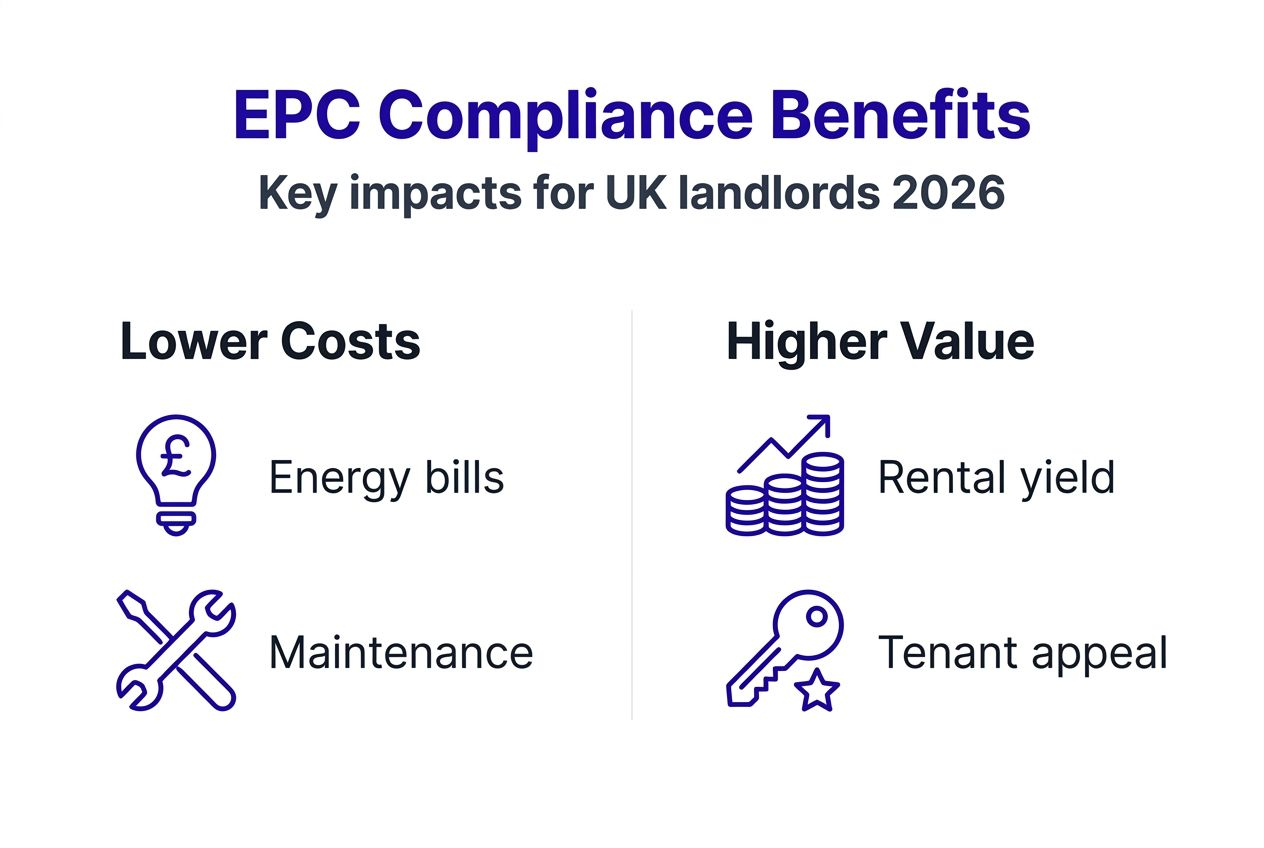
Higher ratings attract quality tenants. Properties with better energy performance appeal to environmentally conscious renters and those seeking lower utility costs. This reduces void periods and tenant turnover, directly impacting profitability.
| EPC Band | Avg Annual Savings | Rental Premium | Tenant Appeal |
|---|---|---|---|
| A | £600+ | 10-15% | Excellent |
| B | £400-£600 | 8-12% | Very High |
| C | £200-£400 | 5-10% | High |
| D | £100-£200 | 2-5% | Moderate |
| E | Baseline | 0% | Basic |
Property values also benefit. Research shows energy-efficient homes command higher sale prices. Buyers increasingly factor running costs into purchase decisions, making poor EPC ratings a negotiating weakness.
Consider the competitive advantage. With stricter regulations approaching, properties already meeting band C or B standards will become premium assets. Early movers benefit from:
- Lower upgrade costs before contractor demand surges
- Extended rental viability without forced improvements later
- Marketing advantage over non-compliant competitors
- Reduced risk of stranded assets as regulations tighten
Explore the benefits of upgrading your EPC rating for detailed financial modelling.
Pro Tip: Prioritise upgrades offering the best cost-to-rating improvement ratio. Often, heating system upgrades and LED lighting provide quick wins before tackling expensive measures like external wall insulation.
EPC compliance as part of the UK’s national climate strategy
EPC regulations exist within a broader environmental framework. EPC compliance is central to the UK’s target of reducing greenhouse gas emissions by 78 percent by 2035. Residential properties account for roughly 20 percent of UK carbon emissions, making housing efficiency critical to national climate goals.
The government views progressively stricter EPC standards as essential to decarbonisation. Future-proofing your property portfolio means anticipating continued tightening of requirements beyond current 2030 targets. Properties that meet only minimum standards today will likely require further upgrades within a decade.
This policy direction creates both challenges and opportunities. Landlords who embrace energy efficiency early position themselves advantageously as green credentials become market differentiators. Those who delay face mounting pressure from regulations, tenant preferences, and financing conditions.
Mortgage lenders increasingly factor EPC ratings into lending decisions. Properties with poor ratings may struggle to secure favourable financing terms. Insurance companies similarly adjust premiums based on climate risks and energy performance.
Understanding energy performance regulations in the UK context helps property owners align with long-term policy trajectories rather than merely reacting to immediate deadlines.
“The shift towards energy-efficient housing represents not just regulatory compliance but a fundamental transformation of the UK property sector towards sustainability and reduced carbon dependency.”
Government support schemes periodically offer grants and low-interest loans for energy improvements. Staying informed about available funding can significantly reduce upgrade costs whilst contributing to national environmental objectives.
Practical tips for property owners to improve EPC ratings and ensure compliance
Taking action on EPC compliance need not overwhelm. Focus on high-impact improvements that balance cost against rating gains.
Common effective upgrades include:
- Replacing old boilers with modern condensing models or heat pumps
- Installing double or triple glazing where single-pane windows remain
- Upgrading to LED lighting throughout
- Adding loft and cavity wall insulation where absent
- Installing smart heating controls and programmable thermostats
- Sealing draughts around doors, windows, and letterboxes
Choosing qualified assessors matters enormously. Verify accreditation through official schemes like Elmhurst, Stroma, or Quidos. Request quotes from multiple providers but prioritise experience and reputation over lowest price alone. Poor assessments can undervalue your property’s actual efficiency.
Financial planning helps spread costs. Rather than rushing all improvements simultaneously, create a phased upgrade plan aligned with tenancy changes or planned maintenance work. This approach maintains cash flow whilst progressing towards compliance.
Timing reassessments strategically maximises value. After completing improvements, schedule reassessment promptly to capture rating increases. This updates your certificate whilst changes remain fresh and documented.
Follow proven energy rating improvement steps for UK properties to ensure systematic progress. Understanding which measures deliver the greatest rating gains per pound spent optimises your investment.
Review the benefits of upgrading your EPC rating to justify improvement expenditure through quantified returns.
Pro Tip: Use established providers like Complete EPC for fast, affordable certification combined with detailed improvement recommendations. Professional guidance identifies cost-effective pathways to compliance whilst avoiding unnecessary expenditure on low-impact measures.
Ready to ensure your EPC compliance with confidence?
Navigating EPC regulations needn’t be complicated when you have expert support. Complete EPC provides fast, affordable energy performance certificates across London and beyond, helping landlords and property owners meet legal requirements efficiently. Our qualified assessors deliver detailed reports with practical improvement recommendations tailored to your property and budget. Whether you need initial certification, renewal before expiry, or strategic advice on achieving higher ratings, we offer transparent pricing and rapid turnaround times. Understanding EPC regulations in London and following our EPC renewal guide ensures you stay compliant whilst maximising property value. Start your compliance journey today with proven energy rating improvement steps that deliver results.
Frequently asked questions
What is EPC compliance for landlords?
EPC compliance means meeting legal energy performance standards when renting or selling properties in England and Wales. It requires maintaining a valid EPC certificate with at least a band E rating for rental properties and following scheduled upgrade deadlines as minimum thresholds increase to bands C and B.
When must landlords renew EPC certificates?
EPC certificates remain valid for 10 years from their issue date. Landlords must arrange reassessment by a qualified energy assessor before expiry to maintain continuous compliance. Properties cannot be legally rented without current, valid certification.
What penalties apply for non-compliance with EPC regulations?
Penalties reach up to £5,000 per non-compliant property depending on breach duration and circumstances. Fines result from renting properties without valid EPCs, letting properties below minimum band E standards, or providing false information. Local authorities also publish offender details on public registers.
Can improving insulation alone ensure EPC compliance?
No, EPC assessments evaluate multiple factors including heating systems, windows, lighting, ventilation, and insulation. Comprehensive upgrades addressing the property as an integrated energy system deliver significant rating improvements. Single measures rarely suffice for substantial band increases.
How do EPC improvements affect property value?
Higher EPC ratings can increase rental income by 5 to 10 percent whilst reducing energy costs by up to 20 percent. Better ratings attract quality tenants seeking energy-efficient, affordable homes. Properties with strong EPC ratings also command higher sale prices and reduced void periods.