

Securing a valid Energy Performance Certificate (EPC) before letting your London property can feel overwhelming, especially with evolving regulations and common assessor errors affecting up to 30% of applications. Many landlords discover compliance issues only when marketing begins, leading to costly delays and missed rental opportunities. This guide provides expert preparation tips to help you navigate EPC requirements smoothly, avoid common pitfalls, and optimise your property’s energy rating for the competitive 2026 London rental market.
Table of Contents
- Understand EPC Compliance Criteria Before Letting
- Prepare Your Property To Avoid Common EPC Delays
- Explore Options To Improve Energy Efficiency For Better EPC Ratings
- Compare Common EPC Improvement Methods For London Landlords
- Get Expert EPC Services With Complete EPC London
Key takeaways
| Point | Details |
|---|---|
| Legal compliance | Properties must achieve minimum EPC band E before marketing to prospective tenants. |
| Early preparation | Scheduling assessments well ahead prevents last-minute compliance issues and allows time for retakes if needed. |
| Multiple improvement options | Beyond insulation, landlords can enhance ratings through heating systems, smart technology, and energy management upgrades. |
| New dual metrics | Reformed EPC standards by 2030 will assess both fabric performance and heating system quality separately. |
| Valid certification timing | EPCs remain valid for 10 years and must be provided before any property marketing begins. |
Understand EPC compliance criteria before letting
Before marketing your rental property in London, you must meet specific legal requirements that have been mandatory since April 2020. Rental properties must achieve EPC band E or higher to be let legally in England and Wales. This means your property cannot fall into bands F or G without qualifying for a registered exemption.
The timing of your EPC matters significantly. Landlords must provide valid EPCs before marketing begins, not just before tenancy starts. This requirement applies whether you advertise through estate agents, online platforms, or direct tenant contact. Failing to comply exposes you to financial penalties and creates barriers when tenants search for properties or when you seek mortgage refinancing.
Exemptions exist for specific circumstances, such as properties where improvements would devalue the asset or where costs exceed market value gains. However, these exemptions require official registration through the EPC exemption register and remain valid for only five years. After this period, you must reassess your property’s compliance status.
Understanding these compliance criteria early prevents costly last-minute scrambles. Properties failing to meet standards cannot legally accept new tenancies, leaving you with void periods and lost rental income. Additionally, non-compliance creates refinancing difficulties, as many lenders now require proof of minimum energy standards before approving buy-to-let mortgages.
Pro Tip: Schedule your EPC assessment at least two months before you plan to market your property, allowing time to address any unexpected rating issues or assessor errors.
Key compliance requirements include:
- Valid EPC certificate issued within the last 10 years
- Minimum rating of band E or registered exemption
- Certificate provided to prospective tenants before viewing or marketing
- Compliance maintained throughout the entire tenancy period
- Exemptions registered and renewed every five years if applicable
Prepare your property to avoid common EPC delays
Property preparation significantly impacts assessment accuracy and timeline. Research shows that up to 30% of EPC applications face delays due to assessor errors and inadequate property readiness. Taking proactive steps before your scheduled assessment minimises these risks and ensures you receive an accurate rating reflecting your property’s true energy performance.
Start by gathering complete documentation for your assessor. This includes building plans, boiler service records, insulation certificates, and window installation dates. Missing documentation often leads assessors to make conservative assumptions that lower your rating. For example, without proof of loft insulation depth, assessors may record minimal insulation even if substantial coverage exists.
Physical property readiness matters equally. Ensure your heating system operates correctly and displays clear controls. Check that loft spaces and cavity walls are accessible for inspection. Replace any broken windows or damaged seals, as these directly impact thermal performance ratings. Clear obstructions from areas assessors need to measure, including radiators, thermostats, and external walls.
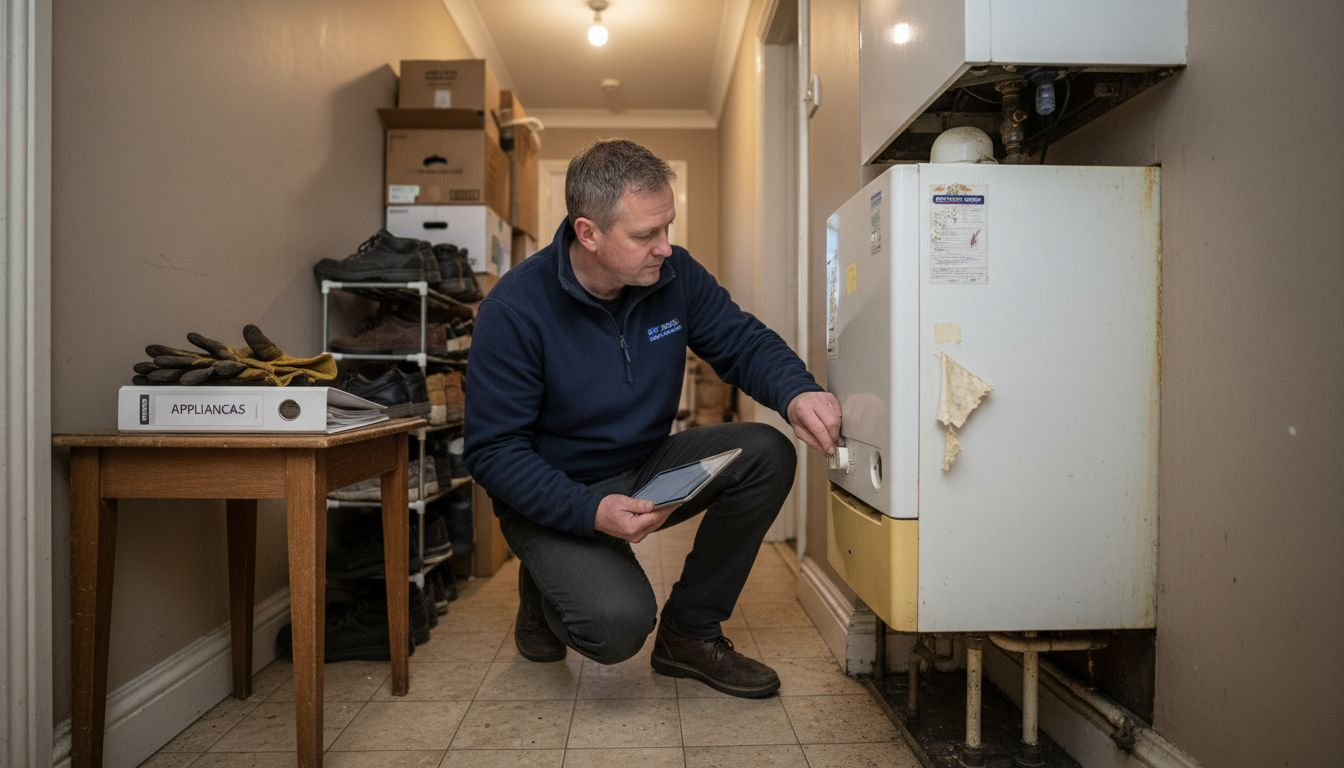
Communication with your chosen assessor prevents misunderstandings. Discuss any recent improvements you’ve made, such as upgraded heating controls or additional insulation. Provide photographs of inaccessible areas if structural limitations prevent direct inspection. This collaborative approach helps assessors record accurate data rather than making assumptions that could disadvantage your rating.
Following this landlord EPC checklist ensures thorough preparation:
- Compile all relevant property documentation including building plans and improvement certificates
- Service and test your heating system to confirm proper operation
- Verify that insulation, windows, and doors are in good condition
- Clear access to loft spaces, boiler rooms, and external walls
- Schedule your assessment well ahead of marketing deadlines
- Brief your assessor on recent improvements and property features
Pro Tip: Take dated photographs of insulation installations and heating upgrades before scheduling your assessment, creating backup evidence if documentation goes missing.
Understanding the EPC assessment process helps you anticipate what assessors need and prepare accordingly. This knowledge transforms what might feel like an intimidating inspection into a straightforward procedure where you control the outcome through proper preparation.
Explore options to improve energy efficiency for better EPC ratings
Improving your property’s energy efficiency offers multiple pathways beyond traditional insulation upgrades. The government’s EPC reform programme introduces multiple assessment metrics including smart readiness and heating system performance, creating flexibility in how you achieve compliance. This dual compliance standard, expected by 2030, means you can focus improvements where they deliver the best return for your specific property type.
Insulation remains the foundation of energy efficiency, addressing heat loss through walls, roofs, and floors. Loft insulation typically offers the quickest payback, with cavity wall insulation following closely. However, solid wall insulation proves costly and disruptive, particularly in period properties or conservation areas where external cladding faces planning restrictions. For these properties, alternative improvement routes become essential.
Heating system upgrades deliver substantial rating improvements while reducing tenant energy costs. Modern condensing boilers operate at over 90% efficiency compared to 60-70% for older models. Smart heating controls, including programmable thermostats and thermostatic radiator valves, enhance system responsiveness and earn additional EPC points. Heat pumps represent the most significant upgrade, though higher installation costs require careful financial evaluation.
Smart technology improvements address the new smart readiness metric while appealing to tech-savvy tenants. Smart meters provide real-time energy monitoring, helping tenants manage consumption. Integrated home energy management systems optimise heating, lighting, and appliance use automatically. These technologies position your property favourably under reformed EPC standards whilst adding modern amenities that justify premium rents.
Pro Tip: Focus improvements on areas where your property scores lowest in its current EPC report, as these typically deliver the greatest rating increases per pound invested.
Consider these energy rating improvement options:
- Loft insulation to 270mm depth for optimal thermal performance
- Cavity wall insulation where structural surveys confirm suitability
- Double or triple glazing replacements for single-glazed windows
- Condensing boiler upgrades with smart heating controls
- LED lighting throughout to reduce electricity consumption
- Smart thermostats and zone controls for heating optimisation
- Solar photovoltaic panels where roof orientation permits
Each improvement contributes differently depending on your property’s existing features and construction type. Victorian terraces benefit more from window upgrades than modern flats, whilst properties with electric heating see larger gains from renewable technology. Consulting the recommendations section of your current EPC report identifies the most cost-effective improvements for your specific circumstances, helping you make your property energy efficient strategically.
Compare common EPC improvement methods for London landlords
Choosing the right improvement approach requires balancing costs, disruption, and rating impact against your property characteristics and letting strategy. Landlords have flexibility in achieving compliance through heating or smart technology if insulation proves difficult, particularly valuable for listed buildings or properties in conservation areas where structural changes face restrictions.
This comparison helps you evaluate the main improvement categories:
| Improvement Type | Typical Cost | Rating Impact | Installation Time | Best For |
|---|---|---|---|---|
| Loft insulation | £300-£500 | 1-2 bands | 1 day | Properties with accessible loft spaces |
| Cavity wall insulation | £500-£1,500 | 1-2 bands | 2-3 days | Post-1920s properties with suitable cavities |
| Condensing boiler | £2,000-£3,500 | 1 band | 2-3 days | Properties with outdated heating systems |
| Smart heating controls | £200-£800 | 0.5-1 band | 1 day | All properties with central heating |
| Double glazing | £3,000-£8,000 | 0.5-1 band | 1-2 weeks | Single-glazed properties |
| Solar PV panels | £4,000-£6,000 | 1-2 bands | 2-3 days | Properties with suitable roof orientation |
Insulation upgrades deliver strong thermal performance improvements but require property access and can disrupt existing tenancies. Solid wall insulation, necessary for pre-1920s properties, costs significantly more at £4,000-£14,000 and requires planning permission for external systems. These factors make insulation challenging for occupied properties or those with architectural constraints.
Heating system improvements offer compelling alternatives, particularly under reformed EPC metrics that assess heating quality separately. A modern condensing boiler combined with smart controls can lift a property from band F to band D, whilst smart thermostats alone often provide the final push from band D to band C. These upgrades minimise disruption and complete quickly, making them ideal for properties between tenancies.
Smart readiness investments future-proof your property against upcoming regulatory changes whilst attracting quality tenants. Though individual smart devices contribute modestly to current ratings, the reformed EPC framework will weight these features more heavily. Early adoption positions you ahead of competitors and demonstrates commitment to sustainability that resonates with environmentally conscious renters.
When comparing property energy rating services, consider:
- Your property’s construction type and existing energy features
- Budget available for improvements and expected payback period
- Tenant occupancy status and tolerance for installation disruption
- Local planning restrictions affecting external modifications
- Long-term letting strategy and target tenant demographic
Properties requiring only one band improvement typically achieve this most cost-effectively through insulation and heating controls. Those needing two or more bands benefit from combining insulation with heating system upgrades or renewable technology. Your current EPC report’s recommendations section provides tailored guidance, though consulting energy efficiency specialists ensures you select improvements delivering maximum impact for your investment.
Get expert EPC services with Complete EPC London
Navigating EPC requirements and improvement strategies becomes straightforward with professional support. Complete EPC provides expert London-based EPC assessment and energy consultancy, ensuring your property meets current 2026 standards whilst avoiding common delays and errors. Our qualified assessors bring extensive industry experience, delivering accurate ratings and practical improvement recommendations tailored to your property type and letting objectives.
We streamline the entire process, from initial understanding of EPCs through to final certification. Our comprehensive assessment process includes detailed property evaluation, improvement consultation, and ongoing compliance support. Whether you need a straightforward certificate or strategic advice on energy rating improvements, our team ensures you achieve compliance efficiently whilst maximising your property’s rental potential.
FAQ
What is an EPC and why is it needed before letting?
An Energy Performance Certificate rates your property’s energy efficiency on a scale from A (most efficient) to G (least efficient). Landlords must provide valid EPCs before marketing rental properties because they inform prospective tenants about energy costs and demonstrate legal compliance with minimum efficiency standards.
How often must I renew my EPC?
EPCs remain valid for 10 years from their issue date. You must renew after this period expires or when major energy improvements occur that could significantly change your rating. Keeping track of expiry dates prevents last-minute compliance issues when re-letting.
What penalties exist for letting without a valid EPC?
Non-compliance can lead to fines and difficulty letting or refinancing properties. Local authorities can issue financial penalties ranging from £500 to £5,000 depending on the breach severity. Properties without valid EPCs also struggle to attract quality tenants and may face mortgage lending restrictions.
Can I get an exemption from EPC requirements?
Exemptions must be registered and last for five years only. You may qualify if improvements would devalue your property, exceed cost caps, or prove technically impossible. Register exemptions through the official exemption register and reassess when they expire.
Recommended
- 7 Essential EPC Compliance Tips for London Property Owners – Complete EPC
- EPC Rental Properties London 2026: Save 30% Time & Avoid Fines
- London’s Guide to EPC: What You Need to Know to Boost Property Value – Complete EPC
- Why Londoners Need an EPC for Their Properties – Complete EPC
- Wat Is Energieprestatie – Impact Op Woningwaarde – Holland Electric Duurzaam