

Many property owners believe an Energy Performance Certificate is just another bureaucratic box to tick, but this misconception can cost you dearly in London’s competitive property market. An EPC is actually a powerful tool that affects your ability to sell or rent legally, influences property value, and guides strategic improvements. Whether you’re a landlord preparing to let, an estate agent managing listings, or an owner planning a sale, understanding EPCs thoroughly is essential for compliance and maximising returns. This guide cuts through confusion to explain exactly what EPCs are, how ratings work, the assessment process, and practical compliance strategies tailored for London properties in 2026.
Table of Contents
- What Is An Energy Performance Certificate (EPC)?
- How EPC Ratings Work And Why They Matter For London Properties
- The EPC Assessment Process: What To Expect In London
- Common Exemptions And Compliance Tips For EPC In London 2026
- Get Expert Help With Your EPC Requirements In London
Key takeaways
| Point | Details |
|---|---|
| Legal requirement | EPCs are mandatory when selling or renting properties in London, with specific minimum standards for rentals |
| Rating impact | Energy efficiency ratings from A to G directly affect property value, marketability, and tenant appeal |
| Assessment process | Qualified assessors evaluate insulation, heating, windows, and other factors to determine your rating |
| Exemptions exist | Certain property types including listed buildings may qualify for exemptions under 2026 regulations |
| Improvement opportunities | Strategic upgrades can boost ratings, reduce energy costs, and enhance property competitiveness |
What is an energy performance certificate (EPC)?
An Energy Performance Certificate provides an energy efficiency rating and recommendations for improvements, serving as an official document that assesses how efficiently a property uses energy. Think of it as a report card for your building’s energy performance, similar to the energy labels you see on appliances. For London property owners, landlords, and estate agents, EPCs represent far more than paperwork. They’re legal requirements that unlock your ability to transact in the property market.
The legal framework surrounding EPCs stems from UK energy efficiency regulations designed to reduce carbon emissions and improve building standards. When you sell or rent a property in London, you must provide a valid EPC to prospective buyers or tenants before marketing begins. This isn’t optional or negotiable. Without an EPC, you cannot legally complete a sale or let a property, and violations can result in substantial fines.
The EPC rating scale runs from A (most efficient) to G (least efficient), with the assessment considering factors like insulation quality, heating system efficiency, window glazing, and renewable energy installations. Your property receives a numerical score that translates into a letter band, giving potential buyers or tenants immediate insight into expected energy costs and environmental impact. Calculations follow standardised methodologies that account for property size, construction type, and installed systems, ensuring consistency across assessments.
Typically, an EPC remains valid for 10 years from the date of issue, meaning you won’t need frequent renewals unless you make significant energy efficiency improvements worth documenting. However, many property owners choose to obtain a new EPC after major renovations to capture improved ratings that enhance marketability. One common misconception is that EPCs assess actual energy consumption. They don’t. Instead, they evaluate the property’s potential energy performance based on its physical characteristics, assuming standard occupancy and usage patterns.
Another misunderstanding involves scope. EPCs cover the building fabric and fixed systems like heating and lighting, but they don’t assess portable appliances or occupant behaviour. Understanding these distinctions helps you interpret your certificate accurately and focus improvement efforts where they’ll genuinely affect your rating. For London properties ranging from Victorian conversions to modern flats, this standardised approach provides comparable metrics that buyers and tenants increasingly prioritise when making decisions.
How EPC ratings work and why they matter for London properties
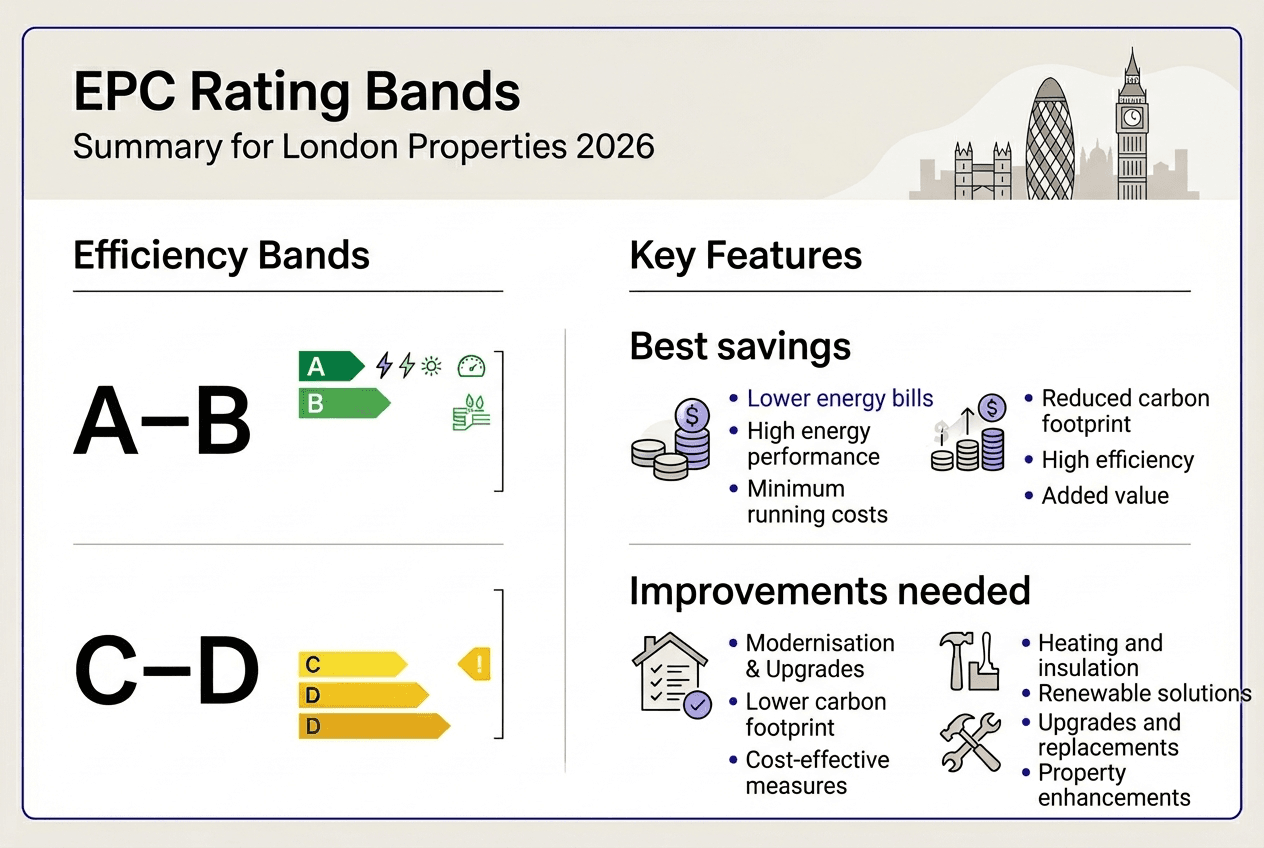
Energy efficiency bands create a clear hierarchy that directly impacts your property’s market position. Band A properties represent the pinnacle of efficiency, typically featuring cutting edge insulation, renewable heating systems, and triple glazing. These are rare in London’s older housing stock but increasingly common in new developments. Band B and C properties demonstrate good efficiency with modern insulation, efficient boilers, and double glazing. Most well maintained London properties with recent upgrades fall into these categories.
Band D represents average efficiency, where many older London properties naturally sit without significant improvements. Band E properties show below average performance, often characterised by single glazing, poor insulation, or outdated heating systems. Bands F and G indicate serious efficiency deficiencies requiring urgent attention, particularly for landlords facing minimum standards.
The impact of your EPC rating on property value and rental prospects cannot be overstated. Research consistently shows that higher EPC ratings enhance property value and attract tenants willing to pay premium rents for lower energy bills. In London’s competitive market, a Band C property commands higher prices than an identical Band E property, with buyers increasingly factoring running costs into affordability calculations. For rentals, tenants actively filter searches by EPC rating, knowing that efficient properties mean lower monthly bills.
Legal minimum requirements add urgency to rating considerations. As of 2026, landlords in London cannot legally let properties with ratings below Band E, except in cases where specific exemptions apply. This minimum energy efficiency standard (MEES) has transformed the rental market, forcing thousands of landlords to invest in improvements or face being unable to let their properties. Penalties for non compliance are substantial, making EPC ratings a compliance issue as much as a marketing advantage.
Benefits of improving your EPC rating extend beyond legal compliance. Lower energy bills make properties more attractive to cost conscious tenants and buyers. Enhanced comfort from better insulation and heating improves tenant satisfaction and retention. Environmental credentials appeal to the growing segment of eco conscious renters and buyers. Marketing advantages position your property ahead of competitors with lower ratings. Future proofing protects against anticipated tightening of regulations, with government signals suggesting Band C may become the rental minimum in coming years.
Pro Tip: Focus improvement budgets on measures offering the best rating boost per pound spent. Loft insulation and boiler upgrades typically deliver excellent returns, while expensive features like solar panels may not proportionally improve your letter band despite high costs. Request recommendations from your assessor to prioritise strategically.
| Rating Band | Typical Features | London Market Impact |
|---|---|---|
| A-B | Excellent insulation, renewable heating, triple glazing | Premium pricing, fastest sales, highest rents |
| C | Good insulation, efficient boiler, double glazing | Strong demand, competitive advantage |
| D | Average efficiency, some improvements needed | Standard market position, improvement opportunity |
| E | Minimum rental standard, requires attention | Limited appeal, rental compliance threshold |
| F-G | Poor efficiency, urgent upgrades needed | Cannot legally rent, significantly reduced value |
The EPC assessment process: what to expect in London
Obtaining an EPC for your London property follows a straightforward process that typically completes within days. Understanding each step helps you prepare effectively and ensures accurate assessment of your property’s energy performance.
-
Book a qualified assessor. Search the official EPC register or contact professional services to find accredited assessors operating in London. Verify credentials and compare quotes, though prices are generally competitive across the market. Schedule an appointment convenient for property access.
-
Prepare the property. Ensure the assessor can access all areas including lofts, basements, and utility spaces. Gather documentation about heating systems, insulation installations, and any energy efficiency improvements you’ve made. Clear access to boilers, meters, and windows speeds the assessment.
-
Assessment visit. The qualified assessor inspects the property to evaluate energy use and efficiency, typically spending 45 to 90 minutes depending on property size and complexity. They measure rooms, photograph key features, and record details about construction, insulation, heating, lighting, and glazing.
-
Data analysis. After the site visit, the assessor inputs collected data into approved software that calculates your energy efficiency rating using standardised methodologies. The system generates your letter band, numerical scores, and tailored recommendations for improvements.
-
Certificate delivery. You receive your EPC within days, usually electronically. The certificate includes your current rating, potential rating if recommended improvements are implemented, and detailed suggestions ranked by cost effectiveness. The assessor also uploads your EPC to the national register, making it publicly accessible.
A qualified assessor examines numerous property characteristics during their visit. Insulation levels in walls, roofs, and floors significantly influence ratings, with assessors noting whether cavities are filled and loft spaces properly insulated. Heating system efficiency matters enormously, including boiler age, type, and controls like thermostats and timers. Window glazing receives close attention, with single, double, or triple glazing dramatically affecting scores. Lighting fixtures, particularly the proportion of low energy bulbs, contribute to overall ratings. Renewable technologies like solar panels or heat pumps provide substantial rating boosts.

The assessment directly informs both your energy rating and the improvement recommendations section of your certificate. Recommendations are categorised by potential impact and typical costs, helping you prioritise upgrades strategically. Some suggestions offer quick wins with minimal investment, while others require significant expenditure but deliver substantial rating improvements.
Typical timelines and costs for London EPCs are remarkably reasonable. Assessment visits usually occur within a week of booking, with certificates issued within three to five days after the visit. Total turnaround rarely exceeds two weeks. Costs for domestic EPCs in London typically range from £60 to £120 depending on property size and assessor, while commercial assessments cost more due to complexity. These modest expenses represent excellent value considering EPCs last 10 years and unlock your ability to transact.
Pro Tip: Schedule your EPC assessment after completing any planned improvements but before marketing your property. This ensures your rating reflects all enhancements, maximising appeal to buyers or tenants. Have boiler service records, insulation installation certificates, and window specifications ready to help the assessor accurately record your property’s features.
Common exemptions and compliance tips for EPC in London 2026
While EPCs are mandatory for most property transactions in London, certain properties may be exempt from EPC requirements under specific conditions in 2026 regulations. Understanding exemptions prevents unnecessary assessments while ensuring you don’t mistakenly assume your property qualifies when it doesn’t.
Common EPC exemptions include:
- Listed buildings where compliance would unacceptably alter character or appearance
- Places of worship and buildings used primarily for religious activities
- Temporary buildings with planned use of two years or less
- Standalone buildings with total useful floor area under 50 square metres
- Industrial sites, workshops, and non residential agricultural buildings with low energy demand
- Buildings due for demolition with relevant planning or demolition consent
- Holiday lets rented out for fewer than four months annually
Even when exemptions apply, landlords must register the exemption formally and renew it every five years. Simply assuming your property is exempt without proper registration leaves you non compliant and vulnerable to penalties. The exemption process requires documentation proving eligibility, such as listed building status or demolition notices.
| Property Type | EPC Required? | Key Considerations |
|---|---|---|
| Standard residential sale or rental | Yes | Must meet Band E minimum for rentals |
| Listed building (residential) | Often exempt | Must register exemption formally if alterations would harm character |
| New build property | Yes | Developer typically provides EPC before completion |
| Commercial premises | Yes | Different assessment methodology than residential |
| Holiday let (under 4 months yearly) | Exempt | Must prove limited letting period |
| Buildings under 50 sqm | Exempt | Rare in London but applies to some outbuildings |
Avoiding compliance breaches and fines requires proactive EPC management. Obtain your EPC before marketing begins, not after you’ve found a buyer or tenant. Estate agents and letting platforms increasingly refuse listings without valid EPC references. Ensure your rental property meets the Band E minimum standard before advertising, as letting below this threshold risks fines up to £5,000. Keep digital and physical copies of your EPC readily accessible for viewings and legal processes. Set calendar reminders for renewal approximately 12 months before your EPC expires, allowing time for assessments and any necessary improvements.
Maintaining EPC documentation as part of your property management routine prevents last minute scrambles. Store certificates with other property records like gas safety certificates, electrical reports, and insurance documents. When you complete energy efficiency improvements, consider obtaining a new EPC even if your existing certificate hasn’t expired. An updated certificate capturing improvements provides marketing advantages and may improve rental yields or sale prices enough to offset the modest assessment cost.
Integrating EPC considerations into property strategy means thinking beyond minimum compliance. Forward thinking landlords and investors recognise that Band C properties will likely become the rental minimum within years, making proactive improvements a strategic investment rather than grudging compliance. When planning refurbishments, prioritise measures that boost EPC ratings alongside aesthetic improvements. When acquiring properties, factor improvement costs into valuations, recognising that Band F or G properties may require substantial investment before they’re legally lettable.
For estate agents, incorporating EPC guidance into client conversations adds value and positions you as a trusted advisor. Help sellers understand how improvements before listing can increase sale prices and speed transactions. Advise landlords on cost effective upgrades that enhance rental income and tenant quality. Make EPC ratings prominent in marketing materials, recognising that efficiency conscious buyers and tenants actively seek this information.
Get expert help with your EPC requirements in London
Navigating EPC requirements shouldn’t feel overwhelming when you have experienced professionals supporting your compliance and property improvement goals. Complete EPC specialises in delivering comprehensive energy performance certificates for London properties, combining technical expertise with practical understanding of the capital’s diverse housing stock. Whether you’re managing a portfolio of rental properties, preparing a sale, or seeking to enhance your property’s efficiency rating, professional assessment ensures accuracy and identifies genuine improvement opportunities.
Our qualified assessors bring extensive experience evaluating everything from period conversions to modern developments across London’s boroughs. We understand the unique challenges of older buildings, the potential of newer constructions, and the regulatory landscape affecting property owners and landlords in 2026. Beyond simply providing certificates, we offer clear guidance on understanding EPCs and practical advice on cost effective improvements that genuinely enhance ratings and property value.
For properties requiring exemption registration or complex assessments, our team provides tailored support that simplifies compliance. We handle the entire assessment process efficiently, minimising disruption while ensuring thorough evaluation. Competitive pricing combined with rapid turnaround means you can confidently proceed with property transactions knowing your EPC requirements are professionally managed.
“Complete EPC made the entire process straightforward and stress free. Their assessor was knowledgeable, punctual, and provided helpful recommendations that improved our property’s rating and rental appeal.”
Frequently asked questions
What is an EPC and how long is it valid?
An Energy Performance Certificate is an official document that rates your property’s energy efficiency on a scale from A (most efficient) to G (least efficient), providing recommendations for improvements. The certificate remains valid for 10 years from the date of issue, though you can obtain a new one earlier if you make significant energy efficiency improvements worth documenting. This 10 year validity applies to both residential and commercial properties across London.
Who must have an EPC in London?
Property owners in London must obtain a valid EPC when selling or renting residential or commercial properties, with the certificate required before marketing begins. This legal requirement applies to landlords, estate agents managing sales, and anyone transferring property ownership or creating new tenancies. While some exemptions exist for listed buildings, places of worship, and certain temporary structures, the vast majority of London property transactions require EPCs for compliance.
How can I improve my property’s EPC rating?
Improving insulation in lofts, walls, and floors provides some of the most cost effective rating boosts, while upgrading to efficient condensing boilers and installing heating controls like programmable thermostats significantly enhance scores. Double or triple glazing windows, switching to LED lighting throughout the property, and adding renewable technologies like solar panels all contribute to better ratings. For tailored recommendations specific to your property, consult the improvement section of your EPC certificate or seek professional advice on which upgrades offer the best return on investment for your particular building type and current rating.
Are there any exemptions to EPC requirements?
Certain properties including listed buildings where alterations would harm character, places of worship, temporary buildings with use under two years, and standalone structures under 50 square metres may qualify for exemptions. Holiday lets rented for fewer than four months annually and buildings scheduled for demolition with proper consent also typically exempt. However, you must formally register exemptions and renew them every five years, checking the latest 2026 regulations for specific criteria applicable to your London property rather than simply assuming exemption applies.