

Many commercial property owners in London misunderstand energy performance certificate requirements, often assuming they apply only to residential properties or that exemptions are easily obtained. An EPC provides an official rating of a building’s energy efficiency, which is required for commercial properties sold or rented in London. This guide explains the EPC process, legal obligations, and practical steps to achieve compliance while unlocking cost savings. Understanding these requirements protects you from penalties and enhances your property’s market value.
Table of Contents
- Key takeaways
- What is an energy performance certificate and why is it required for commercial buildings?
- How is the EPC assessment for commercial buildings conducted?
- Interpreting EPC ratings and improving commercial building energy efficiency
- Legal implications and compliance timelines for London commercial EPCs
- How Complete EPC supports London commercial building owners
- Frequently asked questions about energy performance certificates for commercial buildings
Key Takeaways
| Point | Details |
|---|---|
| EPCs required for London properties | Commercial buildings must have a valid energy performance certificate when sold or let in London. |
| Rating scale A to G | The certificate assigns a rating from A for highest efficiency to G for lowest. |
| Penalties for non compliant | Fines up to £5,000 can apply, along with potential legal challenges and difficulties marketing non compliant properties. |
| EPC assessment process | A qualified energy assessor conducts a site visit, collects building data, and uses the Standard Assessment Procedure or Simplified Building Energy Model for calculations. |
What is an energy performance certificate and why is it required for commercial buildings?
An energy performance certificate evaluates how efficiently a building uses energy and produces carbon emissions. The certificate displays a rating from A to G, with A representing the highest efficiency and G the lowest. This standardised assessment allows property owners, tenants, and potential buyers to understand energy performance at a glance.
Commercial buildings in London must have valid EPCs when sold or let. The legal framework stems from the Energy Performance of Buildings Regulations, which mandate transparency about energy efficiency in property transactions. Understanding commercial EPC requirements ensures you remain compliant with current legislation. The certificate remains valid for ten years unless significant alterations affect the building’s energy performance.
The rating scale directly correlates with energy consumption and running costs. Buildings with higher ratings typically feature modern insulation, efficient heating systems, and optimised lighting. Lower ratings indicate opportunities for improvement that could substantially reduce operational expenses. Landlords benefit from improved ratings through increased property values and easier lettings, whilst tenants gain from reduced utility bills.
Non-compliance carries serious consequences:
- Fines up to £5,000 for failing to provide an EPC when required
- Legal challenges from prospective buyers or tenants
- Difficulty marketing properties without valid certification
- Potential listing on public registers of non-compliant properties
- Reduced property valuations during transactions
Pro Tip: Schedule your EPC assessment at least four weeks before marketing your property to allow time for any improvements that could boost your rating before listing.
The certificate includes tailored recommendations for enhancing energy efficiency. These suggestions range from quick wins like LED lighting upgrades to substantial investments such as heating system replacements. Each recommendation indicates potential cost savings and payback periods, helping you prioritise improvements based on your budget and timeline.
How is the EPC assessment for commercial buildings conducted?
The EPC assessment involves a qualified surveyor evaluating a commercial building’s energy use and features to assign a rating. The process follows a systematic approach to ensure consistency and accuracy across all commercial properties. Understanding this procedure helps you prepare effectively and ensures the assessment captures your building’s best features.
-
Book a qualified energy assessor accredited by an approved scheme such as Elmhurst Energy or Stroma Certification. Verify their credentials and experience with commercial properties similar to yours. Request quotes from multiple assessors to ensure competitive pricing whilst maintaining quality standards.
-
The assessor conducts a site visit to collect comprehensive data about your building. They measure floor areas, examine insulation levels, inspect heating and cooling systems, evaluate lighting installations, and assess ventilation arrangements. This physical inspection typically takes two to four hours depending on building size and complexity.
-
Assessors use either the Standard Assessment Procedure or Simplified Building Energy Model for calculations. SBEM applies to most commercial buildings and analyses energy consumption based on building fabric, services, and operational patterns. The software generates standardised outputs ensuring consistency across assessments.
-
You receive the EPC certificate showing your rating, current energy costs, and potential savings from recommended improvements. The document includes a detailed breakdown of how different building elements contribute to overall performance. Certificates are registered on a national database and remain accessible to authorised parties.
Assessment duration varies from half a day for small offices to several days for large complexes. Costs typically range from £100 for compact units to £500 or more for extensive commercial premises. Complex buildings with multiple zones or mixed uses require more detailed analysis, increasing both time and expense.
Prepare these documents before the assessment:
- Building plans and floor layouts
- Details of heating, ventilation, and air conditioning systems
- Lighting installation specifications
- Insulation certificates and specifications
- Previous EPC certificates if available
- Records of recent energy efficiency improvements
Pro Tip: Review your EPC assessment process checklist beforehand to gather all necessary documentation and ensure the assessor can complete their work efficiently in a single visit.
Accurate data collection directly influences your rating. Ensure the assessor has access to all areas, including plant rooms, roof spaces, and service areas. Provide maintenance records demonstrating that systems operate efficiently. Well-maintained equipment often performs better than specifications suggest, potentially improving your rating.
Interpreting EPC ratings and improving commercial building energy efficiency
EPC ratings translate complex energy data into an accessible format. The scale from A to G mirrors familiar efficiency labels on appliances, making comparisons straightforward. Each band represents a range of energy consumption per square metre annually, with precise thresholds determining band boundaries.

| Rating | Energy efficiency | Typical features | Annual savings potential |
|---|---|---|---|
| A | 0-25 kWh/m² | Excellent insulation, renewable energy, heat recovery | Baseline (most efficient) |
| B | 26-50 kWh/m² | Modern systems, good fabric performance, efficient lighting | 15-20% vs rating D |
| C | 51-75 kWh/m² | Adequate insulation, standard efficient systems | 25-30% vs rating E |
| D | 76-100 kWh/m² | Basic efficiency measures, conventional equipment | 35-40% vs rating F |
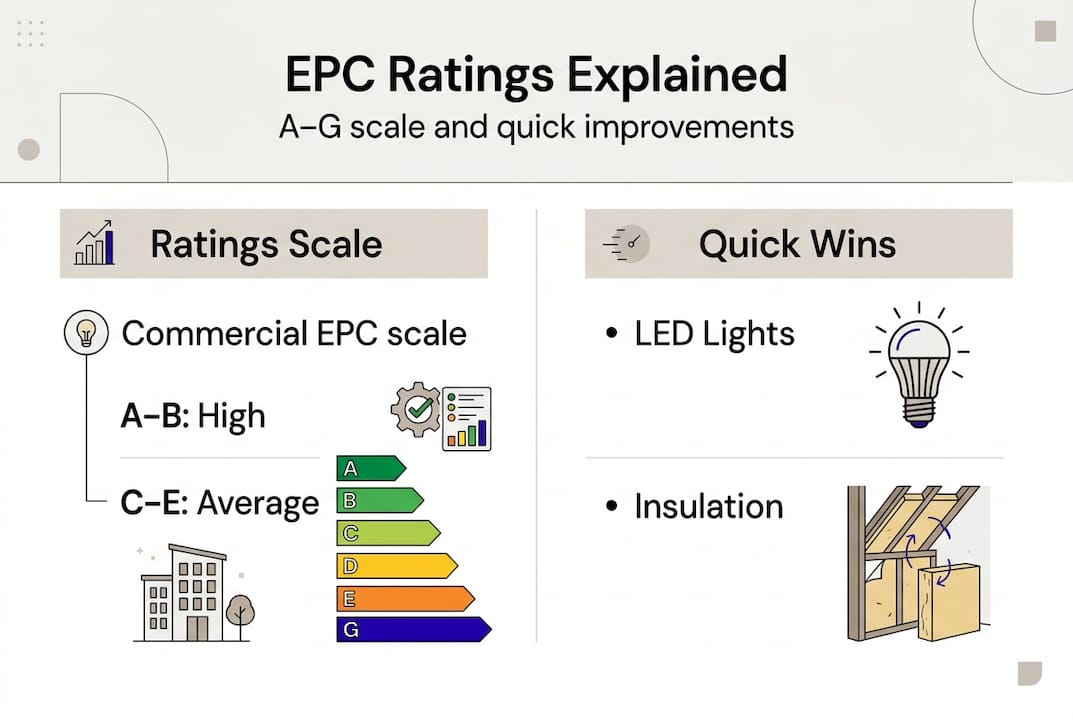
Your rating directly impacts operational costs and environmental footprint. Buildings with poor ratings waste energy through heat loss, inefficient systems, and outdated technology. Improving an EPC rating can reduce energy consumption by up to 30%, offering significant cost savings for landlords. This reduction translates to lower utility bills, decreased carbon emissions, and enhanced tenant satisfaction.
Practical improvements for improving commercial EPC ratings include:
- Upgrade insulation in walls, roofs, and floors to reduce heat transfer and maintain comfortable temperatures with less energy input
- Install LED lighting throughout the building, reducing electricity consumption by up to 75% compared to traditional lighting whilst improving light quality
- Optimise heating, ventilation, and air conditioning systems through regular maintenance, controls upgrades, and zone management
- Fit double or triple glazing to minimise heat loss through windows and reduce noise pollution
- Consider renewable energy installations such as solar panels or heat pumps to generate clean energy on site
- Implement building management systems that automatically adjust heating, cooling, and lighting based on occupancy and weather conditions
Prioritise improvements based on cost-effectiveness and building-specific needs. Quick wins like lighting upgrades deliver immediate savings with short payback periods. Substantial investments in insulation or heating systems require longer timeframes but provide greater long-term benefits. Your EPC recommendations include estimated costs and savings for each measure, helping you plan strategically.
Enhanced ratings attract quality tenants willing to pay premium rents for efficient premises. Properties with superior energy performance stand out in competitive markets, reducing void periods and increasing capital values. Environmental credentials increasingly influence corporate tenants’ location decisions, making high EPC ratings a commercial advantage beyond simple cost savings.
Legal implications and compliance timelines for London commercial EPCs
Legal requirements for commercial EPCs in London create clear obligations for property owners and landlords. Legal deadlines for EPC compliance in London are strictly enforced to encourage energy efficiency in commercial buildings. Understanding these timelines and potential exemptions helps you maintain compliance without unnecessary stress or penalties.
Key compliance deadlines include:
- EPCs must be available from the point of marketing when selling or letting commercial property
- Certificates must be provided to prospective buyers or tenants at the earliest opportunity
- Existing tenancies require valid EPCs when agreements are renewed or extended
- Display Energy Certificates are required for public buildings over 500 square metres with high visitor numbers
- Minimum Energy Efficiency Standards prohibit letting commercial properties rated below E from April 2023
| Compliance aspect | Requirement | Timeline |
|---|---|---|
| New lettings | Valid EPC before marketing | Immediate |
| Property sales | Certificate available to buyers | Before completion |
| Certificate validity | Remains current unless alterations | 10 years |
| MEES compliance | Minimum rating E for lettings | Currently enforced |
| Display certificates | Public buildings over 500m² | Renewed annually |
EPCs remain valid for ten years from the date of issue. You may commission a new assessment earlier if you make improvements that could enhance your rating. Properties undergoing significant alterations affecting energy performance require fresh assessments regardless of existing certificate validity. Track expiry dates carefully to avoid gaps in coverage during critical transaction periods.
Several exemptions exist for specific circumstances:
- Buildings due for demolition with relevant planning consent
- Temporary structures with planned use under two years
- Stand-alone buildings with total useful floor area below 50 square metres
- Industrial sites, workshops, and agricultural buildings with low energy demand
- Listed buildings where compliance would unacceptably alter character
- Properties with commercial EPC exemptions must be registered on the national exemptions register
Penalties for non-compliance escalate based on rateable value. Trading standards officers enforce requirements and can issue fines ranging from £500 to £5,000. Repeated violations or deliberate non-compliance attract higher penalties. Local authorities maintain registers of non-compliant properties, creating reputational risks alongside financial consequences.
Maintain ongoing compliance through systematic record keeping. Diarise certificate expiry dates well in advance. Schedule assessments during planned maintenance periods to capture recent improvements. Keep copies of all energy efficiency upgrade documentation to demonstrate enhanced performance during future assessments. Proactive management prevents last-minute rushes and ensures you always have current certification when opportunities arise.
How Complete EPC supports London commercial building owners
Navigating commercial EPC requirements demands expertise and attention to regulatory detail. Complete EPC provides specialist assessments for London commercial buildings, simplifying the compliance process from initial booking through certificate issuance. Their qualified assessors understand the nuances of commercial property evaluation, ensuring accurate ratings that reflect your building’s true performance.
The service streamlines every stage of obtaining your EPC. Book assessments online with flexible scheduling that accommodates your operational needs. Assessors arrive prepared with comprehensive checklists and calibrated equipment, completing evaluations efficiently without disrupting your business. You receive detailed reports explaining your rating and highlighting practical improvement opportunities tailored to your property type and budget.
Complete EPC offers guidance on exemptions and renewals, helping you understand when certificates are required and how to maintain continuous compliance. Their team stays current with evolving regulations, ensuring your assessments meet the latest standards. Whether you manage a single commercial unit or an extensive portfolio, their expertise helps you avoid penalties whilst optimising energy performance.
Access their understanding EPCs guide for comprehensive background information. Review their EPC assessment process guide to prepare effectively for your evaluation. Explore EPC exemptions and regulations to determine if your property qualifies for special treatment under current rules.
Frequently asked questions about energy performance certificates for commercial buildings
What documents do I need to provide for an EPC assessment?
You should prepare building plans, heating and cooling system specifications, lighting details, and insulation certificates. Previous EPC certificates and records of recent energy improvements help assessors understand your property’s current state. Having documentation ready ensures the assessment proceeds smoothly without delays.
How long does an EPC certificate remain valid?
Commercial EPCs remain valid for ten years from the issue date unless you make significant alterations affecting energy performance. You can commission a new assessment earlier if improvements could enhance your rating. Always check expiry dates before marketing properties to ensure continuous compliance.
Can I sell or lease a commercial building without an EPC in London?
No, you cannot legally market, sell, or let commercial property in London without a valid EPC. The certificate must be available from the point of marketing and provided to prospective buyers or tenants at the earliest opportunity. Non-compliance results in fines up to £5,000.
What are common exemptions from EPC requirements?
Exemptions include buildings scheduled for demolition, temporary structures used under two years, stand-alone buildings below 50 square metres, and certain listed buildings where compliance would alter character. Industrial sites and agricultural buildings with low energy demand may also qualify. Visit commercial EPC certificates FAQ for detailed exemption information.
How can I improve my commercial building’s EPC rating?
Focus on insulation upgrades, LED lighting installation, heating system optimisation, and improved glazing. Building management systems that control energy use based on occupancy deliver significant improvements. Your EPC report includes tailored recommendations with estimated costs and savings, helping you prioritise measures that offer the best return on investment.
Recommended
- EPC and Energy Cost Savings for London Firms
- Meet Legal EPC Obligations for Commercial Properties
- The Commercial EPC Handbook for London Businesses: Increase Your Energy Savings – Complete EPC
- EPC for Commercial Property: Complete Guide London – Complete EPC
- Property management compliance checklist Europe 2026