

Over 90 percent of british homes now require an up-to-date Energy Performance Certificate before being sold or let. Understanding how these certificates work can make a real difference when dealing with property regulations or trying to cut energy bills. This guide breaks down the role of domestic EPCs, why they matter to every british homeowner, and offers straightforward advice to help you spot savings and stay compliant.
Table of Contents
- Understanding Domestic EPCs and Their Purpose
- Types of EPCs for Residential Properties
- Domestic EPC Assessment Process Explained
- Legal Requirements and Compliance in London
- Costs, Validity, and Improving Your EPC Rating
Key Takeaways
| Point | Details |
|---|---|
| Understanding EPCs | Domestic Energy Performance Certificates provide insights into a property’s energy efficiency and are legally required for constructions, sales, or rentals. |
| Types of Residential EPCs | Different housing types require specific EPC assessments to evaluate energy efficiency effectively. |
| Legal Compliance | Property owners must obtain a valid EPC, with a minimum rating of E for rental properties, to avoid penalties. |
| Improvement Strategies | Enhancing energy efficiency can increase property value and lower long-term costs, making it beneficial to adopt suggested upgrades. |
Understanding Domestic EPCs and Their Purpose
A Domestic Energy Performance Certificate (EPC) represents a detailed assessment of a property’s energy efficiency, providing homeowners, landlords, and potential buyers with critical insights into a building’s energy performance. According to ONS, these certificates indicate energy efficiency by evaluating key features such as building materials, heating systems, and insulation quality.
The primary purpose of an EPC goes beyond mere documentation. These certificates are legally mandated by the Department for Levelling Up, Housing and Communities, requiring properties to have a valid certificate when constructed, sold, or let. The certificate uses a standardised grading system from A to G, with ‘A’ representing the most energy-efficient properties and ‘G’ indicating the least efficient buildings.
Key aspects of a Domestic EPC include:
- Comprehensive energy efficiency rating
- Estimated energy costs
- Recommendations for potential improvements
- Carbon dioxide emission ratings
- Detailed insights into thermal performance
Beyond regulatory compliance, an EPC serves as a valuable tool for property owners. It not only helps identify potential energy-saving opportunities but also provides a clear roadmap for reducing both environmental impact and long-term utility expenses. By understanding your property’s energy performance, you can make informed decisions about potential renovations, insulation upgrades, and heating system modifications that could significantly improve your home’s overall energy efficiency.
For a comprehensive understanding of EPC ratings and what they mean for your property, check out our guide on EPC ratings.
Types of EPCs for Residential Properties
In the realm of energy assessment, residential properties have specific EPC requirements that differ from commercial buildings. Government regulations clearly distinguish between domestic and non-domestic Energy Performance Certificates, ensuring that each property type receives a tailored energy efficiency evaluation.
Residential EPCs are primarily designed for different housing types, including:
- Detached houses
- Semi-detached properties
- Terraced homes
- Flats and apartments
- Bungalows
- Converted properties
Each residential EPC assessment involves a comprehensive review of the property’s energy characteristics. An accredited energy assessor will inspect key elements such as:
- Heating systems
- Insulation quality
- Window and door glazing
- Hot water systems
- Overall building construction
The certification process for domestic properties focuses on providing homeowners with a clear understanding of their property’s energy performance. Government guidelines emphasize that these certificates use a standardised A to G grading system, allowing property owners to quickly understand their home’s energy efficiency and potential improvement areas.
For property owners looking to dive deeper into the intricacies of EPC ratings and their implications, our guide to EPC rating scales offers comprehensive insights into understanding and interpreting these crucial energy efficiency assessments.
Domestic EPC Assessment Process Explained
The Domestic EPC Assessment is a structured, professional evaluation of a property’s energy performance, requiring meticulous attention to detail and expertise. Government sources confirm that only qualified domestic energy assessors can conduct these comprehensive evaluations, ensuring a standardised and reliable approach to understanding a home’s energy efficiency.
The assessment process typically involves several critical stages:
- Initial Property Survey
- Detailed Measurements
- System and Construction Analysis
- Data Collection and Documentation
- Software-Based Energy Performance Calculation
During the assessment, the accredited energy assessor will systematically examine various property elements, including:
- Building fabric and insulation quality
- Heating system specifications
- Windows and door configurations
- Hot water system efficiency
- Ventilation and potential heat loss areas
Nidirect guidelines emphasize that the assessment requires a physical property visit, where the assessor meticulously collects data about the building’s energy features. This on-site inspection ensures an accurate representation of the property’s actual energy performance, going beyond theoretical calculations.

Homeowners preparing for an EPC assessment can streamline the process by gathering relevant documentation beforehand, such as previous energy bills, renovation records, and information about heating systems. For a comprehensive walkthrough of what to expect during your property’s energy assessment, our EPC assessment process guide for London provides detailed insights and preparation tips.
Legal Requirements and Compliance in London
The Energy Performance Certificate (EPC) is not merely a recommendation but a legal obligation for property owners in London. Government regulations mandate that properties must obtain a valid EPC when they are constructed, sold, or let, with strict penalties for non-compliance that can result in enforcement actions and financial penalties.
Key legal requirements for London property owners include:
- Mandatory EPC for all properties being sold or rented
- Minimum energy efficiency rating of E for rental properties
- Valid certificate must be provided to potential buyers or tenants
- Certificate must be less than 10 years old
- Penalties for failing to produce a valid EPC
Specifically for landlords, the legal landscape is particularly stringent. Local government guidelines stipulate that non-compliant properties cannot be marketed or let until they meet the minimum energy efficiency standards. Landlords must not only obtain an EPC but also ensure their properties reach at least an E rating, and they are legally required to provide tenants with a copy of the certificate.
Navigating these complex legal requirements can be challenging, which is why property owners should stay informed about the latest regulations. Our comprehensive guide to EPC compliance in London offers detailed insights to help you understand and meet these critical legal obligations, ensuring your property remains fully compliant with current energy efficiency standards.
Costs, Validity, and Improving Your EPC Rating
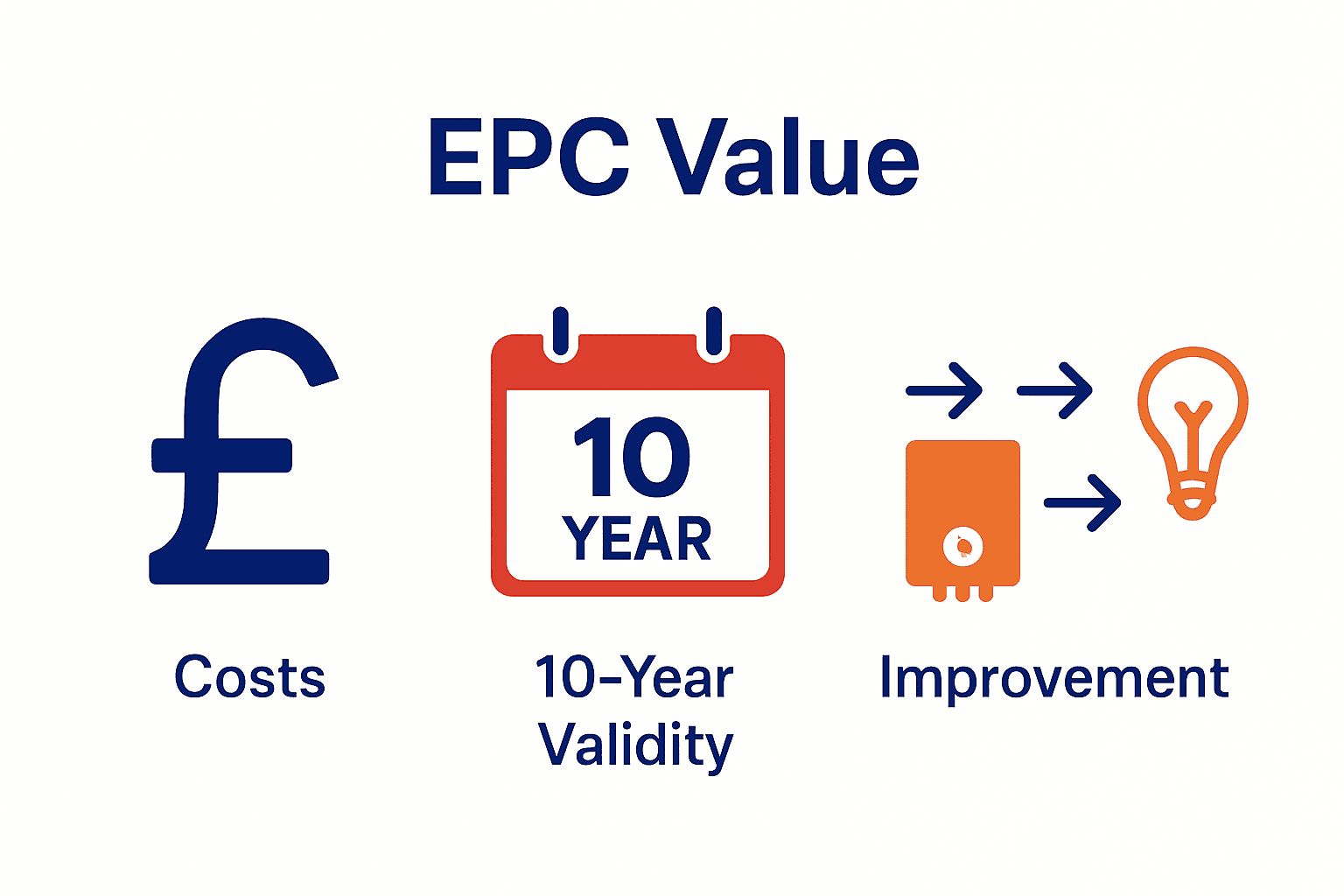
The Energy Performance Certificate (EPC) represents a critical document for property owners, balancing both financial considerations and energy efficiency insights. Nidirect guidelines confirm that each certificate remains valid for a standard 10-year period, providing property owners with a comprehensive snapshot of their building’s energy performance and potential improvements.
Key factors influencing EPC costs and validity include:
- Initial assessment fees (typically £60-£120)
- Certificate validity duration of 10 years
- Potential cost savings from energy efficiency recommendations
- Impact on property market value
- Compliance requirements for rental and sale transactions
Improvement strategies for enhancing your EPC rating can deliver significant benefits. Local government sources recommend targeted upgrades such as:
- Boiler renewal and system upgrades
- Installing radiator thermostats
- Enhancing property insulation
- Upgrading to low-energy lighting
- Implementing double or triple glazing
Property owners should view the EPC not just as a regulatory requirement, but as a strategic tool for reducing long-term energy costs and increasing property value.
 By understanding and implementing the recommended improvements, homeowners can potentially increase their property’s energy efficiency rating, reduce utility expenses, and make their homes more attractive to potential buyers or tenants.
For a comprehensive walkthrough of how to maximize your EPC rating and understand its nuances, our guide to EPC certificate validity provides in-depth insights tailored to London property owners.
Secure Your Domestic EPC with Confidence and Ease in London
Navigating the legal requirements and complex energy assessments outlined in our guide can feel daunting especially when you need a reliable Domestic EPC that meets all standards. It is crucial to have a trusted partner who understands the specific challenges London homeowners face such as meeting the minimum energy efficiency rating and avoiding costly penalties. At Complete EPC, we specialise in helping property owners, landlords and estate agents get accurate, legally compliant certificates swiftly and affordably while offering detailed energy efficiency reports to guide your improvements.
Take control of your property’s energy future today by choosing experts who offer competitive pricing and a seamless service backed by experienced qualified assessors. Explore how easy it is to comply with London’s legal EPC obligations through our Complete EPC services. If you want to understand what your rating means or how to improve it, visit our EPC rating guide for practical insights. Don’t postpone this essential step that can enhance your property value and reduce energy expenses. Start now at Complete EPC and secure your Domestic EPC with confidence.
Frequently Asked Questions
What is a Domestic Energy Performance Certificate (EPC)?
A Domestic EPC is a certificate that assesses a property’s energy efficiency, providing insights into how energy-efficient it is and highlighting potential improvements.
Why is an EPC required for my property?
An EPC is legally required for properties that are constructed, sold, or let. It helps ensure compliance with energy efficiency standards and informs potential buyers or tenants of the property’s energy performance.
How long is an EPC valid for?
An Energy Performance Certificate is valid for 10 years, after which a new assessment must be conducted to provide an updated energy performance rating.
What factors can improve my EPC rating?
You can improve your EPC rating by upgrading your heating systems, enhancing insulation, installing energy-efficient lighting, and implementing double or triple glazing to reduce energy consumption.
Recommended
- London’s Ultimate Guide to Energy Performance Certificates: Enhance Your Property’s Efficiency – Complete EPC
- Decoding Energy Performance Certificates in London: A Complete Guide – Complete EPC
- Why an EPC Certificate Is Essential for London Homeowners – Complete EPC
- Understanding EPCs in London: Why They Matter for Property Owners – Complete EPC