


Most british property owners are surprised to learn that over 65 percent misunderstand the purpose of an Energy Performance Certificate. These documents play a much larger role than simply ticking a legal box. In a market like London, understanding the real impact of an EPC can help you save money, boost property value, and take clear steps toward a greener future. This guide clears up common myths and highlights how these certificates can offer more than you might think.
Table of Contents
- EPC Reports Defined And Core Misconceptions
- Types Of EPC Reports And Their Uses
- What An EPC Assessment Covers In Detail
- Legal Requirements For EPCs In London
- Costs, Common Errors, And How To Avoid Them
Key Takeaways
| Point | Details |
|---|---|
| EPC Purpose and Value | Energy Performance Certificates (EPCs) are essential tools that provide insights into a property’s energy efficiency and potential cost savings. They offer recommendations for improvements that can enhance value and reduce utility bills. |
| Legal Compliance | Valid EPCs are mandatory for properties being sold or rented in the United Kingdom, requiring compliance to avoid substantial fines. Certificates remain valid for ten years and must reflect current energy performance. |
| Assessment Variability | Different methodologies used by assessors can lead to variability in EPC ratings; property owners should view these certificates as dynamic documents. Continuous improvements can significantly enhance both energy performance and property value. |
| Strategic Management | Property owners should approach EPCs as strategic assessments rather than mere bureaucracy, using recommendations to drive energy efficiency investments and sustainability objectives. |
EPC Reports Defined and Core Misconceptions
An Energy Performance Certificate (EPC) provides a comprehensive assessment of a property’s energy efficiency, offering property owners and potential buyers critical insights into a building’s environmental performance. These standardised documents rate properties on a scale from A (most efficient) to G (least efficient), effectively visualising energy consumption and potential carbon emissions. Understanding these certificates is crucial for London property owners seeking to improve their property’s energy rating.
Common misconceptions often surround these certificates, with many property owners misunderstanding their purpose and significance. Contrary to popular belief, an EPC is not merely a bureaucratic requirement but a valuable tool for identifying energy-saving opportunities. The certificate goes beyond a simple rating, providing detailed recommendations for reducing energy consumption, potentially saving property owners significant amounts on utility bills. These suggestions range from minor improvements like installing LED lighting to more substantial interventions such as upgrading insulation or replacing heating systems.
The accuracy of EPC assessments has been a point of ongoing discussion in the property sector. While official energy efficiency ratings provide a standardised approach, individual assessments can vary based on the specific methodologies used by different energy assessors. Property owners should view these certificates as dynamic documents that reflect the current state of a building’s energy performance, recognising that improvements can significantly enhance both environmental sustainability and property value. Importantly, these reports are not static snapshots but actionable guides that can help property owners make informed decisions about energy efficiency investments.
Navigating the complexities of EPCs requires understanding their legal and practical implications. In the United Kingdom, these certificates are mandatory for properties being sold or rented, serving as a critical compliance document. Property owners must obtain a valid EPC before marketing their property, with certificates remaining valid for ten years. By approaching these reports as strategic tools rather than bureaucratic requirements, London property owners can transform their approach to energy management, contributing to broader environmental goals while potentially reducing long-term operational costs.
Types of EPC Reports and Their Uses
Energy Performance Certificates (EPCs) are not a one-size-fits-all document but rather a nuanced set of assessments tailored to different property types and purposes. Commercial and residential properties require distinct approaches to energy performance evaluation, reflecting the unique characteristics and energy consumption patterns of each building type. Primarily, these certificates are classified into two main categories: domestic and non-domestic EPCs, each serving specific regulatory and informational needs for property owners and stakeholders.
In the realm of commercial properties, EPC reports are particularly sophisticated, featuring multiple complexity levels that account for the intricate nature of different building structures. Commercial EPC assessments are stratified into three distinct levels: Level 3 for straightforward buildings with simple energy systems, Level 4 for more complex commercial spaces featuring intricate mechanical and electrical installations, and Level 5 for specialised structures with unique architectural elements like atriums or advanced technological infrastructure. These granular classifications ensure that energy performance evaluations capture the nuanced energy dynamics of diverse commercial environments.
Domestic EPC reports, by contrast, focus on residential properties and provide homeowners with a clear snapshot of their property’s energy efficiency. These reports not only rate the building’s current performance but also offer actionable recommendations for improving energy consumption and reducing carbon emissions. The recommendations can range from simple interventions like upgrading insulation to more comprehensive upgrades such as installing renewable energy systems or replacing outdated heating mechanisms. Property owners can leverage these insights to make informed decisions about energy-related investments, potentially increasing their property’s market value and reducing long-term operational costs.
Beyond individual property benefits, EPC reports play a crucial role in broader environmental and policy landscapes. Government agencies and environmental researchers utilise these standardised documents to track national energy efficiency trends, develop targeted policy interventions, and monitor progress towards sustainability goals. By providing a consistent, quantifiable method of assessing building energy performance, EPCs contribute to the United Kingdom’s commitment to reducing carbon emissions and promoting more sustainable urban development strategies.
What an EPC Assessment Covers in Detail
A comprehensive Energy Performance Certificate assessment is a meticulous examination of a property’s energy efficiency, delving far beyond surface-level evaluations. Solar water heating systems and photovoltaic panels play a crucial role in these detailed assessments, forming key components of the overall energy performance analysis. Trained assessors methodically inspect multiple aspects of a property’s structural and technological characteristics, gathering data that provides a holistic view of energy consumption and potential improvements.

The assessment process encompasses several critical elements that determine a property’s energy efficiency rating. Inspectors conduct an exhaustive review of the building’s fabric, examining insulation quality in walls, roofs, and floors, which significantly impact thermal performance. Heating systems receive particular scrutiny, with assessors evaluating the efficiency of boilers, radiators, and alternative heating technologies. Window glazing, ventilation systems, and thermal bridges are also meticulously analysed, creating a comprehensive profile of the property’s energy dynamics. These detailed observations are translated into a standardised rating that helps property owners understand their building’s current energy performance and potential for improvement.
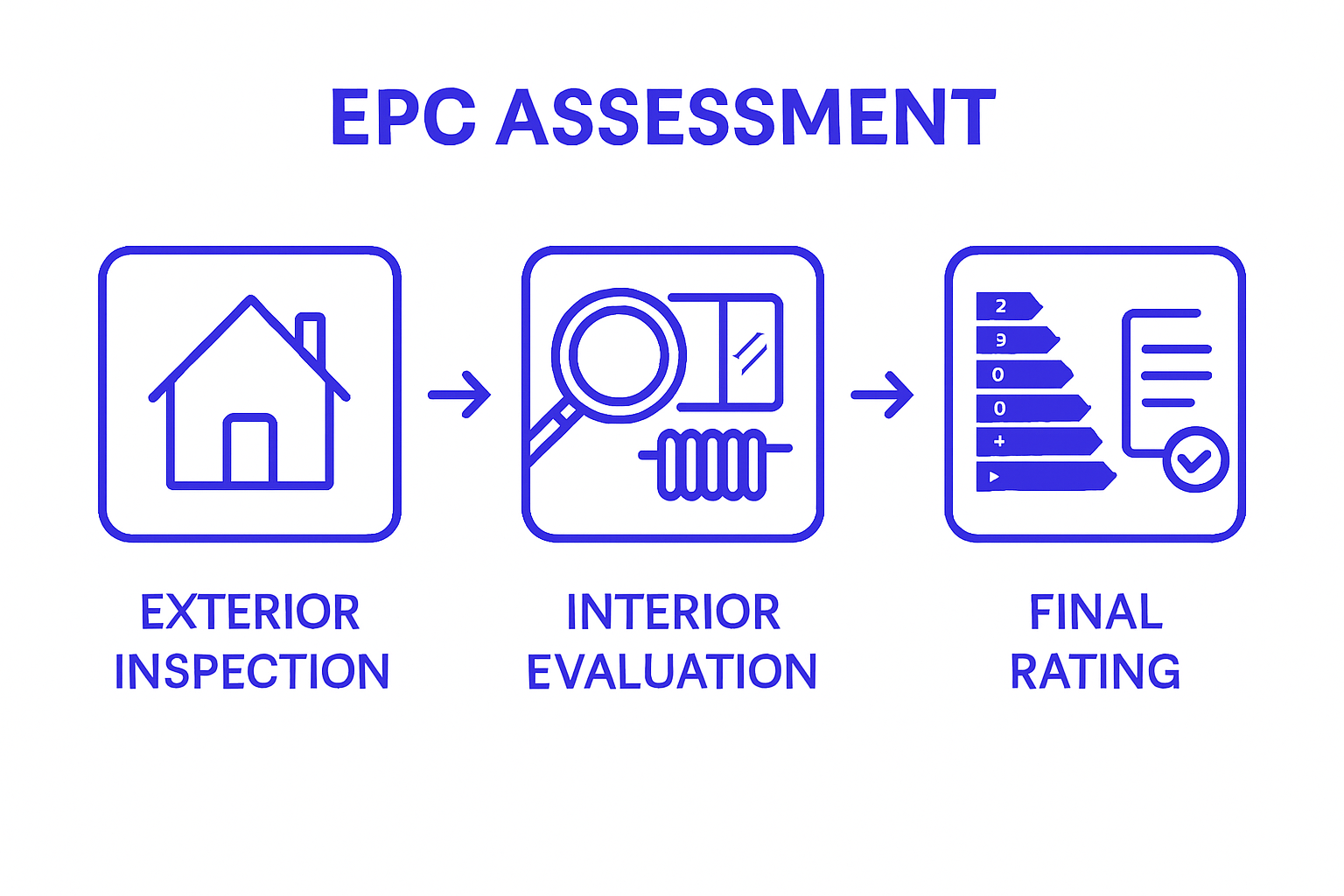
Beyond physical infrastructure, EPC assessments incorporate advanced computational modeling to predict energy consumption and carbon emissions. Assessors use sophisticated software that calculates theoretical energy usage based on the property’s specific characteristics, considering factors like occupancy patterns, heating controls, and potential renewable energy integrations. This approach allows for a nuanced understanding of a property’s energy performance, moving beyond simple visual inspections to provide data-driven insights. The resulting recommendations are tailored to each property, suggesting targeted interventions that can range from minor adjustments like draught-proofing to significant upgrades such as installing more efficient heating systems or implementing renewable energy technologies.
The ultimate objective of an EPC assessment extends far beyond a simple energy rating. These comprehensive evaluations serve as powerful tools for property owners, potential buyers, and policymakers, providing actionable intelligence about a building’s environmental performance. By highlighting potential energy-saving opportunities and associated cost implications, EPC assessments empower stakeholders to make informed decisions about property improvements, ultimately contributing to broader sustainability goals and helping to reduce the built environment’s carbon footprint.
Legal Requirements for EPCs in London
Navigating the legal landscape of Energy Performance Certificates (EPCs) in London requires a comprehensive understanding of the regulatory framework. Property owners must obtain a valid EPC when constructing, selling, or renting out properties, with strict guidelines governing the certification process. These legal mandates apply uniformly across residential and commercial properties, ensuring a consistent approach to energy efficiency assessment throughout the metropolitan area.
For residential properties, the legal requirements are particularly stringent. An EPC becomes mandatory whenever a property is marketed for sale or rent, and must be made available to potential buyers or tenants before the transaction proceeds. The certificate remains valid for a decade, after which a new assessment is required. Non-compliance can result in substantial financial penalties, with local authorities empowered to issue fines ranging from £500 to £5,000 depending on the property’s size and the severity of the violation. Commercial property owners face equally rigorous requirements, with additional layers of complexity for buildings with more sophisticated energy systems.
The legal framework surrounding EPCs extends beyond mere documentation. Property owners are not just required to obtain the certificate but must also demonstrate a commitment to improving energy performance. The EPC includes recommendations for enhancing a property’s energy efficiency, and while these suggestions are not immediately legally binding, they represent a clear pathway towards meeting increasingly stringent environmental regulations. Landlords, in particular, must pay close attention to these recommendations, as future legislation may mandate minimum energy efficiency standards that could impact property value and rentability.
Enforcement of EPC regulations in London is taken seriously, with multiple stakeholders involved in ensuring compliance. Local authorities, trading standards offices, and environmental health departments work collaboratively to monitor adherence to energy performance standards. Property transactions, rental agreements, and property advertisements are potential trigger points for EPC verification, meaning property owners must remain proactive in maintaining current and accurate energy performance documentation. The ultimate goal of these legal requirements transcends bureaucratic compliance, representing a crucial mechanism for reducing carbon emissions and promoting sustainable urban development in one of the world’s most dynamic metropolitan environments.
Costs, Common Errors, and How to Avoid Them
Understanding the financial landscape of Energy Performance Certificates requires careful navigation, with costs varying significantly across different property types and assessment complexities. Property owners can optimise their EPC expenditure by selecting qualified assessors who provide comprehensive and accurate evaluations. Residential properties typically incur lower assessment costs, ranging from £60 to £120, while commercial property assessments can escalate from £150 to £500 depending on building size and structural intricacies.
Several common errors can substantially compromise the accuracy and value of an Energy Performance Certificate. Property owners frequently underestimate the importance of providing comprehensive documentation to assessors, potentially leading to incomplete or inaccurate ratings. Critical mistakes include failing to disclose recent energy efficiency improvements, providing outdated building information, or neglecting to highlight renewable energy installations. Assessors rely heavily on precise documentation and visual inspection, meaning incomplete or misleading information can result in suboptimal energy performance ratings that might adversely affect property valuation and marketability.
To mitigate potential errors and maximise the EPC’s effectiveness, property owners should adopt a proactive approach. Preparation is key: gather all relevant documentation beforehand, including recent renovation records, heating system specifications, and details of any energy-efficient upgrades. Photographs documenting improvements can provide additional context for assessors. Property owners should also ensure unobstructed access to all areas requiring inspection, including loft spaces, utility rooms, and external elements. Professional assessors recommend conducting a preliminary self-assessment, reviewing insulation, checking window seals, and verifying heating system efficiency before the official evaluation.
Beyond immediate compliance, strategic EPC management can yield significant long-term benefits. Property owners who view these certificates as opportunities for improvement rather than mere regulatory requirements can leverage the recommendations to enhance energy efficiency, reduce utility costs, and increase property value. The most forward-thinking property managers treat EPC assessments as strategic audits, using the insights to plan targeted energy efficiency investments. By understanding potential improvements and implementing them systematically, property owners can transform a mandatory certification process into a valuable tool for sustainable property management and financial optimization.
Take Control of Your London Property’s Energy Efficiency Today
Navigating the complexities of Energy Performance Certificates can feel overwhelming, especially with the detailed assessments and legal requirements outlined in the article. Whether you are a property owner, landlord, or estate agent, understanding your EPC report’s recommendations and ensuring accurate, compliant certification is vital. Common challenges include avoiding costly errors, interpreting energy ratings, and identifying improvement opportunities that enhance property value while reducing energy costs.
Complete EPC offers expert support tailored to London properties, providing reliable and affordable EPC services that help you meet legal obligations swiftly and confidently. By choosing Complete EPC, you gain access to qualified assessors who deliver detailed reports with practical advice for improvements. Don’t let inaccuracies or delays hold you back from maximising your property’s potential. Explore our EPC assessment process and start your journey towards energy efficiency with ease. Take the first step now and ensure your London property stands out in the market with a trustworthy energy performance certificate.
Frequently Asked Questions
What is an Energy Performance Certificate (EPC)?
An Energy Performance Certificate (EPC) provides a detailed assessment of a property’s energy efficiency, rating it from A (most efficient) to G (least efficient) and offering recommendations for energy-saving improvements.
Why is an EPC mandatory for properties being sold or rented?
An EPC is legally required for any property marketed for sale or rent. It ensures transparency regarding a property’s energy performance and helps buyers and tenants understand potential energy costs.
How long is an EPC valid for?
An EPC remains valid for ten years from the date of issue, after which a new assessment must be obtained to reflect any changes in energy efficiency.
What factors are assessed during an EPC evaluation?
EPC evaluations include a comprehensive review of insulation, heating systems, window efficiency, and renewable energy technologies. Assessors analyse these elements to determine the property’s overall energy performance rating.
Recommended
- Understanding EPCs in London: Why They Matter for Property Owners – Complete EPC
- EPC Costs in London: What Should You Expect? – Complete EPC
- 7 Essential EPC Compliance Tips for London Property Owners – Complete EPC
- EPC for Property Investors: Complete London Guide – Complete EPC
- What Is Eau De Parfum? Complete Breakdown for UK Buyers