


Energy performance certificate reports can feel overwhelming if you are a property owner or landlord in London. Many people struggle to interpret the ratings, recommendations, and technical jargon these documents contain. Yet understanding your EPC is essential for legal compliance, improving energy efficiency, and maximising property value. This guide breaks down EPC reports into clear, actionable insights so you can confidently navigate regulations, reduce energy costs, and make informed decisions about your property in 2026.
Table of Contents
- What Is An Energy Performance Certificate (EPC) And Why It Matters
- How EPC Reports Are Created: The Home Energy Model And New Metrics In 2026
- Reading And Interpreting Your EPC Report: Key Components And What They Mean
- How To Use Your EPC Report To Enhance Property Value And Comply With London Regulations
- How Complete EPC Can Help With Your Energy Performance Certificate Needs
- Frequently Asked Questions
Key takeaways
| Point | Details |
|---|---|
| EPCs are legally required | Properties sold or rented in London must have a valid energy performance certificate to comply with regulations. |
| New metrics improve clarity | The Home Energy Model introduces fabric performance, heating system, and smart technology metrics in 2026 for better transparency. |
| Ratings guide efficiency | EPC ratings from A to G indicate energy performance, with A being most efficient and G least efficient. |
| Recommendations reduce costs | Implementing suggested improvements can lower energy bills and increase property value significantly. |
| Validity lasts 10 years | EPCs remain valid for a decade unless significant energy upgrades require earlier reassessment. |
What is an energy performance certificate (EPC) and why it matters
An energy performance certificate is an official document that assesses how efficiently a building uses energy. It provides a rating from A (most efficient) to G (least efficient) and includes recommendations for improving energy performance. For property owners and landlords in London, EPCs serve as both a legal requirement and a practical tool for reducing running costs whilst supporting environmental sustainability.
The legal framework governing EPCs stems from national calculation methodologies established under the Building Regulations 2010 and Energy Performance of Buildings Regulations 2012. These regulations mandate that most properties being sold or let must have a valid EPC available to prospective buyers or tenants. Compliance is not optional, and failing to provide an EPC can result in financial penalties for landlords and estate agents.
Understanding energy performance regulations UK is crucial because these rules directly impact your ability to market and rent properties legally. In London’s competitive property market, having an up to date EPC demonstrates professionalism and transparency. It also helps tenants and buyers make informed decisions about potential energy costs before committing to a property.
Typical properties requiring EPCs include:
- Residential homes being sold or rented
- Commercial buildings changing tenancy or ownership
- New constructions upon completion
- Properties undergoing significant renovations affecting energy performance
Pro Tip: Always verify your EPC assessor uses approved methodology to avoid invalid reports that could delay property transactions or result in compliance issues.
How EPC reports are created: the home energy model and new metrics in 2026
The technical foundation of modern EPCs relies on the Home Energy Model, a sophisticated simulation tool that evaluates energy usage patterns in dwellings. This model considers numerous factors including building fabric, heating systems, ventilation, lighting, and renewable energy installations. By simulating how a property uses energy under standardised conditions, the HEM produces consistent, comparable ratings across different buildings.

Government reforms in 2026 have introduced new EPC metrics that provide clearer insights into specific aspects of energy performance. These metrics move beyond simple A to G ratings to offer granular information about individual building characteristics. For landlords and property owners, this enhanced transparency makes it easier to identify which improvements will deliver the greatest impact on energy efficiency and tenant comfort.
The key new metrics introduced include:
- Fabric performance indicators measuring insulation quality and heat loss through walls, roofs, and windows
- Heating system efficiency ratings showing how effectively your boiler or heat pump converts energy into warmth
- Smart technology integration scores reflecting the presence of programmable thermostats, smart metres, and energy management systems
These additions transform EPCs from simple rating documents into comprehensive diagnostic tools. Understanding your energy performance certificate guide becomes more valuable because you can pinpoint exactly where your property excels or needs improvement. The home energy model explanation reveals how assessors calculate these metrics using standardised assumptions about occupancy patterns, heating schedules, and internal temperatures.
For London property owners, these reforms mean your EPC report now provides actionable intelligence rather than just a compliance document. You can prioritise upgrades based on which metrics score poorly, focusing investment where it will make the most difference to both energy bills and property marketability. The enhanced detail also helps when discussing improvements with contractors, as you can reference specific performance gaps identified in your assessment.
Reading and interpreting your EPC report: key components and what they mean
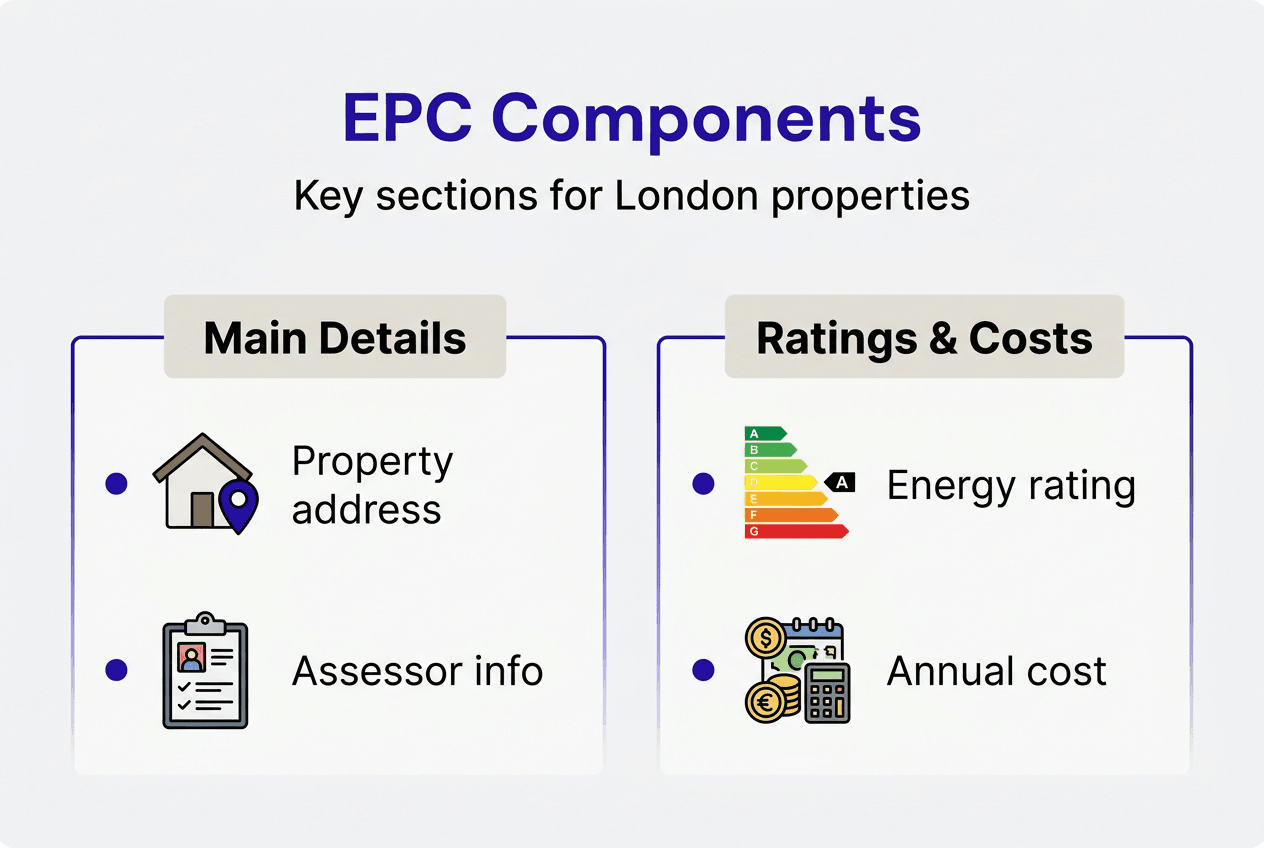
Navigating an EPC report becomes straightforward once you understand its core components. The document opens with your property’s current energy rating displayed prominently on the familiar colour coded scale. This rating reflects estimated energy costs per square metre annually, allowing direct comparison with similar properties. Below the main rating, you will find your potential rating, which shows what could be achieved by implementing all recommended improvements.
| Rating | Efficiency Level | Typical Annual Cost | Implications |
| — | — | — |
| A (92-100) | Very efficient | £200-400 | Lowest running costs, highest property value |
| B (81-91) | Efficient | £400-600 | Good performance, minimal improvements needed |
| C (69-80) | Fairly efficient | £600-900 | Moderate costs, some improvement opportunities |
| D (55-68) | Average | £900-1,200 | Standard performance, significant savings possible |
| E (39-54) | Below average | £1,200-1,600 | Higher costs, improvements recommended |
| F (21-38) | Poor | £1,600-2,000 | Substantial inefficiency, urgent action needed |
| G (1-20) | Very poor | £2,000+ | Severe inefficiency, major upgrades required |
The recommendations section forms the heart of your EPC’s practical value. Here, assessors list specific improvements categorised by cost effectiveness and potential impact. Each suggestion includes estimated implementation costs, projected annual savings, and the rating improvement you might achieve. This section transforms abstract energy concepts into concrete actions you can take to enhance your property’s performance.
Common energy efficiency measures suggested in EPCs include:
- Cavity wall insulation to reduce heat loss through external walls
- Loft insulation upgrades to meet current building standards
- Double or triple glazing replacement for older single glazed windows
| Condensing boiler installation to improve heating system efficiency - LED lighting conversion throughout the property
- Solar photovoltaic panels for renewable electricity generation
- Smart heating controls and programmable thermostats
The EPC metrics reform supporting net zero goals means your report now aligns with the UK’s commitment to reach net zero emissions by 2050. Understanding these connections helps you see beyond immediate cost savings to the broader environmental impact of your property choices. For landlords, this alignment with national climate objectives can also enhance your reputation among environmentally conscious tenants.
Pro Tip: Prioritise cost effective improvements highlighted in the report first, such as loft insulation or LED lighting, which typically deliver quick payback periods before tackling more expensive upgrades like heating system replacements.
Exploring benefits of EPCs for London properties reveals how these reports extend beyond compliance to become strategic tools for property investment and management decisions.
How to use your EPC report to enhance property value and comply with London regulations
Transforming EPC insights into tangible improvements requires a systematic approach. Property owners who methodically address recommendations see measurable benefits in reduced energy bills, increased tenant satisfaction, and higher property valuations. The key lies in prioritising actions based on cost effectiveness and regulatory requirements specific to London’s property market.
Follow these sequential steps to act on EPC recommendations:
- Review your current rating and identify which band your property falls into, noting any regulatory thresholds you must meet for letting purposes.
- Analyse the recommendations section to understand which improvements offer the best return on investment based on estimated costs and annual savings.
- Obtain quotes from qualified contractors for priority improvements, ensuring they understand the specific measures outlined in your EPC.
- Implement quick wins first, such as draught proofing, LED lighting, and thermostat upgrades that require minimal investment but deliver immediate savings.
- Plan larger projects like insulation or heating system replacements during natural renovation cycles to minimise disruption and maximise cost efficiency.
- Schedule a new EPC assessment after completing significant improvements to document enhanced performance and update your legal compliance records.
London landlords face specific compliance requirements that make understanding EPC reports essential. Energy performance certificate regulations deliver warmer, cost effective homes whilst aligning with legal standards for selling or renting properties. Staying current with these requirements protects you from penalties and ensures your properties remain marketable.
Key compliance requirements for London landlords include:
- Providing a valid EPC to prospective tenants before marketing a property for rent
- Ensuring rental properties meet minimum energy efficiency standards, currently set at E rating or above
- Displaying EPC ratings prominently in property advertisements and listings
- Keeping EPC certificates accessible for inspection by local authority enforcement officers
- Updating EPCs when significant energy improvements are completed or when the 10 year validity period expires
The practical application of EPC recommendations extends beyond regulatory compliance to create genuine competitive advantages. Properties with higher energy ratings attract quality tenants more quickly, command premium rents, and experience lower void periods. Buyers increasingly factor energy efficiency into purchase decisions, making improved EPC ratings a direct contributor to property value appreciation.
Pro Tip: Schedule EPC reassessments promptly after completing upgrades to maintain legal compliance and capture the full marketing benefit of your improvements when advertising properties.
Implementing energy efficiency steps London properties and following energy rating improvement steps creates a clear roadmap from assessment to action. This structured approach ensures you maximise the return on every pound invested in property improvements whilst meeting all regulatory obligations.
How Complete EPC can help with your energy performance certificate needs
Navigating EPC requirements becomes significantly easier when you partner with specialists who understand London’s unique property landscape. Complete EPC offers streamlined online ordering for domestic EPC quotes, ensuring you receive competitive pricing without compromising on assessment quality. Our qualified assessors bring extensive experience evaluating properties across all London boroughs, providing accurate reports that stand up to regulatory scrutiny.
Beyond simply producing certificates, we guide property owners through understanding epcs guide London requirements and implementing practical improvements. Our team explains report findings in plain language, helping you prioritise upgrades that deliver maximum impact on both energy performance and property value. Whether you are preparing a property for sale, ensuring rental compliance, or planning renovation projects, Complete EPC provides the expertise and support you need to make informed decisions about energy efficiency steps London properties require in 2026.
Frequently asked questions
What properties in London require an EPC?
All properties being sold or rented in London require a valid energy performance certificate before marketing to prospective buyers or tenants. This includes residential homes, flats, commercial buildings, and mixed use properties. Certain exempted property types exist, such as listed buildings where compliance would unacceptably alter character, buildings scheduled for demolition, and temporary structures with planned use under two years. Understanding energy performance regulations UK ensures you know whether your specific property falls under EPC requirements or qualifies for exemption.
How often must an EPC be updated?
Energy performance certificates remain valid for 10 years from the date of issue, provided no significant changes occur to the property’s energy characteristics during that period. However, you should obtain a new assessment earlier if you complete substantial improvements like installing insulation, upgrading heating systems, or adding renewable energy technologies. This captures enhanced performance in your official rating and ensures compliance documentation reflects your property’s current state. Landlords must also ensure a valid EPC exists throughout any tenancy period, obtaining renewals before the EPC update requirements expire to maintain continuous legal compliance.
Can EPC recommendations help reduce energy bills?
Implementing recommendations from your energy performance certificate typically delivers substantial reductions in energy bills whilst improving property comfort and marketability. Measures like enhanced insulation, efficient heating systems, and smart controls directly reduce the energy needed to maintain comfortable temperatures. Many property owners report savings of 20 to 40 percent on annual heating costs after completing priority improvements identified in their EPC reports. Beyond financial benefits, these upgrades create warmer, more comfortable homes that appeal to quality tenants and buyers. The benefits of EPC recommendations extend to environmental impact as well, reducing your property’s carbon footprint and supporting broader sustainability goals.
What happens if I rent a property without a valid EPC?
Renting a property without providing a valid energy performance certificate constitutes a breach of legal requirements and exposes landlords to financial penalties. Local authorities can issue fines ranging from £500 to £5,000 depending on the severity and duration of non compliance. Beyond monetary penalties, lacking an EPC can delay property transactions, damage your reputation with estate agents and tenants, and create complications if disputes arise. Ensuring you maintain current EPCs for all rental properties protects you from these risks whilst demonstrating professionalism and commitment to legal compliance in London’s regulated property market.
Recommended
- Understanding EPCs in London: Why They Matter for Property Owners – Complete EPC
- Understanding EPCs: Your Guide to Energy Performance Certificates in London – Complete EPC
- EPC Report Breakdown – Key Insights for London Properties
- London’s Guide to EPC: What You Need to Know to Boost Property Value – Complete EPC