

Cold winter mornings in Greater London often reveal which properties hold onto their warmth and which let heat vanish through poorly insulated walls and roofs. For any landlord or property owner, understanding thermal efficiency is far more than a technical detail—it directly shapes your monthly energy costs and your property’s EPC rating. When you grasp how fabric performance and insulation standards work, you unlock the benefits of superior thermal efficiency, making your property both more comfortable and more valuable while meeting modern compliance requirements.
Table of Contents
- What Thermal Efficiency Means for Buildings
- Types of Thermal Efficiency in Properties
- Thermal Efficiency’s Role in EPC Ratings
- Legal Standards for Energy Performance Compliance
- Improving Thermal Efficiency: Practical Steps and Costs
Key Takeaways
| Point | Details |
|---|---|
| Understanding Thermal Efficiency | Thermal efficiency measures a building’s ability to retain heat in winter and reduce heat gain in summer, impacting energy bills and EPC ratings. |
| Impact on Energy Performance | Improving thermal efficiency through insulation and upgrades can lead to reduced energy consumption and increased property appeal. |
| Legal Compliance Requirements | Compliance with energy performance regulations is essential, with specific EPC requirements affecting rental properties in London. |
| Strategic Upgrades for Cost Savings | Targeted improvements like loft and cavity wall insulation offer the best returns, significantly enhancing EPC ratings and reducing heating costs. |
What Thermal Efficiency Means for Buildings
Thermal efficiency in buildings refers to how well your property prevents heat loss during winter and heat gain during summer. Essentially, it measures the building’s ability to maintain comfortable temperatures whilst using minimal energy for heating and cooling. A thermally efficient building keeps warmth where you want it—inside during cold months—rather than letting it escape through walls, windows, roofs, and floors. This concept sits at the heart of modern building regulations and directly influences both your energy bills and your property’s Energy Performance Certificate rating.
The Building Regulations framework in England emphasises thermal efficiency through Approved Document L, which sets practical standards for construction methods, insulation performance, and how building elements—such as walls, windows, and doors—work together to reduce energy demand. When your property has poor thermal efficiency, your heating system works harder and longer to maintain temperature, driving up your energy consumption and monthly costs. Conversely, when thermal efficiency improves through better insulation, sealed air leaks, and upgraded glazing, you need less energy to heat or cool your home, resulting in lower running costs and reduced carbon emissions.
Understanding how thermal efficiency affects heating costs and energy demand helps you prioritise improvements that deliver real savings. The UK Government’s assessment model specifically evaluates fabric performance—the quality of your building’s construction—to guide which upgrades will make the biggest difference. For London property owners and landlords, this matters considerably because thermal efficiency directly determines your EPC rating, which affects rental appeal, property value, and compliance with letting regulations. Buildings with superior thermal efficiency achieve higher EPC grades, making them more attractive to prospective tenants and buyers whilst reducing your ongoing operational expenses.
The practical reality is straightforward: every gap in insulation, every poorly sealed window frame, and every thermal bridge—where heat escapes through structural elements like concrete or metal—chips away at your property’s efficiency rating. When thermal comfort standards require proper fabric performance, these elements become measurable factors in your property’s overall energy performance assessment.
Pro tip: Focus first on the biggest heat loss culprits in your property—typically the roof (where 25% of heat escapes), external walls, and windows—before tackling smaller improvements, as these deliver the fastest payback on investment and the most noticeable difference in your EPC rating.
Types of Thermal Efficiency in Properties
Thermal efficiency in properties comes down to several key building components that work together to reduce heat loss. The main elements are wall insulation, roof insulation, and window glazing—each contributing differently to your property’s overall thermal performance. Understanding these distinct types helps you identify where improvements will have the greatest impact on your EPC rating and energy bills. Your property’s specific combination of these features determines how effectively it maintains temperature without relying heavily on heating or cooling systems.
Wall insulation is perhaps the most significant factor, as walls represent a major source of heat escape. Properties typically have one of two types: cavity wall insulation (where insulation material sits between two layers of brickwork) or solid wall insulation (applied to the interior or exterior of solid brick walls). Cavity wall insulation is generally easier and cheaper to install, making it common in homes built after the 1920s. Solid wall properties, often older Victorian and Edwardian terraces and semis common throughout London, require more substantial investment but deliver substantial improvements. Roof insulation is equally important because heat naturally rises—poor loft insulation means significant warmth escapes upwards. Most properties benefit from loft insulation depths of 250mm or more, though older homes may have minimal or no loft insulation. Window glazing has evolved considerably; single-glazed windows offer minimal insulation, whilst double glazing provides meaningful improvement, and triple glazing offers the highest performance.
Beyond these primary elements, floor insulation and heating system efficiency also affect overall thermal performance. Different property types show varying levels of thermal efficiency—social housing tends to perform better due to recent retrofits and newer construction standards, whilst older private properties and some rental homes often lag behind. Your property’s age, construction type, and tenure all influence which thermal improvements make practical sense. A Victorian terrace with solid walls needs a different approach than a 1970s semi with cavity walls. When evaluating energy-saving measures for your property type, prioritising the most cost-effective upgrades ensures you get the best return on investment and the most noticeable improvement in your EPC grade.
Pro tip: Ask your EPC assessor which single improvement would raise your rating most efficiently—often it is loft insulation or cavity wall insulation rather than expensive full external wall retrofits, meaning you can boost your EPC band without breaking the bank.
Thermal Efficiency’s Role in EPC Ratings
Thermal efficiency forms the foundation of your EPC rating. When an assessor evaluates your property, they examine how well your building retains heat through its walls, roof, floors, windows, and doors. These thermal properties directly translate into your EPC score, which ranges from A (most efficient) to G (least efficient). The better your property’s thermal performance, the higher your rating. This is not just about comfort—a strong EPC rating affects property value, rental appeal, and your ability to comply with letting regulations in London.

The EPC rating scale measures building efficiency by assessing insulation quality across multiple components. An assessor reviews your wall insulation (cavity or solid), roof insulation depth, floor insulation, window glazing type, and airtightness. They also consider your heating system and hot water provision, but thermal efficiency of the building fabric itself carries substantial weight in the final score. A property with excellent cavity wall insulation, thick loft insulation, and double glazing will score significantly higher than an identical property with single glazing, minimal loft insulation, and no wall insulation. The difference between an EPC Band D and Band C often comes down to these thermal elements rather than expensive heating system replacements.
What makes this particularly important for London landlords and property owners is that thermal efficiency improvements directly boost your EPC rating and reduce heating costs simultaneously. Upgrading your loft insulation, for example, can shift your rating by one or two bands whilst cutting heating bills by 10 to 15 percent. Similarly, cavity wall insulation or window replacements yield both rating improvements and tangible monthly savings. The UK government is also reforming how EPCs present this information, moving towards clearer metrics that separately highlight fabric performance and heating efficiency, making it easier to understand exactly where thermal weaknesses exist in your property.
The practical reality is that thermal efficiency improvements offer something rare in property investment: immediate cost savings paired with increased asset value. Tenants actively seek thermally efficient properties because they mean lower energy bills. Buyers recognise that superior thermal performance reduces future heating costs. Regulatory compliance for lettings in London increasingly hinges on achieving minimum EPC standards. Every upgrade to your building’s thermal fabric moves you closer to compliance, reduces your environmental footprint, and strengthens your property’s market position.
Pro tip: Request a detailed EPC assessment that breaks down which specific thermal elements are limiting your rating; tackling the three or four biggest weaknesses first delivers the fastest rating improvement and the best return on your retrofit investment.
Legal Standards for Energy Performance Compliance
Energy performance compliance in England and Wales is not optional—it is legally mandated. Property owners, landlords, and sellers must comply with specific regulations that govern thermal efficiency standards and energy certification requirements. These legal frameworks exist to reduce energy consumption, lower carbon emissions, and protect tenants and buyers by ensuring transparent information about building energy performance. Understanding your compliance obligations prevents costly penalties and protects your property investment.
The Energy Performance of Buildings Regulations 2012 legally require every building to have a valid EPC when constructed, sold, or let. This regulation applies across England and Wales and stems from European Union directives designed to drive energy efficiency improvements. When you sell a property, you must provide an EPC to potential buyers before marketing it. When you let a property, you must provide an EPC to prospective tenants and keep it available throughout the tenancy. Failure to comply can result in fines of up to £5,000 per breach, and enforcement officers can issue penalty notices. The regulations also require that EPCs include recommendations for improving energy efficiency, giving tenants and buyers a clear understanding of how thermal performance could be enhanced.
Beyond EPC requirements, Approved Document L sets specific technical standards for building energy efficiency that directly relate to thermal performance. These standards cover new construction and major renovation work, specifying minimum insulation values, air tightness requirements, and performance standards for building elements such as walls, roofs, windows, and doors. For existing properties undergoing renovation, you must meet these standards for the components being upgraded. A landlord installing new windows, for example, must ensure they meet the thermal transmittance (U-value) requirements. Property owners conducting loft conversions or extending properties must comply with current thermal standards for those new elements. These requirements ensure that improvements to your property meet modern efficiency expectations and contribute to net-zero emissions targets.
For London property owners specifically, compliance also involves understanding energy efficiency regulations affecting rental properties. Lettings in London must meet minimum EPC standards—currently, a property cannot be let if it achieves an EPC rating of G. From April 2025, the minimum standard increases to EPC band E for new lets and existing tenancies from April 2026. This means your property’s thermal efficiency directly determines whether it remains legally lettable. Planning ahead by improving thermal performance now protects your rental income and avoids sudden regulatory restrictions.
The following table highlights legal requirements and deadlines for landlords based on EPC band and tenancy status:
| EPC Band Required | Deadline (New Lets) | Deadline (Existing Tenancies) | Maximum Non-Compliance Fine |
|---|---|---|---|
| Band G or above | Until April 2025 | Until April 2026 | £5,000 per breach |
| Band E or above | From April 2025 | From April 2026 | £5,000 per breach |
Pro tip: Obtain your EPC assessment well before selling or letting, and use the detailed recommendations to prioritise improvements that improve your rating; doing this proactively gives you time to plan costs and ensures you meet compliance deadlines without rushing.
Improving Thermal Efficiency: Practical Steps and Costs
Improving thermal efficiency does not require a complete property overhaul. Targeted, strategic upgrades deliver measurable improvements to your EPC rating whilst reducing energy bills. The key is prioritising improvements based on your property’s specific weaknesses and your budget constraints. Most effective improvements fall into three categories: insulation upgrades, glazing replacements, and heating system efficiency. Understanding the typical costs and expected benefits helps you make informed decisions about which measures offer the best return on investment.
Loft and cavity wall insulation represent the quickest wins for most London properties. Adding or upgrading loft insulation typically costs between £300 to £500 for an average-sized property and can reduce heating bills by 10 to 15 percent whilst improving your EPC rating by one or two bands. Cavity wall insulation, where applicable, costs roughly £1,500 to £3,000 and delivers similar efficiency gains. Solid wall insulation proves more expensive, ranging from £10,000 to £25,000 depending on whether you opt for internal or external application, but creates substantial thermal performance improvements in Victorian and Edwardian properties common throughout London. Retrofitting measures like draught proofing and window upgrades complement these primary improvements and cost considerably less whilst still contributing to overall efficiency gains.
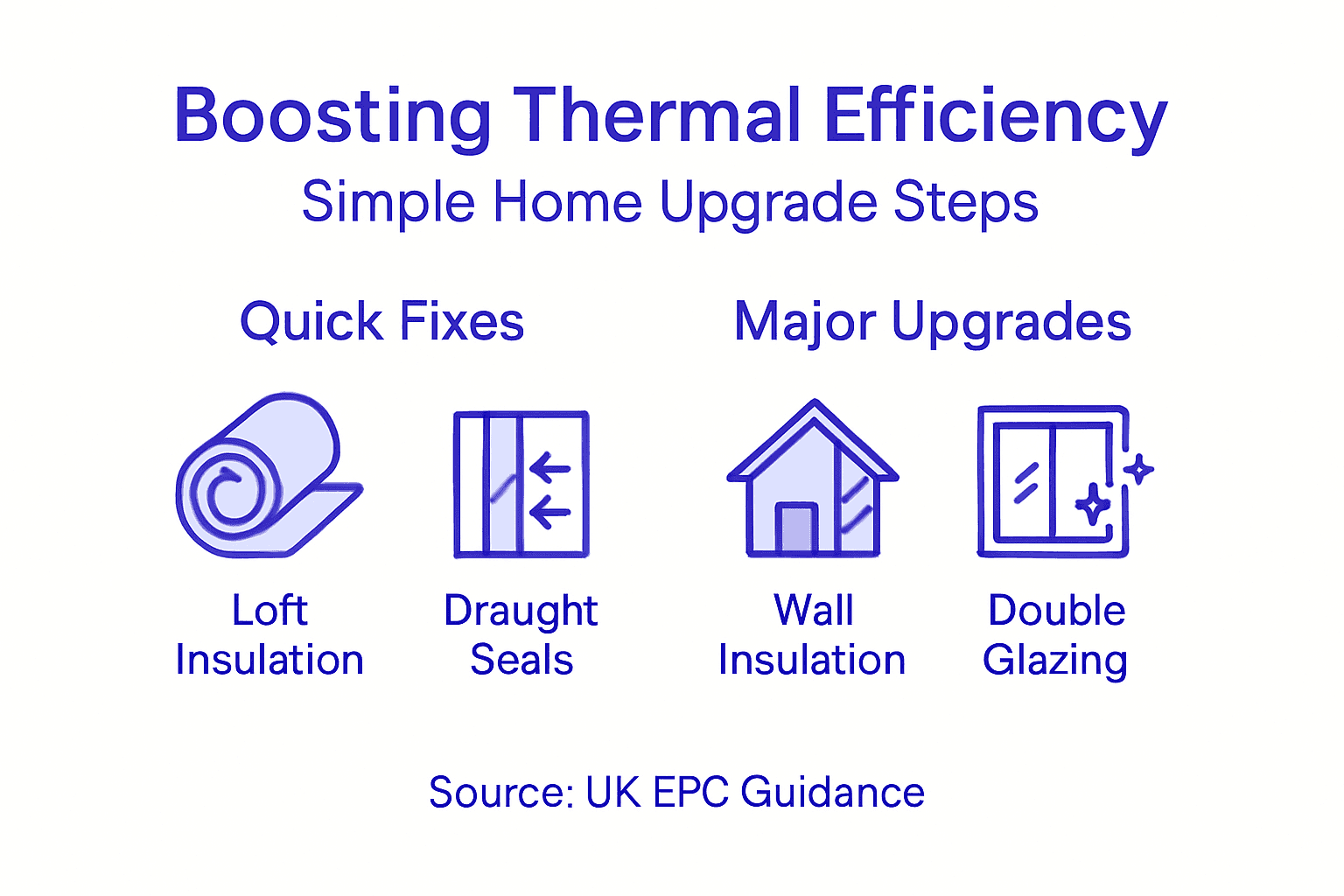
Window and door upgrades accelerate your efficiency improvements but require larger investment. Replacing single-glazed windows with double glazing costs approximately £5,000 to £10,000 for a typical three-bedroom home and improves comfort whilst reducing heat loss by roughly 20 percent. Triple glazing offers superior performance for properties in particularly cold locations or where extra noise reduction matters. Practical steps like installing efficient heating systems such as condensing boilers or heat pumps represent another significant investment, ranging from £3,000 to £15,000, but deliver long-term energy savings and often qualify for government support schemes. A condensing boiler replaces an older system with one that captures heat from exhaust gases, reducing fuel consumption. Air source heat pumps cost more upfront but offer substantial savings in running costs over time.
The table below summarises how different types of property insulation compare in terms of installation complexity, cost, and potential energy savings:
| Insulation Type | Installation Complexity | Upfront Cost | Typical Energy Savings |
|---|---|---|---|
| Loft insulation | Simple, DIY possible | £300–£500 | 10–15% on heating bills |
| Cavity wall | Moderate, specialist | £1,500–£3,000 | 10–15% on heating bills |
| Solid wall | Complex, disruptive | £10,000–£25,000 | Up to 25% on heating bills |
| Double glazing | Moderate, skilled fit | £5,000–£10,000 | 15–20% heat loss reduction |
| Triple glazing | Complex, skilled fit | £8,000–£15,000 | 20–25% heat loss reduction |
Government support schemes reduce your actual out-of-pocket costs considerably. The Energy Company Obligation provides grants and interest-free loans to eligible households for insulation improvements and heating system upgrades. Local authority grants sometimes support retrofits in priority areas. Rather than viewing improvements as expenses, consider them strategic property investments. A property that improves from EPC Band F to Band D becomes significantly more lettable, commands higher rental income, and appeals to buyers seeking lower energy costs. Many improvements pay for themselves within five to ten years through energy bill reductions alone, before considering increased property value.
Pro tip: Obtain quotes from three installers before committing to any major improvement, and ask specifically which upgrades your assessor identified as highest priority for your rating band—focusing on these delivers the most rapid EPC improvement per pound spent.
Enhance Your Property’s Thermal Efficiency with Expert EPC Support
Struggling to improve your property’s thermal efficiency and boost your EPC rating while managing costs and compliance deadlines? The detailed guidance in this article highlights how crucial fabric performance, insulation quality, and glazing are to reducing energy bills and meeting legal standards. At Complete EPC, we understand these challenges and provide expert, hassle-free EPC assessments tailored for London properties. Our qualified assessors deliver thorough reports pinpointing exactly where your property loses heat and offer clear, practical recommendations to raise your EPC band efficiently.
Don’t risk costly fines or diminished rental appeal due to poor thermal performance. Act now to secure your compliance and unlock savings by visiting Complete EPC’s Energy Performance Certificate Services. Benefit from competitive pricing and experienced consultancy that helps you prioritise the best improvements for your building type. Ready to take control of your property’s energy efficiency and value? Contact us at Complete EPC today and start your journey towards a warmer, more compliant, and cost-effective home or rental portfolio.
Frequently Asked Questions
What is thermal efficiency and why is it important for buildings?
Thermal efficiency measures how well a building maintains comfortable temperatures while minimising energy use. It is crucial as it influences energy costs, comfort levels, and compliance with building regulations.
How does thermal efficiency affect EPC ratings?
Thermal efficiency is a significant factor in your Energy Performance Certificate (EPC) rating. A property with better thermal performance achieves a higher EPC score, which can enhance marketability and reduce energy bills.
What upgrades can improve thermal efficiency in my home?
Key upgrades include loft and cavity wall insulation, double or triple glazing windows, and energy-efficient heating systems. These improvements can significantly reduce energy loss and improve your property’s EPC rating.
What potential savings can I expect from improving my thermal efficiency?
Improving thermal efficiency can lead to noticeable savings on heating bills—typically 10 to 15% from loft insulation and up to 25% with solid wall insulation. Additionally, a higher EPC rating can enhance property value and rental appeal.