
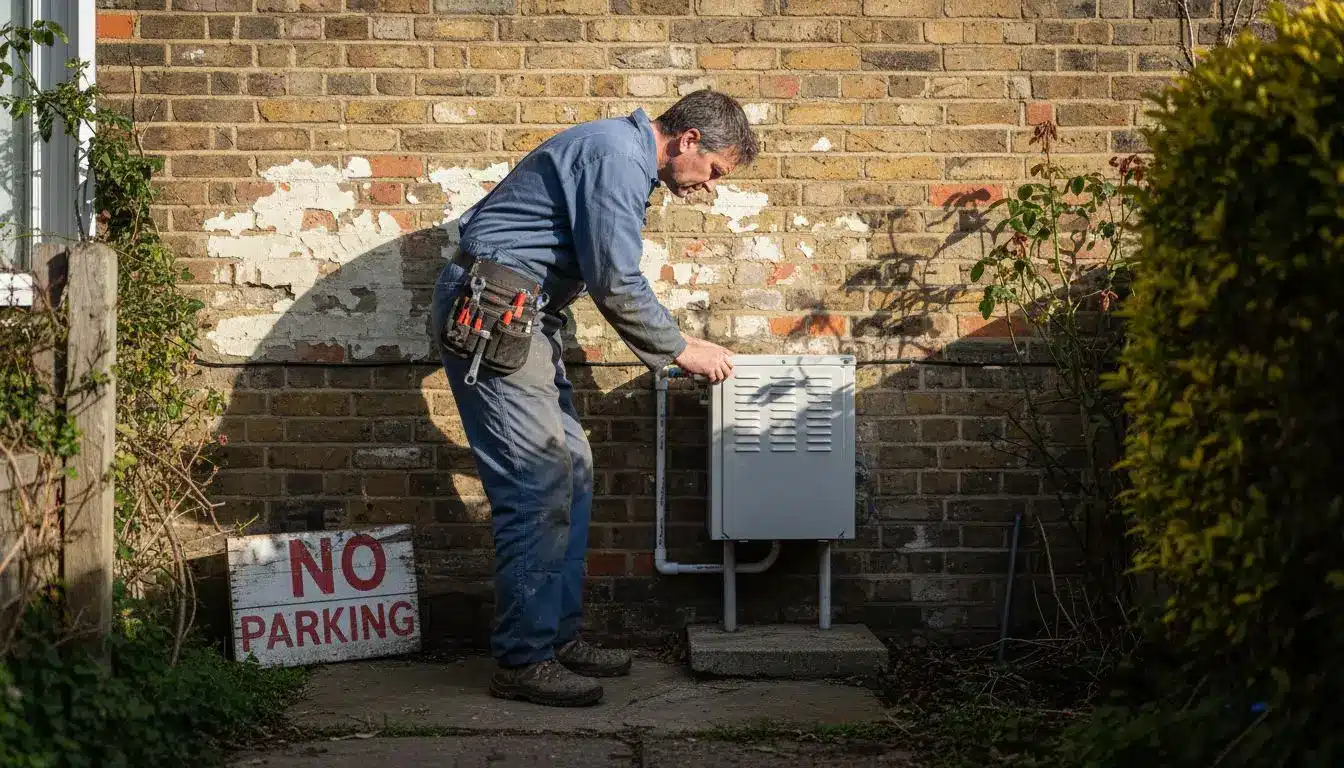
Many property owners believe air source heat pumps struggle during London’s cold winters. That’s outdated thinking. Modern ASHP units operate efficiently at outdoor temperatures as low as -15°C, well below typical London lows. This guide explains what air source heat pumps are, how they slash carbon emissions and costs, their installation expenses, government incentives available in 2026, and whether they suit your London property. You’ll learn how ASHPs improve EPC ratings and comply with evolving regulations while boosting property value.
Table of Contents
- What Is An Air Source Heat Pump?
- Benefits For Energy Efficiency And Sustainability
- Cost And Financial Considerations
- Regulatory And Market Impact In London
- Common Misconceptions
- Comparison With Other Heating Technologies
- Practical Installation And Maintenance Considerations
- Enhance Your London Property’s Energy Performance With Complete EPC
- FAQ
Key Takeaways
| Point | Details |
|---|---|
| Technology | ASHPs extract ambient heat from outdoor air and work efficiently even in freezing London winters. |
| Environmental Impact | They reduce carbon emissions by up to 50% compared to traditional gas boilers. |
| Financial Benefits | Installation costs are offset by government grants and typical running cost savings of 30-40%. |
| Regulatory Compliance | ASHPs improve EPC ratings by 1-2 bands and help meet London’s Minimum Energy Efficiency Standards. |
| Property Suitability | Best for detached or semi-detached homes with outdoor space; professional assessment determines viability. |
What is an Air Source Heat Pump?
An air source heat pump extracts heat from outside air using a reversed refrigeration cycle. Think of it as a refrigerator running backwards. Where your fridge removes heat from inside and dumps it outside, an ASHP grabs heat from outdoor air and pumps it indoors. Even when temperatures drop below freezing, air contains usable thermal energy.
The system works through a refrigerant that absorbs outdoor heat at very low temperatures. This refrigerant then passes through a compressor that raises its temperature significantly. The hot refrigerant flows through an indoor heat exchanger, transferring warmth to your radiators, underfloor heating, or hot water cylinder. The cycle repeats continuously, moving heat rather than generating it through combustion.
Modern air source heat pump technology maintains efficiency at temperatures down to -15°C, far colder than typical UK winters. A standard system includes these components:
- Outdoor unit housing the evaporator and fan
- Indoor unit with heat exchanger and circulating pump
- Control system managing temperature and cycling
- Pipework connecting indoor and outdoor units
- Optional hot water cylinder for domestic hot water storage
The outdoor unit looks similar to an air conditioning unit. It sits on a concrete pad or wall brackets outside your property. The indoor components integrate with your existing heating system or require upgrades depending on your setup.
Benefits for Energy Efficiency and Sustainability
ASHPs cut heating related carbon emissions by up to 50% compared to gas boilers. This dramatic reduction comes from using renewable heat in outdoor air rather than burning fossil fuels. As the UK electricity grid becomes cleaner with more renewable generation, ASHP carbon savings increase further.
London property owners installing ASHPs contribute directly to the UK’s net zero carbon targets by 2050. The government prioritizes heat pump adoption as a cornerstone of decarbonizing home heating. Every gas boiler replaced with an ASHP moves the country closer to climate commitments.
Typical households see annual energy bill reductions of 30-40% when switching from electric heating to an ASHP. Even compared to gas boilers, running costs often match or beat gas prices depending on tariffs. The coefficient of performance (COP) explains why. For every unit of electricity an ASHP uses, it delivers 3-4 units of heat. Gas boilers max out around 0.9 units of heat per unit of gas.
Key energy efficiency benefits of ASHPs include:
- 300-400% efficiency compared to 90% for best gas boilers
- Zero direct emissions at point of use
- Compatible with solar panels for even lower running costs
- Reduced dependence on fossil fuel price volatility
- Increased property appeal to environmentally conscious buyers and tenants
Pro Tip: Pair your ASHP with a time of use electricity tariff. Run the system during cheaper off peak hours to maximize savings.
Cost and Financial Considerations
ASHP installation in London typically costs £7,000 to £13,000 depending on property size and system complexity. That’s before government support. The Boiler Upgrade Scheme provides £7,500 grants in 2026, slashing upfront costs significantly. Typical ASHP installation costs can be offset by these grants, making the net investment comparable to a premium gas boiler.
Running costs vary by property insulation, system efficiency, and electricity tariffs. Well insulated homes with modern ASHPs see the best savings. Annual heating costs for a typical three bedroom London semi might drop from £1,200 with electric radiators to £700-£800 with an ASHP. Gas boiler users might see smaller but meaningful savings as gas prices rise and electricity becomes relatively cheaper.
Compare these annual running cost estimates:
- Electric storage heaters: £1,200-£1,400
- Gas boiler (efficient condensing): £800-£1,000
- Air source heat pump: £700-£900
- Ground source heat pump: £600-£800
Payback periods typically range from 8-12 years when factoring in grants and energy savings. Properties with higher current heating costs see faster payback. The ASHP lifespan of 15-20 years means you’ll enjoy years of lower bills after breaking even.
Financial incentives for ASHP installation extend beyond upfront grants. Improved EPC ratings can increase property values by 5-10%. Rental properties command higher rents when offering lower energy costs. Some mortgage lenders offer green mortgages with better rates for energy efficient properties.
Pro Tip: Get multiple quotes from MCS certified installers. Certification ensures quality and qualifies you for government grants.
Regulatory and Market Impact in London
Installing an ASHP typically boosts your EPC rating by one to two bands. A property rated D could jump to B, dramatically improving marketability. London properties with ASHPs see EPC rating improvements of 1-2 bands on average, directly impacting compliance and value.
The Minimum Energy Efficiency Standards require rental properties to achieve at least an E rating, with government signals pointing toward a C requirement by 2028. ASHPs offer landlords a clear path to meet and exceed these thresholds. The Future Homes Standard, applicable to new builds from 2025, effectively mandates low carbon heating like heat pumps.
London’s property market increasingly rewards energy efficiency. Buyers prioritize running costs and environmental credentials. Properties with heat pumps and strong EPC ratings sell faster and command premiums. Estate agents report growing buyer inquiries specifically about heating systems and energy performance.
Key regulatory advantages include:
- Meeting current and anticipated rental property standards
- Compliance with London borough climate action plans
- Eligibility for green financing and mortgages
- Protection against future fossil fuel heating bans
- Enhanced property value in competitive London market
Landlords face particular pressure to upgrade. The trajectory points clearly toward stricter standards. Installing an ASHP now secures compliance for years ahead while spreading costs during periods of grant availability. Waiting risks higher future upgrade costs when grants may be less generous.
EPC rating improvements with ASHPs also unlock better mortgage products. Lenders increasingly differentiate rates based on property energy performance. A strong EPC supported by an ASHP can mean thousands in interest savings over a mortgage term.
Common Misconceptions
Several myths discourage property owners from considering ASHPs. Let’s clear them up.
-
Myth: ASHPs don’t work in cold weather. Modern units function efficiently down to -15°C. London rarely drops below -5°C. Your ASHP will perform excellently through winter.
-
Myth: Heat pumps are unbearably noisy. Today’s ASHPs produce 40-50 decibels, similar to a quiet conversation or rainfall. Proper placement away from bedroom windows minimizes any disturbance.
-
Myth: Installation costs too much with minimal savings. The £7,500 grant cuts upfront costs dramatically. Running cost savings of £300-£500 annually add up quickly.
-
Myth: Maintenance is expensive and frequent. ASHPs need annual checks costing £100-£150, comparable to boiler servicing. No chimney sweeping or gas safety certificates required.
-
Myth: You need to rip out all your radiators. Many properties use existing radiators. Larger radiators or underfloor heating optimize performance but aren’t always mandatory.
The biggest misunderstanding involves system sizing. Undersized units run constantly and struggle in cold snaps. Oversized units cycle inefficiently. Professional heat loss calculations ensure correct sizing for your specific property. Don’t rely on generic estimates.
Pro Tip: Ask installers to show you noise ratings and placement plans. Simple adjustments during installation prevent future complaints from neighbors.
Comparison with Other Heating Technologies
How do ASHPs stack up against alternatives?
| Feature | Air Source Heat Pump | Gas Boiler | Ground Source Heat Pump |
|---|---|---|---|
| Installation Cost | £7,000-£13,000 (£7,500 grant available) | £2,500-£4,000 | £14,000-£20,000 |
| Annual Running Cost | £700-£900 | £800-£1,000 | £600-£800 |
| Carbon Emissions | Very Low (depends on grid mix) | High | Very Low |
| Space Requirements | Moderate outdoor space | Minimal | Large garden area |
| Noise Level | 40-50 dB | 35-45 dB | Very quiet |
| Lifespan | 15-20 years | 10-15 years | 20-25 years |
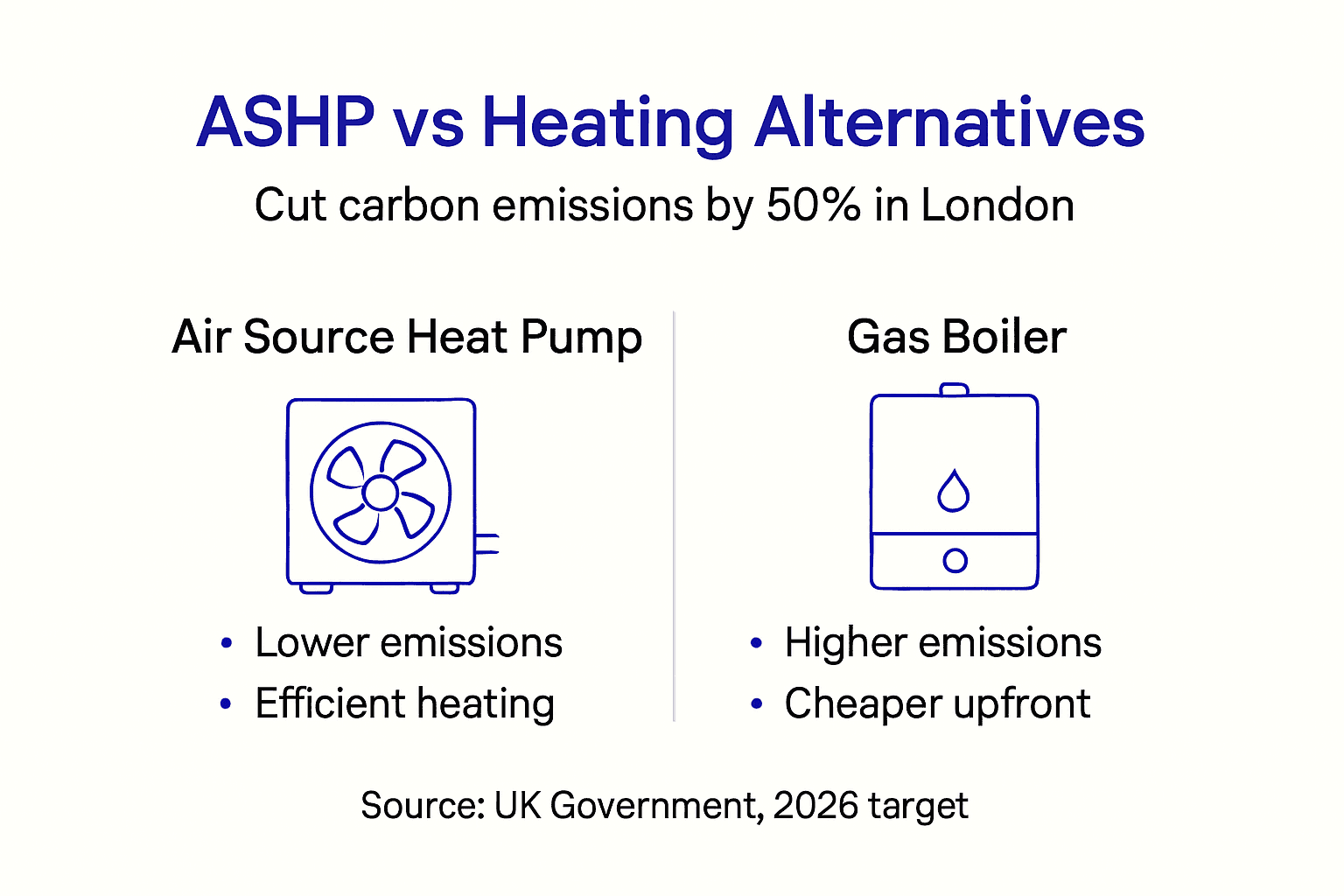
Gas boilers cost less upfront but face uncertain futures. The government plans to phase out new gas boiler installations. Running costs depend on volatile gas prices. Carbon emissions remain high regardless of efficiency improvements.
Ground source heat pumps offer superior efficiency and whisper quiet operation. But installation requires extensive garden excavation. Costs remain substantially higher even with grants. Most London properties lack sufficient outdoor space for ground loops.
Compare ASHPs to other heating systems based on your priorities:
- Choose gas if you need lowest upfront cost and have limited outdoor space
- Choose ASHP for balanced cost, efficiency, and regulatory compliance
- Choose ground source if you have large gardens and want maximum efficiency
- Avoid oil or LPG due to high carbon emissions and costs
ASHPs occupy the sweet spot for most London properties. They deliver strong efficiency without ground source’s space demands or gas’s regulatory risks. The technology continues improving, with newer models quieter and more efficient than units from just five years ago.
For broader context on energy efficient home improvements, ASHPs complement insulation upgrades, double glazing, and solar panels.
Practical Installation and Maintenance Considerations
Successful ASHP installation depends on several property specific factors. The outdoor unit needs adequate space, typically a concrete pad or wall mounting. Allow at least 0.5 meters clearance on all sides for airflow. Units placed too close to walls or fences lose efficiency.
Noise management matters in dense London neighborhoods. Position the outdoor unit away from bedroom windows, yours and your neighbors’. Acoustic barriers or strategic landscaping can further reduce sound transmission. Check planning permission requirements, though most installations fall under permitted development.
Maintenance remains straightforward:
- Annual service by qualified technician (£100-£150)
- Regular air filter cleaning (monthly during heating season)
- Visual checks for debris or damage around outdoor unit
- Monitor system pressure and top up if needed
Expect 15-20 year lifespans with proper maintenance. The refrigerant circuit is sealed and rarely needs attention. Moving parts like fans and pumps may require occasional replacement but costs remain modest.
Property type significantly affects suitability. Detached and semi detached houses with gardens are ideal candidates. Terraced houses work but require careful unit placement. Flats face challenges with outdoor unit location and building management approval. Leasehold properties need freeholder consent.
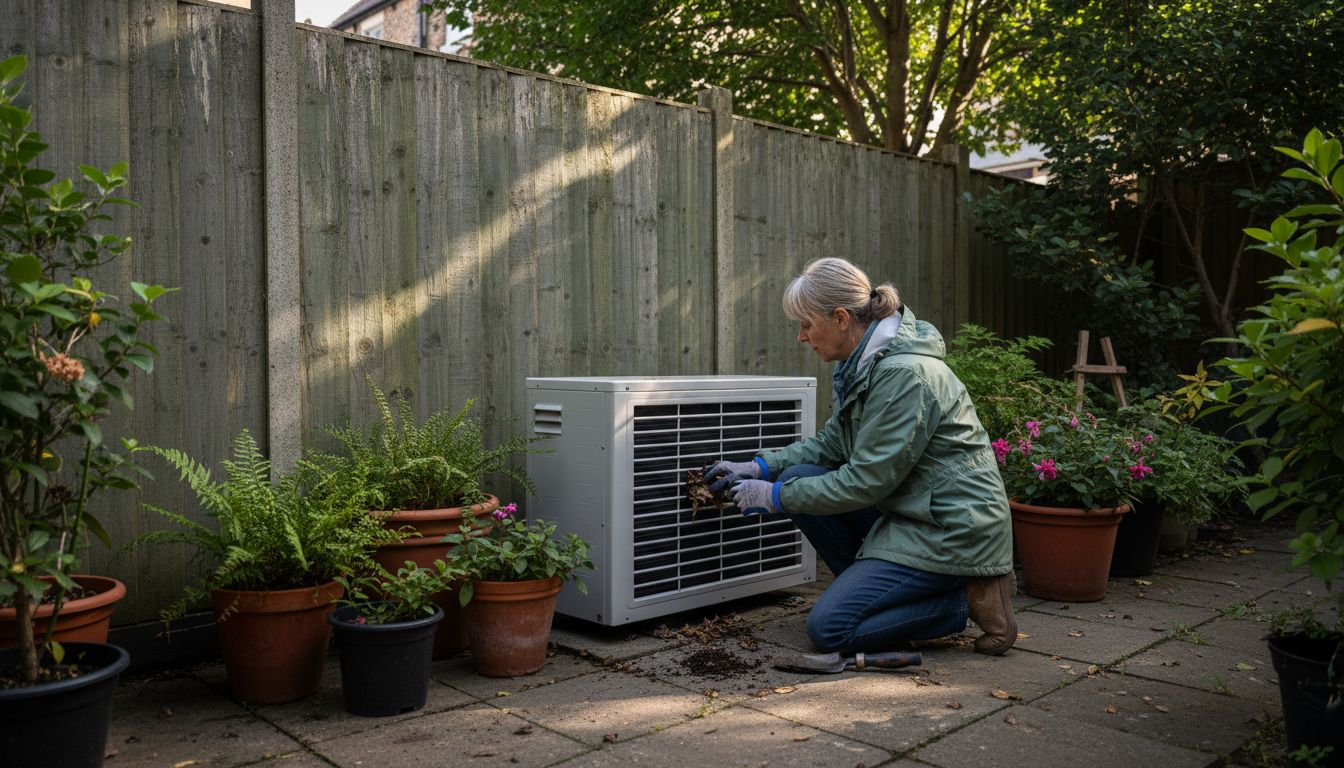
ASHP installation considerations in London include building regulations compliance. Installations must meet Part L energy efficiency requirements. MCS certified installers handle these details automatically.
Pro Tip: Schedule installation during spring or autumn. You’ll have time to familiarize yourself with controls before peak heating season. Installers also have better availability outside winter.
For insights on practical ASHP installation challenges, consider how property age affects integration. Older properties with poor insulation may need efficiency upgrades first. Modern homes with underfloor heating are perfect ASHP candidates.
Enhance Your London Property’s Energy Performance with Complete EPC
Maximizing your ASHP investment requires accurate energy assessment and compliance guidance. Complete EPC specializes in helping London property owners improve energy performance ratings through professional EPC assessments and strategic recommendations. Our qualified assessors evaluate how ASHP installations impact your EPC score and identify complementary improvements.
Whether you’re a landlord ensuring regulatory compliance or a homeowner boosting property value, understanding EPCs in London is essential. We provide detailed reports showing exactly how your ASHP contributes to better ratings. Our team stays current with EPC regulations in London, ensuring your property meets all current and anticipated standards.
Complete EPC offers competitive rates backed by the UK’s most experienced energy assessors. We make compliance straightforward, handling assessments quickly and providing clear guidance on maximizing your investment. Contact Complete EPC today for personalized quotes and expert consultations.
Pro Tip: Schedule your EPC assessment shortly after ASHP installation. The improved rating can immediately enhance property marketing and rental appeal.
FAQ
Are Air Source Heat Pumps Suitable for All London Properties?
ASHPs work best in detached or semi detached homes with adequate outdoor space for unit placement. Flats and terraced houses may face installation challenges including limited outdoor access, noise concerns in close quarters, and building management restrictions. Professional site assessments determine viability for your specific property.
How Much Can I Save on Energy Bills with an ASHP?
Typical savings range from 30-40% compared to electric heating systems, translating to £300-£500 annually for average London homes. Actual savings depend on your current heating system, property insulation, usage patterns, and electricity tariff. The £7,500 Boiler Upgrade Scheme grant significantly improves overall cost effectiveness.
Do ASHPs Comply with London’s Energy Performance Regulations?
Yes, ASHP installation improves EPC ratings by one to two bands on average, supporting compliance with London’s Minimum Energy Efficiency Standards and Future Homes Standard. Landlords use ASHPs to meet legal obligations for rental properties while homeowners benefit from increased property values. The technology aligns perfectly with current and anticipated regulations.
Are Air Source Heat Pumps Noisy?
Modern ASHPs generate 40-50 decibels, comparable to rainfall or a quiet conversation. Proper placement away from bedroom windows and strategic use of acoustic barriers minimize disturbance. Noise levels have decreased significantly in recent models. Most homeowners find the sound unobtrusive once familiar with it.
Recommended
- How Energy Statements Contribute to Lowering Carbon Emissions in London – Complete EPC
- SAP Calculations in London: Optimising Your Home’s Energy Performance – Complete EPC
- EPC Blog: UK Energy Performance Certificates Guide 2026
- Unveiling London’s Path to Optimal Home Energy Use: Understanding SAP Calculations – Complete EPC
- 7 Smart Energy-Efficient Home Improvements for Homeowners – Astrotech Construction