

Many London landlords assume an EPC rating E is acceptable for rental properties, but this misconception can lead to compliance issues and missed opportunities. An E rating signals below-average energy efficiency, potentially affecting your property’s marketability and legal standing. With regulations tightening and tenant expectations rising, understanding what rating E truly means is essential for protecting your investment. This article clarifies the implications of EPC rating E, explores legal obligations, examines market impacts, and provides actionable steps to improve your property’s energy performance.
Table of Contents
- Key takeaways
- What does an EPC rating E mean for your property?
- Legal requirements and obligations for London landlords with EPC rating E
- Impact of EPC rating E on property marketability and tenant attraction
- Steps to improve your property’s EPC rating from E to higher bands
- How Complete EPC can help London landlords improve their EPC rating
- Frequently asked questions
Key Takeaways
| Point | Details |
|---|---|
| Meaning of E rating | An E rating indicates below average energy efficiency and higher running costs for tenants. |
| MEES compliance duties | Landlords must meet MEES before letting or renewing tenancies, with penalties for non compliance up to £5,000. |
| Standards set to rise | Regulations are expected to raise the minimum to C by 2028 for new tenancies, making E ratings unacceptable. |
| Improve energy performance | Targeted fixes such as insulation upgrades, better boiler efficiency, and modern glazing can boost the EPC score and enhance tenant appeal. |
What does an EPC rating E mean for your property?
EPC ratings range from A to G, with A representing the most efficient properties and G the least. An E rating sits in the middle-lower portion of this scale, indicating your property operates with moderate energy efficiency but falls short of recommended standards. This means your tenants likely face higher energy bills than they would in a C or D-rated property, and your building consumes more resources than necessary for heating, lighting, and hot water.
The practical implications extend beyond numbers on a certificate. Properties with an E rating typically feature older heating systems, insufficient insulation, or single-glazed windows that allow heat to escape. These characteristics translate to tangible costs: tenants may spend 20-30% more on energy compared to properties rated C or above. Understanding this helps you recognise why improvement matters not just for compliance, but for tenant satisfaction and retention.
EPC ratings are calculated using Standard Assessment Procedures that evaluate your property’s construction, heating systems, insulation levels, and glazing quality. Qualified assessors examine these elements during an inspection, then input data into government-approved software that generates your rating. The assessment considers factors like wall thickness, roof insulation depth, boiler efficiency ratings, and window types to determine overall energy performance.
A common misconception holds that an E rating is sufficient because it sits in the middle of the scale. This thinking proves problematic as regulations evolve and tenant expectations shift. What seemed acceptable five years ago now represents the bare minimum, with future standards likely to phase out E-rated rentals entirely. Recognising this trajectory helps you plan improvements proactively rather than scrambling to meet last-minute compliance deadlines.
Pro Tip: Request a detailed breakdown of your EPC assessment to identify which specific features drag down your rating. This targeted information helps you prioritise improvements that deliver the greatest rating boost for your investment.
Legal requirements and obligations for London landlords with EPC rating E
Properties with rating E must meet MEES to be let legally, with increasingly strict enforcement across London. The Minimum Energy Efficiency Standards prohibit landlords from granting new tenancies or renewing existing ones if the property falls below acceptable efficiency thresholds. Currently, rating E represents the minimum permissible standard for most rental properties, but this baseline continues to rise as the government pursues net-zero carbon targets.
Landlords who ignore these requirements face substantial penalties. Non-compliance can result in fines up to £5,000 for residential properties, with enforcement authorities actively pursuing cases through tenant complaints and routine inspections. Beyond financial penalties, you risk reputational damage and potential inclusion on public registers of non-compliant landlords, which can affect your ability to secure financing or insurance for your property portfolio.
Upcoming regulation changes pose significant challenges for E-rated properties. Government consultations have proposed raising the minimum standard to C by 2028 for new tenancies and 2030 for existing ones. This timeline means landlords need EPCs that demonstrate proactive improvement planning rather than waiting until the last moment. Properties that currently hold an E rating will require substantial upgrades within the next few years to remain legally lettable.
EPC certificates remain valid for ten years, but relying on an old certificate with an E rating becomes increasingly risky as standards tighten. You must ensure your documentation stays current and accurately reflects any improvements made since the last assessment. EPC rules for landlords require you to provide valid certificates to prospective tenants at the earliest opportunity, typically before viewings commence, making up-to-date documentation essential for smooth lettings.
Key legal obligations include:
- Obtaining a valid EPC before marketing your property for rent or sale
- Ensuring the property meets minimum E rating standards for new and renewed tenancies
- Providing EPC documentation to prospective tenants before they commit to renting
- Maintaining records of any improvement works undertaken to enhance energy efficiency
- Registering your EPC on the national database within specified timeframes
Impact of EPC rating E on property marketability and tenant attraction
Properties with higher EPC ratings consistently outperform E-rated ones in London’s competitive rental market. Prospective tenants increasingly prioritise energy efficiency when choosing accommodation, driven by rising energy costs and growing environmental awareness. An E rating signals to potential renters that they will face higher utility bills and potentially less comfortable living conditions compared to properties with superior ratings.
The financial impact manifests in multiple ways. Research indicates that properties rated C or above achieve rental premiums of 5-8% compared to E-rated equivalents in similar locations. Additionally, E-rated properties experience longer void periods, with average letting times extending 2-3 weeks beyond more efficient alternatives. These combined factors erode your annual rental income substantially, often exceeding the cost of efficiency improvements within 3-5 years.

Tenant expectations have shifted dramatically over recent years. Modern renters view energy efficiency as a fundamental property feature rather than a luxury consideration. They understand that an E rating translates to higher monthly expenses and often indicates older, less maintained building systems. This perception affects not just whether they choose your property, but also their willingness to renew tenancies when alternatives with better ratings become available.
Market data reveals telling patterns about rental performance:
- Properties rated C achieve 12-15% higher tenant retention rates than E-rated ones
- E-rated properties receive 30% fewer initial enquiries in competitive London markets
- Tenants viewing E-rated properties negotiate harder on rent, reducing your pricing power
- Properties with poor ratings attract shorter-term tenants, increasing turnover costs
“Upgrading from an E to a C rating typically increases property value by 3-5% whilst simultaneously reducing void periods and enhancing tenant satisfaction. The investment pays for itself through improved rental performance and reduced management headaches.”
The competitive disadvantage extends beyond immediate letting concerns. Why EPC affects rent in London relates directly to tenant cost calculations. Savvy renters now compare total occupancy costs rather than just headline rent figures. When they calculate that an E-rated property at £1,500 monthly rent will cost them an additional £80-100 in energy bills compared to a C-rated alternative at £1,550, the choice becomes obvious. Your apparently lower rent actually represents poor value, making the property harder to let at any price point.
Steps to improve your property’s EPC rating from E to higher bands
Upgrading your property from an E rating requires strategic investment in proven energy efficiency measures. The most impactful improvements typically involve insulation, heating system upgrades, and glazing enhancements. Understanding which interventions deliver the greatest rating improvement for your budget helps you plan effectively and achieve compliance targets without overspending on marginal gains.
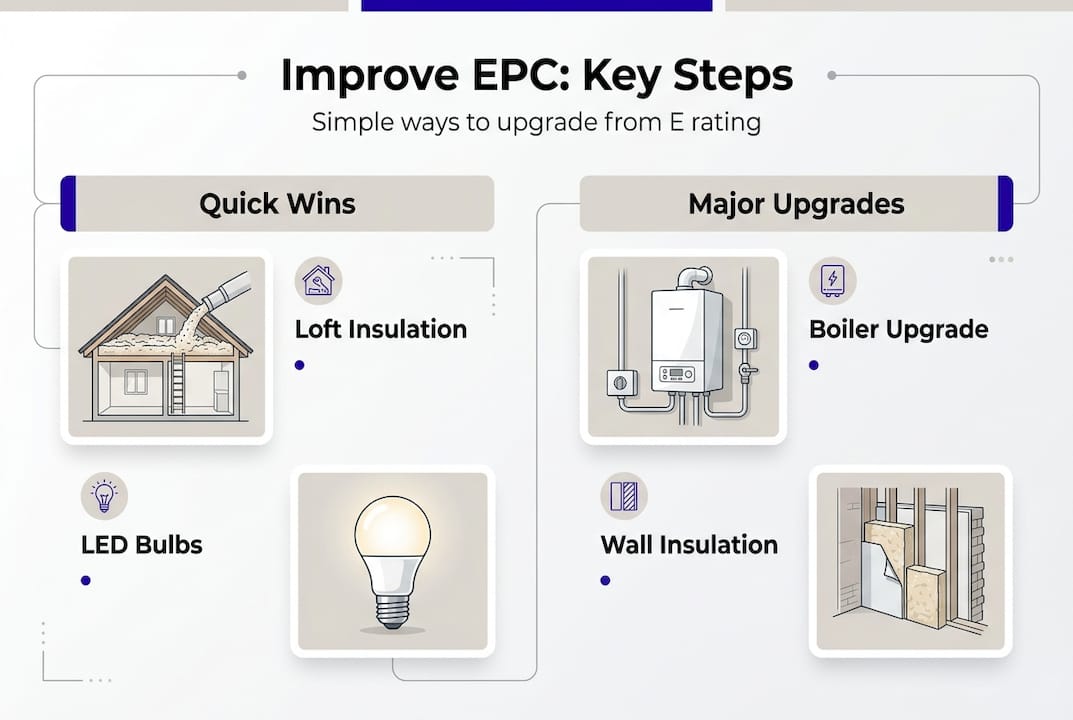
Energy efficiency improvements follow a logical hierarchy based on cost-effectiveness. Loft insulation represents the quickest win, often moving properties up half a rating band for £500-800 investment in a typical London terraced house. Cavity wall insulation follows closely, delivering similar benefits for £1,000-1,500. These foundational improvements address heat loss fundamentals before considering more expensive interventions like heating system replacements or window upgrades.
The improvement process begins with obtaining a detailed EPC assessment that identifies specific deficiencies. Your assessor’s report includes tailored recommendations ranked by potential impact and cost-effectiveness. Review these suggestions carefully, prioritising measures that address your property’s worst-performing elements first. Many landlords make the mistake of pursuing visible upgrades like new windows before addressing hidden issues like inadequate insulation, resulting in poor return on investment.
Common upgrade pathway from E to C:
- Install or upgrade loft insulation to minimum 270mm depth throughout accessible areas
- Add cavity wall insulation if your property features unfilled cavities in external walls
- Replace old boilers (over 15 years) with modern condensing models rated A for efficiency
- Upgrade single-glazed windows to double-glazing with low-emissivity glass and thermal breaks
- Install heating controls including programmable thermostats and thermostatic radiator valves
- Add draught-proofing around doors, windows, and other openings to reduce air leakage
- Consider renewable technologies like solar panels if budget permits and property is suitable
| Improvement | Typical Cost | Rating Impact | Payback Period |
|---|---|---|---|
| Loft insulation (270mm) | £500-800 | +5-8 points | 3-4 years |
| Cavity wall insulation | £1,000-1,500 | +8-12 points | 4-5 years |
| Condensing boiler replacement | £2,500-3,500 | +10-15 points | 6-8 years |
| Double glazing (full house) | £4,000-8,000 | +5-10 points | 10-15 years |
| Solar PV panels (4kW system) | £5,000-7,000 | +5-8 points | 8-12 years |
After completing improvements, arrange a reassessment through the EPC assessment process to update your certificate. The new assessment must occur after all work finishes and should be conducted by a qualified assessor who can verify the upgrades meet building regulations standards. This fresh certificate then becomes valid for another ten years, providing long-term compliance security and marketing advantages.
Pro Tip: Combine multiple improvements in a single project to maximise rating gains and minimise disruption to tenants. Contractors often offer package discounts when undertaking several measures simultaneously, and you avoid repeated access issues or multiple void periods between tenancies.
How Complete EPC can help London landlords improve their EPC rating
Navigating EPC requirements and improvement pathways can feel overwhelming for busy landlords managing multiple properties across London. Complete EPC provides comprehensive support throughout your energy efficiency journey, from initial assessment through to post-improvement certification. Our qualified assessors bring extensive experience evaluating London properties, understanding the unique challenges posed by period buildings, conversions, and mixed-use developments common throughout the capital.
We help you develop practical improvement strategies tailored to your property portfolio and budget constraints. Rather than recommending expensive upgrades that deliver marginal gains, we focus on cost-effective measures that achieve meaningful rating improvements and ensure compliance with current and upcoming regulations. Our team stays current with understanding EPC certificates in London, providing guidance on regulatory changes that affect your obligations as a landlord.
Complete EPC supports your energy rating improvement journey with transparent pricing, rapid turnaround times, and detailed reports that clearly explain your options. We coordinate with trusted contractors who specialise in energy efficiency upgrades, helping you implement improvements efficiently. Our streamlined assessment process minimises disruption whilst ensuring accurate, compliant certificates that protect your letting business and enhance your property values.
Frequently asked questions
What does an EPC rating E indicate about energy efficiency?
An EPC rating E signals that your property operates with moderate energy efficiency but falls below recommended standards for modern rental accommodation. This rating typically means tenants face higher energy costs due to factors like insufficient insulation, older heating systems, or poor-quality glazing. Properties with E ratings consume significantly more energy than those rated C or above, resulting in increased bills and reduced comfort for occupants.
Are London landlords required to improve properties with an EPC rating E?
Currently, landlords can legally let properties with an E rating under MEES regulations, but this represents the minimum acceptable standard. However, proposed regulatory changes will likely require upgrades to at least a C rating by 2028 for new tenancies and 2030 for existing ones. Failure to comply with these evolving standards results in substantial fines and potential restrictions on your ability to let the property, making proactive improvement essential for long-term compliance.
How can landlords improve their EPC rating from E?
The most effective improvements include installing or upgrading loft and cavity wall insulation, replacing old boilers with modern condensing models, and upgrading to double-glazed windows. Start with the most cost-effective measures like insulation, which typically delivers the greatest rating improvement per pound invested. After completing upgrades, arrange a professional reassessment to update your certificate and demonstrate compliance with current standards.
How often must an EPC certificate be renewed in London?
EPC certificates remain valid for ten years from the date of issue, after which you must obtain a new assessment before marketing the property for rent or sale. However, if you make significant energy efficiency improvements during this period, consider arranging an EPC renewal earlier to capture the enhanced rating. Timely renewal ensures ongoing legal compliance and helps you maintain competitive advantage in London’s demanding rental market.
Recommended
- Understanding EPCs in London: Why They Matter for Property Owners – Complete EPC
- EPC Essentials: How London Property Owners Can Improve Their Ratings – Complete EPC
- Understanding Commercial EPC Requirements in London – Complete EPC
- Understanding EPCs: Your Guide to Energy Performance Certificates in London – Complete EPC